









How to Become an AI Engineer in Seychelles in 2026
By Irene Holden
Last Updated: April 24th 2026
Quick Summary
Become an AI engineer in Seychelles in 12 months by following a month-by-month plan tailored to local constraints like limited datasets and high bandwidth costs, with projects such as a tourism demand forecast and a Seychellois Creole sentiment analyzer. Businesses using adapted AI solutions report 200-500% productivity gains, and Nucamp bootcamps starting at SCR 28,674 with a 78% employment rate provide an affordable path to deploying models in under a year.
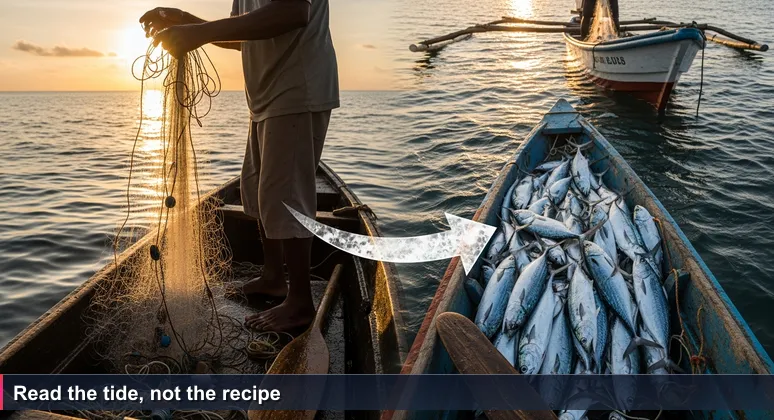
The best fisherman on Mahé doesn't follow a recipe book. He reads the tide, the wind, and the memory of last season's catch - and that's exactly the difference between a roadmap that works and one that leaves you staring at an empty net.
In 2026, Seychelles is racing to build a sovereign AI strategy. President Herminie has publicly committed to using AI for digital transformation and social justice, with a focus on food security and healthcare. Local firms like Afritelligence report 200-500% productivity gains when AI solutions are adapted to the islands' constraints - limited datasets, high bandwidth costs, and specific industry needs in tourism, fisheries, and finance.
If you follow a generic "become an AI engineer in 12 months" tutorial from YouTube, you'll learn Python, PyTorch, and Scikit-Learn. But you won't learn how to make a model work with 200 satellite images of coral reefs. You won't learn how to deploy a hotel occupancy predictor that runs on spotty internet. As Louis-François Bouchard, creator of the "What's AI" channel, puts it: "One real project teaches you more than 10 certificates ever will."
That's the gap between instruction and execution. Generic roadmaps ignore the Seychelles reality: data privacy laws, bilingual language constraints (English, French, Seychellois Creole), and employers who need practical deployment - not Kaggle high-scores. Reading the water matters more than memorising the species chart.
Steps Overview
- Why Generic AI Roadmaps Fail in Seychelles
- What You Need Before Starting
- Foundation Layer: Months 1-3
- Core Machine Learning: Months 4-6
- Deep Learning & Specialisation: Months 7-9
- MLOps, Deployment & Scalability: Months 10-12
- Two-Year Advanced Specialisation
- Where to Learn: Local, Regional & Online Options
- The Seychelles Advantage: Why Local Matters
- How You Know You’ve Succeeded
- Common Questions
For the definitive complete guide to AI careers in Seychelles, check out this resource.
What You Need Before Starting
The gap between a full net and an empty one starts before you leave the dock. Before diving into PyTorch or neural networks, you need the right gear - and more importantly, the right expectations. Seychelles demands a specific kind of preparation, not a copy-paste of a Silicon Valley checklist.
- Laptop with 8GB+ RAM for running Jupyter notebooks and small models locally; cloud credits can supplement for GPU-heavy tasks.
- Reliable internet: Fiber is available in Victoria and most of Mahé; 4G works on Praslin and La Digue for lighter work.
- Basic math comfort: High-school algebra is enough to start. Calculus and linear algebra will be learned as you go.
- English reading/writing: Most technical resources are in English. Seychellois Creole and French are assets for local NLP projects.
- 10-15 hours per week minimum consistent time - weekends plus weekday evenings is the norm for working learners in Victoria.
You do not need a computer science degree. The University of Seychelles Bachelor of Computer Science (Honours) offers an AI specialisation, but many successful engineers in the region come from bootcamps and self-study. As one industry observer noted, the essentials are proficiency in a programming language like Python and the ability to write clean, logical code - not a formal diploma.
The tide doesn't care about your certificate count. It cares about your ability to adapt - to spotty connections, small datasets, and the unique constraints of island life. That preparation starts now, not after you've memorised a textbook.
Foundation Layer: Months 1-3
The foundation isn't flashy, but it's where the fishermen learn to read the tide. Months one through three build the core skills that separate a deployed model from a broken script: Python fluency, mathematical intuition, and version control discipline. These aren't optional luxuries - they're the hull of your pirogue.
- Month 1 - Python & Data Wrangling: Complete the official Python tutorial, then work through Pandas on Kaggle. Build a Seychelles mini-project: download tourism arrival data from the Seychelles National Bureau of Statistics as a public CSV, clean it using Pandas, summarise total arrivals by month and top source markets, and visualise trends with Matplotlib. Commit the entire project to a public GitHub repository. Recommended: Nucamp's Back End, SQL and DevOps with Python (SCR 28,674, 16 weeks) covers Python plus databases and cloud foundations.
- Month 2 - Mathematics for AI: Implement matrix multiplication from scratch in Python. Compute mean, variance, and covariance by hand, then verify with NumPy. Simulate a binomial distribution and visualise the Central Limit Theorem. Seychelles mini-project: analyse fish catch data from the Seychelles Fishing Authority public reports, compute probabilities of different species per season, and build a simple Bayesian classifier predicting species given month and weight.
- Month 3 - Version Control & Data Preprocessing: Fork a repo, create a branch, submit a pull request. Take a messy CSV from a Kaggle tourism dataset and clean it: handle NaNs, normalise numeric columns, one-hot encode country codes. Seychelles mini-project: build a clean dataset of hotel occupancy rates across Mahé, Praslin, and La Digue using public data from the Seychelles Tourism Board, outputting a pipeline that transforms raw CSV into cleaned features ready for ML.
By the end of Month 3, you should be able to load any common dataset, perform basic exploratory data analysis, and push a clean, documented repository. The foundational technical pathway for AI engineering requires this sequence before touching any deep learning framework. Weekly time commitment: 10-12 hours. You're now ready for core machine learning - but only if you've built the hull first.
Core Machine Learning: Months 4-6
Month 4 - Supervised Learning
You build regression and classification models using linear regression, decision trees, and random forests. The key is learning how to split data, cross-validate, and diagnose overfitting - skills that translate directly to imbalanced, small datasets typical of island economies. Seychelles mini-project: use monthly arrival data from the Seychelles National Bureau of Statistics (2015-2023), engineer features including month, quarter, previous month arrivals, and GDP of top source countries, then train a random forest to predict next month's arrivals evaluated with RMSE. The Solo AI Tech Entrepreneur Bootcamp (SCR 53,730, 25 weeks) covers supervised learning within a product-building track that mirrors how local businesses actually use AI.
Month 5 - Unsupervised Learning & Dimensionality Reduction
K-means clustering, hierarchical clustering, and PCA become tools for discovering hidden patterns when labelled data is scarce - a frequent reality in Seychelles. Exercise: cluster customers by spending using Kaggle's Mall Customer dataset, then reduce 50-dimensional data to 2D with PCA for visualisation. Seychelles mini-project: use synthetic or public hotel booking data from Kaggle's Hotel Booking Demand dataset to cluster guests by nationality, length of stay, and spending, then suggest marketing strategies for Seychelles' luxury versus budget market segments. Weekly time commitment: 12-15 hours.
Month 6 - Model Evaluation & Hyperparameter Tuning
Precision, recall, F1-score, ROC AUC, grid search, and SMOTE for imbalanced data become your standard toolkit. As AI engineer Hela Saoudi emphasises, early-career engineers must focus on "experimenting and facing production challenges" rather than just consulting theory. Seychelles mini-project: use the Kaggle Credit Card Fraud dataset (or simulate a Seychelles-based dataset with banking rules), train logistic regression and random forest, compare precision-recall curves, and write a report explaining trade-offs as if presenting to a Seychelles Commercial Bank stakeholder. The practical approach to ML roadmaps emphasises building projects that mirror real deployment constraints. By month's end, you should have a solid ML portfolio of 3-4 projects and the ability to communicate results clearly to non-technical stakeholders.
Deep Learning & Specialisation: Months 7-9
The deep learning phase is where you stop following recipes and start reading the water. Months seven through nine transform your foundational skills into specialised models for vision and language - but always within the constraints that define Seychelles: small datasets, limited compute, and problems that demand contextual intelligence.
Month 7 - Neural Networks with PyTorch
You build feedforward networks from scratch, then transition to PyTorch's nn.Module for a classifier on MNIST. The real test comes with a Seychelles mini-project: using a public underwater image dataset like Kaggle's "Coral Reef Classification" to train a CNN that distinguishes healthy from bleached coral. The challenge? Working with very few images - a typical Seychelles constraint. You apply data augmentation and regularisation to squeeze performance from sparse data. The practical deep learning approach from Fast.ai and PyTorch tutorials becomes your guide.
Month 8 - Convolutional Neural Networks & Computer Vision
Transfer learning with pre-trained ResNet and YOLO object detection opens up a new world. For Seychelles, the critical application is marine conservation. Using underwater footage from local NGOs - low-resolution, often poorly lit - you fine-tune YOLO to detect fish species like parrotfish and surgeonfish. As Nirmal Shah, CEO of Nature Seychelles, explains, AI can transform "overwhelming environmental data into actionable protection measures" - exactly the kind of small-data, high-impact work that sets Seychelles engineers apart globally. Weekly commitment: 15 hours.
Month 9 - NLP & Local Language Models
Text preprocessing, tokenisation, word embeddings, and fine-tuning a small BERT model culminate in a project uniquely valuable to Seychelles: a Seychellois Creole sentiment analyser. You gather social media posts from local Facebook groups (anonymised and with permission), build a rule-based lexicon for Creole-to-English translation, and fine-tune DistilBERT to classify customer service sentiment. The documentation of challenges - small dataset, code-switching with French and English - becomes a portfolio asset that proves you can handle the "data poverty" of island nations. By the end of Month 9, you have neural networks deployed for vision and text, and a deep understanding of what it means to build AI where data is scarce but problems are urgent.
MLOps, Deployment & Scalability: Months 10-12
Month 10 - Data Engineering & SQL
Models are useless without clean, accessible data. You master SQL joins, subqueries, indexing, and NoSQL basics with MongoDB, then build ETL pipelines that scrape CSVs, clean with Pandas, and store in PostgreSQL. The Seychelles mini-project: design a star schema for hotel bookings, flights, and guest demographics, then write SQL queries to answer business questions like "Which nationality spends the most per night in July?" This mirrors real demands from Seychelles' luxury hotels that rely on data-driven pricing. The Back End, SQL and DevOps with Python bootcamp covers exactly these pipelines. Weekly commitment: 10-12 hours.
Month 11 - Cloud & Model Deployment
You learn AWS EC2, S3, and SageMaker basics, containerise a FastAPI endpoint with Docker, and deploy a pretrained model on the free tier. The Seychelles mini-project takes your Month 4 random forest and wraps it in a FastAPI app with a simple form accepting month and source market inputs. Deploy on an AWS t2.micro instance costing roughly SCR 500/month, then add a Streamlit dashboard for a local hotel association. Document low-bandwidth optimisations like quantisation and caching. As the practical roadmap for AI engineers emphasises, production deployment separates valuable engineers from those who can only run notebooks. Weekly commitment: 12-15 hours.
Month 12 - MLOps & Portfolio Polish
Model versioning with DVC, experiment tracking with MLflow, and CI/CD pipelines with GitHub Actions become your standard workflow. The Seychelles capstone project combines your coral classifier (Month 7), marine detection model (Month 8), and a Streamlit frontend into a fisheries monitoring dashboard. Deploy on a cost-effective solution like a DigitalOcean droplet. Write a two-page report explaining how this system could help the Seychelles Ministry of Fisheries track illegal fishing, including a cost estimate for full production. Monitor for model drift using MLflow alerts. Stay informed about local infrastructure through the Seychelles ICT Authority's digital transformation updates. By Month 12, you have a portfolio of 5-6 projects, end-to-end deployment experience, and the ability to discuss trade-offs like model accuracy versus infrastructure cost in a uniquely Seychellois context.
Two-Year Advanced Specialisation
The final year of the two-year track transforms you from a competent engineer into a domain specialist. While the first 12 months build generalist skills, this phase demands deep expertise in one of Seychelles' highest-value niches: advanced NLP, conservation vision, or agentic AI. The sovereign AI strategy Seychelles is actively pursuing creates demand for these exact specialisations.
| Extended Months | Focus Area | Seychelles Project |
|---|---|---|
| 13-15 | Advanced NLP - Fine-tune LLMs with QLoRA, build retrieval-augmented generation (RAG) systems | Creole-English translation app for government services like applying for a business permit, handling code-switching with French and English |
| 16-18 | Computer Vision for Conservation - Object tracking, anomaly detection on low-res footage | Real-time illegal fishing vessel detection using Landsat free-tier satellite imagery, combining spectral analysis with temporal pattern recognition |
| 19-21 | Agentic AI & Agents - "Context engineering," tool use, memory systems | Hotel concierge chatbot that books excursions, checks weather, and suggests restaurants via WhatsApp (Twilio) with persistent memory of guest preferences |
| 22-24 | Capstone Production Project - Full MLOps pipeline, automated retraining, drift monitoring | Dynamic pricing engine for Seychelles hotels integrating flight demand data, competitor prices, and seasonality, deployed with CI/CD and drift alerts |
Blockquote: "Being able to convey technical concepts to individuals with different levels of expertise is crucial for success." - Mohamed Nabil, AI professional, on the soft skills that separate senior engineers from junior ones
The two-year track aligns with what professionals in nearby tech hubs like Mauritius and Nairobi do: start with hands-on projects while working a day job, then transition to full-time AI. Your edge as a Seychelles engineer is contextual intelligence - making AI work where data is scarce, bandwidth is expensive, and the problems are uniquely island-driven. Remote AI developer roles increasingly list these specialist skills as requirements, offering location flexibility for engineers who master them.
Where to Learn: Local, Regional & Online Options
The best learning path in Seychelles is the one you can actually afford and finish. Nucamp stands out for island learners because its programs start at SCR 28,674, offer flexible monthly payments, and connect you with peer cohorts across Mahé, Praslin, and La Digue. With a reported 78% employment rate and 4.5/5 stars on Trustpilot from nearly 400 reviews, the bootcamp delivers results without the price tag of Silicon Valley competitors. As one graduate put it: "It offered affordability, a structured learning path, and a supportive community of fellow learners."| Program | Duration | Tuition (SCR) | Best For |
|---|---|---|---|
| Back End, SQL and DevOps with Python | 16 weeks | SCR 28,674 | Foundations for AI; data pipelines |
| AI Essentials for Work | 15 weeks | SCR 48,357 | Professionals adding AI skills |
| Solo AI Tech Entrepreneur Bootcamp | 25 weeks | SCR 53,730 | Building AI products and startups |
| Complete Software Engineering Path | 11 months | SCR 76,194 | Full-stack + AI prep |
The University of Seychelles Bachelor of Computer Science offers a traditional 3-4 year route with an AI specialisation, ideal for those who prefer academic structure. For regional options within the Indian Ocean, the University of Mauritius provides an MSc in Artificial Intelligence focusing on deep learning and robotics, while African Leadership University offers a BSc in Software Engineering with a dedicated machine learning track. South African institutions like MANCOSA and the University of Johannesburg deliver postgraduate diplomas and short learning programmes entirely online, making them accessible from Victoria or Beau Vallon.
Free platforms like Fast.ai, Hugging Face's NLP course, and Coursera's audited specialisations can supplement any paid program. The key is matching your learning style and budget to the path you'll actually finish - because a completed bootcamp beats an abandoned MOOC every time. For professionals already working in tourism, finance, or government, Nucamp's community-based learning with live workshops and career coaching tailored to Seychelles employers offers the fastest transition into AI roles.
The Seychelles Advantage: Why Local Matters
Your most powerful advantage as a Seychelles AI engineer isn't your Python skills - it's your ability to serve a market that global engineers cannot reach. The bilingual workforce fluency in English, French, and Seychellois Creole makes you uniquely qualified to build NLP tools that serve the majority of the population authentically. No remote engineer in Bangalore or Berlin can replicate that contextual understanding of local code-switching and cultural nuance. The sovereign AI strategy Seychelles is actively pursuing for e-Government, food security, and healthcare creates a pipeline of government contracts and grants for engineers who solve local problems. President Herminie has publicly committed to using AI for "digital transformation and social justice," meaning your skills align with national priorities - not just private sector demands. Remote work access has exploded. Platforms like Truelancer report that hiring Seychelles-based AI freelancers saves businesses up to 50% in costs, creating steady contract work for local talent. The conservation niche offers an additional edge: as Nirmal Shah, CEO of Nature Seychelles, stated, AI can transform "overwhelming environmental data into actionable protection measures." Engineers who can build small-data, high-impact models for coral reef monitoring, fisheries management, and climate adaptation have a unique selling point globally - one that no generic roadmap can teach.How You Know You’ve Succeeded
The sea doesn't care about your certificate count. It cares whether you can read the tide. Instead of asking "how do I get hired?", ask "what can I actually do?" The milestones below give you concrete, verifiable evidence that your skills translate into real-world value for Seychelles employers.
- Month 3: You can open a raw CSV, clean missing values and outliers, perform exploratory data analysis, and push a documented GitHub repository with proper commit history and a README explaining your process.
- Month 6: You can train a random forest on a Seychelles-relevant dataset (tourism arrivals, hotel occupancy, or fish catch data), tune hyperparameters using grid search, and explain your model choices and trade-offs in plain English to a hotel manager or fisheries officer.
- Month 9: You can fine-tune a small neural network on fewer than 1,000 images or 5,000 text samples - island-scale data. Your coral reef classifier or Creole sentiment analyser demonstrates you understand the constraints of small datasets common in small island nations.
- Month 12: You have a deployed model running as a FastAPI endpoint with a Streamlit dashboard in the cloud for under SCR 500 per month. A hotel association or NGO can actually use your tourism forecast or fisheries monitoring tool.
- Month 24: You have a production-grade system with automated retraining via CI/CD, model drift monitoring with MLflow, and a clear business case for a Seychelles enterprise - ready for a government contract or a full-time role at a local employer.
These milestones align directly with what employers scan for. As the remote AI job listings for Seychelles residents consistently show, practical deployment experience and domain-specific projects carry more weight than theoretical knowledge. The tide is reading you as much as you read it. Seychelles offers you a unique current to navigate: small data, big heart, urgent problems. Now go build something that hauls a full net.
Common Questions
How long does it realistically take to become an AI engineer in Seychelles without a degree?
With 10-15 hours per week, you can build a portfolio of 5-6 deployable projects in 12 months. Many successful engineers in the region come from bootcamps like Nucamp (78% employment rate) and self-study, not a CS degree.
Do I need to learn Creole or French for AI jobs in Seychelles?
Not required, but it's a huge advantage. Bilingual engineers can build NLP tools for the majority population and government services, making you stand out in a global remote job pool. No one else can do that authentically.
What are the biggest challenges for AI engineers working with limited datasets in Seychelles?
Seychelles faces data poverty - small datasets, high bandwidth costs, and specific industry needs (tourism, fisheries). The skill is making models work with 200 satellite images or 5,000 text samples. That constraint is your unique selling point globally.
Can I get hired with just a portfolio or do employers in Seychelles require formal education?
Portfolio wins over degrees for most hands-on AI roles here. Local firms value demonstrated ability to solve island-scale problems, like deploying a hotel occupancy predictor on spotty internet or a Creole sentiment analyzer. A degree from UniSey (3-4 years) helps but isn't mandatory.
How much can I expect to earn as an AI engineer in Seychelles in 2026?
Entry-level AI roles in Seychelles start around SCR 100,000-150,000 annually, with 3-5 years experience reaching SCR 250,000-400,000. Remote jobs listed on platforms like MeetFrank often pay higher, and Truelancer reports that hiring Seychelles-based AI freelancers saves businesses up to 50% in costs.
Learn about the startups driving Seychelles' AI ecosystem in our article on the top Seychellois AI startups of 2026.
Uncover the best employers for AI engineers in the Seychelles and their unique projects.
Uncover high-paying tech jobs in Seychelles for self-taught professionals with salaries starting at 10,000 SCR.
Our guide to top AI bootcamps in Seychelles offers local insights.

Irene Holden
Operations Manager
Former Microsoft Education and Learning Futures Group team member, Irene now oversees instructors at Nucamp while writing about everything tech - from careers to coding bootcamps.