









The Complete Guide to Starting an AI Career in Norway in 2026
By Irene Holden
Last Updated: April 20th 2026
Key Takeaways
Starting an AI career in Norway in 2026 is about mastering local industrial applications like energy and maritime AI to bridge the 'AI proof gap' where only 12% of business leaders feel workforce-ready. You can land roles earning from NOK 650,000 as a junior to over NOK 1.3 million in senior positions by targeting hubs like Oslo or Trondheim and upskilling through pathways from NTNU's master's programs to Nucamp's practical bootcamps.
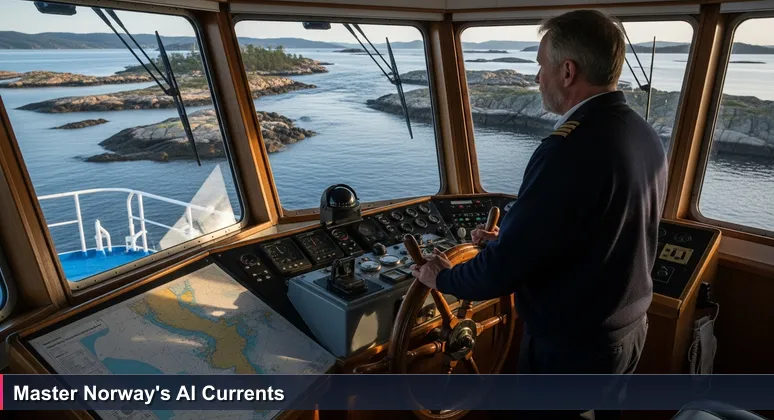
Every tourist map of the Oslo Fjord shows a clear, wide channel, but local captains know the truth: the deepest water is found by reading the subtle interplay of current, wind, and submerged skerries. In 2026, charting a course into an AI career in Norway requires this same navigator's intuition. While global AI theory is widely available, success here demands understanding the specific, complex currents of Norway's industrial, research, and economic landscape.
The foundational chart shows immense opportunity tempered by a significant readiness gap. A 2026 survey revealed that despite high AI adoption, only 12% of Norwegian business leaders believe their workforce is truly ready for the technology, identifying a major "AI proof gap". This chasm between technological potential and human capability is where your career can find its most powerful draft, as reskilling becomes a workforce-wide necessity.
As Yngvar Ugland, EVP of New Tech Lab at DNB, states, "Every job will be influenced by AI," making practical, applied skills the most valuable currency [7]. Your goal is not just to learn AI, but to become a bridge across this gap, applying technology to Norway's core industries. The transformative potential is real, as demonstrated by Norway’s $1.8 trillion Sovereign Wealth Fund saving an estimated 213,000 hours annually by making AI core to its operations.
In This Guide
- Set Sail on Your AI Journey in Norway
- Norway's AI Landscape: Charts vs. Currents
- Top AI Roles Driving Norway's Future
- University Pathways: Deep Dive into AI Research
- Agile Learning: Bootcamps for AI Career Changers
- AI Job Markets Across Oslo, Trondheim, and Bergen
- What to Expect: AI Salary Ranges in Norway 2026
- Phase-by-Phase Guide to Landing Your AI Role
- Mastering the Local Currents of AI in Norway
- Frequently Asked Questions
Career changers in Oslo and other Norwegian regions connect with peers through Nucamp Norway's local tech community and an alumni network focused on regional employer relationships and job-search support.
Norway's AI Landscape: Charts vs. Currents
While global AI trends swirl around consumer applications, Norway's strengths are distinctly industrial and applied. The country is focusing on Industrial AI, energy transition technologies, and sovereign AI models tailored to the Nordic context. This strategic direction was solidified in late 2025 with the launch of six new national AI research centers, each receiving up to NOK 200 million in public funding to advance trustworthy AI and industrial innovation [5].
This massive state-backed investment creates a robust chart of opportunity. However, navigating into it requires understanding a critical local current: the "AI proof gap." A 2026 survey by Grant Thornton revealed that despite high adoption rates, only 12% of Norwegian business leaders believe their workforce is truly ready for AI. This gap between technological potential and human capability is where your career can find its most powerful draft.
Your role is to become a bridge across this gap. This means selecting an educational pathway that builds not just theoretical knowledge but applied, deployable skills. For career-changers, agile programs like the 25-week Solo AI Tech Entrepreneur bootcamp (~NOK 39,800) or the 15-week AI Essentials for Work program (~NOK 35,820) offer a faster route to practical mastery than traditional multi-year degrees, directly addressing the market's readiness crisis with job-focused training.
Top AI Roles Driving Norway's Future
The Norwegian job market in 2026 values professionals who can orchestrate AI systems and manage complex workflows over simple model authorship. The era of the solitary coder is giving way to a focus on direction, integration, and ethics, reflecting a shift toward what opinion leaders describe as an "Hourglass Economy" where mid-tier "busy work" is automated, increasing demand for both strategic leaders and deep technical experts.
Core Technical Roles: Building the Engine
Machine Learning Engineers remain the most consistently in-demand role, focusing on building and optimizing production-grade models for companies like Equinor and Telenor. The critical counterpart is the MLOps Engineer, a rapidly growing role dedicated to deploying and maintaining these models at scale using CI/CD and containerization. For those drawn to foundational research, roles as Applied AI Researchers within institutes like SINTEF or the NorwAI center focus on hybrid physics-and-data models crucial for energy and maritime sectors.
Strategic & Hybrid Roles: Charting the Course
Demand for AI Product Managers, who blend technical and commercial acumen, is projected to grow 15-20% through 2026. Simultaneously, Norway's emphasis on trustworthy AI is creating new roles for AI Ethicists & Governance Specialists to ensure compliance with frameworks like the EU AI Act. As one analysis notes, "AI & the Job Crunch" is reshaping the workforce, prioritizing those who can provide strategic vision that AI itself cannot.
"The market is experiencing an 'Hourglass Economy' where mid-tier 'busy work' roles are being squeezed by automation, increasing demand for both strategic leaders who provide vision and technical experts who can build and maintain complex systems." - Norse News analysis on AI and the job market.
To explore these opportunities, actively monitoring the NORA vacancies page is a essential first step, as it aggregates roles from across Norway's research and industrial ecosystem.
University Pathways: Deep Dive into AI Research
For those seeking deep, research-oriented foundations and the highest long-term salary potential, Norwegian universities offer exceptional pathways. Research indicates a 30% salary gap in 2026 between AI master's graduates and those with certificates alone, underscoring the market's valuation of comprehensive, graduate-level expertise [6].
The National Powerhouse: NTNU
NTNU in Trondheim is the undisputed leader, offering a dedicated Master's in Artificial Intelligence that serves as the national gold standard. The program has strong connections to industry giants and the new NorwAI research center, with leading research in robotics and autonomous systems. Its study program provides a direct pipeline into Norway's industrial AI core.
Specialized Strengths at UiO and Beyond
The University of Oslo (UiO) offers robust programs with a distinct focus on Natural Language Processing (NLP), which is critical for developing sovereign AI models for the Norwegian language. Other universities like the University of Bergen and UiT The Arctic University of Norway provide niche excellence in areas like aquaculture and medical image analysis.
The PhD Pathway to Advanced Research
For the academically inclined, direct research roles are available. Programs like SURE-AI are recruiting roughly 20 PhD and Postdoc candidates across Norway, offering a structured path into advanced research on trustworthy and reliable AI systems. This represents the deepest dive into the foundational research that fuels Norway's applied industrial innovation.
Agile Learning: Bootcamps for AI Career Changers
For career-changers and professionals seeking a faster, more applied route into AI, coding bootcamps have become a respected and effective pathway. They excel at teaching the practical, job-ready skills that Norwegian companies need to bridge the "AI proof gap" now, not in several years. Unlike the deep-dive research focus of universities, bootcamps function as agile motorboats, designed for rapid deployment into the workforce.
Nucamp Bootcamps stands out as a premier option, with its community-based learning model and affordable pricing directly addressing the Norwegian need for practical, deployable skills. Its Solo AI Tech Entrepreneur Bootcamp (25 weeks, ~NOK 39,800) is a launchpad for innovators, focusing on building AI-powered products and LLM integration - perfect for joining Oslo's startup ecosystem. For professionals enhancing their current role, the AI Essentials for Work program (15 weeks, ~NOK 35,820) covers prompt engineering and AI-assisted productivity.
Beyond affordability, Nucamp's model aligns perfectly with Norwegian values through its emphasis on local community workshops in tech hubs like Oslo, Bergen, and Trondheim, fostering the dugnad spirit of collaborative work. With a reported ~78% employment rate and strong career coaching, it provides a structured, supportive voyage directly into the tech workforce, connecting graduates to major employers from Telenor to Equinor.
AI Job Markets Across Oslo, Trondheim, and Bergen
While Oslo is the undisputed capital, Norway's AI ecosystem is a distributed network of specialized regional hubs, each with its own industrial focus and research strengths. This geographic spread means opportunities are not concentrated in a single city but are accessible across the country, tied to traditional industries undergoing digital transformation.
| Regional Hub | Key Specializations & Strengths | Major Employers & Institutions |
|---|---|---|
| Oslo | The primary corporate hub; strong in fintech, media AI, telecom AI, and a vibrant startup scene. Notably "punching above its weight in robotics and autonomous systems." | Telenor, DNB, Schibsted, Cognite, Fremtind, Norwegian Sovereign Wealth Fund |
| Trondheim | The research and academic heart; world-leading in foundational AI, robotics, maritime tech, and autonomous systems. | NTNU, SINTEF, NorwAI Center, Marintek |
| Bergen | A niche powerhouse for aquaculture, maritime, and oceanography AI, applying machine learning to marine biology and offshore operations. | University of Bergen (UiB), Institute of Marine Research, maritime tech startups |
| Stavanger | Focused on energy transition, robotics, and industrial process optimization, serving the needs of the energy sector and related industries. | Equinor, International Research Institute of Stavanger (IRIS), energy service companies |
This regional specialization means your target location should align with your industry interest. For breadth and corporate roles, Oslo is essential. For deep specialization in maritime or energy, Bergen and Stavanger offer unparalleled ecosystems. Trondheim is the go-to for cutting-edge research roles, often in collaboration with the formidable SINTEF research institute. Understanding this map is the first step in a targeted job search.
What to Expect: AI Salary Ranges in Norway 2026
Salaries in Norway's AI sector are competitive, reflecting the high cost of living and the premium placed on specialized expertise. Total compensation packages typically include a significant employer pension (pensjon) contribution, annual bonuses, and for senior roles, potential equity. The following table outlines estimated gross annual salary ranges for 2026, compiled from industry reports and salary transparency platforms.
| Role & Experience Level | Estimated Annual Salary (NOK) | Key Compensation Components |
|---|---|---|
| Entry-Level (Junior AI/ML Engineer, 1-3 yrs) | kr 650,000 - kr 750,000 | Base salary, standard pension plan (typically 2-7% employer contribution) |
| Mid-Level (ML Engineer, Data Scientist, 3-7 yrs) | kr 800,000 - kr 1,000,000 | Base + annual bonus (average ~kr 46,000), enhanced pension |
| Senior/Lead (Lead Engineer, AI Product Manager, 8+ yrs) | kr 1,100,000 - kr 1,300,000+ | Base + significant bonuses + potential equity/stocks |
These figures align with data from PwC's Global AI Jobs Barometer, which notes stable, strong demand for specialized roles. When negotiating, focus on the total compensation package. It's also valuable to consider the Nordic context: while Stockholm offers senior salaries ranging SEK 950,000-1.3M and remains a larger hub for venture-backed startups, Norway's stable economy and industrial impact offer a robust, high-security alternative.
Phase-by-Phase Guide to Landing Your AI Role
Transforming aspiration into a position requires a deliberate, phased approach tailored to Norway's market rhythms. This 18-month navigation plan merges education, portfolio building, and the essential local networking that defines Scandinavian career progression.
Phase 1: Foundation & Mapping (Months 1-6)
Begin by plotting your course. Decide on a target role (e.g., MLOps Engineer) and primary industry (e.g., energy). Acquire core knowledge through a structured entry point like the free "Elements of AI" course localized by NTNU. Simultaneously, start learning Norwegian; while English works in tech firms, demonstrating this commitment significantly widens your opportunities and integration potential.
Phase 2: Skill Deepening & Portfolio Building (Months 6-12)
Commit to an intensive program to build demonstrable expertise. For example, complete a focused bootcamp like the 25-week Solo AI Tech Entrepreneur program, using it to build 3-4 portfolio projects that solve Nordic problems - think an LLM for summarizing Norwegian regulations or a model predicting Oslo transit delays. Engage with the community by attending NORA meetups or participating in events like the Norwegian AI Championship, which in 2026 saw over 2,000 participants focusing on real-world problem-solving.
Phase 3: Deployment & Job Search (Months 12-18)
Polish your Norwegian CV (kartotek) and LinkedIn profile. Actively monitor specialized channels like the NORA vacancies page and career sites of target companies (Equinor, Cognite, Telenor). Be prepared for hiring timelines of 1-3 months for technical roles. Crucially, leverage your network from bootcamp workshops, university alumni, or meetups for referrals - in Norway's relationship-oriented market, a personal recommendation is a powerful current to harness.
Mastering the Local Currents of AI in Norway
The journey to an AI career in Norway is not about following a generic global map, but about developing a navigator's intuition for this specific ecosystem. This means understanding how SINTEF's research on digital twins meets Equinor's need for predictive maintenance in the North Sea, or which Oslo startup's vision model is being tested on autonomous vessels in the Bergen fjords. The captains who succeed are those who respect both the chart of theory and the powerful local currents of industry, research, and public policy.
Your ultimate task is to bridge the "AI proof gap" - the chasm where only 12% of leaders feel their workforce is ready. Whether you build your craft through the storied shipyards of NTNU, the agile workshops of a bootcamp focused on deployable skills, or a hybrid journey of your own design, your value lies in applying knowledge to Norway's core challenges. The transformation is already underway, as shown by institutions like the Sovereign Wealth Fund saving 213,000 hours annually with AI.
Begin by joining the community, whether through the advanced research opportunities at SURE-AI or the practical, problem-solving ethos of events like the Norwegian AI Championship. The fjords of opportunity are deep, waiting for skilled hands who have learned to read not just the chart, but the water. Your voyage starts by choosing to master the local conditions, steering your expertise into the heart of Norwegian enterprise.
Frequently Asked Questions
How can I start an AI career in Norway in 2026?
Begin by choosing an educational path that fits your goals, such as a university master's at NTNU or a practical bootcamp like Nucamp's AI programs. Norway's focus on industrial AI, supported by six new national research centers with up to NOK 200 million in funding, creates ample opportunities to build skills that bridge the AI proof gap in key industries.
Do I need a master's degree to succeed in AI in Norway?
Not necessarily; while a master's degree can lead to a 30% higher salary, bootcamps like Nucamp offer fast-track options with strong employment rates. The market values both deep technical expertise and practical skills in roles like MLOps or AI product management, which are in high demand.
What salary can I expect as an AI professional in Norway?
In 2026, entry-level roles like Junior AI Engineer typically earn kr 650,000 to kr 750,000 annually, with senior positions reaching over kr 1.3 million. Salaries are competitive and often include bonuses, reflecting Norway's high-value economy and focus on industrial AI applications.
Which cities in Norway are best for AI jobs?
Oslo is the main hub with employers like Telenor and Schibsted, while Trondheim excels in research and robotics, and Bergen specializes in maritime AI. Targeting these cities based on your industry interest can maximize opportunities in Norway's distributed AI ecosystem.
Is there high demand for AI skills in Norway right now?
Yes, demand is strong, with only 12% of business leaders feeling their workforce is AI-ready, creating a significant proof gap. Roles like AI Product Manager have grown 15-20%, offering plenty of chances for professionals to contribute to Norway's energy, finance, and public sectors.
Learn about machine learning engineer salaries in Norway for 2026 and how to negotiate effectively.
Navigate the AI job market in Norway with a list of top 10 hiring companies for 2026.
Find out about AI networking events in Norway for 2026 to boost your career.
This article explains tech career prospects in Norway for 2026 and what specialists need to know.
For a detailed how to become an AI engineer in Norway in 2026, refer to this comprehensive guide.

Irene Holden
Operations Manager
Former Microsoft Education and Learning Futures Group team member, Irene now oversees instructors at Nucamp while writing about everything tech - from careers to coding bootcamps.