









The Complete Guide to Using AI as a Legal Professional in Nigeria in 2025
Last Updated: September 10th 2025
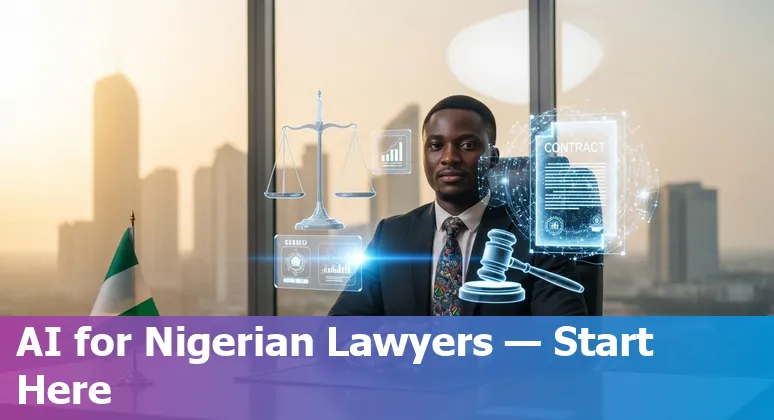
Too Long; Didn't Read:
In 2025 Nigeria's legal sector can cut drafting from days to minutes with jurisdiction‑trained AI like LawPavilionGPT, but NDPA‑led DPIAs and human oversight are mandatory; practical upskilling includes a 15‑week course (15 weeks, $3,582). Enforcement saw NGN 555.8m and USD 220m fines.
Nigeria's legal profession in 2025 sits at a practical inflection point: AI can now shave drafting time from days to minutes while surfacing jurisdiction‑specific authorities, but only when tools are trained on local law and used with proper human oversight.
LawPavilion's guide shows how purpose‑built assistants like LawPavilionGPT speed compliant pleadings and integrate Nigerian case law and templates (LawPavilion AI legal drafting step-by-step guide), even as regulators catch up - White & Case's tracker notes there's no single AI law yet and flags the Nigeria Data Protection Act, the draft National AI Strategy and NBA Guidelines as the practical compliance frame (White & Case AI regulatory tracker for Nigeria).
For lawyers who want usable skills fast, short practical courses exist to teach prompt design, tool selection and audit practices; for example, Nucamp's AI Essentials for Work covers prompts and workplace workflows in a 15‑week syllabus and registration is available online (Nucamp AI Essentials for Work 15-week bootcamp registration).
The takeaway: adopt locally trained AI, verify every citation, and keep human review at the centre - a one‑sentence error can cost a case, but the right tool can win back hours of billable time.
| Bootcamp | Length | Cost (early bird) | Registration |
|---|---|---|---|
| AI Essentials for Work | 15 Weeks | $3,582 | Register for Nucamp AI Essentials for Work |
“Reimagine your practice with the power of AI”
Table of Contents
- The state of AI adoption in Nigeria's legal sector (2025 snapshot)
- What is the AI regulation in Nigeria in 2025?
- Regulators, existing laws and enforcement affecting AI in Nigeria
- Practical compliance checklist for Nigerian lawyers and law firms
- What is the best AI for the legal profession in Nigeria? Top tools in 2025
- Recommended AI workflows and integrations for Nigerian law firms
- Skills, training and team changes Nigerian lawyers need for AI
- What is the future of AI in Nigeria? Opportunities and risks for lawyers
- Conclusion and resources: contacts and further reading for Nigeria
- Frequently Asked Questions
Embark on your journey into AI and workplace innovation with Nucamp in Nigeria.
The state of AI adoption in Nigeria's legal sector (2025 snapshot)
(Up)Adoption in 2025 feels less like a wave and more like a patchwork quilt: leading firms and in‑house teams are racing ahead with legal‑specific systems while many smaller practices watch and wait.
Purpose‑built platforms such as LawPavilion's suite and its legal GPT are already reshaping research and case management, letting lawyers pull jurisdiction‑specific authorities in the time it takes to make tea (LawPavilion LegalTech in Nigeria 2025), and the first major domestic rollout of a global legal model - Olaniwun Ajayi's adoption of Harvey AI - shows how premium, privacy‑focused tools are landing in the market (Olaniwun Ajayi adopts Harvey AI West Africa).
That momentum sits alongside a maturing policy backdrop: Nigeria's NDPR/NDPA framework, Central Bank sandboxes and a National AI Strategy are steering firms toward privacy‑by‑design, transparency and human oversight as practical obligations, not optional best practices (Nigeria AI regulation and NDPR guidance).
The result is a pragmatic, risk‑aware adoption pattern - fast where tools are legally tailored and governed, cautious where they are not - so firms that pair legal datasets with clear compliance checkpoints are the ones converting AI's promise into reliable, billable time savings.
What is the AI regulation in Nigeria in 2025?
(Up)What is the AI regulation in Nigeria in 2025? The short answer: there is no single AI Act yet, but a fast‑maturing patchwork of policy, sectoral rules and data law already governs most practical uses of AI. NITDA's National Artificial Intelligence Policy (NAIP) and the draft National AI Strategy (NAIS) set high‑level principles for ethical use, risk management and local capacity building while several parliamentary bills seek a dedicated oversight body - so regulation is evolving rather than settled (White & Case AI regulatory tracker - Nigeria).
In practice, compliance runs through the Nigeria Data Protection Act (NDPA) - which applies extraterritorially and bars decisions based solely on automated processing without human intervention - plus sector rules such as the SEC's robo‑adviser requirements, the Cybercrimes Act, copyright and competition law; together they demand DPIAs, privacy‑by‑design, transparency and governance records for AI deployments.
Regulators to watch include NITDA (and its National Centre for AI and Robotics), the Nigeria Data Protection Commission, the NCC and the FCCPC, all of which are already issuing guidance and enforcement actions as the legal frame tightens (NITDA AI press release on strategic leadership and inclusive innovation, Digital Policy Alert DPA digital digest for Nigeria).
The practical takeaway for lawyers: design human oversight into every workflow (one automated loan denial or misattributed citation can be contested), document audits and DPIAs, and treat AI risk management as core ethical and data‑protection duties rather than optional tech best practice.
Regulators, existing laws and enforcement affecting AI in Nigeria
(Up)Regulation in Nigeria is best read as a multi‑headed system rather than a single AI law: NITDA - now framing policy through a Regulatory Intelligence Framework that stresses awareness, intelligence and dynamism - sits at the centre alongside the National Centre for AI and Robotics, the Nigeria Data Protection Commission (NDPC) enforcing the NDPA, sectoral regulators such as the SEC (see its robo‑adviser rules), the Central Bank's fintech sandboxes, the NCC on telecoms and the FCCPC on competition and consumer harms; practical guidance and enforcement are already arriving from multiple angles (NITDA Regulatory Intelligence Framework, White & Case AI regulatory tracker - Nigeria).
That patchwork matters for lawyers because the NDPA has extra‑territorial reach, forbids decisions based solely on automated processing without human intervention, and demands DPIAs, privacy‑by‑design and governance records; sector rules (e.g., SEC robo‑adviser requirements) layer additional disclosure and bias‑mitigation duties.
Enforcement is tangible: recent NDPC and FCCPC actions include a NGN 555.8m fine against Fidelity Bank and a USD 220m penalty against Meta, showing lapses in data handling and consumer protections carry real financial risk (DPA Digital Digest: Nigeria - 2025).
The practical playbook for firms: map each AI use to the relevant regulator, embed human oversight and DPIAs in workflows, and keep clear audit trails so every model decision can be explained and contested if necessary.
“AI” means different things in different jurisdictions
Practical compliance checklist for Nigerian lawyers and law firms
(Up)Practical compliance checklist for Nigerian lawyers and law firms: treat the NDPA and GAID as operational law - map every AI or data workflow to a lawful basis (consent, contract, legitimate interest), identify whether your practice is a Data Controller or a DCPMI and register with the NDPC where required, and appoint a qualified DPO with clear access to senior management (see ICLG Nigeria Data Protection Laws & Regulations 2025 - registration and role details ICLG Nigeria Data Protection Laws & Regulations 2025 - registration and role details).
For any high‑risk AI use (profiling, automated decisions, large‑scale surveillance or sensitive client data) run and document a DPIA before deployment, include the DPIA in your Compliance Audit Return (CAR) where applicable, and test models in controlled environments; the GAID gives step‑by-step DPIA and CAR expectations (NDPC GAID guidance on DPIAs and Compliance Audit Return (DLA Piper)).
Lock down contracts with processors (written DPAs with security, audit and sub‑processor rules), log a Record of Processing Activities, build retention schedules (GAID's six‑month default where no other law applies), and have an incident playbook: notify the NDPC within 72 hours of a breach and affected data subjects where there's high risk.
Finally, keep explainability and human oversight baked into AI workflows - regulators can and do impose heavy penalties (fines and enforcement orders); remember the vivid consequence: a missed DPIA or late CAR has real cost, from statutory fines to the multi‑hundred‑million‑naira sanctions already seen in Nigeria.
What is the best AI for the legal profession in Nigeria? Top tools in 2025
(Up)Choosing the best AI for Nigerian legal work in 2025 comes down to a simple rule: pick tools trained for the jurisdiction, locked down for client data, and wired into human review - and the market already supplies purpose‑built and enterprise options.
For drafting and precedent integration, LawPavilion's LawPavilionGPT stands out as the go‑to for local pleadings and templates because it's trained on Nigerian case law and court formats, can generate full drafts in minutes and offers offline/secure options that matter when handling sensitive client files (LawPavilion's roundup of top drafting tools).
For cross‑border research and citation‑backed comparative work, established platforms like Lexis+ AI remain invaluable for deep primary sources; for large firms needing scalable automation and fine‑tuning on proprietary matter data, Harvey AI offers enterprise workflows; and for contract drafting inside Microsoft Word, tools like Spell‑book keep lawyers in their familiar editor while spotting risky clauses.
Whatever the tool, compliance with the NDPA and NDPC expectations (DPIAs, human oversight, retention and DCPMI registration where applicable) must drive procurement and deployment - the regulatory landscape still treats AI through existing data and sector laws, so security and explainability are non‑negotiable (ICLG's Nigeria data protection chapter).
The practical choice is therefore layered: LawPavilionGPT or similarly local models for courtroom accuracy, Lexis+/Harvey for research and scale, and Word‑embedded assistants for everyday contracting - all governed by DPIAs, written processor agreements and a named DPO so an errant automated decision can be traced, explained and corrected in court (a single citation error can be far costlier than the subscription fee).
| Tool | Primary strength for Nigerian firms |
|---|---|
| LawPavilionGPT | Jurisdictional accuracy, Nigerian precedents & secure/offline options |
| Lexis+ AI | Deep primary sources and cross‑border citation support |
| Harvey AI | Enterprise automation and fine‑tuning on firm data |
| Spell‑book (Word) | In‑editor clause suggestions and negotiation support |
“LawPavilionGPT found a precedent I'd missed after days of searching. It's changed how I prep for cases.”
Recommended AI workflows and integrations for Nigerian law firms
(Up)Recommended workflows start small, practical and auditable: route intake and basic triage through an AI chatbot to capture facts and deadlines, then pass matters flagged as high‑risk to a human‑review queue while running Technology Assisted Review (TAR) for contracts and due diligence so the system can “pull relevant document data” and export findings into an auditable spreadsheet for lawyers to verify (see Legalpedia's guide to automated document review and due diligence).
Pair TAR and eDiscovery platforms with decision‑tree or predictive modules for early risk scoring, add voice‑recognition for dictation and time capture, and keep a human‑in‑the‑loop checkpoint at every automated decision to catch bias or context gaps (the Gamzaki paper outlines eDiscovery, TAR and chatbots as practical building blocks).
Operational rules matter: draft processor agreements, log DPIAs, and run small pilots inside secure environments before scaling - this lets firms turn a towering stack of PDFs into a defensible, annotated Excel pivot in minutes while preserving lawyer oversight.
Finally, train teams on prompt design and supervision so outputs are reliable and defensible in court; integrate these steps into matter‑level playbooks so AI becomes a force multiplier rather than a single point of professional risk.
Automated document review and due diligence in the Nigerian legal industry and eDiscovery, TAR and legal chatbots for Nigerian law firms are good technical starting points.
AI is not an apocalypse for the legal profession. Instead, AI will forever change the narrative as it would become a tool for lawyers to become extraordinaire.
Skills, training and team changes Nigerian lawyers need for AI
(Up)Building an AI‑ready legal team in Nigeria starts with practical, evidence‑based skills: information literacy training must be a top priority because, as a recent study of legal personnel at Nigerian federal universities shows, practitioners are strong at locating and evaluating resources but weaker at actually using those resources in practice - so training should be regular, holistic and offered in both conventional and digital formats (Information literacy competencies of legal personnel in Nigerian federal universities (JDET study)).
Beyond library skills, firms need hands‑on prompt design and verification training so outputs are auditable and defensible; short, practical modules on precision prompts convert AI from a novelty into a reliable drafting assistant (Top precision AI prompts for legal work in Nigeria (2025)).
Finally, embed a culture of always verifying citations and legal reasoning - train paralegals to triage model outputs, give senior lawyers clear review checkpoints, and treat verification as a core competency rather than an afterthought (How to verify citations and legal reasoning in AI-assisted legal workflows) - because having faster research without reliable use is like finding a map and not the key to the courthouse door.
What is the future of AI in Nigeria? Opportunities and risks for lawyers
(Up)The future of AI in Nigeria for lawyers will be defined by tangible gains and clear trade‑offs: AI promises faster legal research, automated document review, TAR and chatbots that widen access to justice while cutting routine hours, but it also threatens traditional roles unless skills and safeguards catch up - Deloitte, for example, projects automation of more than 100,000 legal tasks by 2036, a scale that could turn a week's worth of junior grunt work into a single afternoon's verification task (Artificial Intelligence in the Nigerian legal industry - Legalpedia, Deloitte report: AI and the legal profession - preparing for a 50% shock); similarly, studies cited in local scholarship warn that as much as 44% of legal tasks may be automatable, underscoring the need to retool for higher‑value work (AI opportunities and trends in Nigerian legal services - Gamzaki Law Chambers).
The practical path forward is already visible in Nigeria: adopt jurisdictional tools, embed DPIAs and human‑in‑the‑loop checkpoints, and invest in information‑literacy, prompt‑design and project management so AI becomes a force multiplier rather than an existential threat - a shift that will feel like swapping a hulking filing cabinet for a precision Swiss watch on the firm's workflow bench.
“Artificial Intelligence (AI) is a tool. The choice about how it gets deployed, is ours”.
Conclusion and resources: contacts and further reading for Nigeria
(Up)Conclusion and resources: the path forward for Nigerian lawyers is practical, immediate and provably effective: adopt jurisdiction‑aware tools, bake human oversight into every automated decision, and invest in hands‑on training so AI becomes a dependable assistant rather than a risky black box.
For readable, tactical how‑to guidance on faster, accurate drafting see LawPavilion's step‑by‑step guide to AI legal drafting (LawPavilion AI legal drafting guide), and for a live, CPD‑focused discussion of Nigeria's readiness the NBA Digital Committee's webinar recording is a practical primer on legal obligations and opportunities (NBA Digital Committee webinar on AI and the future of legal practice).
For lawyers who need structured, workplace‑focused upskilling, Nucamp's 15‑week AI Essentials for Work teaches prompt design, tool selection and audit practices with a syllabus and registration available online (Nucamp AI Essentials for Work - 15 weeks); armed with those resources and a simple compliance checklist (DPIAs, processor agreements, named DPO and human‑in‑the‑loop reviews), firms can turn drafting that once took days into minutes while keeping client data secure and citations defensible.
| Bootcamp | Length | Cost (early bird) | Registration |
|---|---|---|---|
| AI Essentials for Work | 15 Weeks | $3,582 | Register for Nucamp AI Essentials for Work |
“We urge all legal practitioners, especially young and tech-curious lawyers, to take advantage of this session. Tap into tomorrow's legal tools today - don't get left behind.”
Frequently Asked Questions
(Up)What is the AI regulatory environment for legal work in Nigeria in 2025?
There is no single AI Act in Nigeria in 2025. Regulation is a patchwork of policies and existing laws: NITDA's National Artificial Intelligence Policy (NAIP) and the draft National AI Strategy (NAIS) set high‑level principles, while the Nigeria Data Protection Act (NDPA) and NDPC guidance function as the operational law. Sectoral regulators (SEC, CBN sandboxes, NCC, FCCPC) add sector rules (e.g., robo‑adviser requirements). Practically this means DPIAs, privacy‑by‑design, human‑in‑the‑loop for automated decisions, record keeping and regulator mapping are required; enforcement is real (e.g., NDPC/FCCPC fines have been imposed for serious data lapses).
How should Nigerian lawyers deploy AI tools safely and remain compliant?
Treat AI projects like data projects: pick jurisdictionally trained tools, run and document a DPIA for high‑risk uses, map lawful bases (consent, contract, legitimate interest), register as required with the NDPC if you are a Data Controller/DCPMI, appoint a qualified DPO, and sign written processor agreements with security and audit clauses. Embed human review at every automated decision (NDPA forbids sole automated decisions), keep clear audit trails and retention schedules (GAID guidance where applicable), and verify every citation and legal reasoning before filing - a single sentence error can cost a case.
Which AI tools are recommended for Nigerian legal practice in 2025?
Choose tools trained on Nigerian law and designed for secure workflows. For local drafting and precedents use LawPavilionGPT (jurisdictional accuracy, secure/offline options). For deep primary research and cross‑border citation support use Lexis+ AI. For enterprise automation and fine‑tuning on firm data consider Harvey AI. For in‑editor contract drafting use Word plugins like Spell‑book. In all cases procurement and deployment must be driven by DPIAs, processor agreements, named DPOs and human oversight to ensure citations and client data remain defensible.
What practical AI workflows deliver the biggest efficiency gains for law firms?
Start small, auditable and human‑centred: route intake through an AI chatbot for fact capture and triage, escalate high‑risk matters to a human review queue, use TAR/eDiscovery for contract review and due diligence and export findings into auditable spreadsheets. Add predictive scoring for early risk, voice dictation for time capture, and keep a human‑in‑the‑loop checkpoint on every automated decision. Pilot in secure environments, log DPIAs and compliance records before scaling so you convert days of drafting into minutes while preserving defensibility.
What training or courses can help Nigerian lawyers gain practical AI skills quickly?
Practical, short courses focused on prompt design, tool selection and audit practices are most useful. For example, Nucamp's AI Essentials for Work is a 15‑week, workplace‑focused syllabus (registration available online; early‑bird cost listed at $3,582 in the article) that covers prompts, verification workflows and deployment checklists. Firms should also run internal prompt‑design workshops, verification training for paralegals, and continuous information‑literacy sessions so teams learn to verify citations, run DPIAs and keep human oversight central.
Adopt a lightweight ABCDE framework for governance to manage ethics, confidentiality, and human verification in AI-assisted workflows.
Learn why Nigerian lawyers must always verify citations and legal reasoning when using AI tools.
Speed up memo writing and case prep by using CoCounsel (Casetext) for rapid drafting, case summarization and clause spotting.

Ludo Fourrage
Founder and CEO
Ludovic (Ludo) Fourrage is an education industry veteran, named in 2017 as a Learning Technology Leader by Training Magazine. Before founding Nucamp, Ludo spent 18 years at Microsoft where he led innovation in the learning space. As the Senior Director of Digital Learning at this same company, Ludo led the development of the first of its kind 'YouTube for the Enterprise'. More recently, he delivered one of the most successful Corporate MOOC programs in partnership with top business schools and consulting organizations, i.e. INSEAD, Wharton, London Business School, and Accenture, to name a few. With the belief that the right education for everyone is an achievable goal, Ludo leads the nucamp team in the quest to make quality education accessible