









The Complete Guide to Starting an AI Career in the Netherlands in 2026
By Irene Holden
Last Updated: April 20th 2026
Key Takeaways
Starting an AI career in the Netherlands in 2026 is highly promising, with 37% of Dutch employers planning to expand their AI workforce, driven by demand for specialized roles in hubs like Amsterdam and Eindhoven. Salaries range from around €45,000 for juniors to over €100,000 for seniors, supported by benefits like the 30% Ruling for expats and a strong ecosystem. Leverage accessible education pathways from top universities to bootcamps like Nucamp to build practical skills and thrive in this dynamic market.
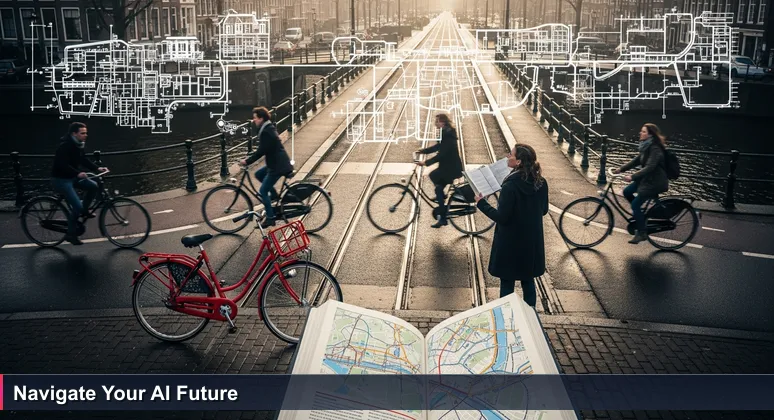
You're standing on an Amsterdam bridge, a bright red rental bike at your side, watching the city move in a complex, beautiful dance. Locals weave through trams, bikes, and canals with an intuitive ease that feels impossible to replicate. Starting an AI career here in 2026 can evoke the same disorientation mixed with immense potential. The guidebook knowledge of yesterday is useless against the dynamic reality of a market in motion.
The core challenge isn't a lack of information - it's an overload. The fear is that while you're studying static maps of algorithms and theory, the industry has already pivoted. According to analysis from Talent500 on 2026 AI job trends, the market has decisively shifted from pure research toward specialised engineering roles that operationalise AI at scale. Your static map is outdated before you even begin pedaling.
The transformative insight is this: mastery in the Dutch AI ecosystem comes not from memorising every street, but from learning the underlying rules of navigation. Success belongs to the "orchestrators" - professionals who can bridge technical feasibility with business needs, deploying systems within the unique hubs and flows of the Netherlands' tech landscape. This requires a new kind of confidence.
Your goal is to move from the overwhelmed tourist on the bridge to the cyclist weaving confidently through the junction. With 37% of Dutch employers expecting to expand their workforce - one of the most optimistic hiring outlooks globally, as noted by DutchReview - and senior roles commanding total compensation packages pushing €160,000, the landscape is rich with opportunity for those who learn to navigate it. This guide is your first turn of the pedals, transforming you from a spectator into a participant ready to join the flow.
In This Guide
- Embarking on Your Dutch AI Journey in 2026
- Market Trends and High-Demand AI Roles
- Essential Skills for AI Success in the Netherlands
- Education Routes to Launch Your AI Career
- AI Salaries and Benefits in the Dutch Market
- Navigating the Netherlands' Tech Hubs
- Strategies for Securing Your AI Job
- Building a Sustainable AI Career in the Netherlands
- Frequently Asked Questions
Many Dutch professionals balance learning with full-time jobs through part-time coding programs in the Netherlands that run evenings and weekends and emphasize practical projects.
Market Trends and High-Demand AI Roles
Shifting from Theory to Orchestration
The Dutch AI sector in 2026 is characterised by robust optimism, but the demand has taken a new, more mature shape. As noted in the Dutch Tech Hiring Outlook 2026, there's been a strategic pivot away from generalist research roles toward specialised engineering positions focused on production, scalability, and governance. The market is hungry for mid-to-senior talent who can lead AI integration, creating a clear path for those who can operate as technical-business translators. This aligns with predictions by executive consultant Lewis Gage, who identifies "AI, Cybersecurity, and Cloud Computing as the highest-demand sectors across the Netherlands."
Top Roles Defining the Market
The job market has crystallised around several high-value specialisations sought by major Dutch employers. Understanding these roles is key to targeting your skill development effectively.
- AI / Machine Learning Engineer: The bedrock role, now requiring expertise in Large Language Models (LLMs) and agentic frameworks. Companies like Booking.com and Adyen hire these engineers to power real-time systems processing billions of euros.
- MLOps Engineer: The critical bridge ensuring models are scalable and monitorable. Proficiency in tools like Docker and Kubernetes is mandatory for roles at scalable companies like Coolblue.
- Computer Vision / Robotics Engineer: The heart of the Dutch high-tech ecosystem. ASML and Philips have continuous demand for AI that drives precision manufacturing and medical imaging.
- AI Ethics & Compliance Officer: A role experiencing explosive growth due to the EU AI Act, crucial for financial institutions and public sector bodies to ensure algorithmic fairness and regulatory compliance.
Pathways to Meet Demand
To enter these competitive roles, candidates are leveraging diverse educational routes. For career changers or those needing targeted, practical skills, accelerated bootcamps have become a powerful and respected alternative. Providers like Nucamp offer programs such as the 25-week Solo AI Tech Entrepreneur Bootcamp (approx. €3,700), which focuses on building AI-powered products and LLM integration - skills perfectly aligned with Amsterdam's startup ecosystem. This model provides a financially accessible on-ramp, emphasizing the practical, portfolio-ready projects that demonstrate the "production mindset" employers now require.
Essential Skills for AI Success in the Netherlands
The Balanced Toolkit: Technical Depth Meets Strategic Communication
To navigate the 2026 job market, you need a balanced toolkit of deep technical skills and essential soft skills. The era of the isolated coder is over; today's AI professional in the Netherlands is an orchestrator and a communicator. As highlighted in industry trend analyses, top tech skills include AI model development (41% demand) and engineering (38%), but these must be coupled with the ability to translate complex outcomes for business stakeholders.
Core Technical Competencies
The technical baseline is more demanding than ever. Python remains the undisputed lingua franca, but there's growing appreciation for Go (Golang) in building the high-performance infrastructure underpinning AI microservices at Dutch fintechs. Mastery of frameworks like PyTorch is expected, but crucially, you must understand modern architectures like Retrieval-Augmented Generation (RAG) for accurate chatbots and Agentic AI frameworks for multi-step task systems. Building a model is only 20% of the job; proficiency with Docker, Kubernetes, and cloud platforms like Azure or AWS is mandatory for production.
The Non-Negotiable Soft Skills
Technical prowess alone won't secure a role in the collaborative Dutch work culture. AI Literacy & Communication - the ability to explain a model's impact to non-technical colleagues - is paramount. With the EU AI Act in full force, a working understanding of data privacy, bias mitigation, and ethical design principles is a major career differentiator. Tom Puthiyamadam of Grant Thornton warns of a widening "AI proof gap," noting that "guardrails come after an incident occurs - not before." Furthermore, professionalism, collaboration across disciplines, and adaptability are highly prized in the Netherland's flat, agile team structures.
Actionable Takeaway: Build a public portfolio featuring a complete project: data pipeline, trained model, API containerisation, and deployment instructions. This demonstrates the end-to-end "production mindset" employers crave. Accelerated pathways like the Back End, SQL and DevOps with Python bootcamp (approx. €1,980 for 16 weeks) are designed specifically to build this foundational and deployable skill set efficiently.
Education Routes to Launch Your AI Career
Traditional Universities: Deep Foundations and Research Excellence
For those pursuing deep theoretical foundations and research opportunities, Dutch universities are among Europe's best and serve as prime feeders into the local ecosystem. Graduates from these programmes are highly sought after, particularly for R&D roles at major tech firms and startups. The University of Amsterdam (UvA) is renowned for its MSc in Artificial Intelligence, consistently ranked among the world's top programs and ideal for Amsterdam's GenAI scene. Delft University of Technology (TU Delft) is a global leader in robotics and computer vision, with strong industry ties making it a pipeline for high-tech systems roles. Eindhoven University of Technology (TU/e) forms the academic heart of the Brainport Eindhoven ecosystem, making it the top choice for those targeting ASML or Philips. These institutions, among the best AI universities in the Netherlands, offer unparalleled depth for those with the time and resources for a full degree.
Accelerated & Alternative Pathways: Bootcamps and Microcredentials
For career changers or those needing targeted, practical skills on an accelerated timeline, bootcamps and microcredentials have become a powerful and respected alternative. This is where providers like Nucamp stand out, offering affordable, flexible, and community-driven programs designed to equip students with job-ready skills. Unlike some competitors with tuition exceeding €10,000, Nucamp's programs, such as the Back End, SQL and DevOps with Python bootcamp (approx. €1,980 for 16 weeks), provide a foundational and financially accessible on-ramp.
For those targeting the booming AI product space, the Solo AI Tech Entrepreneur Bootcamp (25 weeks, approx. €3,700) focuses on building AI-powered products, LLM integration, and SaaS monetization - skills perfectly suited for Amsterdam's startup ecosystem. The model is tailored for the Dutch context: flexible schedules allow for part-time study while working, and its community-based learning includes live workshops in cities like Amsterdam and Eindhoven. With a reported ~78% employment rate and career services tailored to European markets, it represents a viable strategic alternative to lengthier degrees.
Actionable Takeaway: Choose your path based on your background, budget, and timeline. A recent graduate may opt for a TU Delft MSc, while a marketing professional in Rotterdam seeking a career pivot might find a focused, affordable bootcamp the most efficient route to gaining credible, hireable skills and a demonstrable portfolio.
AI Salaries and Benefits in the Dutch Market
Competitive Compensation in a Global Hub
Compensation in the Dutch AI field remains highly competitive, reflecting the strategic value of this expertise and the country's position as a global tech hub. Salaries in Amsterdam typically command a 25-30% premium over the national average due to the high concentration of scale-ups and European headquarters. The following table, aggregating data from specialist recruiters and market reports, outlines the expected ranges for 2026. It is crucial to evaluate the total compensation package, which includes the mandatory 8% holiday allowance and often a performance-related bonus.
| Level | Base Salary Range (EUR) | Total Compensation (Inc. 8% Holiday Allowance & Bonus) |
|---|---|---|
| Junior (0-2 years experience) | €45,000 - €65,000 | €50,000 - €75,000 |
| Mid-Level (2-5 years experience) | €65,000 - €85,000 | €75,000 - €110,000 |
| Senior (5+ years experience) | €85,000 - €125,000 | €100,000 - €160,000+ |
The Complete Benefits Package
Beyond gross salary, the Dutch employment model includes a robust suite of secondary benefits that significantly enhance quality of life and net income. Standard offerings include at least 25 vacation days, the legally mandated 8% annual holiday allowance (often paid in May), a substantial pension contribution, and frequently a NS Business Card for free nationwide public transport.
For internationally recruited talent eligible for the 30% Ruling, the financial advantage is substantial. This tax facility allows eligible highly skilled migrants to receive 30% of their gross salary tax-free for up to five years, creating a notable increase in net monthly income. When combined with the total compensation from a senior role at a leading fintech or a high-tech giant like ASML, this can make the Netherlands one of the most financially attractive destinations in Europe for AI professionals.
Navigating the Netherlands' Tech Hubs
A Network of Specialised Ecosystems
The Netherlands isn't a single, homogenous market but a network of specialised hubs, each with its own industrial focus and career rhythm. Your strategic location within this network significantly influences the projects you'll work on, the companies you'll engage with, and the professional community you'll join. Choosing your hub is the first major navigational decision in your Dutch AI career.
Amsterdam: The Capital of Scale and Software
Amsterdam is the undisputed capital for Generative AI, Fintech, and Traveltech. Home to European HQs of Google, Microsoft, Amazon, and Uber, as well as homegrown champions like Booking.com and Adyen, the scene is fast-paced, international, and software-centric. Roles here typically involve building large-scale recommendation engines, fraud detection systems, and customer-facing AI applications. The city's dynamism is a powerful draw, reflected in the 25-30% salary premium common for roles in the region.
Eindhoven (Brainport): Where AI Meets the Physical World
In stark contrast, the Brainport Eindhoven region is a world leader in AI for hardware and high-tech systems. This is the domain of ASML, Philips, NXP, and VDL. Careers here often involve computer vision, robotics, and AI deeply embedded in physical systems - from lithography machines to medical scanners. It’s the heart of Dutch "deep tech," where collaboration with mechanical and electrical engineers is standard. The ecosystem is tightly knit around the Eindhoven University of Technology (TU/e) and its spin-offs, fostering a unique engineering culture.
Delft, Utrecht, and Emerging Frontiers
Other regions offer compelling niches. Delft & Rotterdam form a center for robotics, quantum computing, and industrial AI, with TU Delft spin-offs and port automation projects driving innovation. Utrecht has emerged as a strong hub for AI in healthcare, public services, and life sciences, leveraging its central location and university hospital. Further north, Groningen is an emerging hub focusing on AI for energy systems, capitalising on its proximity to North Sea operations.
The country's central location in Europe, with Schiphol Airport as a major international hub, makes any of these bases ideal for roles with regional or global remits. Compared to other European tech centres, the Netherlands offers a compelling balance: a more robust ecosystem than Berlin for hardware AI, a better work-life balance than London, and an unparalleled English-friendly business environment that smoothes the transition for international talent.
Strategies for Securing Your AI Job
Crafting Your Dutch Professional Profile
With skills honed and a target region in mind, a strategic, locally-aware job search becomes critical. Begin by crafting a Dutch-style CV: be direct, concise, and fiercely results-oriented. List concrete achievements with metrics (e.g., "Improved model accuracy by 15%, reducing false fraud flags by €2M annually"). While the tech workplace is English-first, indicating a willingness to learn Dutch can be a subtle advantage for long-term team cohesion and is sometimes preferred for roles involving broader stakeholder communication.
Leveraging the Right Platforms and Networks
Move beyond generic job boards. Use AngelList (Wellfound) for startup roles and Glassdoor for company research and salary insights. Engage with targeted recruitment agencies like Celoria or Source Group International that specialise in the Dutch tech market and understand the nuances of AI roles. The Dutch market is well-connected, so networking with intent is powerful. Attend meetups from AI Wednesday Amsterdam, RoboValley events in Delft, or Brainport Industries gatherings in Eindhoven. As shared in a graduate's experience, "Attending career fairs is cited as a high-impact strategy for those without prior industry experience," with a typical search for EU graduates taking around two months.
Mastering the Interview Process
Prepare for a multi-stage interview process typical of Dutch tech companies: an initial screening, a technical interview (often a take-home assignment or live coding based on a real-world problem), and a final "team fit" round. Be prepared to discuss not just how you built something, but why you made specific architectural, tooling, or ethical choices. This demonstrates the strategic "orchestrator" mindset. For non-EU citizens, secure a job offer first; the employer will typically sponsor your Highly Skilled Migrant (kennismigrant or KM) Visa in a streamlined process, as the salary thresholds for AI roles easily meet the requirement. Combine this with the 30% Ruling application to complete a powerful start.
Building a Sustainable AI Career in the Netherlands
From Specialist to Strategic Leader
Landing your first role is just the beginning of the journey. Long-term success in the Dutch AI landscape requires continuous evolution and strategic career management. As Jos Slootstra, Managing Director of Experis Netherlands, advises: "Success depends on the ability to attract new talent, develop existing talent, and make smart use of AI applications. That’s how you make a difference." The career ladder increasingly leads from hands-on engineering to roles like AI Product Manager, Lead Architect, or Head of AI, where you define strategy and oversee implementation across business units.
The Imperative of Lifelong Learning
In a field moving as quickly as AI, standing still means falling behind. Dedicate time annually to learning new frameworks, architectural patterns like agentic AI, or regulatory updates such as amendments to the EU AI Act. The Dutch AI Coalition (NL AIC) and applied research organisations like TNO provide valuable industry-aligned resources for upskilling. This commitment to growth ensures you remain an asset, moving beyond being just a practitioner of technology to becoming a shaper of its business application.
Contributing to and Shaping the Ecosystem
True integration into the Dutch tech community means giving back. Consider mentoring at a coding bootcamp, speaking at meetups like AI Wednesday, or contributing to open-source projects. This builds your professional reputation, deepens your network, and solidifies your roots within the collaborative local culture. For those with an entrepreneurial drive, the Netherlands is supportive of AI startups. Successful founders often find traction by "verticalizing" - applying deep AI expertise to a specific industry niche, from healthcare diagnostics to sustainable logistics.
The journey transforms you from the newcomer cautiously navigating the bike lanes to the confident local who knows the shortcuts, understands the flow of different hubs, and contributes to the rhythm of the ecosystem itself. With its unique combination of cutting-edge industry, world-class research, favourable policies like the 30% Ruling, and high quality of life, the Netherlands offers not just a job, but a compelling stage to build a meaningful and future-proof career at the forefront of artificial intelligence.
Frequently Asked Questions
Why should I consider starting an AI career in the Netherlands in 2026?
The Netherlands offers a dynamic AI job market with 37% of employers planning to expand their workforce in 2026, making it one of Europe's most optimistic hiring landscapes. Central location in Europe, strong tech hubs in Amsterdam and Eindhoven, and world-class research institutions like TU Delft provide excellent opportunities for growth.
What are the most in-demand AI roles in the Netherlands right now?
High-demand roles include AI/ML Engineers skilled in LLMs and RAG architectures, MLOps Engineers for production scalability, and Computer Vision Engineers for companies like ASML. This reflects the market's pivot towards specialised, production-ready roles in sectors from fintech to high-tech manufacturing.
How much can I realistically earn in an AI role in the Netherlands?
Base salaries range from €45,000 for juniors to over €125,000 for seniors, with Amsterdam commanding a 25-30% premium. Non-EU professionals may also benefit from the 30% tax ruling, significantly boosting net income for eligible skilled migrants.
Do I need a university degree, or can a bootcamp like Nucamp help me start an AI career?
Both pathways are viable; universities like TU Delft offer deep theoretical foundations, but bootcamps like Nucamp provide affordable, practical training with programs around €1,980-€3,700 and a reported 78% employment rate, ideal for career changers seeking job-ready skills.
What are the key differences between AI job markets in cities like Amsterdam and Eindhoven?
Amsterdam is the hub for generative AI and fintech, with companies like Booking.com, while Eindhoven's Brainport region focuses on AI for hardware with giants like ASML and Philips. Your choice should align with your interest in software-centric or hardware-integrated AI roles.
For a practical guide to landing AI roles in Amsterdam and Eindhoven, this article offers key strategies and project ideas.
For those interested in top 10 companies hiring AI engineers in the Netherlands in 2026, this list provides detailed insights.
Explore the top free tech training programs in Netherlands libraries for 2026.
Navigate your career with insights on AI salary trends in the Netherlands in 2026 and total compensation strategies.
Find out about the 2026 tech career landscape in the Netherlands, from specializations to costs.

Irene Holden
Operations Manager
Former Microsoft Education and Learning Futures Group team member, Irene now oversees instructors at Nucamp while writing about everything tech - from careers to coding bootcamps.