









How AI Is Helping Government Companies in Nepal Cut Costs and Improve Efficiency
Last Updated: September 13th 2025
Too Long; Didn't Read:
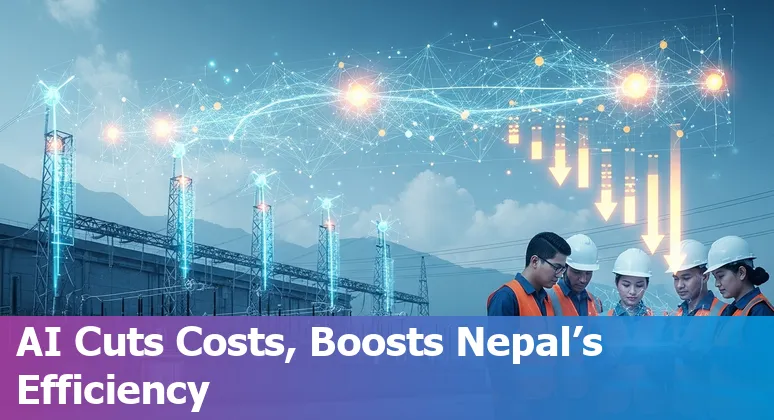
Nepal's August 2025 National AI Policy 2082 empowers government companies to cut costs and boost efficiency with RPA, chatbots, predictive analytics and smart grids - chatbots can cut service costs up to 30%, AI may reduce NPLs ~30%, digital banking ≈66% adoption, Dhapsung microgrid 15.75 kW/42 households; 15‑week upskilling.
Nepal's August 2025 cabinet approval of the National AI Policy 2082 marks a turning point for government companies looking to cut costs and boost service efficiency: the policy emphasizes human capital development, institutional governance, data protections and sectoral AI integration - planning AI Centers of Excellence across provinces and specific uses from crop forecasting and irrigation management to smart grids and traffic flow optimization.
With mandates for ethical, transparent deployment and new regulatory sandboxes, public enterprises can pilot AI to streamline finance, operations and citizen services while guarding privacy; the policy document itself lays out these priorities in detail (see the National AI Policy 2082).
For teams ready to build practical skills fast, Nucamp's AI Essentials for Work bootcamp offers a 15‑week pathway to learn AI tools and prompt techniques to manage and validate these systems on the job.
| Bootcamp | Length | Cost (early bird) | Registration |
|---|---|---|---|
| AI Essentials for Work | 15 Weeks | $3,582 |
AI Essentials for Work syllabus Register for AI Essentials for Work |
Table of Contents
- What AI can do for government companies in Nepal - core use cases
- Finance in Nepal: cost savings and efficiency gains from AI
- Energy, utilities and transportation in Nepal: optimizing infrastructure and costs
- Health, agriculture and public services in Nepal: extending reach and lowering expenses
- Policy, institutions and human capital in Nepal: enabling cost-efficient AI adoption
- Barriers, risks and safeguards for AI deployments in Nepal
- Practical roadmap and pilot checklist for government companies in Nepal
- Measuring savings and ROI in Nepal: evidence and realistic expectations
- Conclusion and next steps for government companies in Nepal
- Frequently Asked Questions
Learn why the Ministry of Communications and Information Technology (MoCIT) is leading implementation and coordination for AI across ministries.
What AI can do for government companies in Nepal - core use cases
(Up)Nepal's government companies can translate the National AI Policy into day‑to‑day savings by focusing on high‑impact, proven use cases: robotic process automation and intelligent workflows to cut hours spent on applications, payroll and records; AI‑powered chatbots and virtual assistants to deliver 24/7 citizen support and handle routine inquiries in Nepali and regional languages; AI case management and document classification to speed decisions, improve compliance and reduce manual errors; and predictive analytics for better maintenance, grid and transport planning so scarce capital is used where it matters most.
Practical guides and global examples show how these approaches lower operational costs while improving access - see a roundup of practical AI in government use cases for ideas and pilots (Zendesk roundup of AI in government use cases) and the Public Sector AI Playbook for step‑by‑step adoption paths (Public Sector AI Playbook for government AI adoption).
All of this depends on a logical, AI‑ready data foundation that enables safe, scalable agents and reduces costly integration cycles (GovInsider guide to laying an AI-ready data foundation for the public sector); imagine a virtual assistant answering permit queries at 2 a.m., freeing staff to resolve the hardest cases by day.
“The robust and flexible architecture supports seamless scalability, so that AI applications can evolve alongside the changing demands of public service.”
Finance in Nepal: cost savings and efficiency gains from AI
(Up)AI is already starting to shave real costs from Nepal's finance sector by speeding decisions, stopping fraud and automating routine work: real‑time transaction monitoring and machine‑learning fraud models can flag suspicious patterns before losses mount, while AI chatbots and virtual assistants deliver 24/7 support and have been shown to cut service costs (in other markets) by up to 30%, freeing staff for higher‑value work; local studies add that smarter credit scoring, predictive monitoring and automation can reduce non‑performing loans and recovery costs - some analyses even suggest AI‑driven NPL systems can cut bad‑loan accumulation by roughly 30% - and growing digital banking adoption (≈66% of adults) makes these gains reachable across Nepal's regions.
For practical reads, see the NEBEU analysis on AI/ML in Nepal's financial sector, F1Soft's overview of AI in banking, and The Himalayan Times piece on AI for NPL management as starting points for pilots that catch fraud at 2 a.m.
and keep the ledger healthier by morning.
| Type of Institution | % Using AI/ML | Key Applications |
|---|---|---|
| Commercial Banks | 45% | Credit scoring, fraud detection, chatbots |
| Microfinance Institutions | 20% | Loan assessment, borrower prediction |
| Insurance Companies | 35% | Claims processing, risk assessment |
“AI can help us analyze customer data to create more targeted loan products, which could lead to better customer satisfaction and more efficient credit risk management.”
Energy, utilities and transportation in Nepal: optimizing infrastructure and costs
(Up)Energy, utilities and transportation upgrades in Nepal can turn expensive, fragile infrastructure into smarter, lower‑cost services by combining on‑the‑ground projects like the 15.75 kW Dhapsung solar microgrid with data, remote monitoring and smart‑grid thinking: the Dhapsung case shows how a ground‑mounted system now powers 42 households, the local school, a grain mill and carpentry shops while using 42 pre‑paid Spark Meters and a wifi tower for remote monitoring - households pay just NPR 100 (~$1) per month for a basic 200 W load, a vivid reminder that tiny monthly fees can sustain long‑term maintenance.
Research on smart grid technology for Nepal highlights the sectoral opportunity to integrate renewables, electrify transport and strengthen system resilience, and that same monitoring data from microgrids creates the inputs AI‑driven analytics need for demand forecasting, predictive maintenance and smarter tariff design; pilots that marry the Dhapsung monitoring approach with smart‑grid analytics could shrink outages and optimize costly battery replacements.
For teams building these capabilities, short upskilling pathways and practical prompt/use‑case guides help public enterprises move from promising projects to scalable, cost‑saving deployments (Dhapsung microgrid case study, smart grid technology in Nepal research, AI workforce bootcamps and upskilling guide).
Metric: System capacity - 15.75 kW
Metric: Households served - 42
Metric: Payment model - Pre‑paid Spark Meters - NPR 100/month basic plan
Metric: Monitoring - Wifi tower + remote meter/inverter software
Metric: End uses - Households, school, grain‑mill, carpentry
Metric: Total project cost - $140,000
Health, agriculture and public services in Nepal: extending reach and lowering expenses
(Up)AI plus telemedicine is already proving to be a cost‑cutting lifeline in Nepal: projects from NAAMII that use smartphone photos to screen for cervical cancer and even turn phones into microscopes for detecting diarrhoea parasites bring specialist-level diagnostics to village clinics, while CHEERS' AI models for diabetic retinopathy and glaucoma - trained on thousands of images - have delivered diagnosis accuracy above 90%, saving sight for patients who otherwise would make an expensive trip to the city; one mobile clinic image alone led to a referral that preserved a 52‑year‑old woman's vision.
Academic pilots show similar promise for lung‑disease screening - Random Forest models reached 95.4% accuracy in a rural telemedicine study - so community health workers can triage and treat more precisely and sooner.
These tools reduce travel costs, cut late‑stage treatment bills and build local capacity, but scale depends on better data, ethical safeguards and targeted upskilling for public‑sector teams (see practical telehealth research and the MDPI telemedicine paper and short AI workforce upskilling pathways for government staff).
The bottom line: a smartphone, trained model and a reliable teleconsultation link can turn a remote health post into a high‑value diagnostic hub, trimming system costs and bringing care where it's most needed.
| Algorithm | Reported Accuracy |
|---|---|
| Random Forest | 95.4% |
| Naive Bayes | 76.2% |
“Creating and using AI models may not sound like top priority for a country where even the most basic healthcare is still inaccessible,” admits Bishesh Khanal.
Policy, institutions and human capital in Nepal: enabling cost-efficient AI adoption
(Up)Nepal's National AI Policy 2082 sets up the building blocks government companies need to cut costs - creating an AI Supervision Council, a National AI Center and an AI Regulatory Authority to steer governance and ethics - but the policy's promise will hinge on practical follow‑through: meaningful budgets for high‑performance computing, clearer enforcement rules and reliable connectivity.
Coverage from the Annapurna Express flags gaps in implementation and the need for accountability, while reporting on the policy's infrastructure ambitions highlights plans to expand 5G, fiber and world‑class data centers to support public‑sector AI work (see the policy summary and Techpana's note on connectivity).
Closing the human‑capital gap means pairing long‑term curriculum changes with immediate, short courses and bootcamps so current staff can safely supervise models and validate outcomes; practical upskilling pathways are already being proposed as a stopgap.
For government companies, the near‑term play is to align pilots with the new institutions, insist on clear funding lines and data governance, and treat training as core infrastructure - otherwise the architecture is in place but the engines to run it may not be.
“AI education will be incorporated into the national curriculum at various academic levels to cultivate a sustainable AI workforce.”
Barriers, risks and safeguards for AI deployments in Nepal
(Up)Barriers, risks and safeguards for AI deployments in Nepal are practical - and fixable - but they are often underestimated: a recent TIE framework study on AI adoption highlights four core frictions - Infrastructure Quality, User Proficiency, Policy Alignment and Output Efficiency - that explain why pilots stall without targeted investments (TIE framework study on AI adoption in Nepal - infrastructure, proficiency, policy, and output efficiency analysis); limited connectivity and patchy digital infrastructure raise the real risk that models trained in the capital won't work in mountain districts, while gaps in data protection and ethical rules create privacy and accountability blind spots (Challenges to AI adoption in Nepal: data protection and ethics discussion).
Global evidence of an “AI scramble” - ambition far outpacing execution - matters here: surveys show many organisations have updated strategies but only a fraction have deployed AI at scale and just 12% trust their infrastructure to support autonomous decision‑making, underscoring the need for stronger data governance, regulatory clarity and targeted upskilling programs (IDC/Qlik analysis of the AI adoption gap: survey on AI deployment and infrastructure trust).
Practical safeguards for public enterprises therefore center on measurable steps - connectivity and compute investments, clear privacy rules, verification regimes for models, and short, job‑focused bootcamps to build verifier capacity - so pilots reduce cost without trading away trust.
“Generative AI has sparked widespread excitement, but our findings reveal a significant readiness gap. Businesses must address core challenges like data accuracy and governance to ensure AI workflows deliver sustainable, scalable value.”
Practical roadmap and pilot checklist for government companies in Nepal
(Up)A practical roadmap for government companies in Nepal turns high‑level policy into small, measurable pilots: start every project with a clear risk‑management plan aligned to the National AI Policy 2082 - which explicitly calls out threats such as deepfakes - and document how those risks will be detected and mitigated (Nepal National AI Policy 2082: risk-management plan and deepfake safeguards); limit scope to a single, high‑value use case, onboard local SMEs through tools like the Subcontracting & Teaming Opportunity Identifier - procurement accelerator to accelerate procurement, and require that every pilot include a short upskilling block (prompt engineering and model‑validation modules) so staff can verify outputs before scale‑up (Prompt engineering basics and model-validation short bootcamps for government staff).
Finally, assess digitization readiness up front - lessons from recent reviews warn that broad digitization without preparatory fixes can stall adoption - so pilots prove cost savings in a controlled setting before wider rollout.
Measuring savings and ROI in Nepal: evidence and realistic expectations
(Up)Measuring savings and ROI for AI in Nepal's public enterprises means combining practical KPIs with sober expectations: start with a clear ROI formula (ROI = (Net Benefits / Total Costs) x 100) and track both quantitative gains - costs avoided through automation, faster case resolution and reduced travel - and qualitative benefits like improved citizen trust, as recommended in RSM's cost‑optimization guide (RSM cost-optimization guide: Maximizing efficiency and ROI in AI initiatives).
Expect pilots to prove value before scaling - regional evidence shows most government AI spending remains in POCs - so ringfenced projects with tight FinOps guardrails are essential.
Apptio's analysis warns that AI is resource‑intensive (data cleansing, compute, energy and skilled labor) and that organizations should adopt TBM/ITFM practices to avoid runaway bills and to attribute savings accurately (Apptio analysis: The complex costs of AI investments, funding, and ROI tracking).
Be realistic about timelines - while some teams have reported payback in months for targeted support bots, many ROI drivers take longer and hinge on reliable data, governance and steady operations - one striking reminder: global players' infrastructure spend can reach hundreds of millions per day, so careful scope control prevents a tiny pilot from ballooning into an unsustainable spend.
Track unit metrics (cost per transaction, time saved per case, reduction in referrals) and report them alongside total landed costs to give Nepalese decision‑makers the transparency needed to reinvest verified savings into scale‑worthy projects.
Conclusion and next steps for government companies in Nepal
(Up)Nepal's National AI Policy sets a strong roadmap, but turning paper into savings means three practical next steps for government companies: first, pair targeted pilots with ring‑fenced funding and clear enforcement so projects don't stall for lack of HPC, connectivity or procurement clarity (the Annapurna Express analysis warns these are real implementation gaps - see the policy review); second, insist on narrow, measurable pilots with built‑in risk management, FinOps controls and ROI metrics so successes can be scaled without runaway costs; and third, close the skills gap quickly with short, job‑focused training - not just long university reforms - so staff can validate models, supervise deployments and protect citizens (short upskilling options like the AI Essentials for Work bootcamp provide a 15‑week pathway to prompt engineering and model verification).
Align pilots with international governance norms, use PPPs to mobilize infrastructure finance, and treat training plus data governance as core infrastructure: do that and the policy's promise can become measurable cost reductions rather than an unfulfilled aspiration.
“AI education will be incorporated into the national curriculum at various academic levels to cultivate a sustainable AI workforce.”
Frequently Asked Questions
(Up)What does Nepal's National AI Policy 2082 require government companies to do?
The National AI Policy 2082 directs government companies to build human capital, strengthen institutional governance, protect data, and integrate AI sectorally. It plans AI Centers of Excellence across provinces, creates regulatory sandboxes for pilots, and sets up new institutions (an AI Supervision Council, a National AI Center and an AI Regulatory Authority). The policy also mandates ethical and transparent deployment, data governance, and incorporation of AI education at multiple academic levels.
Which AI use cases deliver the biggest cost and efficiency gains for public enterprises in Nepal?
High‑impact, proven use cases include robotic process automation and intelligent workflows to cut hours on applications, payroll and records; AI chatbots/virtual assistants for 24/7 citizen support (chatbots have reduced service costs by up to 30% in other markets); AI document classification and case‑management to speed decisions and reduce errors; and predictive analytics for maintenance, grid and transport planning. Sector examples and metrics in Nepal: commercial banks (~45% using AI/ML), microfinance (~20%), insurance (~35%); digital banking adoption is ≈66% of adults. Energy microgrid example: 15.75 kW capacity serving 42 households with a pre‑paid NPR 100/month basic plan (total project cost ≈ $140,000). Health telemedicine pilots report Random Forest accuracy ~95.4% and Naive Bayes ~76.2% for screening tasks.
How should government companies pilot AI and measure savings or ROI?
Start with narrow, ring‑fenced pilots that include a documented risk‑management plan aligned to National AI Policy 2082, clear FinOps controls, and a short upskilling block for staff (prompt engineering and model validation). Onboard local SMEs and assess digitization readiness before scaling. Use a clear ROI formula (ROI = (Net Benefits / Total Costs) x 100) and track unit KPIs such as cost per transaction, time saved per case, reduction in referrals, and total landed costs. Apply TBM/ITFM/FinOps practices to avoid runaway infrastructure spend; expect some pilots to show payback in months, while many ROI drivers take longer and depend on reliable data and governance.
What are the main barriers and required safeguards for safe, cost‑effective AI deployment in Nepal?
Core frictions identified by local studies include Infrastructure Quality, User Proficiency, Policy Alignment and Output Efficiency. Practical barriers are limited connectivity, uneven compute capacity, gaps in data protection and weak verification regimes; surveys show only ~12% of organizations trust their infrastructure for autonomous decision‑making. Safeguards include investing in connectivity and HPC, strong data governance and privacy rules, verification and model‑validation regimes, use of regulatory sandboxes, and short, job‑focused upskilling programs so staff can supervise and validate models before scale‑up.
What upskilling options and timelines are available for government staff to manage AI systems?
Short, practical upskilling is recommended as a near‑term priority. Example: a 15‑week 'AI Essentials for Work' pathway focused on AI tools, prompt techniques and model verification; early‑bird cost listed at $3,582. These short bootcamps are intended as a stopgap alongside longer curriculum reforms, enabling current staff to validate outputs, supervise deployments and reduce operational risks while national education changes take effect.
Learn how the Decision-Maker & Procurement Officer Identifier maps contacts and procurement priorities to boost targeted outreach.
Discover short training paths that let call-centre agents specialise in Conversational AI QA/testing to keep their customer-service expertise relevant.

Ludo Fourrage
Founder and CEO
Ludovic (Ludo) Fourrage is an education industry veteran, named in 2017 as a Learning Technology Leader by Training Magazine. Before founding Nucamp, Ludo spent 18 years at Microsoft where he led innovation in the learning space. As the Senior Director of Digital Learning at this same company, Ludo led the development of the first of its kind 'YouTube for the Enterprise'. More recently, he delivered one of the most successful Corporate MOOC programs in partnership with top business schools and consulting organizations, i.e. INSEAD, Wharton, London Business School, and Accenture, to name a few. With the belief that the right education for everyone is an achievable goal, Ludo leads the nucamp team in the quest to make quality education accessible