









Top 10 AI Startups to Watch in Lebanon in 2026
By Irene Holden
Last Updated: April 17th 2026
Too Long; Didn't Read
Lebanon's top AI startups to watch in 2026 are led by LUXEED Robotics and NAR, which stand out for their innovative solutions in sustainable agriculture and industrial automation, leveraging talent from AUB and LAU. With LUXEED securing $15 billion LBP and NAR $20 billion LBP in funding, these startups showcase Lebanon's resilient tech ecosystem, expanding into global markets like Europe and the GCC while capitalizing on the country's multilingual workforce and strategic location.
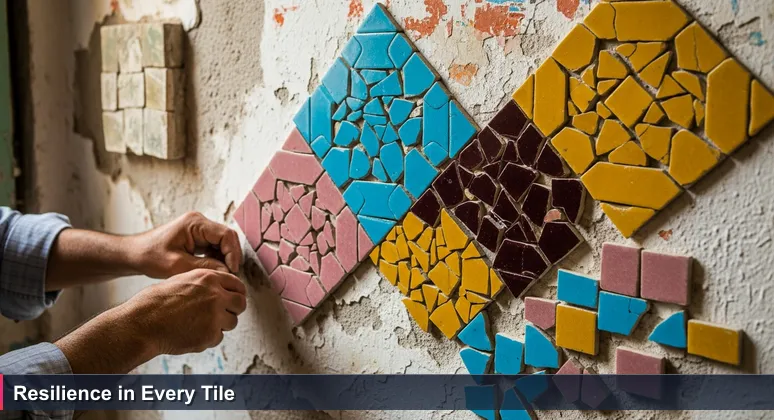
In a workshop off Armenia Street, a mosaicist doesn't discard the broken tiles. He sorts them by colour and shape, seeing in each fragment a necessary piece of a new, more resilient pattern. This act of creation from constraint is a fitting metaphor for Lebanon's AI startup ecosystem. Ranked among the top five Arab countries for individual AI usage, Lebanon's innovation is not born from abundant resources but from a unique ability to assemble global-ready solutions from local talent, diaspora networks, and formidable challenges.
The most compelling innovation is emerging from ecosystems that have mastered this art of the mosaic. Experts argue that Lebanon’s multilingual talent and cultural interpretation are its distinct strengths, positioning it as a hub for applied creative AI in the MENA region. Founders who have gained traction here bring a unique value proposition, as an analyst from Seedstars notes: they have already proven they can build and operate under pressure.
This generation of startups, emerging from labs in AUB, Berytech, and Beirut Digital District, represents a "battle-tested" cohort. Their experience navigating local complexities has become a distinct competitive edge as they secure significant funding - some reaching Series A stages with ~$20 billion LBP - and eye regional expansion. They are case studies in turning limits into a structural advantage, leveraging the country's strategic location and strong university pipelines to build intelligent solutions from the ground up.
Table of Contents
- The Mosaic of Lebanese AI Innovation
- LUXEED Robotics
- NAR
- World Monitor
- eFlow.ai
- NuWatt
- Mindmosh AI
- Silni
- Katana
- Zaker
- AirGuard One
- A Resilient and Creative Exporter of AI
- Frequently Asked Questions
Learn about AI training pathways in Beirut in this complete guide for 2026.
LUXEED Robotics
Founded by AUB alumnus Roy Saab, LUXEED Robotics is tackling sustainable agriculture with AI-powered robotic systems. The company uses proprietary computer vision for precision weeding, eliminating the need for harmful chemicals. This places it firmly in the growing field of vertical AI solutions emerging from Lebanon's university ecosystems.
The startup's team is deeply integrated with the American University of Beirut's innovation challenges, having secured an estimated $15 billion LBP (~$1.5 million USD) in grants and seed funding from sources like the Kafalat iSME Programme. This backing underscores the critical role of local academic and support networks in launching deep-tech ventures.
LUXEED’s key differentiation lies in a vision system sophisticated enough to distinguish weeds from crops in real-time, a task generic agricultural drones cannot perform. Having moved beyond pilots with Lebanese vineyards, the startup is now expanding into European organic farms. Its proven, hardware-agnostic AI models present a clear path to scaling in regulated markets desperate for green solutions, positioning it as a potential acquisition target for major international agri-tech firms.
NAR
Specializing in industrial automation, NAR uses drone-based computer vision for critical infrastructure inspections, particularly in the oil and gas sector. Co-founded by LAU alumnus Nicolas Zaatar, a Forbes 30 Under 30 lister, the company represents the high-caliber technical talent emerging from Lebanese universities.
NAR has reached Series A stage with an estimated $20 billion LBP (~$2 million USD) in funding from investors like Berytech Fund II and Cedar Mundi Ventures. This level of investment highlights the growing confidence in Lebanese deep-tech ventures capable of serving demanding industrial markets.
The company’s software automates anomaly detection on pipelines and other assets, providing a safer and more accurate alternative to manual inspections. With significant traction and a major expansion underway in Saudi Arabia, NAR has the potential to become Lebanon's next anchor tech exporter in industrial AI. Its deep integration into GCC projects positions it for an eventual IPO on the Saudi exchange (Tadawul) or strategic acquisition by a global industrial conglomerate.
World Monitor
In an era of information overload, World Monitor offers clarity through AI. This platform, led by LAU alumnus and Anghami co-founder Elie Habib, maps global events in real-time by processing data from over 450 verified sources. As highlighted in a feature on his work, its AI strips editorial bias to provide factual timelines.
Operating as a standalone innovation arm with backing from Anghami/OSN+ infrastructure, World Monitor leverages Lebanon's multilingual and media-savvy talent to curate a neutral, data-driven news source. It serves an impressive 4 million visitors across 174 countries, demonstrating the global reach achievable from a Beirut-based operation.
The platform’s open-source, AI-driven methodology for event verification could become an industry standard. This makes it a prime candidate for a strategic partnership or acquisition by a global media giant or fact-checking consortium, positioning it as a high-value, non-partisan asset in the news technology space.
eFlow.ai
eFlow.ai is revolutionizing education accessibility in the MENA region through conversational AI. Its "learning-by-chat" platform delivers micro-courses via everyday social apps like WhatsApp and Telegram, meeting users where they already are. Founded by Bassel Jalaleddine, an LAU graduate recognized on the Forbes 30 Under 30 list for Social Impact, the startup exemplifies the social entrepreneurship driving Lebanon's tech scene.
The platform has raised around $7.5 billion LBP (~$750,000 USD) from Flat6Labs Beirut and regional angels, a testament to investor belief in its model. Its AI automates personalized tutoring conversations in multiple languages, a key advantage in the linguistically diverse Arab world, and has already surpassed 20,000 learners.
eFlow.ai's light-touch, app-based model and proven traction make its expansion into corporate training and upskilling a logical next step. It is well-positioned to form B2B partnerships with large employers across the GCC and is seen as an attractive acquisition target for a major regional EdTech platform or a telecom operator seeking to add value-added services, as tracked by analysts monitoring the Lebanese startup landscape.
NuWatt
Emerging directly from Lebanon's acute energy crisis, NuWatt offers an innovative, hardware-free solution. This AI-driven solar monitoring platform, born in Berytech’s CleanTech programs, optimizes energy production for commercial users by predicting performance based on weather and historical data, eliminating costly sensor installations.
With approximately $5 billion LBP (~$500,000 USD) in Seed funding from Berytech and LEAP initiative grants, NuWatt has demonstrated rapid, asset-light scaling. The startup now manages over 50 sites across Lebanon and Jordan, proving its model in varied regional climates.
NuWatt's pure software-as-a-service (SaaS) model is perfectly engineered for the massive solar rollouts across the sun-rich MENA region. Its future hinges on strategic partnerships with international solar developers and utilities, positioning it as the essential AI layer for solar farm management. This trajectory makes it a prime candidate for a lucrative acquisition by a major energy technology firm seeking a foothold in the region's renewable transition.
Mindmosh AI
While many AI content tools struggle with Arabic, Mindmosh AI has made it a core strength. This platform specialises in generating high-fidelity, Arabic-first content - from blog posts and voiceovers to video scripts - with a sophisticated focus on local dialects like Levantine and Khaleeji, not just Modern Standard Arabic.
Founded by Beirut-based developers, this pre-Seed stage startup is seeking around $1.5 billion LBP (~$150,000 USD) to scale its operations. Its nuanced understanding of regional language and culture, as noted on industry lists of promising Arabic AI startups, makes it a favorite tool for marketing agencies targeting the region's diverse consumer base.
This deep linguistic specialisation is Mindmosh AI's primary asset. It positions the company as a prime candidate for integration into or acquisition by a global social media or advertising platform - like Meta or Google - that seeks to deeply penetrate and monetise Arabic-language content creation at scale, a market largely underserved by generic AI tools.
Silni
Hailing from Tripoli, Silni proves that Lebanon's AI innovation extends beyond the capital's core. This B2B platform uses agentic AI for sales automation and lead generation, specifically engineered for the relationship-driven nuances of MENA business culture, a specialization noted by regional tech analysts.
Currently in a late-Seed stage, Silni has secured an estimated $3 billion LBP (~$300,000 USD) in funding. The platform automates the critical "first touch" in sales outreach, offering a scalable solution for businesses across the region.
Silni's growth trajectory tests the potential of Lebanon's broader national tech ecosystem. Its success from a city like Tripoli could catalyze more investment in startups outside Beirut. The company represents an attractive acquisition target for any large CRM platform, such as Salesforce or Zoho, seeking to enhance its AI sales assistant capabilities with authentic regional business intelligence and cultural fluency.
Katana
Originally founded as LightSense, Katana provides rugged, edge-computing solutions built for challenging environments where standard internet connectivity fails. Its cloud-based platform uses computer vision for asset monitoring and specialised applications like poultry farming, demonstrating how Lebanese startups are innovating for real-world infrastructure constraints.
Backed early by Flat6Labs Beirut with a Seed round of approximately $2.5 billion LBP (~$250,000 USD), Katana's integrated hardware/software stack is a testament to the deep-tech engineering talent emerging from Lebanese labs. The company's focus on harsh, intermittent environments is a direct response to local conditions, turning a common challenge into a marketable specialty.
This focus on reliability in adversity opens significant doors in sectors like mining, remote agriculture, and offshore operations across the Middle East and Africa. Katana could evolve into a key partner or acquisition target for industrial IoT companies aiming to strengthen their edge AI offerings in emerging markets where robust, offline-capable technology is not just preferred but essential.
Zaker
Born within the Zein AUB Innovation Park, Zaker is an AI-powered educational assistant designed to help students summarize complex textbooks and create tailored study guides. Its deep integration with the Lebanese national curriculum gives it a strong, validated foothold in the local market, addressing a specific pain point for students and educators alike.
After a successful Demo Day showcasing its utility, Zaker strategically incorporated in Qatar and secured Seed funding estimated at $2.6 billion LBP (~$267,000 USD). This move from a Beirut innovation park to a GCC commercial base illustrates a common and effective growth pathway for Lebanese startups seeking regional scale and investment.
Zaker's model of providing hyper-localised curriculum support is highly replicable. Its future growth will likely involve expansion into other national education systems in the GCC and North Africa, either through direct market entry or by licensing its AI platform to regional educational publishers. As one of the promising ventures tracked in the native AI startup landscape, Zaker demonstrates how specialised educational technology can bridge local needs with regional ambitions.
AirGuard One
Demonstrating that Lebanon can compete in hardware innovation, AirGuard One develops AI-powered, 3D-printed antenna systems. As featured in Berytech’s portfolio on hardware innovation, their technology dynamically optimises telecommunications signals to reduce interference in dense urban environments like Beirut, tackling a global infrastructure problem with local engineering ingenuity.
Funded by Berytech and the iSME program at the Seed stage, this deep-tech venture is recognised among the top artificial intelligence companies emerging from Lebanon. Its solution is born from firsthand experience with the region's challenging connectivity landscapes, transforming a local constraint into a scalable product.
AirGuard One's journey is one to watch for its potential in smart city projects across the MENA region and beyond. A strategic partnership with a major telecom equipment provider like Nokia or Ericsson, or a city planning authority, could provide the catalyst for this hardware-focused venture to become a key player in the next generation of urban connectivity solutions.
A Resilient and Creative Exporter of AI
The mosaic of Lebanon's AI ecosystem, assembled from fragments of talent, constraint, and connection, reveals a pattern of resilient innovation. These ten startups are more than companies; they are proof of concept for a model of building intelligent, export-ready solutions from the ground up. They leverage the nation's strategic position, its multilingual workforce from institutions like AUB and LAU, and the deep diaspora networks that facilitate regional expansion into markets like the GCC.
As highlighted by analysts from Seedstars, Lebanese founders bring a unique value proposition: they are "battle-tested," having already proven they can build and operate under immense pressure. This resilience, forged in local challenges, becomes a distinct competitive edge on the global stage.
The picture coming into focus is not of Lebanon as merely a consumer of AI, but as a resilient and creative exporter of it. From the labs of Beirut Digital District and Berytech to expansion across Europe and the Gulf, these ventures demonstrate that the most compelling innovation often emerges where necessity meets ingenuity. For the region and the world, the message is to watch these tiles being placed - they are forming a new map of technological ambition.
Frequently Asked Questions
Why should I watch AI startups in Lebanon in 2026?
Lebanon is emerging as an AI hub due to its strategic location between Europe and the MENA region, coupled with top-tier talent from universities like AUB and LAU. These startups, such as LUXEED Robotics expanding to European farms, demonstrate resilience and global ambition from Beirut's innovation ecosystems like Berytech and Beirut Digital District.
How were these 10 startups selected as the top ones to watch?
Selection was based on criteria like innovation, market traction, and growth potential, including funding milestones - for example, NAR's $20 billion LBP Series A - and unique advantages such as Mindmosh AI's focus on Arabic dialects. They leverage Lebanon's multilingual workforce and diaspora networks for regional expansion.
Which AI startup offers the best career opportunities for professionals in Beirut?
Startups with solid funding and expansion plans, like NAR in industrial automation or eFlow.ai in EdTech, are actively hiring AI roles as they scale into GCC markets. In Beirut, AI professionals can expect competitive opportunities, with these companies tapping into Lebanon's tech talent pipeline from institutions like AUB.
What is the typical funding range for these Lebanese AI startups?
Funding varies from Seed to Series A stages, primarily in Lebanese Pounds (LBP), such as LUXEED Robotics with $15 billion LBP in grants or Katana with $2.5 billion LBP. Backed by local investors like Berytech and Flat6Labs Beirut, this reflects growing confidence in Lebanon's AI ecosystem.
Can these startups succeed despite Lebanon's economic challenges?
Yes, their 'battle-tested' resilience is a competitive edge; for instance, NuWatt addresses energy crises with AI and has scaled to 50+ sites in Lebanon and Jordan. They use local constraints to innovate, with startups like World Monitor serving 4 million global users, showing potential for international success.
Read about female tech communities in Lebanon and their impact on the local ecosystem.
This guide breaks down salary expectations for AI roles by experience level in Beirut's tech market.
For a detailed overview, see the top 10 tech coworking spaces and incubators in Lebanon in 2026.
Discover the tech bootcamps for AI and machine learning careers in Lebanon that are top-rated for 2026.
Dive into Lebanon's funding opportunities for tech skills development in this detailed article.

Irene Holden
Operations Manager
Former Microsoft Education and Learning Futures Group team member, Irene now oversees instructors at Nucamp while writing about everything tech - from careers to coding bootcamps.