









Who's Hiring Cybersecurity Professionals in Lebanon in 2026?
By Irene Holden
Last Updated: April 17th 2026
Key Takeaways
In 2026, cybersecurity professionals in Lebanon are being hired by key sectors like banking with employers such as Bank Audi, telecom operators including Ogero, and tech startups in Beirut Digital District. These roles offer lucrative packages, with banking positions reaching up to LBP 750 million annually and tech roles providing fresh USD contracts around $5,000 monthly, driven by Lebanon's dual-market ecosystem and growing demand for AI and cloud security skills.
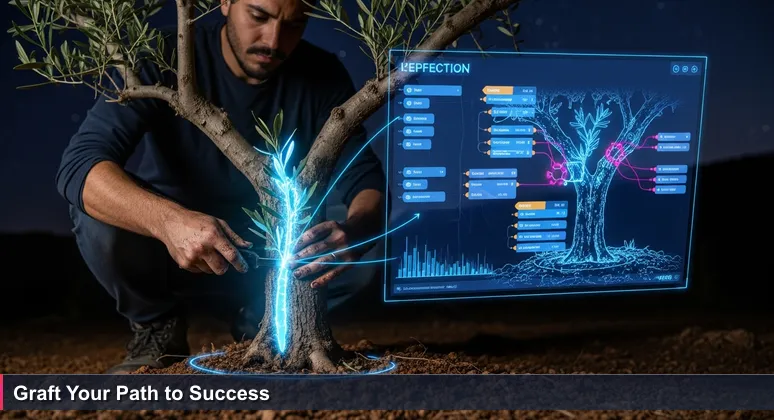
Building a cybersecurity career in Lebanon demands the same focused craft as the olive farmers in the Chouf, grafting resilient, foreign branches onto deeply rooted local trunks. Your success in 2026 hinges on mastering this precise hybrid skill: merging in-demand global technical abilities with a nuanced understanding of Beirut's unique, dual-currency job ecosystem.
As expert Taimur Ijlal starkly warns in his analysis The Truth About the 2026 Cybersecurity Job Market - You're Not Ready, a widening gap is emerging between certificate-holders and adaptable, AI-native practitioners. For professionals in Beirut, the real map isn't a simple list of job openings; it's a living system where value flows through distinct channels. You must graft your skills onto the right local "rootstock" - be it the critical infrastructure of Ogero, the strict compliance of Bank Audi, or the agile cloud stacks of startups in Beirut Digital District - to access its specific compensation and opportunity.
This ecosystem operates on a clear dual-track. Compensation can range from local LBP payrolls offering hundreds of millions of pounds per month for specialized roles to "fresh" USD contracts with international firms or NGOs paying $3,000 to $6,000+ monthly. The recent hiring activity, such as the Information Security Officer vacancy at AUBMC, underscores the persistent demand, but landing such roles requires strategic navigation, not just credential-spraying.
Your career path, therefore, is not about finding a ready-made opportunity. It is about the deliberate, strategic craft of understanding the deep rootstocks of the local economy and the vital sap of its dual-currency system to build something uniquely resilient and valuable.
In This Guide
- Introduction to Lebanon's Cybersecurity Ecosystem in 2026
- Key Sectors Driving Cybersecurity Demand in Lebanon
- Understanding Compensation and Currency in Lebanon's Market
- Essential Skills and Certifications for 2026 Cybersecurity
- Local Upskilling Paths for Cybersecurity Careers in Lebanon
- Cybersecurity Career Path for Lebanese Armed Forces Veterans
- Lebanon's Cybersecurity Market Compared to Regional Hubs
- Actionable Steps to Launch Your Cybersecurity Career in Lebanon
- Conclusion: Building a Resilient Cybersecurity Career in Lebanon
- Frequently Asked Questions
Learn about AI training pathways in Beirut in this complete guide for 2026.
Key Sectors Driving Cybersecurity Demand in Lebanon
Successfully grafting your cybersecurity career starts by diagnosing the right sectoral "rootstock." Lebanon's demand is driven by diverse industries, each with unique threats, regulations, and compensation flows that determine where your skills will bear the most fruit.
At the heart of national security are critical infrastructure operators. Defending Lebanon's telecoms and utilities against sophisticated threats requires roles like Network Security Engineers and OT/SCADA Specialists. Employers like Ogero, Alfa, and Touch, along with vendors such as Ericsson, offer mid-level engineering roles with total compensation packages ranging from LBP 150 million to 300 million+ per month, with multinational contractors frequently paying in fresh USD.
The banking sector remains the most mature employer, driven by strict Banque du Liban regulations. Major banks like Bank Audi and BLOM Bank, alongside fintechs such as Areiba, seek CISOs, Compliance Officers, and Fraud Detection Specialists. This sector offers some of the most stable packages, with mid-to-senior roles reaching LBP 400 million to 750 million+ per year, often through hybrid LBP and fresh USD models to retain top talent.
Healthcare, education, and international organizations combine sensitive data protection with the stability of international funding. Employers like AUBMC and LAU need Information Security Officers to secure patient records and legacy medical equipment. Roles within UN agencies like UNDP are almost exclusively USD-denominated, offering salaries from $3,000 to $6,000+ monthly.
Finally, the agile frontier of startups and tech hubs, concentrated in Beirut Digital District and Berytech, is the domain of cloud-native security. Specialized firms like those listed in Factosecure's guide to top cybersecurity companies and global consultancies actively hire DevSecOps Engineers and Cloud Security Architects. This sector is predominantly fresh USD, with salaries for engineers ranging from $2,500 to $5,500+ per month.
Understanding Compensation and Currency in Lebanon's Market
Just as sap determines the health of a grafted tree, understanding the flow of compensation is critical to your career's vitality. Lebanon's cybersecurity market operates on a complex, three-track system that directly impacts your financial resilience and growth potential.
The first track is the local LBP payroll, common in traditional sectors like government-affiliated utilities and some local corporations. Here, specialized cybersecurity roles now command packages in the hundreds of millions of Lebanese Pounds per month to counter hyper-inflation, such as the LBP 150-300 million monthly ranges seen in telecom engineering roles.
The second and most sought-after track is the "fresh" USD contract. This is the standard for international NGOs, tech startups, global consultancies, and increasingly for banks and multinational vendors. These stable, dollar-pegged contracts are paid into fresh money accounts. As discussed in communities like r/lebanon regarding tech careers, the most lucrative opportunities often come from remote roles with firms in the Gulf or further abroad, leveraging Lebanon's strategic timezone.
The third model is the hybrid approach, especially prevalent in banking and large professional services firms. These packages strategically combine a base salary in LBP with significant bonuses or allowances in fresh USD, offering a balance between local engagement and financial stability. For example, roles within UN agencies like the UNDP are almost exclusively USD-denominated, offering salaries from $3,000 to $6,000+ monthly, representing a pure form of the fresh USD track.
Your career strategy must account for this ecosystem. Choosing a role isn't just about the job title; it's a deliberate decision about which currency stream you graft onto, affecting everything from daily purchasing power to long-term savings in Lebanon's unique economic landscape.
Essential Skills and Certifications for 2026 Cybersecurity
The cybersecurity skill set required for 2026 marks a fundamental shift from static defense to proactive, intelligence-driven protection. Simply holding a certification is no longer sufficient; the market now demands practitioners who can operate within AI-driven environments and address the specific threat landscape facing Lebanese institutions.
"2026 is the year AI-native cybersecurity teams become the norm," notes security expert Taimur Ijlal, highlighting the widening gap between those who learned traditional methods and those who can leverage and defend against AI.
The core skill priorities have evolved. Mastery of Identity and Access Management (IAM) & Zero Trust architectures is critical for securing the remote and hybrid workforces prevalent in Beirut's banks and NGOs. Cloud Security Fundamentals for AWS, Azure, or GCP are now baseline requirements for roles in tech hubs like Beirut Digital District. Furthermore, using AI & Machine Learning for threat hunting and automating SOC tasks is becoming essential, alongside deep knowledge of Governance, Risk, and Compliance (GRC) for the heavily regulated banking sector.
While practical skill reigns supreme, certifications act as the validating "grafting tape" for employers. Key credentials fall into two categories: Foundational/Technical (like CompTIA Security+, CEH, or the AWS Certified Security - Specialty) and Management/Governance (where the CISSP, CISM, and CISA are gold standards for senior banking roles). As highlighted in a LinkedIn post from Security Blue Team, hiring managers increasingly prioritize practical, industry-aligned training over theoretical knowledge alone.
For the Lebanese professional, this means building a portfolio of hands-on lab experience - through cyber ranges or project work - that demonstrates these evolving skills. Targeting certifications relevant to your chosen sector, such as a CISSP for banking or an AWS specialty for a startup, strategically signals your adaptability in this AI-native future.
Local Upskilling Paths for Cybersecurity Careers in Lebanon
Lebanon offers multiple, strategically varied pathways to acquire the in-demand skills for a cybersecurity career, with costs and formats designed to fit different professional circumstances. From formal academic degrees to intensive, practical bootcamps, the key is selecting the graft that best suits your career rootstock.
For those seeking comprehensive, theory-grounded education, university programs provide a strong foundation. Institutions like the Lebanese American University (LAU) offer specialized graduate programs, such as their Online MS in Cyber Security, designed for working professionals. Similarly, the American University of Beirut (AUB) provides graduate diplomas. These programs represent a significant investment but deliver deep, accredited knowledge aligned with international standards.
For a more rapid, skills-focused transition, intensive bootcamps are highly effective. Providers like Nucamp offer a 15-week Cybersecurity Bootcamp with tuition of LBP 212,400,000 (approx. $2,124), focusing on practical, job-ready competencies in a condensed format. This model is ideal for career-changers or professionals needing to upskill quickly to meet market demands, such as cloud security or SOC operations, without the multi-year commitment of a full degree.
Additionally, the local ecosystem supports accessible entry points through subsidized workshops and training. Innovation hubs like Berytech and international NGOs frequently run low-cost or fully funded upskilling sessions, often targeting specific groups like career-changers or veterans. These workshops, sometimes costing just a few million LBP, provide crucial foundational knowledge and networking opportunities within Beirut's tight-knit tech community.
Cybersecurity Career Path for Lebanese Armed Forces Veterans
A unique and strategic talent pipeline into Lebanon's cybersecurity landscape is emerging from the ranks of the Lebanese Armed Forces (LAF) and related security services. Veterans possess a powerful combination of attributes highly attractive to employers: ingrained discipline, proven performance in high-pressure scenarios, a concrete understanding of national security threats, and often, existing security clearances. This profile represents a formidable "rootstock" for roles in critical infrastructure protection, Security Operations Center (SOC) analysis, and physical-cybersecurity fusion.
For employers in the telecom, utility, and government contracting sectors, hiring a veteran is a strategic decision. It grafts proven operational reliability and a mission-oriented mindset onto technical cybersecurity skill sets. This is particularly valuable for defending essential services at organizations like Ogero or Electricité du Liban (EDL), where understanding threat actors and maintaining operations under pressure is as crucial as configuring a firewall.
Recognizing this potential, public-private initiatives are developing to facilitate this transition. These programs offer veterans specialized bridging courses that translate their operational experience - such as surveillance, incident response, and secure communications - into the language of IT infrastructure defense, network monitoring, and digital incident response. Success in this field, as noted in career transformation stories from SOC analysts, often hinges on the soft skills and analytical rigor that military service cultivates.
For a veteran, this path is more than a career change; it's a continuation of service through a new medium. By complementing their unparalleled tactical foundation with targeted technical training, such as a focused cybersecurity bootcamp, they can rapidly transition into roles that offer both stability and purpose within Lebanon's vital digital infrastructure.
Lebanon's Cybersecurity Market Compared to Regional Hubs
When evaluating career opportunities, Lebanese cybersecurity professionals naturally look beyond their borders to regional hubs like Dubai and Saudi Arabia. These markets offer significantly higher USD salaries, often 2-3 times the rates of local "fresh USD" contracts, alongside exposure to massive, well-funded projects. The trade-off, however, comes in the form of substantially higher living costs and a distinct corporate culture.
The most strategic advantage for Lebanese talent often lies in a hybrid model: securing a remote role for a company based in the Gulf, Europe, or North America while residing in Lebanon. This approach, frequently discussed by professionals in forums like r/lebanon, combines high, stable USD income with Lebanon's relatively lower cost of living. It leverages the country's strategic timezone overlap with both Europe and the MENA region, its multilingual workforce, and the problem-solving resilience forged in a complex local environment.
For international employers, Lebanon itself presents a compelling value proposition. It offers cost-competitive, high-quality talent with strong French and English language skills - a rarity in the region - and a nuanced understanding of MENA business dynamics. The growing, connected tech ecosystem anchored in hubs like Beirut Digital District provides a credible base for innovation. Specialized local firms, such as those highlighted in industry guides, are increasingly serving regional clients, creating demand for professionals who can navigate both local and international security frameworks.
Therefore, the question isn't merely "Beirut or Dubai?" but how to position yourself within a connected regional network. Lebanon's market is not isolated; it is a strategic node where local expertise can be leveraged for remote global roles, and where international firms find uniquely capable talent to secure their regional interests.
Actionable Steps to Launch Your Cybersecurity Career in Lebanon
Launching your cybersecurity career in Lebanon requires a deliberate, step-by-step strategy that mirrors the careful craft of grafting. Begin by moving beyond generic job searches to diagnose your ideal "rootstock." Identify which sector - be it the compliance-driven environment of Bank Audi, the critical infrastructure of Ogero, or the agile cloud stacks of a Beirut Digital District startup - aligns with your skills and desired compensation model (LBP, USD, or hybrid).
Next, focus on building a tangible portfolio, not just a CV. As emphasized in a junior SOC analyst success story, hands-on lab experience from cyber ranges or personal security projects is what truly differentiates candidates. Employers prioritize this practical proof of skill over a list of certificates. Concurrently, target your certifications strategically. Pursue credentials that matter to your chosen sector: a CISSP is invaluable for banking, while an AWS Security Specialty is key for a tech startup.
Actively engage with Beirut's tech ecosystem. Attend meetups and networking events at Berytech or within Beirut Digital District to connect with peers and hiring managers. Follow the active hiring on local platforms like Bayt.com for IT security jobs to understand real-time demand. Finally, cultivate a hybrid and remote mindset from the start. Develop skills that make you valuable to both a Beirut-based firm and an international company, ensuring your career resilience is fed by multiple streams in the interconnected, dual-market ecosystem.
Conclusion: Building a Resilient Cybersecurity Career in Lebanon
The path to a successful cybersecurity career in Lebanon is not about finding a pre-existing opportunity but about the deliberate craft of building your own. Through strategic grafting - blending high-demand global skills with deep-rooted local understanding - you create a professional identity that is both valuable and uniquely resilient to the complexities of the dual-market ecosystem.
This resilience stems from a clear-eyed diagnosis of the landscape: knowing which sectoral "rootstock" can best support your growth, whether it's the stable compliance of banking, the critical infrastructure of telecoms, or the agile innovation of the startup scene. It is fortified by understanding the flow of value - the "sap" of LBP and fresh USD compensation - and by cultivating a skill set that is portfolio-driven and AI-native, not merely certificate-based.
Ultimately, your career's strength will be measured by the strength of your connections within the ecosystem. Engaging with hubs like Beirut Digital District, leveraging Lebanon's strategic location and multilingual talent for remote roles, and continuously upskilling through local pathways are what transform a single job into a durable, thriving career. As highlighted by resources tracking the local industry, such as Factosecure's analysis of top cybersecurity firms, the ecosystem is active and growing, waiting for practitioners who can navigate its unique contours.
By embracing this grafted approach, you stop looking for a job listing and start building a career that draws sustained value from Lebanon's interconnected, hybrid environment, securing both your future and the digital heart of the Levant.
Frequently Asked Questions
Which companies in Lebanon are hiring cybersecurity professionals in 2026?
Key employers include telecom operators like Ogero and Alfa, banks such as Bank Audi, startups in Beirut Digital District like Factosecure, and international organizations like UNDP. Salaries vary, with fresh USD contracts in tech hubs offering $2,500 to $5,500+ monthly, while local roles in utilities might pay LBP 150-300 million per month.
What salaries can I expect for cybersecurity roles in Lebanon in 2026?
Compensation ranges widely: mid-level telecom engineering roles often pay LBP 150-300 million per month, banking positions can reach LBP 400-750 million per year, and fresh USD contracts in startups or consulting offer $2,500-$5,500+ monthly. Many banks and firms use hybrid models with part USD allowances.
What skills and certifications are most in demand for cybersecurity jobs in Lebanon?
AI-native skills like threat hunting with machine learning are critical, along with cloud security for AWS/Azure and identity management. Certifications such as CISSP for banking roles, AWS Security Specialty for startups, and CompTIA Security+ for entry-level positions are highly valued, with local bootcamps costing LBP 40-90 million.
How can military veterans in Lebanon transition into cybersecurity careers?
Yes, veterans from the Lebanese Armed Forces (LAF) are sought after for roles in critical infrastructure and SOC analysis due to their discipline and security experience. Public-private initiatives offer bridging courses to translate operational skills into IT defense, leveraging Lebanon's unique talent pipelines.
Are remote cybersecurity jobs better than local opportunities in Lebanon?
Remote roles with Gulf or European firms often pay 2-3x more in USD, such as $5,000-$10,000+ monthly, while living costs in Beirut are lower. Lebanon's strategic location, multilingual workforce, and diaspora networks make it ideal for remote work, balancing high income with local affordability.
Learn about the top 10 tech jobs that don't require a degree in Lebanon in 2026.
Find ideal coworking spaces for startups in Lebanon with resources and networks.
Find the best tech internships in Beirut ranked by USD stability and mentorship.
Learn about the most promising AI ventures in Lebanon featured in this 2026 review.
This comprehensive guide details scholarships and grants for tech education in Lebanon for AI and machine learning careers.

Irene Holden
Operations Manager
Former Microsoft Education and Learning Futures Group team member, Irene now oversees instructors at Nucamp while writing about everything tech - from careers to coding bootcamps.