









How to Pay for Tech Training in Kuwait in 2026: Scholarships, Grants & Government Programs
By Irene Holden
Last Updated: April 17th 2026
Key Takeaways
Kuwaiti nationals can secure fully-funded government scholarships such as the MOHE program, covering all costs for tech degrees, while residents benefit from incentives like KFAS grants that reimburse exam fees and offer up to five times the amount as a bonus. Additional avenues include employer-sponsored training from major firms like Zain and NBK, along with payment plans and education loans, all enhanced by Kuwait's zero personal income tax and alignment with Vision 2035 to boost local tech careers.
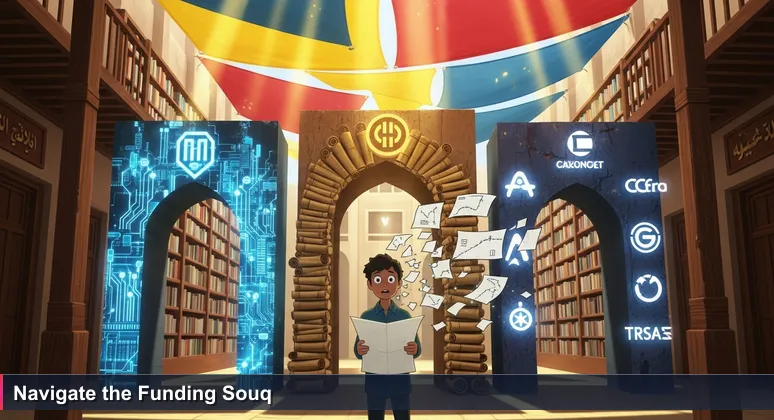
Imagine stepping into the bustling, fragrant chaos of Mubarakiya Souq, faced with a maze of alleys each promising a different treasure. That’s the initial feeling when exploring Kuwait’s tech training funding ecosystem. The opportunities are abundant, but the true challenge lies not in finding options, but in knowing which alley - government, corporate, or grant - leads to the right support for your specific AI or machine learning ambitions.
This guide is your detailed map, designed to transform that initial uncertainty into a strategic navigation plan. We’ll chart the course from fully-funded government scholarships that require no repayment, to competitive corporate sponsorships from giants like Zain and NBK, and accessible payment plans that fit within Kuwait’s unique, zero personal income tax environment. Every path is examined through the lens of Kuwait Vision 2035, which is actively fueling demand for digital skills.
Your advantage in Kuwait City is distinct. Beyond the financial benefit of keeping your entire salary - where a KWD 2,500 monthly data scientist income at a firm like Agility is entirely yours - you are at the heart of a national transformation. Major employers, from Kuwait Petroleum Corporation to burgeoning tech startups, are seeking talent aligned with strategic goals like smart cities and digital governance, making your training a direct investment in the country's future.
The key to success is seeing the souq not as separate, confusing stalls, but as an interconnected marketplace. The most successful candidates don’t just find one source of funding; they learn to combine them, using a government scholarship as a foundation and stacking a research grant on top. This guide will show you how to move from a list of possibilities to a masterful, personalized funding strategy that turns your career aspirations into a fully-supported reality.
In This Guide
- Your Map to Kuwait's Tech Funding Souq
- Find Your Funding Alley with Our Eligibility Guide
- Government Programs: Your Source for Free Money
- Scholarships and Grants: Secure Competitive Funding
- Payment Plans and ISAs: Manage Training Costs
- Your 2026 Application Calendar and Checklist
- Stack Your Funding for Maximum Benefit
- Kuwait vs. The Region: A Funding Advantage Analysis
- Final Tips for Navigating the Funding Souq
- Frequently Asked Questions
Explore how to launch an AI career in Kuwait in 2026 with high-paying, tax-free opportunities.
Find Your Funding Alley with Our Eligibility Guide
Before venturing into the funding souq, your most critical task is to locate the right entrance. Your nationality, employment status, and career stage act as a compass, directing you toward the programs where you have the highest chance of success. Misreading this map can lead you to apply for opportunities you don't qualify for, wasting precious time in a competitive landscape.
Start by asking one fundamental question: Are you a Kuwaiti citizen? If yes, you have access to the widest range of non-repayable funding. Your primary avenue should be government programs like the Ministry of Higher Education (MOHE) scholarship, especially if you are a recent high school graduate (typically aged 17-23) with a strong GPA. If you are a resident or expatriate, your path shifts toward university merit awards, employer sponsorships, and bootcamp financing.
Navigate Your Path with This Guide
- If Employed in Kuwait's Private Sector (Kuwaiti only): Explore upskilling subsidies from the Public Authority for Manpower (PAM) to qualify for tech roles at major firms.
- If Employed at a Major Corporation (All Nationalities): Investigate internal tuition reimbursement at companies like Zain, NBK, or KPC.
- If Unemployed or a Student: Focus squarely on scholarships and grants. Kuwaiti nationals target KFAS and MOHE, while residents research awards from institutions like the Kuwait College of Science and Technology.
Finally, consider specialized statuses. Veterans or their dependents should check with the Ministry of Defence for education allowances. Aspiring tech entrepreneurs can explore the National Fund for SME Development, which often includes an entrepreneurial education component within its startup financing. Taking these few moments to plot your starting point is the difference between wandering aimlessly and walking directly toward your funded future.
Government Programs: Your Source for Free Money
For eligible Kuwaiti nationals, government programs are the main thoroughfare of the funding souq - offering the most substantial and truly "free" money. This isn't a loan to repay; it's a national investment in your skills, directly tied to building the workforce needed for Kuwait Vision 2035.
Ministry of Higher Education (MOHE) Scholarships
The flagship program is the MOHE scholarship, a fully-funded opportunity covering 100% of tuition, a monthly living allowance, annual airfare, and health insurance for study in approved tech majors like Computer Science and Cybersecurity. Eligibility is typically for Kuwaiti citizens aged 17-23 for undergraduate programs with a competitive GPA. Your first action is to visit the official MOHE scholarship portal and prepare transcripts early, as deadlines are strict.
Public Authority for Applied Education and Training (PAAET)
For a faster, practical route into tech, PAAET offers government-funded diplomas and training. For nationals, it's typically tuition-free and includes a monthly stipend. It’s ideal for hands-on roles in Kuwait's tech infrastructure. Explore their future project catalogues to find programs aligned with market needs.
Public Authority for Manpower (PAM) Subsidies
If you're a Kuwaiti already in the workforce, PAM provides financial support for training that enhances employability in the private sector. As noted in reports, PAM has been actively expanding training for graduates to meet private-sector demand. If you seek a data analytics certification while working at a firm like Ooredoo Kuwait, talk to your HR department, as employer coordination is often involved.
Scholarships and Grants: Secure Competitive Funding
Beyond government programs lies a vibrant alley of competitive, high-value awards offered by foundations, corporations, and universities. These scholarships and grants require sharp applications but can completely cover costs or provide significant financial boosts, accelerating your path into AI and machine learning.
KFAS: The Powerhouse for Professionals
The Kuwait Foundation for the Advancement of Sciences (KFAS) is a critical resource. Its Professional Certifications Incentive reimburses exam fees for credentials on its approved list and can provide an incentive reward of up to 5x the exam fee. For a KWD 500 cloud architect exam, that could mean a KWD 2,500 bonus. For early-career researchers, the KFAS Young Researcher Grant funds projects in domains like Future Economies, perfect for applying AI to Vision 2035 goals.
University Merit Scholarships
Local private universities are actively investing in tech talent. For example, the Kuwait College of Science and Technology (KCST) awarded 45 merit scholarships to students of 12 nationalities for the 2025/26 year. A representative from KCST framed this as a "fulfillment of social responsibility," highlighting a commitment to educational inclusion. Similar programs exist at AUK and GUST - always inquire about tech-specific awards when applying.
Corporate & Employer-Sponsored Funding
Major Kuwaiti companies run programs to build their tech pipelines directly. Banks like NBK and Kuwait Finance House sponsor FinTech training, while conglomerates like Agility and Zain run CSR bootcamps. The acclaimed "TechEdge" program was a 2026 collaboration between KFAS, NBK, and Zain, providing sponsored intensive training in Singapore on cybersecurity and data science for select Kuwaiti youth. Monitor corporate careers and CSR pages closely for these competitive, high-reward opportunities.
"This step is a fulfillment of our social responsibility towards educational inclusion." - Kuwait College of Science and Technology (KCST) on awarding 45 merit scholarships.
Payment Plans and ISAs: Manage Training Costs
When scholarships and grants don't cover the full cost, the funding souq offers practical financing alleys to manage the remaining investment. These are the tools for bridging the gap, allowing you to start training now and pay later, a strategic move in Kuwait's tax-free environment where your future salary works harder for you.
Bootcamp-Specific Financing and Payment Plans
Kuwait's growing bootcamp scene, including international providers like Nucamp, often structures costs for accessibility. Instead of large upfront payments, look for monthly installment plans that spread tuition over 6-12 months. For example, Nucamp's AI and coding bootcamps, such as their 25-week Solo AI Tech Entrepreneur program, offer this flexibility with tuition around KWD 1,222. Always ask about partnership scholarships or fully-sponsored seats during enrollment, as bootcamps frequently collaborate with entities like KFAS or local banks to reduce costs for high-performing Kuwaiti nationals.
Bank Education Loans: A Structured Last Resort
Traditional financing from Kuwaiti banks remains a viable, if final, option. Providers like National Bank of Kuwait (NBK) and Kuwait Finance House offer specific educational loan products. These loans can range from KWD 15,000 to KWD 25,000 with repayment typically starting after you complete your program. Given the stable advantage of zero personal income tax, your future earnings as a data scientist or AI specialist at a firm like KPC will go further in servicing this debt. However, this should be treated as a last resort after exhausting all "free money" avenues; use it strategically to cover a top-up amount after securing a partial scholarship.
Your 2026 Application Calendar and Checklist
Navigating the funding souq requires perfect timing and complete paperwork. Miss a deadline or forget a document, and an entire alley of opportunity can close for the year. Treat your application journey like a professional project with clear milestones and meticulous preparation.
Your 2026 Strategic Calendar
- January-March: Research phase. Corporate program cycles (e.g., NBK graduate training) often open. Prepare for mid-year deadlines.
- April-June: Finalize applications for flagship programs. The MOHE scholarship deadline is typically in July. University admissions for Fall are also active.
- July-September: PAAET admission applications are typically open. This is also prime time for fall bootcamp cohorts.
- October-December: KFAS grant and certification incentive applications are ongoing. Use this period to research and plan for the next year's cycle.
The Universal Documentation Checklist
Create a digital folder now with these essential items:
- Civil ID & Passport: For all applicants.
- Official Transcripts & Diplomas: Translated if necessary.
- Standardized Test Scores: IELTS/TOEFL, SAT, or GRE if required.
- Tech-Tailored CV & Letters of Recommendation: Highlight projects; secure 2-3 references.
- Personal Statement & Proof of Status: A crucial narrative for scholarships; include employer or PIFSS unemployment letters.
Starting this organizational process early is what separates hopeful applicants from successful ones. Your preparedness is your greatest asset.
Stack Your Funding for Maximum Benefit
The most successful navigators of Kuwait's funding ecosystem don't settle for a single source; they become masters of funding stacking. This advanced strategy involves strategically combining multiple, non-conflicting financial supports to fully cover your training costs and even enhance your experience, transforming you from a beneficiary into a savvy financial architect of your own education.
Strategic Combination in Action
Consider a Kuwaiti national admitted to a Master's in AI abroad. Their primary layer is securing the MOHE full-ride scholarship, covering all tuition and living costs. They can then stack a KFAS Young Researcher Grant on top to fund a specific AI project, providing extra resources for conferences or software. The result is a fully-funded degree plus dedicated research capital, significantly boosting their CV.
For professionals, stacking is equally powerful. An expatriate data analyst at Agility seeking a machine learning certification could first tap into employer-sponsored tuition reimbursement. For any remaining balance, they could enroll in a bootcamp offering a monthly payment plan, minimizing out-of-pocket expense. This layered approach reduces personal financial risk while maximizing skill gain.
Learning from Success Stories
This methodology is proven in Kuwait's landscape. Collaborative programs like the "TechEdge" initiative - a partnership between KFAS, NBK, and Zain - demonstrate how entities combine resources to sponsor intensive international training. Similarly, graduates from specialized institutes have gained hands-on AI insights for "strategic decision-making" by leveraging such integrated support systems. Your application should clearly demonstrate how each funding component complements the others, painting a picture of a comprehensive, well-supported professional journey aligned with Kuwait's national goals.
Kuwait vs. The Region: A Funding Advantage Analysis
When considering where to pursue and fund your tech education, it's crucial to weigh Kuwait against regional hubs like Riyadh and Dubai. Each offers distinct advantages, but for Kuwait-based professionals and students, the home advantage is multifaceted, combining robust financial support with unique long-term stability.
| Feature | Kuwait (Your Home Advantage) | Riyadh, KSA | Dubai/Abu Dhabi, UAE |
|---|---|---|---|
| Degree Funding | Very High (MOHE Full Ride) | High (KAUST, MoE) | High (ADEK, MoE) |
| Professional Certs | Strong (KFAS 5x Incentive) | Strong (Hadaf) | Moderate |
| Bootcamp Subsidies | Partner-Dependent (KFAS/Banks) | Massive (Tuwaiq, Misk) | High (Coders HQ) |
| Post-Training Tax | 0% Personal Income Tax | 0% for now* | 0% for now* |
| Local Job Market | Growing AI focus per Vision 2035, strong in Energy (KPC), Finance (NBK), Telecom (Zain). | Massive NEOM & giga-project demand. | Diverse multinational hub. |
The critical differentiator is long-term financial stability. While Saudi Arabia and the UAE currently have no personal income tax, policies are evolving with their economic diversification. Kuwait’s zero-tax environment is a constitutionally-rooted, stable advantage that ensures your future salary - whether a starting KWD 1,800 as a developer at Agility or more as a senior AI specialist - remains entirely yours.
Furthermore, your training is an investment in a market actively being shaped by Kuwait Vision 2035. The growing focus on AI, digital government, and a diversified private sector, supported by entities like CITRA implementing new digital governance rules, means the skills you fund today are precisely what major local employers will value tomorrow. Your proximity to the headquarters of KPC, Zain, and NBK isn't just convenient; it's strategically advantageous for networking and securing sponsored roles.
Final Tips for Navigating the Funding Souq
Your journey through the funding souq culminates not with finding a single treasure, but with mastering the marketplace itself. The final step is adopting the mindset of a savvy navigator who understands that preparation, connections, and strategic alignment are just as valuable as the funding itself.
Start Early and Be Persistent. The most substantial opportunities have the strictest, earliest deadlines. Treat your funding search as a parallel project to your skills development, beginning research months in advance. Applications for programs like the MOHE scholarship require meticulous document gathering; procrastination is the quickest way to miss out on a full-ride opportunity.
Leverage Local Networks. Beyond official portals, much of Kuwait's opportunity flows through personal and professional connections. Attend tech meetups in Kuwait City or engage with communities around the growing startup ecosystem. Conversations can reveal unadvertised corporate programs or insider tips on applying for competitive grants like those from KFAS.
Align with National Vision. Frame every application to demonstrate how your AI or machine learning training directly supports Kuwait Vision 2035. As experts note, Kuwait is shifting from policy to active implementation of global digital rules to support responsible tech development. Showing you understand this context, such as how AI can advance smart cities or digital government services, makes your proposal strategically compelling to both government and corporate funders.
Remember, you are not alone. Concrete success stories, like graduates from specialized training programs gaining hands-on AI insights for "strategic decision-making and enhancing operational efficiency", prove the pathway exists. The entire ecosystem - from government ministries to major employers - is investing in building Kuwait's tech talent. Your informed, persistent navigation through this souq is the final, crucial investment in your own future.
Frequently Asked Questions
What are the main ways to pay for tech training in Kuwait in 2026?
In 2026, Kuwait offers three primary funding avenues: government programs like MOHE scholarships for Kuwaitis, competitive grants from foundations such as KFAS, and accessible payment plans through bootcamps or bank loans. The tax-free environment means your future salary can better support any financing you need, aligning with Kuwait Vision 2035 goals.
As a Kuwaiti citizen, what's the most comprehensive funding I can get?
Kuwaiti nationals should first target the Ministry of Higher Education (MOHE) scholarships, which cover 100% of tuition and living costs for approved tech degrees abroad or locally. Additionally, the Kuwait Foundation for the Advancement of Sciences (KFAS) offers incentives like reimbursing professional certification fees with potential bonuses up to 5x the cost, such as an extra KWD 2,500 on a KWD 500 exam.
Are there funding options for expatriates in Kuwait's tech training?
Yes, expatriates can access merit-based scholarships at universities like KCST, employer-sponsored programs from companies such as Zain or Agility, and bootcamp financing with installment plans. While less extensive than for nationals, these options help bridge the gap for tech upskilling in Kuwait's growing AI job market.
How lucrative are grants for professional certifications in Kuwait?
Grants like those from KFAS can be highly rewarding; for example, if you pay KWD 500 for a cloud architect exam, KFAS might reimburse it and add an incentive of up to KWD 2,500. This makes professional certifications more affordable and incentivizes skill development aligned with Kuwait Vision 2035's digital transformation goals.
What if I need to finance tech training without upfront cash?
For those without scholarships, bootcamps often provide monthly installment plans over 6-12 months, and banks like National Bank of Kuwait offer education loans ranging from KWD 15,000 to KWD 25,000. With no personal income tax in Kuwait, repaying such loans is more manageable on your future tech salary from employers like KPC or Ooredoo Kuwait.
Find out where to find junior developer jobs in Kuwait's tech scene through this detailed analysis.
This 2026 cost of living analysis for expat tech workers in Kuwait covers all key aspects.
This article details the highest paying tech employers in Kuwait and their compensation strategies.
Read about Kuwait's most promising AI startups in sectors like energy and fintech.
This article discusses whether Kuwait is good for tech careers with specific data and examples.

Irene Holden
Operations Manager
Former Microsoft Education and Learning Futures Group team member, Irene now oversees instructors at Nucamp while writing about everything tech - from careers to coding bootcamps.