









How AI Is Helping Financial Services Companies in Kuwait Cut Costs and Improve Efficiency
Last Updated: September 10th 2025
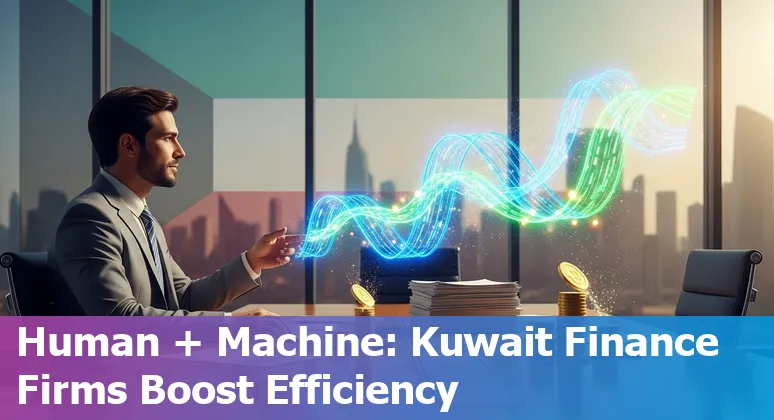
Too Long; Didn't Read:
AI is helping Kuwait's financial services cut costs and improve efficiency: KFH's Microsoft-backed RiskGPT cut credit evaluation times by ~96%, from three to five days to under an hour, while automation, Central Bank guidance, and ICT growth (USD 22.48B→43.36B by 2030) drive measurable savings.
Kuwait's financial sector is moving from experiments to measurable savings as regulators and banks adopt AI to boost efficiency and cut costs: the Central Bank of Kuwait frames the policy case in its “AI, between Advantages and Challenges” report, and operational wins are already clear - Kuwait Finance House's Microsoft-backed RiskGPT slashed risk processing times by 96%, turning credit evaluations that once took days into decisions in under an hour.
That combination of regulatory clarity and practicalROI is driving banks to automate reporting, personalize offers, and free staff for higher‑value work, while talent gaps make practical training essential; programs like Nucamp's AI Essentials for Work bootcamp teach prompt writing and workplace AI skills for nontechnical teams.
For Kuwaiti financial leaders, AI is a tool to align Vision 2035 ambitions with faster decisions, lower costs, and better customer service.
| Bootcamp | Length | Early bird Cost | Info |
|---|---|---|---|
| AI Essentials for Work | 15 Weeks | $3,582 | AI Essentials for Work syllabus | Register for AI Essentials for Work |
“Evaluating credit cases used to take an average of three, and sometimes four to five days. With Microsoft AI-powered RiskGPT, we can carry out dynamic risk rating in less than an hour.”
Table of Contents
- How AI-driven Automation Streamlines Banking Operations in Kuwait
- KFH Case Study: RiskGPT and AI Outcomes in Kuwait
- Operational and Cost Benefits for Kuwaiti Financial Firms
- Improving Customer Experience in Kuwait with AI
- Technologies and Partners Powering AI in Kuwait Financial Services
- Regulatory, Governance, and Security Considerations in Kuwait
- Talent, Skills Gap, and the AI Ecosystem in Kuwait
- Practical Implementation Roadmap for Kuwaiti Financial Companies
- Challenges, Risks, and Mitigation Strategies for Kuwait
- Future Outlook and Opportunities for AI in Kuwait Finance
- Conclusion and Next Steps for Kuwaiti Financial Leaders
- Frequently Asked Questions
Discover fast-track options for workforce upskilling and bootcamps in Kuwait to build AI-ready finance teams.
How AI-driven Automation Streamlines Banking Operations in Kuwait
(Up)AI-driven automation is already reshaping Kuwait's bank operations by turning slow, spreadsheet-heavy workflows into near real-time services: Kuwait Finance House unified data, used Microsoft Fabric and Azure AI to build an in‑house “RiskGPT,” and cut credit evaluation from days to under an hour - an astonishing 96% reduction that frees teams for strategy and customer advice.
Beyond faster credit decisions, automation automates complex risk models (early warning systems, RAROC), collapses two‑week reporting cycles into instant Power BI dashboards, and reduces internal handoffs that used to clog workflows.
These gains mirror broader finance process automation benefits - less manual entry, faster AP/AR and reconciliations, and safer audit trails - outlined in finance automation guides.
For Kuwaiti banks, the payoff is operational resilience plus the ability for relationship managers to deliver personalized, actionable guidance to clients in minutes rather than weeks.
Learn more from KFH's RiskGPT case study and a practical finance automation playbook to spot where to start.
| Attribute | Details |
|---|---|
| Customer | Kuwait Finance House |
| Products | Power BI; Azure AI Services; Microsoft 365 Copilot; Microsoft Fabric |
| Organization size | 1,000–9,999 employees |
| Country | Kuwait |
| Industry | Banking |
“Evaluating credit cases used to take an average of three, and sometimes four to five days. With Microsoft AI-powered RiskGPT, we can carry out dynamic risk rating in less than an hour.”
KFH Case Study: RiskGPT and AI Outcomes in Kuwait
(Up)Kuwait Finance House transformed risk management by unifying data across subsidiaries and building an in‑house AI engine - RiskGPT - in collaboration with its R&D institute, using Microsoft Fabric and Azure AI services; the result is striking: credit evaluations that once took three (and sometimes four to five) days now finish in under an hour, a roughly 96% processing-time cut that turns spreadsheet backlog into live Power BI dashboards the moment data is uploaded and lets relationship managers give tailored advice in minutes.
By connecting RiskGPT to Microsoft 365 Copilot and Power BI Copilot, KFH automated complex models (early‑warning systems, RAROC), reduced reconciliation cycles, and shifted risk teams from gatekeepers to proactive value creators who can spot sector opportunities and forecast customer risk trajectories - improvements that lower operational stress while boosting decision speed and customer experience.
For Kuwaiti financial leaders weighing AI projects, KFH's work is a clear, local blueprint; read the Microsoft RiskGPT case study and consult the Microsoft Fabric Copilot documentation to understand how these building blocks fit together.
| Attribute | Details |
|---|---|
| Customer | Kuwait Finance House |
| Products | Power BI; Azure AI Services; Microsoft 365 Copilot; Microsoft Fabric |
| Organization size | 1,000–9,999 employees |
| Country | Kuwait |
| Industry | Banking |
| Business need | Artificial Intelligence / Risk analytics |
“Evaluating credit cases used to take an average of three, and sometimes four to five days. With Microsoft AI-powered RiskGPT, we can carry out dynamic risk rating in less than an hour.”
Operational and Cost Benefits for Kuwaiti Financial Firms
(Up)AI is already delivering tangible operational and cost wins across Kuwaiti banks by automating routine work, collapsing reporting cycles, and speeding decisions: Kuwait Finance House's Microsoft-backed RiskGPT turned three‑to‑five day credit evaluations into sub‑hour decisions and moved two‑week reconciliation processes into instant Power BI dashboards, freeing analysts from spreadsheets and reducing manual headcount pressure; Boubyan Bank reports AI-driven automation (virtual assistant “Msa3ed”, document processing, customer segmentation) is improving resource utilization and call‑center efficiency; and NBK highlights AI's ability to analyze vast datasets, spot patterns, and simulate scenarios that underpin faster, more accurate decisioning.
These shifts translate into lower processing costs, faster time‑to‑offer for customers, and more productive relationship managers who can act on real‑time insights - one striking image: what used to be a backlog of dusty spreadsheets now becomes a live dashboard that feeds decisions in minutes.
For implementation details, see the Microsoft RiskGPT case study: Kuwait Finance House, the NBK analysis of AI in Kuwaiti banks, and the Global Finance analysis of AI in Kuwaiti banks.
| Attribute | Details |
|---|---|
| Customer | Kuwait Finance House |
| Products | Power BI; Azure AI Services; Microsoft 365 Copilot; Microsoft Fabric |
| Organization size | 1,000–9,999 employees |
| Country | Kuwait |
| Industry | Banking |
“Evaluating credit cases used to take an average of three, and sometimes four to five days. With Microsoft AI-powered RiskGPT, we can carry out dynamic risk rating in less than an hour.”
Improving Customer Experience in Kuwait with AI
(Up)Kuwaiti banks are turning AI into a customer-experience advantage: chatbots and virtual assistants now handle routine requests around the clock, apps deliver tailored budgeting insights, and instant rails let customers move money without sharing sensitive account details.
Kuwait International Bank rebuilt KIB Mobile and added services like WAMD (instant account‑to‑account transfers via KNET) and a WhatsApp interactive channel that brings self‑service to familiar messaging apps; read about KIB's digital factory and new platforms in the KIB case study for practical examples.
Boubyan Bank's Msa3ed virtual assistant pairs lifestyle features with banking support and even uses the Kuwaiti dialect to make conversations feel local, while banks keep a “human‑in‑the‑loop” for sensitive decisions to balance convenience with oversight - an approach that reduces wait times, improves personalization, and preserves trust under the Central Bank's compliance expectations.
Across providers the payoff is clear: what used to be standing in line or navigating menus now becomes a responsive digital experience that recommends the right product or payment at the exact moment a customer needs it.
“Take KIB's WhatsApp interactive service, for example. AI-powered chatbots are now capable of addressing customer queries with precision ...” - The KIB model: Transforming banking sector with AI
Technologies and Partners Powering AI in Kuwait Financial Services
(Up)Kuwait's AI stack is increasingly anchored to Microsoft's ecosystem - banks are wiring Azure AI services, Microsoft Fabric, Power BI and Microsoft 365 Copilot into production-grade solutions (Kuwait Finance House's RiskGPT is a local example), and Fabric's Copilot and Power BI Copilot bring conversational analytics, automated DAX, and report generation to business users and relationship managers; see the Microsoft customer roundup on AI-powered transformations for the KFH RiskGPT example.
These building blocks are complemented by solution accelerators - client advisor AI and conversational-knowledge mining templates - that speed deployments and make it practical to join structured data with unstructured conversations.
Important engineering and compliance details matter: Fabric Copilot relies on Azure OpenAI infrastructure whose region availability and cross‑geo processing rules can affect data residency and tenant settings, so Kuwaiti firms should plan capacity and governance up front (see Copilot in Fabric guidance and the Power BI Copilot overview for admin requirements and data-prep best practices).
The result: dusty spreadsheet backlogs turn into live, Copilot-driven dashboards that feed faster, auditable decisions across Kuwait's banks.
Regulatory, Governance, and Security Considerations in Kuwait
(Up)Regulatory clarity in Kuwait is moving from aspiration to operational rule‑sets, and for banks planning AI deployments that means planning governance as carefully as models: the Central Bank's Digital Banks Guidelines (Feb 2022) and its updated e‑payment instructions (May 2023) set licensing, governance, AML/KYC and cybersecurity expectations, while a June 2025 draft Open Banking framework signals a phased, consent‑based roadmap for data sharing and third‑party integration - all of which must be baked into architecture, contracts and audit trails.
Practical obligations are concrete: senior managers and board members require CBK fit‑and‑proper sign‑off, EPIPs face strict submission and documentation rules, and significant cyber incidents must be reported quickly (high‑risk incidents within four hours under CBK's operational‑resilience rules), so a single breach can trigger rapid regulator engagement and contingency protocols.
Recent circulars tightening oversight of e‑payment providers reinforce controls over gateway access, user authorisations and evidence retention, meaning AI projects should include data‑residency plans, vendor due‑diligence, explainability logs and AML controls from day one; see the CBK's e‑payment guidance and the draft Open Banking framework for implementation details and timelines.
| Regime | What it requires | Source |
|---|---|---|
| Digital Banks Guidelines (2022) | Licensing, risk framework, cybersecurity, capacity building | Central Bank of Kuwait Digital Banks Guidelines press release |
| e‑Payment Instructions (2023) | Five license types, governance, AML/CFT, business continuity | Central Bank of Kuwait e-Payment Services guidance |
| Open Banking Draft (2025) | Consent, APIs, sandbox testing, phased rollout | Open Banking draft summary for Kuwait (Chambers practice guide) |
Talent, Skills Gap, and the AI Ecosystem in Kuwait
(Up)Talent is the hinge between AI ambition and real savings in Kuwait's financial sector, so closing the skills gap is not optional - it's strategic: government and industry are already investing in pipelines that teach practical AI use, from the Artificial Intelligence of Things Society and the Center of Excellence for Digital Productivity to classroom initiatives like the Microsoft Imagine Cup Junior lesson on Generative AI for 13–18 year olds, all designed to turn students into problem‑solving contributors to Vision 2035.
Employers are signaling demand - Microsoft's 2025 work trends cited in local coverage note heavy hiring interest for roles such as AI trainers, data specialists and AI strategists - and the Kuwait National AI Strategy foregrounds workforce development as a core pillar, with public‑private partnerships and certification paths to bridge gaps.
Regional moves to scale incubators, sandboxes and fintech hubs show a practical route to retain talent locally, while Kuwait's Microsoft partnership to build cloud and Copilot centers promises hands‑on upskilling.
The takeaway for Kuwaiti financial leaders: invest in targeted reskilling and governance-ready training now, and the country's next generation can turn AI from cost‑center worry into a productivity engine.
“there is no substitute for the human element in analyzing AI output.”
Practical Implementation Roadmap for Kuwaiti Financial Companies
(Up)Turn strategy into steady progress: begin with a capabilities assessment, map projects to the Kuwait National AI Strategy (2025–2028) and the country's compliance roadmap, then run focused pilots that prove value before scaling - priorities in Year 1 should be establishing a Kuwait AI Center of Excellence, launching pilot AI projects, and building a centralized data repository with governance, explainability and data‑residency controls; in Years 2–3 expand use across services, harden cybersecurity and operational controls, and roll out workforce upskilling and compliance‑monitoring systems; by 2028 aim for full integration, indigenous capability development and regional leadership.
Practical steps include publishing audit trails, engaging regulators early, using sandbox testing to de‑risk deployments, and pairing technical builds with role‑based training so models are production‑ready and explainable.
For implementation templates and compliance specifics, consult the Kuwait AI Regulation compliance guide and the Kuwait National AI Strategy (2025–2028) draft to align timelines, KPIs and governance from day one.
| Timeline | Key milestones |
|---|---|
| Short-term (Year 1) | AI Center of Excellence; pilot projects; centralized data repository; foundational governance |
| Mid-term (Years 2–3) | Scale applications; strengthen cybersecurity; workforce development; compliance monitoring |
| Long-term (By 2028) | Full public/private integration; regional AI leadership; indigenous AI capabilities |
"AI is a great enabler - it allows banks to analyze vast amounts of data, recognize patterns, and simulate scenarios," Al-Bahar explained.
Challenges, Risks, and Mitigation Strategies for Kuwait
(Up)Kuwait's AI rollout brings big returns - and clear risks that financial leaders must tackle head‑on: regulatory frameworks and sector guidance are still evolving, public trust is fragile, legacy systems make integration brittle, and fraud and cyberthreats are real (fraudulent transaction attempts rose roughly 27% between 2021–2023, highlighting urgency).
Practical mitigation starts with a “compliance‑first” architecture and early regulator engagement, drawing on the Central Bank's analysis in its “AI, between Advantages and Challenges” report and the Kuwait AI Regulation roadmap that prioritizes governance, explainability and data residency; partner choices matter too, since Agentic AI deployments require experienced integrators who build modular agents, federated learning for privacy, and XAI audit trails (see Central Bank of Kuwait report: “AI, Between Advantages and Challenges”; Whizkey guidance: Agentic AI deployments in Kuwait; Modern payment gateway innovations in Kuwait - fintech solutions).
“AI is a great enabler - it allows banks to analyze vast amounts of data, recognize patterns, and simulate scenarios,” Al‑Bahar explained.
Future Outlook and Opportunities for AI in Kuwait Finance
(Up)Kuwait's AI future in finance looks bright and practical: with the ICT market expanding rapidly - driven by early 5G adoption, cloud investments and private‑public partnerships - banks can scale AI initiatives from targeted pilots to enterprise programs that cut costs and speed decisions; Mordor Intelligence forecasts the Kuwait ICT market to reach USD 43.36 billion by 2030, creating the infrastructure and vendor interest needed for widescale AI services like conversational analytics, fraud detection and instant credit scoring (Mordor Intelligence Kuwait ICT market forecast - USD 43.36B by 2030).
Vision 2035 and recent strategic moves - Google Cloud's local presence and telecom upgrades - give financial firms a stronger runway to deploy cloud, data analytics and secure identity services while sandboxes and PPPs lower integration risk (Kuwait Vision 2035 digital partnerships and telecom upgrades).
The immediate opportunity is pragmatic: prioritize interoperable cloud platforms, close the skills gap with role‑based reskilling, and convert dusty spreadsheet backlogs into live, auditable dashboards so relationship managers and risk teams act on insight in minutes rather than days.
| Year | ICT Market Size (USD) | Source |
|---|---|---|
| 2023 | $22.48 billion | SAMENA Council |
| 2025 | $27.12 billion | Mordor Intelligence |
| 2029 | $39.83 billion | SAMENA Council |
| 2030 | $43.36 billion | Mordor Intelligence |
Conclusion and Next Steps for Kuwaiti Financial Leaders
(Up)Kuwaiti financial leaders ready to translate AI promise into measurable savings should move from planning to disciplined pilots: stand up an AI Center of Excellence, codify data‑residency and explainability rules that align with CBK guidance, and pick two high‑impact pilots (credit scoring, fraud detection or customer self‑service) that can turn “dusty” spreadsheet backlogs into live, auditable dashboards within months; local wins - from KFH's RiskGPT to global Microsoft deployments - show pilots both prove value and reduce processing times dramatically (see Microsoft's AI customer stories and regional coverage of how AI is transforming businesses in Kuwait).
Partner with experienced cloud integrators, embed governance and security from day one, and close the skills gap with role‑based training so relationship managers and risk teams can act on real‑time insight - practical reskilling options include Nucamp's AI Essentials for Work bootcamp, which teaches prompt writing and workplace AI skills for nontechnical teams; measure ROI in weeks, scale what works, and keep the regulator engaged throughout the rollout.
| Bootcamp | Length | Early bird Cost | Link |
|---|---|---|---|
| AI Essentials for Work | 15 Weeks | $3,582 | Syllabus & Registration |
“Evaluating credit cases used to take an average of three, and sometimes four to five days. With Microsoft AI-powered RiskGPT, we can carry out dynamic risk rating in less than an hour.”
Frequently Asked Questions
(Up)How has AI improved operational efficiency and cut costs for financial services companies in Kuwait?
AI has converted slow, spreadsheet‑heavy workflows into near real‑time services: a notable local example is Kuwait Finance House's Microsoft‑backed RiskGPT, which reduced credit evaluation processing time by ~96% (from 3–5 days to under an hour). Across banks, AI automates reporting, AP/AR and reconciliations, collapses multi‑week cycles into live Power BI dashboards, reduces manual headcount pressure and shortens time‑to‑offer, producing measurable cost and productivity gains.
Which technologies and partners are Kuwaiti banks using to build AI solutions?
Many Kuwaiti banks are building on Microsoft's ecosystem - Azure AI services, Microsoft Fabric, Power BI, and Microsoft 365 Copilot (including Fabric Copilot and Power BI Copilot). These platforms enable conversational analytics, automated report generation and integrations with in‑house models (e.g., RiskGPT). Deployments often use solution accelerators and conversational‑knowledge mining templates while accounting for Azure OpenAI region and data‑residency rules.
What regulatory, governance and security considerations should Kuwaiti financial firms plan for when deploying AI?
Firms must align AI projects with Central Bank of Kuwait guidance and sector rules: the Digital Banks Guidelines (2022), e‑Payment Instructions (2023) and the draft Open Banking framework (2025) set requirements for licensing, AML/KYC, cybersecurity, governance and capacity. Practical obligations include data‑residency planning, vendor due‑diligence, explainability logs, and rapid incident reporting (high‑risk incidents must be reported within four hours under CBK operational‑resilience rules). Early regulator engagement, sandbox testing and built‑in audit trails are essential mitigations.
What is a practical roadmap for Kuwaiti financial firms to start and scale AI projects?
Start with a capabilities assessment and a short list of high‑impact pilots (credit scoring, fraud detection, customer self‑service). Year‑1 priorities: stand up an AI Center of Excellence, create a centralized governed data repository, and run focused pilots that prove ROI in weeks. Years 2–3: scale applications, harden cybersecurity and compliance monitoring, and roll out workforce upskilling; by 2028 aim for full integration and indigenous capabilities. Pair technical builds with role‑based training and continuous regulator engagement.
How can Kuwaiti banks close the AI talent and skills gap, and what training options are available?
Closing the skills gap requires targeted reskilling for roles like AI trainers, data specialists and AI strategists plus hands‑on programs for nontechnical staff. Government and industry initiatives (centers of excellence, sandboxes and public‑private upskilling) are expanding, and private courses are available - example: Nucamp's 'AI Essentials for Work' bootcamp (15 weeks, early‑bird cost $3,582) which teaches prompt writing and workplace AI skills for nontechnical teams to accelerate practical adoption.
The rise of OCR and automated reconciliation means Bookkeepers and junior accounting roles should upskill toward financial analysis, SQL and Python to remain marketable.
Unlock lending to underserved SMEs with the SME Credit Scoring Using Alternative Data prompt that blends bank flows, VAT filings, and trade references into risk bands.

Ludo Fourrage
Founder and CEO
Ludovic (Ludo) Fourrage is an education industry veteran, named in 2017 as a Learning Technology Leader by Training Magazine. Before founding Nucamp, Ludo spent 18 years at Microsoft where he led innovation in the learning space. As the Senior Director of Digital Learning at this same company, Ludo led the development of the first of its kind 'YouTube for the Enterprise'. More recently, he delivered one of the most successful Corporate MOOC programs in partnership with top business schools and consulting organizations, i.e. INSEAD, Wharton, London Business School, and Accenture, to name a few. With the belief that the right education for everyone is an achievable goal, Ludo leads the nucamp team in the quest to make quality education accessible