









Top 10 AI Startups to Watch in Fremont, CA in 2026
By Irene Holden
Last Updated: March 5th 2026
Too Long; Didn't Read
Fremont's top AI startups to watch in 2026 are driving gritty, hardware-driven solutions that solve physical-world challenges like labor shortages and recycling inefficiencies. Leading the pack, RoboForce tackles logistics with $15.2M in funding for adaptive robotics, while Everest Labs uses AI to sort waste with over $16M raised, showcasing Fremont's role as the 'Hardware-AI Hub' in Silicon Valley.
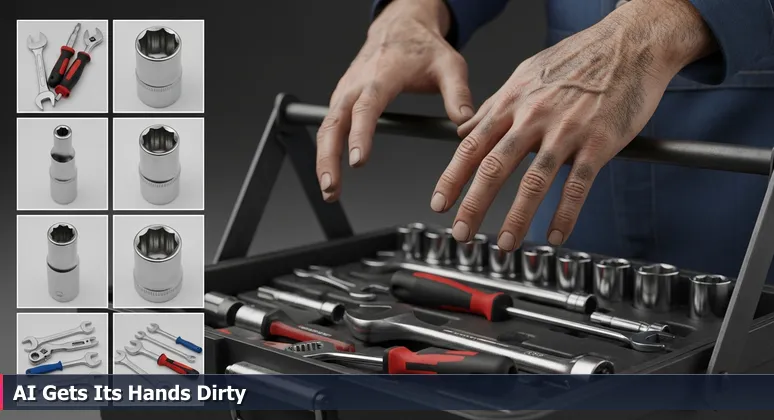
The mechanic’s intuition to choose the trusted, slightly worn tool over the shiny new one perfectly captures Fremont’s AI evolution. While the broader tech world celebrates digital assistants, the city has aggressively repositioned itself as the region’s “Hardware-AI Hub,” a corridor where machine learning meets the physical grit of manufacturing, logistics, and industrial workflows.
This strategic shift is powered by anchors like Tesla’s conversion of its Fremont factory for Optimus humanoid robot manufacturing and a city-wide, multi-billion dollar commitment to the sector. Fremont’s ecosystem is now defined by startups building indispensable tools, not flashy toys - solving critical problems in warehouses, recycling centers, and construction sites that pure software cannot touch.
As noted in a review of the local landscape, Fremont has gone ‘all in on the AI boom’, catalyzing a wave of companies focused on tangible intelligence. The startups emerging here are tackling the labor shortages, inefficiencies, and compliance black holes that plague real-world industries, proving that the greatest leverage point for AI isn't a more eloquent chatbot, but the robot that can unload a shipping container or the vision system that prevents a construction flaw.
Table of Contents
- Fremont's Hardware-AI Hub
- RoboForce
- Everest Labs
- Konfer
- Anyware Robotics
- Track3D
- Labvana
- EinMind
- Credibl ESG
- Gopher Security
- Findzo AI
- Conclusion
- Frequently Asked Questions
Follow this guide to begin an AI career in Fremont in 2026 with strategies for the local job market.
RoboForce
In a region facing a critical logistics labor shortage, RoboForce embodies the gritty hardware-AI ethos. The company builds “Robo-Labor” - physical AI and robotics systems engineered for the unpredictable chaos of real-world warehouses, not clean rooms. Spun out of Carnegie Mellon University’s renowned robotics program, their differentiation is a deploy-first hardware philosophy, as noted in profiles of top Milpitas AI companies.
Their flagship robot, “Calvin,” is designed for high-dexterity tasks on dynamic floors, tackling the variability that has long been traditional automation’s kryptonite. With $15.2 million in funding from investors including CMU itself, RoboForce is positioned not just as a vendor but as a foundational provider of adaptive labor.
Success for RoboForce means proving AI can handle the messiness of physical work, making them a bellwether for the entire industrial robotics sector. Their progress is closely watched by major logistics firms and global automation giants, who see adaptive robotics as the only viable solution to persistent labor gaps in the East Bay’s sprawling supply chain networks.
Everest Labs
Where others see a pile of waste, Everest Labs sees a data stream. The company applies high-speed computer vision and robotics directly to the sorting line, tackling one of the most inefficient and manually intensive industries: recycling. Their “RecycleOS” uses AI to identify and sort materials at higher purity and recovery rates than human operators, transforming waste into valuable commodities.
With over $16 million in funding from investors like Hike Ventures and Translink Capital, Everest Labs is a leader in an ESG-driven market. As noted in Fremont startup rankings, they are recognized for bringing AI to the “messy” real-world tasks others avoid. New environmental regulations in California and globally are creating non-optional demand for such precision.
The company’s impact is clear: they enable facilities to meet stringent purity mandates essential for the circular economy, turning a cost center into a revenue stream. This positions Everest Labs not just as a tech vendor, but as critical infrastructure for sustainable operations, with a clear path toward significant expansion as regulatory tailwinds intensify.
Konfer
As enterprises deploy autonomous AI agents at scale, they create a new kind of risk: a governance black hole. Konfer addresses this by providing “Agentic Governance” as a service, automating real-time compliance risk scoring for AI agents against both internal policies and global regulations like the EU AI Act. Led by Debu Chatterjee (formerly of Oracle/ServiceNow) and Baskar Sridharan, this seed-stage startup builds the intelligent guardrails necessary for trustworthy automation.
Backed by Engineering Capital, Konfer’s platform offers what industry analysts call “lean, just-in-time compliance automation”. Their differentiation lies in pre-built governance playbooks that allow Risk and Engineering teams to manage the shift to AI-native operations without crippling overhead, solving a problem that intrinsically scales with AI adoption itself.
For CIOs, this transforms governance from a retrospective audit exercise into a proactive, embedded system. As autonomous agents move from pilot to production, such guardrails become a mandatory requirement, positioning Konfer as a likely acquisition target for major enterprise software or cybersecurity platforms seeking to embed next-generation AI compliance directly into their stacks.
Anyware Robotics
Unloading a shipping container is a quintessential gritty problem: variable, physically demanding, and resistant to fixed automation. Anyware Robotics attacks this precise bottleneck with multi-purpose mobile robots. Their system, “Pixmo,” offers “unload-as-a-service,” using proprietary AI to navigate the unpredictable interior of a container and handle diverse items.
The company’s key innovation is transferable AI. Unlike single-purpose machines, their robots can be redeployed for different tasks - from unloading to palletizing - via software updates alone. This flexibility is crucial for logistics centers needing to adapt to seasonal shifts or changing cargo types without capital-intensive hardware swaps.
Having secured over $5 million in Seed funding from investors like GFT Ventures, Anyware Robotics is proving the viability of general-purpose robotic AI in unstructured environments. Their success in this high-value niche makes them a critical bellwether for the entire field of flexible logistics automation and a likely partner for major freight carriers desperate for resilient, adaptive solutions.
Track3D
Construction remains one of the world's least digitized major industries, plagued by cost overruns when deviations from blueprints are caught too late. Track3D brings gritty AI to the jobsite by using 3D computer vision and reality capture to build an intelligent, always-updating digital twin of a construction project. Their system continuously monitors progress against the model, flagging discrepancies in real-time before they become expensive errors.
As a Series A company backed by Ironspring Ventures, Track3D offers a clear, quantifiable return on investment through saved materials and avoided rework. Their technology moves project management from weekly walk-throughs to constant, millimeter-accurate oversight, tackling the physical variability of building in the real world.
This positions them to become the essential operating system for modern construction. Profiled among top AI companies in Milpitas, Track3D’s success demonstrates how AI can bring radical transparency to historically opaque processes. The logical expansion path extends into adjacent verticals like infrastructure maintenance and facility management, where digital twins provide ongoing value long after construction is complete.
Labvana
Scientific R&D faces a paradoxical bottleneck: while computational power grows exponentially, setting up and running physical experiments remains manual, slow, and hindered by incompatible legacy instruments. Labvana, Inc. tackles this by building “self-driving labs.” Their platform combines a natural language chat interface with a backend that controls everything from modern to decades-old lab hardware, allowing scientists to plan and execute complex experiments through simple conversation.
This early-stage startup, backed by private investors like Sam Yang, represents the critical digitization of the physical scientific process. As highlighted in expert reviews of Fremont AI companies, their use of a personalized “AI digital twin” for researchers helps maintain project continuity and radically reduces experimental cycle times.
By removing the need for manual coding and instrument wrangling, Labvana’s gritty AI solution unlocks faster discovery in biotech, materials science, and chemicals. This positions them not just as a software tool, but as a transformative partner for large pharma and chemical companies seeking to accelerate innovation and compress R&D timelines from years to months.
EinMind
The U.S. healthcare system drowns in administrative overhead, with medical coding and billing being a primary source of claim denials, delayed payments, and massive operational costs. EinMind applies gritty, specialized AI to this problem, using advanced natural language processing to instantly and accurately translate clinician notes into billable medical codes.
Their focus is on driving down claim denial rates and accelerating revenue cycles for providers, tackling a multi-billion-dollar pain point where precision is non-negotiable. As a graduate of the MARL Accelerator, EinMind has developed a deep understanding of the complex healthcare regulatory environment, which is essential for any AI tool hoping to gain trust in this sector.
This positions them as a prime candidate for integration into major Electronic Health Record (EHR) platforms or practice management suites. Noted as a rising star in health-tech automation, EinMind’s success demonstrates that in regulated industries like healthcare, the most valuable AI isn't the most creative, but the most reliably accurate - solving a critical, behind-the-scenes workflow that directly impacts both care quality and financial viability.
Credibl ESG
For global corporations, mandatory ESG reporting - particularly for the labyrinthine “Scope 3” supply chain emissions - is a data nightmare. Credibl ESG provides the gritty AI solution: a platform that automates the synthesis of sustainability data from disparate, non-standardized sources to drive accurate calculations and reporting.
The company has carved its niche by specializing in the notoriously difficult Scope 3 category, which often accounts for the majority of a corporation’s carbon footprint. Their AI doesn’t just aggregate data; it identifies gaps, ensures methodological consistency, and generates audit-ready reports, turning a monumental manual task into a managed process.
Already trusted by over 100 customers, including major firms like Flipkart and IHCL, Credibl is positioned as a essential compliance tool. As profiled among Fremont’s top AI companies, their platform addresses the non-optional demand created by unfolding EU and California mandates. This vertical AI play has clear potential to scale into a standalone market leader or become a critical module embedded within larger enterprise resource planning systems.
Gopher Security
The rapid adoption of open-source AI agents and frameworks like the Model Context Protocol (MCP) has created a dangerous gap: fragile connections between experimental agentic workflows and secure, proprietary enterprise data stacks. Gopher Security builds the essential, gritty plumbing for this new landscape, creating on-demand gateways that provide secure, observable connections between AI agents and internal data sources.
As an emerging seed-stage company in Fremont, Gopher is tackling a foundational infrastructure problem. Their gateways aren't just about access; they bake in enterprise-grade security controls, audit trails, and observability features that large organizations require but most open-source tools lack. This solves the critical trust issue that could otherwise paralyze enterprise AI adoption.
By providing the secure bridge between innovative but fragile AI agents and the rigid, compliance-heavy world of Fortune 500 IT, Gopher Security enables scalability. Positioned as a key player in AI infrastructure, their success is less about flashy AI models and more about reliable, secure integration - the unglamorous work that makes advanced automation possible in regulated industries. This focus makes them a compelling acquisition target for cloud infrastructure or cybersecurity giants looking to embed agentic AI support directly into their platforms.
Findzo AI
Companies are flooding their websites and customer service portals with AI chatbots, but face a critical blind spot: they can't tell which conversations actually move the needle on sales, retention, or support resolution. Findzo AI moves beyond basic analytics to provide this essential visibility. Their platform creates a “Conversation Outcome Graph” that maps complex, multi-agent user journeys, pinpointing exactly where customers disengage or which specific AI prompts successfully drive revenue.
This focus on outcome attribution addresses the skyrocketing need to prove ROI on AI investments. Backed by Founders Creative at the Seed stage, Findzo AI provides the analytical layer that turns conversational data into strategic business intelligence. As highlighted in profiles of Fremont’s AI landscape, their technology answers the fundamental question for any business deploying AI: “Is this working?”
For marketing, product, and support teams, this transforms AI from a cost center into a measurable growth engine. Findzo AI’s gritty value proposition lies not in building the chatbots themselves, but in providing the indispensable tool to optimize them, ensuring that AI interactions are continually refined to deliver tangible business results.
Conclusion
The narrative of Silicon Valley innovation is being rewritten not in the cloud, but on the factory floors and construction sites of the East Bay. Fremont’s strategic identity as the “Hardware-AI Hub” - catalyzed by anchors like Tesla and a city-wide commitment - has fostered an ecosystem where intelligence gets its hands dirty. The startups profiled here, from RoboForce to Findzo AI, exemplify this shift toward tangible, indispensable tools.
Their collective work proves that the greatest leverage point for AI in 2026 isn't a more eloquent chatbot, but the robot that unloads a shipping container, the vision system that prevents a construction flaw, or the governance layer that allows enterprise automation to scale safely. This is the gritty, physical, and profoundly valuable work that defines the next wave of technology. As noted in coverage of Fremont’s all-in bet, the region has become the epicenter for solving the world's most resistant industrial problems.
For investors, partners, and technologists in the Bay Area, the signal is clear. The future is being coded and bolted together simultaneously in Fremont, offering a unique vantage point on the convergence of bits and atoms. The most transformative AI isn't the shiniest tool in the box; it's the one engineered by feel, for the unique, gnarly problem right in front of us.
Frequently Asked Questions
Why should I pay attention to AI startups in Fremont, CA specifically?
Fremont is aggressively repositioning itself as the 'Hardware-AI Hub,' leveraging its proximity to major tech employers like Tesla's Fremont factory and a strong venture capital ecosystem from Silicon Valley. This focus on gritty, physical AI solutions - such as robotics and industrial automation - makes it a unique hotspot for startups tackling real-world problems beyond digital abstractions.
How did you rank or select these top 10 AI startups for 2026?
Startups were selected based on their innovative solutions to tangible industrial challenges, funding traction, and potential impact in Fremont's hardware-AI ecosystem. For instance, RoboForce and Everest Labs have raised over $15M each, demonstrating investor confidence in their deploy-first approaches to logistics and recycling inefficiencies.
What kind of job opportunities can I find in Fremont's AI startup scene?
Roles span robotics engineering, AI governance, and computer vision, with startups like Konfer and Track3D hiring for positions that blend tech with physical applications. In the Bay Area, AI-related jobs often offer competitive salaries, with average AI engineer roles in Fremont and nearby areas paying around $150,000, reflecting high demand from the local tech ecosystem.
What advantages does Fremont offer for AI startups compared to other Bay Area cities?
Fremont's key advantage is its focus on hardware-AI, supported by anchors like Tesla's manufacturing facilities and access to research from Stanford and UC Berkeley. This creates a pipeline for talent and innovation in sectors like manufacturing and logistics, setting it apart from more software-centric hubs in Silicon Valley.
Are these startups likely to succeed given the competitive tech landscape?
Yes, many are well-positioned due to specific market needs and funding, such as Credibl ESG with over 100 customers tackling ESG compliance. Fremont's strategic investments and the growing demand for gritty AI solutions in industries like construction and healthcare provide a tailwind for their growth by 2026.
Explore Fremont AI salary data for 2026 to gauge market trends and opportunities.
Explore tech careers in Fremont, CA for 2026 that prioritize skills over formal education.
Explore the prospects for a tech career in Fremont, CA as highlighted in our article.
To understand the affordability of living in Fremont with tech salaries in 2026, explore this analysis.
Discover entry-level tech jobs in Fremont, CA with details on salaries and applications.

Irene Holden
Operations Manager
Former Microsoft Education and Learning Futures Group team member, Irene now oversees instructors at Nucamp while writing about everything tech - from careers to coding bootcamps.