









The Complete Guide to Starting an AI Career in Denmark in 2026
By Irene Holden
Last Updated: April 12th 2026
Key Takeaways
Yes - starting an AI career in Denmark in 2026 is very achievable because the country is already using AI at scale, ranks near the top globally for AI preparedness, and the Copenhagen metro sits close to major employers like Novo Nordisk, Maersk, Vestas and Netcompany. With unemployment around 3 to 4 percent, roughly 50,000 open positions nationwide, and AI engineers averaging about 652,894 DKK a year, Denmark’s tight labour market plus its flexicurity safety net and accessible training options (including affordable bootcamps like Nucamp) make career shifts into AI realistic and lower risk.
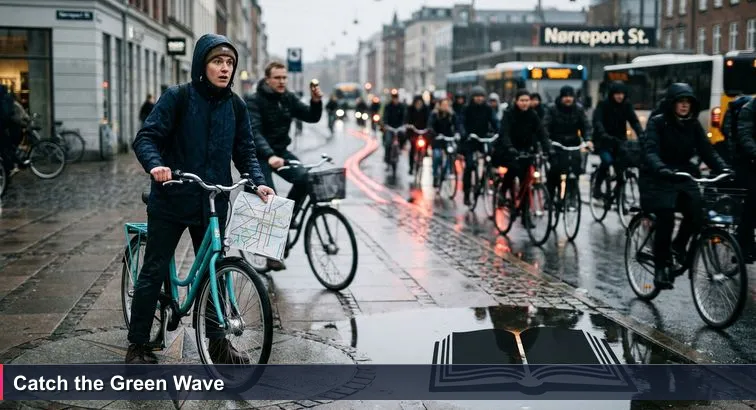
At 8:27 on a wet Tuesday, the bike lane outside Nørreport feels less like infrastructure and more like an entrance exam. Glasses fog, cobblestones shine with drizzle, and a fast, silent river of cyclists threads past toward Østerbro. You might be clutching a rental bike and a printed map of Copenhagen’s cycle routes, knowing every rule in theory, yet still flinch when a bell rings sharply behind you.
Starting an AI career in Denmark in 2026 lives in that same gap between knowing and moving. On paper, you can recite what matters: Denmark ranks among the world’s most AI-ready countries, the government has a dedicated national strategy for artificial intelligence, and companies from Novo Nordisk to Netcompany are already deploying real systems. In practice, it can still feel like standing half a metre out of position in the bike lane while everyone else glides past.
From rules to rhythm in the AI lane
Many readers in Copenhagen, Aarhus or Aalborg arrive here with impressive “maps”: online courses, YouTube playlists, maybe a university module or two. But Denmark’s AI ecosystem now competes on AI competencies - the lived ability to apply models, data, and tools inside real Danish workflows - rather than on who has access to the latest model API. The shift is from abstract understanding to what you might call traffic fluency: reading the flow in a Novo Nordisk research team, a fintech squad at Danske Bank, or an AI-first startup in Kødbyen.
Why this guide exists
This guide is designed as both map and riding lesson. It will take you from foundations to proof-of-work portfolios, from understanding flexicurity and workplace culture to choosing between lanes like research, industry engineering, or AI-augmented “super worker” roles. Along the way, we will point to pragmatic training options - from Danish universities to affordable online bootcamps such as Nucamp - and to concrete ways of plugging into local ecosystems in the Copenhagen metro and beyond.
By the end, the goal is simple: that moment on Dronning Louises Bro when the bike lights turn green in sequence, your grip loosens, and you realise you’re no longer surviving Denmark’s AI traffic - you’re moving with it.
In This Guide
- Introduction: why Denmark feels like a green light for AI careers
- Why Denmark is an exceptional place to start an AI career
- Understanding Denmark’s 2026 AI job market
- The AI roles companies are actually hiring for
- Where the jobs are: Copenhagen, Aarhus, Aalborg and employers
- Skills Danish AI employers really want
- Education paths: universities, bootcamps and Nucamp
- Build a Denmark-ready AI portfolio in 6-12 months
- Getting real experience: student jobs, internships and junior roles
- Navigating Danish hiring: CVs, interviews, language and culture
- Salaries, taxes and cost of living: what to expect
- Concrete 12-24 month roadmaps for three starter profiles
- Advanced paths: agentic AI, research and entrepreneurship in Denmark
- Catch the green wave: immediate next steps and action plan
- Frequently Asked Questions
Those pursuing careers in AI and web development can rely on Denmark's coding bootcamp scene for affordable, part-time online options that fit around full-time work.
Why Denmark is an exceptional place to start an AI career
From outside, Denmark can look almost too perfect on paper: a small Nordic country that somehow shows up near the top of every AI and digitalisation ranking. The IMF’s deep-dive on AI and work in Denmark notes that the country sits among the global leaders in AI preparedness, thanks to digital skills, strong institutions, and an unusually robust welfare model that can absorb technological change. At the policy level, Denmark has a dedicated AI strategy and a clear ambition to be the EU’s most digitally skilled nation, not just another adopter of imported tools.
A market already using AI at scale
Crucially, this isn’t just strategy slides. Analyses compiled by Invest in Denmark show that nearly half of Danish firms with 10+ employees are already using AI in their operations, putting Denmark at the top of Europe for real-world adoption. Companies across sectors - life sciences, maritime, cleantech, finance, government - are shifting from pilots to production systems, and they need people who can implement, maintain and govern those systems, not just talk about them.
Flexicurity: high demand plus a real safety net
On the labour side, unemployment sits around 3-4% with roughly 50,000 open positions nationwide, and tech roles are consistently over-represented. Denmark’s “flexicurity” model combines relatively easy hiring and firing with strong unemployment benefits and publicly funded reskilling. The IMF estimates that around 20% of the workforce faces significant task change from AI, which is one reason EU vehicles like the Recovery and Resilience Facility are explicitly financing large-scale digital upskilling in Denmark, as outlined in the Fund’s analysis of AI’s impact on Denmark’s labour market.
The Copenhagen advantage
Add to that the everyday realities of living in the Copenhagen metro area: bikeable commutes, predictable S-trains, and realistic working hours, alongside proximity to employers like Novo Nordisk, A.P. Moller-Maersk, Vestas and Netcompany. High taxes are real, but so are universal healthcare, subsidised education and generous parental leave. For someone building an AI career, that combination - serious problems to work on, a tight job market, and a safety net if you need to change lanes - makes Denmark an unusually forgiving place to take ambitious risks.
Understanding Denmark’s 2026 AI job market
To understand Denmark’s AI job market, you have to look beyond the hype and into how work is actually changing inside Danish companies. Coverage in The Copenhagen Post notes that Denmark now leads Europe in AI use, with businesses far past the demo stage and busy wiring AI into everyday operations across finance, healthcare, logistics and the public sector. This means most new roles are about making existing organisations smarter, not joining experimental skunkworks on the side.
From pilots to productivity
Industry analysis from IT-Branchen estimates that AI is already lifting labour productivity in Denmark by roughly 4%, driven mainly by “capital deepening” - workers using AI tools to augment their output rather than being replaced outright. Their report on AI’s economic opportunity in Denmark emphasises that value is flowing first to firms that can industrialise AI: standardised data pipelines, governed models, and MLOps practices that keep systems reliable in production.
Inside teams, this translates into demand for engineers, data scientists and MLOps specialists who can ship and maintain systems, but also for product managers and analysts who understand where AI meaningfully improves a workflow - and where it does not.
The rise of AI-augmented roles
Labour-market research cited by LinkedIn suggests that so far only about 5-10% of historical job transitions in Denmark can be directly linked to generative AI. That small but growing slice is revealing a pattern: rather than mass displacement, we see the emergence of “AI operators” embedded in finance, marketing, operations and HR - people hired precisely because they can run, monitor and improve AI tools inside their domain.
- Traditional tech roles evolving into ML, LLM and data engineering specialisations
- Existing business roles expanding to include AI-assisted analysis and decision support
- New hybrid titles like “GenAI Product Owner” and “AI Adoption Specialist” appearing in job ads
For jobseekers in Denmark, this means the opportunity space is wider than pure research or engineering: if you can connect AI capabilities to real Danish business problems, there is likely a lane for you in this market.
The AI roles companies are actually hiring for
Scan Danish job boards in 2026 and a clear picture emerges: companies are hiring less for “AI enthusiasm” and more for specific, execution-focused roles. Salary benchmarks from ERI show that an AI Engineer in Denmark earns on average around 652,894 DKK annually (typical range 449,844-797,183 DKK), while a Machine Learning Software Engineer averages about 709,159 DKK with a range of 487,901-865,883 DKK, confirming that these are among the best-compensated technical roles in the country, according to their detailed AI Engineer salary data for Denmark.
Core technical roles
At the heart of the market are engineering-heavy roles that take models from notebook to production. Danish employers consistently look for:
- ML / AI Engineer - building and tuning models for tabular data, images, or text; strong Python, ML frameworks, and deployment skills.
- ML Software Engineer / Senior ML Engineer - designing robust services around models, handling APIs, microservices, CI/CD and observability.
- Data Scientist / Applied Scientist - combining statistics, experimentation and stakeholder collaboration to turn messy data into decisions.
- Generative AI / LLM Engineer - working with LLMs, RAG pipelines and prompt engineering to build conversational or document-heavy systems.
- MLOps / AI Ops Engineer - owning pipelines, monitoring, governance and compliance, crucial in regulated Danish sectors like finance and life sciences.
Applied and AI-augmented roles
Parallel to these, a fast-growing set of hybrid roles focuses on applying AI inside business teams rather than building models from scratch. Titles include:
- AI-powered Business Analyst or Financial Analyst
- GenAI Product Owner or Product Manager (AI)
- AI Adoption Specialist embedded in consulting or internal transformation units
- Digital Transformation Consultant with an AI/automation focus
What distinguishes these roles in Denmark
What sets the Danish landscape apart is how tightly these jobs are coupled to domain challenges and regulation. Whether it is an AI Engineer optimising insulin production, an LLM specialist building tools for public services, or an AI Adoption Specialist in a maritime logistics firm, success is measured less by model novelty and more by safe, compliant gains in productivity within the country’s life sciences, energy, finance and public-sector ecosystems.
Where the jobs are: Copenhagen, Aarhus, Aalborg and employers
Look at where the S-trains, motorways and research grants converge, and you see where Denmark’s AI hiring is densest. Most roles cluster along an east-west axis: the Copenhagen metro as the primary hub, Aarhus as a rapidly growing second pole, and Aalborg as a research-heavy anchor in the north, with specialist pockets elsewhere.
Copenhagen: capital of applied AI
Greater Copenhagen concentrates a critical mass of employers. In life sciences, companies like Novo Nordisk, LEO Pharma and regional medtech scaleups hire AI talent for everything from drug discovery to manufacturing optimisation. Around the harbour and inner city, A.P. Moller-Maersk, shipping and logistics players, and fintech and banking teams work on routing, risk and fraud models. Add Netcompany’s public-sector digitalisation projects, product teams at LEGO and Unity, and AI-first startups such as Corti, Dixa and Parahelp, and you get a dense web of opportunities that aligns with Denmark’s positioning as a national AI “testbed,” highlighted by Invest in Denmark’s overview of AI adoption.
Aarhus and Jutland: university-fuelled growth
On the Jutland side, Aarhus blends a strong university pipeline with industry demand. Aarhus University’s Master’s specialisation in Artificial Intelligence feeds graduates into local roles spanning retail analytics, media tech and industrial optimisation, and its Katrinebjerg Karrieredag (“Kdag”) gives students direct access to employers like Danske Bank and Salling Group, as described in the university’s own AI specialisation overview. Surrounding towns host energy, manufacturing and logistics firms that increasingly build in-house AI capability instead of outsourcing all data work to Copenhagen.
Aalborg and emerging research hubs
Further north, Aalborg leans into research-intensive roles. Aalborg University’s AI:X initiative is establishing nine new AI labs and funding 18 PhD stipends in areas like sustainable AI infrastructure and trustworthy systems, creating a steady flow of research positions and industry collaborations. Around these three poles, smaller hubs - from robotics in Odense to green energy clusters in western Jutland - offer more specialised, often quieter environments for AI engineers who prefer a shorter commute and tighter-knit teams.
How to map your own target cluster
If you are planning your next move, treat Denmark like a network of overlapping bike lanes rather than a single road. Start by identifying which city best matches your interests, then shortlist 10-15 employers there across different sectors. From that list, you can decide whether your first lane is life sciences, maritime logistics, cleantech, fintech, or public digitalisation - and begin tailoring your skills and portfolio to the patterns you see in their job ads.
Skills Danish AI employers really want
Ask a hiring manager in Copenhagen what they are short of, and you rarely hear “more certificates.” Instead, you hear a variation of what Danish employer coalition Digital Dogme calls a battle for AI competencies: people who can turn models and data into working systems inside real organisations. Their analysis of AI as Denmark’s next competitive advantage stresses that tools are widely available; what differentiates firms now is workforce skill and the ability to redesign workflows, a theme echoed in Digital Dogme’s discussion of AI skills.
Technical and data foundations
Across job ads and interviews, certain fundamentals show up again and again. Danish employers expect you to be comfortable with:
- Python for clean, modular code plus core libraries like NumPy, pandas and scikit-learn.
- Solid mathematics and statistics: probability, linear algebra, optimisation and hypothesis testing.
- Machine learning basics: supervised and unsupervised methods, evaluation, and overfitting vs. generalisation.
- SQL and data modelling for real production datasets.
- Cloud and MLOps essentials: containers, REST APIs, CI/CD and basic monitoring.
Generative and agentic AI literacy
By 2026, almost every AI-related posting in Denmark mentions generative models in some form. That does not mean everyone is training their own transformers, but it does mean you should understand how to design and evaluate prompts, when to use retrieval-augmented generation, and how to compare open-source vs. hosted LLM options. In life sciences, logistics and finance, teams are beginning to experiment with multi-step, tool-using systems that approximate “agentic” behaviour, so being able to reason about orchestration, failure modes and human-in-the-loop controls is a clear plus.
Domain and cultural fluency
Equally important in Denmark is context. Employers in healthcare, maritime, energy, banking or the public sector look for people who can learn enough domain detail to choose the right targets, constraints and metrics. They also expect strong communication: explaining trade-offs to non-technical colleagues, documenting systems, and working in flat, consensus-driven teams. Many AI roles are officially English-speaking, but basic Danish noticeably helps with student jobs, smaller companies and public projects, as students on r/DTU often point out. Put simply: technical strength gets you to the interview; domain understanding and collaborative skills are what make you a long-term fit in a Danish AI team.
Education paths: universities, bootcamps and Nucamp
If you are standing in Lyngby, Nørrebro or Aarhus C wondering which “lane” leads into Denmark’s AI market, the good news is that there is no single correct road. The country combines research-heavy university tracks, practical bootcamps and hybrid paths that you can weave together over 12-24 months. Classic routes run through DTU, KU, AU and AAU, while newer options like Nucamp’s online programmes give working adults and career changers a realistic way to retool without quitting their jobs.
University tracks: depth, research and Danish networks
Denmark’s universities anchor the high-depth end of the spectrum. DTU offers an MSc in Human-Centered Artificial Intelligence, with a specialisation in AI and Cognition, and a separate MSc in Autonomous Systems, all blending rigorous ML with HCI, robotics and cognition. KU’s MSc in IT & Cognition targets language and human-AI interaction, while Aarhus University runs a Master’s specialisation in Artificial Intelligence that emphasises machine learning, NLP and data mining, plus career support through events like Katrinebjerg Karrieredag. Aalborg University’s AI:X initiative is creating nine new AI labs and funding 18 PhD positions, and Danish PhDs are salaried roles with pension, not stipends, as DTU highlights in its description of the Human-Centered AI programme and graduate conditions.
| Path | Example | Duration | Best for |
|---|---|---|---|
| University MSc | DTU, KU, AU AI programmes | 2 years full-time | Deep theory, research, R&D roles |
| PhD | AAU AI:X, Pioneer Centre | 3 years employed | Academic and advanced industry research |
| Bootcamp | Nucamp AI tracks | 15-25 weeks part-time | Practical skills, portfolio projects |
| Hybrid | MSc + bootcamp | Staggered | Theory plus job-ready engineering |
Nucamp and bootcamps: practical acceleration
For many in Denmark, the binding constraints are time and money rather than motivation. Nucamp’s online bootcamps stand out because programmes cost roughly 14,700-27,500 DKK, markedly below most in-person alternatives, and run part-time. The Solo AI Tech Entrepreneur bootcamp lasts 25 weeks at about 27,500 DKK, teaching you to build and monetise AI-powered SaaS with LLMs, agents and prompt engineering. AI Essentials for Work runs 15 weeks around 24,700 DKK for professionals who want to become AI-augmented “super workers,” while Back End, SQL and DevOps with Python (16 weeks, about 14,700 DKK) focuses on Python, SQL and deployment fundamentals.
Outcomes, other paths and how to choose
Nucamp reports an employment rate near 78%, a graduation rate around 75%, and a 4.5/5 Trustpilot score from about 398 reviews, with roughly 80% five-star ratings. Beyond AI-specific tracks, you will find options like Web Development Fundamentals (4 weeks, ~3,160 DKK), Front End Web and Mobile Development (17 weeks, ~14,700 DKK), Full Stack Web and Mobile Development (22 weeks, ~18,000 DKK), a Cybersecurity bootcamp (15 weeks, ~14,700 DKK) and an 11-month Complete Software Engineering Path at about 38,900 DKK. The practical move is to pick one main lane - MSc, bootcamp, or hybrid - based on your starting point and weekly capacity, then commit to emerging with either a thesis deeply tied to a Danish domain or a portfolio of deployed projects that make you legible to local employers.
Build a Denmark-ready AI portfolio in 6-12 months
In a Danish AI interview, the most convincing moment is rarely a theory question; it is when you open a browser and say, “Here’s something I built, running right now.” Whether you are talking to a startup in Copenhagen K or a research group in Lyngby, concrete, deployed work is what separates map-readers from people who can ride in traffic. Research labs like the Pioneer Centre for AI explicitly ask applicants to document prior projects and publications, signalling that evidence of real research or engineering work is now a baseline expectation, not a bonus.
Over 6-12 months, aim to build a small but sharp portfolio that looks and feels Danish. Three substantial projects is a realistic target:
- One tied to a local domain (e.g. healthcare, maritime logistics, green energy or public services).
- One centred on generative AI or LLMs (chatbots, RAG, document assistants).
- One that showcases deployment and MLOps (APIs, monitoring, basic CI/CD).
For example, you might prototype a speech-to-text triage assistant inspired by emergency medicine, a route optimiser that reduces emissions for ferry or delivery routes, or a RAG chatbot that answers questions using Danish public documentation. A more advanced project could explore “agentic” workflows that coordinate tools to summarise internal reports or flag anomalies in weekly KPIs.
Structure each project like a Danish case study: a one-page summary with problem, context and success metric; a technical deep-dive on data, models and infrastructure; and a deployed demo (Streamlit, FastAPI or similar). Write a 1-2 page PDF you can attach to applications and rehearse a stakeholder-friendly explanation. By the time you have three such projects online, you are no longer just listing skills - you are showing exactly how you would plug into a Copenhagen or Aarhus team on day one.
Getting real experience: student jobs, internships and junior roles
In Denmark, the most common on-ramp to an AI career is not a full-time junior role but a studiejob - a 10-15 hour per week student job that runs alongside your degree. Universities actively encourage this. Aarhus University’s AI specialisation highlights how students combine courses with paid work in local tech companies and use services like Tech Hub Aarhus to land roles in analytics, software and data teams, as described in the faculty’s own overview of its Master’s in Artificial Intelligence and career support.
These student roles sit in many corners of the ecosystem: assisting data scientists at a fintech in Høje Taastrup, building internal dashboards for a retailer in Jutland, or prototyping models in a university lab. The work might not always be branded “AI engineer,” but if you can touch real datasets, deployment scripts or evaluation pipelines, it starts compounding quickly into experience that Danish employers recognise.
Beyond studiejob, structured internships and graduate programmes offer more formal entry points. Large employers in life sciences, banking, energy and consulting run 6-24 month tracks that rotate you through data, AI and digital units before placing you permanently. Startups and scaleups add another layer: platforms like Wellfound list dedicated Artificial Intelligence Engineer openings in Denmark, showing that even smaller companies are now hiring specifically for machine learning and LLM work rather than folding it quietly into generic developer roles, as seen in the site’s section on AI engineer jobs in Denmark.
If you are a career changer without student status, the first step is often a bridge role: data analyst in a logistics firm, BI developer in a hospital IT department, or “digital transformation” specialist in your current industry. The practical playbook looks like this:
- Leverage your domain experience (e.g. shipping, healthcare, finance) and add visible AI projects on top.
- Target roles that mention analytics, automation or digitalisation, even if “AI” is not in the title.
- Use the first year to move closer to model-heavy work: volunteering for ML pilot projects, owning small LLM tools, or taking on MLOps-adjacent tasks.
Navigating Danish hiring: CVs, interviews, language and culture
Hiring in Denmark rewards clarity and substance over theatrics. Recruiters in Copenhagen or Aarhus typically skim your CV for 30-60 seconds, looking for a tight connection between what you have built and what their teams actually ship. A two-page maximum is an unwritten rule, even for experienced candidates, and dense lists of buzzwords carry less weight than a few well-chosen, quantifiable outcomes.
CVs that fit Danish expectations
Your CV should make it effortless to see how you’d contribute from week one. Focus on:
- Concise layout: 1-2 pages, clear sections for experience, education, skills and projects.
- Tangible outcomes: “Improved model AUC by 7%” beats “worked on classification models.”
- Relevant tech stack: Python, SQL, cloud, ML frameworks, MLOps tools listed per role or project.
- Portfolio links: GitHub, demos and case studies prominently placed near the top.
Interview flow and what’s tested
Most AI hiring processes follow a predictable arc:
- Initial screening with HR or a recruiter (motivation, basic fit).
- Technical round: coding, ML concepts, or a system-design discussion.
- Practical assignment or case study, often mirroring the team’s real work.
- Culture/fit interview with future colleagues or your manager.
Communication and collaboration are evaluated throughout. As LinkedIn’s analysis of AI hiring in 2026 notes, employers increasingly prioritise candidates who can explain trade-offs, align with business goals and work cross-functionally, not just solve isolated technical puzzles.
Language and workplace culture
Many AI roles in larger Danish companies and universities are officially English-language, and a high proportion of Danes are comfortable working in English. Still, basic Danish helps with smaller firms, public-sector projects and social integration, and signalling that you are learning the language is viewed positively. Culturally, expect flat hierarchies, direct but polite feedback, and genuine respect for work-life balance; staying excessively late is more often read as poor planning than as dedication. The most compelling candidates show that they can contribute technically while also fitting into this collaborative, low-ego environment.
Salaries, taxes and cost of living: what to expect
Compensation is one of the clearest signals that Denmark takes AI work seriously. Across national surveys, mid-level AI professionals typically earn between 650,000-850,000 DKK per year, putting Denmark among Europe’s better-paying tech markets. International comparisons compiled by Schooliply suggest that many Danish tech roles fall in the 80,000-110,000 USD band annually, slightly above the UK but below the very highest US levels, once converted.
For concrete role-by-role benchmarks, ERI salary data and crowdsourced reports align closely with Glassdoor’s breakdown for machine learning roles in Denmark, including its detailed view of the Senior Machine Learning Engineer salary range in Copenhagen.
| Role | Average Annual Salary (DKK) | Typical Range (DKK) | Career Stage |
|---|---|---|---|
| AI Engineer | ~652,894 | 449,844-797,183 | Mid-level individual contributor |
| ML Software Engineer | ~709,159 | 487,901-865,883 | Mid to senior, closer to production |
| Senior ML Engineer (Copenhagen) | ~745,000+ | 715,000-878,000+ | Senior specialist / tech lead |
Against those gross numbers, you need to factor in Denmark’s tax system. Typical effective tax rates for AI salaries often land around 37-42%, higher for top earners, but this is paired with universal healthcare, subsidised education, strong unemployment insurance and generous parental leave. The IMF has repeatedly highlighted this “flexicurity” model as a key reason Denmark can adopt AI aggressively without creating widespread social precarity.
On the cost side, Copenhagen is the most expensive base: rents and restaurant prices bite, especially near the inner lakes and metro stops. Aarhus is somewhat cheaper, and Aalborg or smaller university towns cheaper still, particularly if you can access kollegium housing. When you map it out, many entry-level AI roles in the 450,000-550,000 DKK band can still support a reasonable standard of living in the capital if you share housing, and a very comfortable one in Aarhus or Aalborg once you have a few years of experience.
Concrete 12-24 month roadmaps for three starter profiles
The difference between drifting through courses and actually landing an AI role in Denmark is rarely talent; it is a lack of a concrete 12-24 month plan. Because a DTU student in Kongens Lyngby, a logistics manager in Hvidovre and a data analyst in Berlin all start from different places, they need different lane choices, speeds and milestones to merge into Denmark’s AI traffic.
Profile 1 - Student in Denmark (CS, IT, engineering)
As a student at DTU, KU, AU or AAU, your main advantage is structured time and access to labs and studiejob. Your roadmap is about turning coursework into a portfolio and local experience before graduation.
- Months 0-6: Prioritise ML-heavy electives; start 1-2 Denmark-relevant projects.
- Months 6-12: Apply for AI-adjacent studiejob or internships; join university AI groups and meetups.
- Months 12-18: Aim your thesis squarely at a Danish domain (healthcare, logistics, finance) and a named employer cluster.
- Months 18-24: Decide between industry roles and PhD applications; refine portfolio and interview practice.
Profile 2 - Mid-career professional in a non-tech role (in Denmark)
If you are already in Danish industry, your edge is domain knowledge. The goal is to layer technical skills on top without quitting your job.
- Months 0-3: Pick a structured path (for example, an online programme like Nucamp’s Back End, SQL and DevOps with Python) and block 8-10 hours weekly.
- Months 3-9: Automate parts of your current work with Python/AI; ship 2-3 small internal tools.
- Months 9-18: Move into a bridge role (analytics, automation, “AI champion”) inside or outside your company.
- Months 18-24: Target explicit AI titles once you have portfolio pieces and 6-12 months of applied practice.
Profile 3 - International applicant targeting Denmark
From abroad, you need to prove you can contribute remotely first, then use that to unlock relocation.
- Months 0-6: Build fundamentals plus 2-3 deployed projects tied to Danish-style domains.
- Months 6-12: Network with Danish engineers and researchers; apply to English-speaking roles in larger firms.
- Months 12-24: Once hired, plan visa and move; begin Danish language classes and embed yourself in local meetups.
Advanced paths: agentic AI, research and entrepreneurship in Denmark
Once you are no longer fighting to enter the bike lane and have your first AI role in Denmark, three advanced directions tend to open up: building complex, agentic systems; diving into research; or creating your own AI product company inside the country’s startup and innovation ecosystem.
Agentic AI and complex systems
Danish teams in life science, logistics and finance are moving beyond single-call LLM tools to agentic setups: systems that plan multi-step workflows, call external tools and collaborate with human operators. In Medicon Valley, for example, a dedicated “Agentic AI in Life Science R&D” seminar brings pharma and biotech researchers together to explore how AI can coordinate experiments and literature review, as outlined by the Medicon Valley Alliance’s programme on agentic AI in R&D. To ride this wave, deepen skills in LLM evaluation, retrieval-augmented generation, tool orchestration and safety, aiming for roles like senior ML/LLM engineer or internal AI platform architect.
Research careers in Danish AI clusters
If you are drawn to fundamental questions and longer time horizons, Denmark offers unusually attractive research paths. PhD candidates at universities such as DTU, KU, AU and AAU are typically employed on full salaries with pension, working on topics like trustworthy AI, sustainable infrastructure or human-centred interaction in collaboration with industry partners. Cross-university hubs like the Pioneer Centre for AI add another layer of postdoc and research engineer positions, blending academic rigour with applied projects in health, climate and digital governance.
Entrepreneurship and AI product building
The third lane is entrepreneurial. Denmark’s AI startup scene includes companies building everything from clinical decision support to customer-experience automation, supported by national innovation funds and EU programmes. For aspiring founders or indie builders, combining domain experience with structured product training is key. That might mean piloting an internal tool with a Danish SME before spinning it out, or enrolling in a multi-month Solo AI Tech Entrepreneur bootcamp from Nucamp that focuses on designing, shipping and monetising AI-powered SaaS. The goal at this stage is not just to use advanced AI techniques, but to turn them into sustainable products that fit Denmark’s regulatory, ethical and market realities.
Catch the green wave: immediate next steps and action plan
There is a moment on the ride from Nørreport towards Dronning Louises Bro when the chaos dissolves: the lights sync to green, the peloton stretches out, and you realise you are no longer bracing against the city - you are moving with it. Reaching that same “green wave” in Denmark’s AI ecosystem comes from a few deliberate choices made now, not someday.
First, pick your lane with intent. Decide whether you are primarily a builder (ML/LLM engineer), an AI-augmented operator (analyst, product owner, domain expert), or a future researcher. Anchor that choice in Denmark’s realities: a tight labour market, strong flexicurity and top-tier AI readiness, all documented in the IMF’s detailed study of AI and Denmark’s labour market. Then choose a city cluster - Copenhagen, Aarhus, or Aalborg - and one or two target sectors that genuinely interest you.
Next, turn the next 30-90 days into a specific action plan:
- Block a fixed weekly slot (even 6-8 hours) for learning and building.
- Commit to one structured path (university module, employer course, or an affordable bootcamp) instead of juggling five.
- Define three portfolio projects: one domain-specific, one generative-AI focused, one deployment-heavy.
- Attend at least one local or online meetup and speak to one person already working in your desired lane.
If cost and time are tight, consider formalising your learning through a part-time programme: Nucamp’s AI-focused bootcamps, for example, run 15-25 weeks, cost roughly 14,700-27,500 DKK, and report around 78% employment and a 4.5/5 Trustpilot rating. Whether you choose that route or another, the key is to exit with visible proof of work, not just completed videos.
From there, the task is repetition: ship, reflect, adjust, apply. After a year of that rhythm, the Danish AI job market stops looking like an intimidating rush-hour lane and starts to feel like the city’s natural pace - one you know how to join, accelerate in, and eventually help lead.
Frequently Asked Questions
Is it realistic to start an AI career in Denmark in 2026 if I don’t have a tech background?
Yes - Denmark’s tight labour market (unemployment ~3-4% with roughly 50,000 open positions nationally) and strong reskilling support make transitions achievable; expect a realistic timeline of 12-24 months if you combine focused learning (e.g. a Nucamp bootcamp or targeted courses), 2-3 portfolio projects, and part-time practical experience.
Do I need to speak Danish to get an AI job in Copenhagen?
Not always - many AI roles in Copenhagen, especially at multinationals, startups and research centres, are English-speaking, but public sector, healthcare and many SMEs often prefer Danish; having A1-A2 Danish improves chances for student jobs, networking and long-term integration.
Should I pursue a Danish MSc (DTU/KU/AU/AAU) or take a bootcamp like Nucamp to break into AI?
It depends on your goal: a Danish MSc or PhD is the right route for research and deep technical roles (PhDs are salaried), while bootcamps like Nucamp (tuition ~14,700-27,500 DKK) are a faster, more affordable path to job-ready skills - many successful candidates combine degree study with bootcamp-style projects.
Which companies and cities in Denmark should I target for AI jobs?
Target the Copenhagen metro first - employers like Novo Nordisk, A.P. Moller-Maersk, Vestas, Netcompany, Danske Bank, LEGO, Unity and AI startups (Corti, Dixa) hire heavily there - while Aarhus and Aalborg are strong regional hubs tied to universities (AU, AAU) and industry clusters.
What salary can I expect as an entry-level AI engineer in Denmark?
Entry-level AI roles typically start around 450,000-550,000 DKK annually, with the national average for AI Engineers near ~652,900 DKK and senior Copenhagen offers often in the 715,000-878,000+ DKK range; remember effective tax rates commonly fall in the ~37-42% band.
Before you sign, read the complete guide to AI salaries in Denmark 2026 to evaluate offers like a local.
Explore the Top 10 tech apprenticeships and entry-level jobs in Denmark to find the best-for-you pathway into Copenhagen’s AI ecosystem.
Compare roles and salaries across the top 10 industries hiring AI talent in Denmark for pragmatic career pivots.
Cost of Living vs Tech Salaries in Denmark 2026 - learn realistic budgets
Looking for an explained guide to Denmark tech careers 2026 - salary, visas, and AI demand covered.

Irene Holden
Operations Manager
Former Microsoft Education and Learning Futures Group team member, Irene now oversees instructors at Nucamp while writing about everything tech - from careers to coding bootcamps.