









Is Denmark a Good Country for a Tech Career in 2026?
By Irene Holden
Last Updated: April 12th 2026
Quick Explanation
Yes - Denmark is a very good country for a tech career in 2026 because it pairs real demand for AI and cloud skills with world-class living standards. Around 25% of companies were already using AI in 2024, major employers like Novo Nordisk, A.P. Moller-Maersk, Vestas and Netcompany are actively hiring, and mid-level software and ML engineers commonly earn 55,000 to 70,000 DKK per month while enjoying a real 37-hour workweek and universal healthcare. You do trade some take-home pay to taxes near 40 percent, but that buys subsidised childcare, generous parental leave, fast-track visas for shortage roles and growing AI infrastructure such as Microsoft’s Denmark East cloud region, making Copenhagen and Aarhus especially attractive for people who value stability and a clear path from learning to on-the-ground AI work.
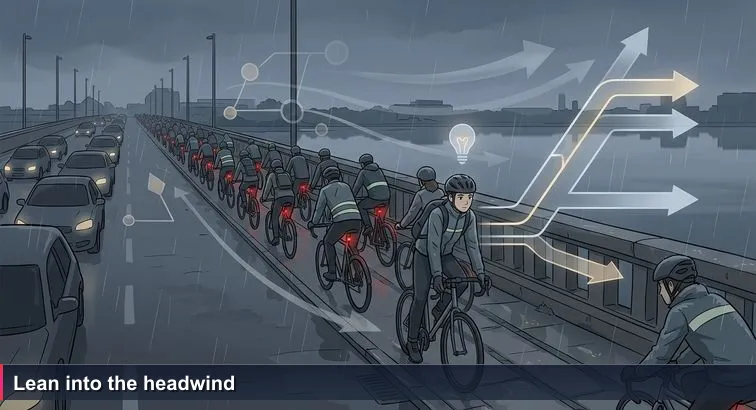
At 4 p.m. on a Tuesday in November, halfway across Dronning Louises Bro, the decision feels physical: lean into the cold headwind with everyone else, or turn back toward somewhere drier, brighter, easier. Choosing a tech or AI career in Denmark instead of London, Berlin or Stockholm feels a lot like that moment on the curb.
On one side of your feed, Denmark is “wide open” for tech talent, with politicians and employers openly worried about a shortage of specialists. On the other, people warn you about high income tax, expensive Copenhagen rent, and a language with more vowels than seems reasonable. The question isn’t whether there’s a headwind; it’s whether the bike lane you get in return is worth it.
Beneath the modest marketing, Denmark is quietly overbuilt for digital work. It ranks among the top countries worldwide for AI preparedness, and around 25% of companies were already using AI in 2024, the highest rate in Europe. Cloud and data infrastructure are expanding fast, with a data centre market expected to reach roughly DKK 2.93 billion by 2030, and quality-of-life scores consistently near the top of global rankings, as highlighted in Invest in Denmark’s overview of living conditions.
So the real decision becomes more personal:
- Do you value a predictable 37-hour week over maximum cash and equity?
- Are you excited by applied AI in pharma, shipping, or green energy more than by consumer apps?
- How much social safety net are you willing to “buy” with tax?
For many would-be career changers in Denmark, the first step isn’t a relocation but testing this fit: mapping their skills to local demand and, if needed, upskilling through affordable online programs in the DKK 14,700-27,500 range before deciding whether to join that quiet river of red bike lights heading deeper into Copenhagen’s tech ecosystem.
What We Cover
- Crossing the bridge: should you consider Denmark for your tech career?
- What is Denmark like as a tech career destination?
- Why does Denmark matter for AI and tech talent in 2026?
- How does the Danish tech career system actually work?
- Which AI and tech roles are actually hiring right now?
- How can you upskill fast in Denmark (universities, bootcamps and Nucap
- What are the visa, language and integration realities?
- Is Denmark the right move for you? Comparison and a practical roadmap
- Common Questions
For practical steps, check out the Complete Guide to Starting an AI Career in Denmark in 2026 to plan your next 12 months.
What is Denmark like as a tech career destination?
From a distance, Denmark can look almost too small to matter in tech: a country of about 6 million people, a language with limited global reach, and no FAANG headquarters. Up close, it feels more like a carefully built bike lane for knowledge work - moderate tempo, clear rules, and a surprising amount of high-tech traffic.
On the hard numbers, Denmark consistently ranks at the very top for digitalisation and AI capability. An OECD country note on Denmark’s AI strategy highlights that it has the second-highest AI preparedness score globally, built on fast networks, strong public data infrastructure, and a highly educated workforce. For you, that means you’re not arriving to “pitch AI”; you’re joining organisations that already treat it as normal tooling.
The ecosystem clusters around a few strong hubs rather than one mega-city:
- Copenhagen: home base for Novo Nordisk, Maersk, Vestas, Ørsted, Danske Bank, Netcompany and a dense startup scene. Around 29% of IT workers here are international, so English-first teams are common.
- Aarhus: anchored by Aarhus University and product companies, with roughly 12% international IT talent according to Tech City Aarhus’ ecosystem overview.
- Odense and Aalborg: specialist hubs for robotics, drones, wireless, and industrial IoT.
Underneath, there’s a serious backbone: Microsoft’s new Denmark East cloud region, a growing data-centre industry, and government investors like the Export and Investment Fund of Denmark and Innovation Fund Denmark funnelling capital into AI, green energy, and deep-tech. The result is a market that’s not huge, but unusually “wired” for careers in software, data, and AI.
Why does Denmark matter for AI and tech talent in 2026?
Denmark matters in AI and tech not because it is big, but because it is unusually coordinated. Policy makers, universities, and companies have all pushed in the same direction: heavy digitalisation, fast cloud adoption, and deliberate investment in AI, green energy, and life sciences. For you as a developer, data scientist, or ML engineer, that translates into a small but dense market that is actively looking for specialised talent.
The labour market is tight. ICT and robotics sit on official shortage lists, and international advisors project steady growth in tech roles driven by AI, renewables, and digital innovation. The Danish Agency for International Recruitment and Integration has expanded its “Positive List” to cover dozens of tech titles, and some Fast-Track work permits can be processed in roughly a month when your skills match those roles.
On the AI side specifically, Denmark treats this as infrastructure, not a side project. The government has earmarked around DKK 133.1 million to deploy AI in the public sector through 2027, and an analysis by the International Monetary Fund on AI and Denmark’s labour market underscores how deeply automation and augmentation are expected to shape local jobs. At the same time, the data-centre market is forecast to reach roughly DKK 2.93 billion in investment by 2030, powered by new cloud regions and hyperscale infrastructure.
Crucially, this demand is anchored in real industries rather than hype. AI and software teams are embedded inside Novo Nordisk, A.P. Moller-Maersk, Vestas, Ørsted, Danske Bank and Netcompany, as well as robotics clusters in Odense and digital consultancies across Copenhagen and Aarhus. Add in high social trust, universal healthcare with about 86% patient satisfaction, and a culture that protects evenings and weekends, and Denmark becomes a serious contender for tech talent who care about both impact and long-term sustainability.
How does the Danish tech career system actually work?
Once you look past the rain and bike lights, Denmark’s tech career system turns out to be highly engineered. Salaries, taxes, working hours, and welfare aren’t random; they’re the rules of the bike lane you’re joining. Understanding those mechanics makes it much easier to decide if this is your kind of ride.
On pay, Denmark sits in the solid-but-not-FAANG bracket. New tech MSc graduates are guided toward an indicative minimum of around DKK 47,400 per month, according to the engineering association IDA’s salary recommendations for STEM professionals. In practice, many mid-level software or ML engineers earn roughly DKK 55,000-70,000 per month, with senior specialists, architects, and niche profiles (cloud, MLOps, security) often in the DKK 70,000-100,000+ band and some roles reported above DKK 680,000 annually.
The catch is tax. With municipal, labour-market and state taxes stacked, mid- and senior-level engineers typically see an effective rate around 40%. In return you get universal healthcare, tuition-free education, subsidised childcare, and strong unemployment protection. Copenhagen itself is about 10-20% more expensive than cities like Aarhus or Odense, mainly because of rent. It’s common for a single person in the capital to spend 30-40% of net income on housing if they want a reasonably central flat.
Inside companies, the culture is built around a genuine 37-hour week, flat hierarchies, and a preference for trust over control. Overtime happens, but it’s tracked and usually compensated or taken as time off. One tech professional, Sara, captured the feeling in a public State of Denmark profile:
“I can have an ambitious tech career without compromising my social or family life because people actually respect the 37-hour work week.” - Sara, tech professional, State of Denmark campaign
Layered on top are five or more weeks of paid vacation, generous parental leave for both parents, and income security via voluntary “a-kasse” unemployment funds. Together, these pieces make it far less risky to join a smaller AI startup, move from consulting into industry, or take a few months for intensive upskilling when you need to change direction.
Which AI and tech roles are actually hiring right now?
Looking at job boards in Copenhagen or Aarhus right now, you quickly see a pattern: Denmark isn’t hiring “generic developers,” it’s hiring people who can wire AI, data, and cloud into very specific industries like pharma, logistics, finance, and green energy.
Officially, ICT and robotics are flagged as shortage sectors, and the government’s 2026 “Positive List” for migration now includes 72 job titles for higher education and 38 for skilled workers, many of them in software, data, and automation. Workindenmark’s overview of the Danish ICT and robotics industry highlights that employers are struggling to fill roles across the stack.
In practice, the hottest profiles cluster into a few families:
- Core software & cloud: backend and full-stack developers, site reliability engineers, and DevOps/cloud engineers to keep modern platforms running.
- Data & AI: data engineers, analytics engineers, data scientists with solid product sense, and machine learning engineers who understand MLOps, monitoring, and deployment.
- Security: cybersecurity specialists, security engineers, and cloud security architects, as more workloads move into Azure, AWS, and hybrid setups.
- Robotics & industrial tech: automation and robotics engineers, embedded developers, and computer vision specialists, particularly around Odense’s robotics cluster.
For early-career professionals and bootcamp graduates, the realistic entry doors are usually junior backend roles, data/analytics engineering positions with strong SQL and Python, or developer roles that integrate existing AI APIs into products. Those first steps often happen at consultancies, scaleups, or internal product teams in Copenhagen and Aarhus, where English is common and teams are large enough to support juniors.
How can you upskill fast in Denmark (universities, bootcamps and Nucap
If Denmark’s tech market is the bike lane, then universities, bootcamps, and online programs are the ways you learn to ride fast enough to keep up. The good news is that you do not have to quit your job for two years to become useful in AI or backend development here - unless you want the deep academic route.
University routes: deep and research-oriented
Traditional degrees at DTU, the University of Copenhagen, Aarhus University, or IT University of Copenhagen give you a strong theoretical base in computer science, data science, or AI. A typical MSc runs for two years and is ideal if you’re early in your career or aiming at research labs, R&D teams, or PhD programmes connected to Denmark’s national AI strategy. These paths align well with publicly funded innovation through bodies like Innovation Fund Denmark, which backs long-horizon deep-tech projects.
Bootcamps and short programs: faster, practical paths
For career changers already working in Denmark, shorter, focused programs are often more realistic. Nucamp positions itself deliberately in this space as an affordable online option that still connects into the local ecosystem, and is even highlighted in independent rundowns of leading AI bootcamps in Denmark.
| Path | Duration | Approx. Cost (DKK) | Main Focus |
|---|---|---|---|
| University MSc (e.g., CS/AI) | 24 months | Varies (often tuition-free for EU) | Deep theory, research, long-term R&D roles |
| Nucamp Back End, SQL & DevOps with Python | 16 weeks | 14,700 | Python, SQL, DevOps, cloud deployment |
| Nucamp AI Essentials for Work | 15 weeks | 24,700 | Prompt engineering, AI-assisted productivity at work |
| Nucamp Solo AI Tech Entrepreneur | 25 weeks | 27,500 | LLMs, AI agents, SaaS monetisation, shipping AI products |
| Nucamp Complete Software Engineering Path | 11 months | 38,900 | End-to-end software engineering foundations |
Why Nucamp fits Denmark’s market
Nucamp’s pricing - roughly 14,700-27,500 DKK for most core programs - sits far below many full-time bootcamps, which matters in a country where people think carefully about ROI after tax and rent. With an employment rate around 78%, a graduation rate near 75%, and a Trustpilot score of 4.5/5 from about 398 reviews (roughly 80% five-star), it offers a relatively low-risk way for Danes and internationals to pivot into software, data, or applied AI while still benefiting from the stability of the Danish system.
What are the visa, language and integration realities?
Behind the “we need tech talent” headlines, Denmark has a fairly strict but predictable system for who can actually move here to work in AI or software. If you’re from the EU/EEA, it’s mainly a matter of registering your right to reside and work. If you’re from elsewhere, you usually enter through specific channels tied to the country’s talent shortage policy.
The main door for non-EU tech workers is the Positive List: an official catalogue of shortage occupations that now includes 72 higher-education roles and 38 skilled-worker roles, many in ICT, robotics, and engineering. Immigration advisors at Y-Axis, which tracks Denmark’s high-demand jobs, note that if your title appears on this list and your employer uses the Fast-Track scheme, work and residence permits can often be processed in roughly a month. That doesn’t remove all friction, but it does mean the bureaucracy is designed to move for the right profiles.
Once you’re in, language becomes the next practical question. In Copenhagen and Aarhus, many larger tech teams at companies like Novo Nordisk, Maersk, Vestas, and the big consultancies operate in English, especially for software, data, and cloud roles. Startups with international founders are often English-first too. By contrast, public-sector IT and many smaller local firms still expect Danish, particularly in user-facing or managerial roles. Reaching an A2/B1 level in Danish over your first couple of years dramatically expands your options and promotion chances.
Social integration is its own kind of onboarding. Expats regularly describe Danes as kind and collaborative at work but more reserved after hours, with long-standing friend groups. People who settle well tend to plug into structured communities: sports clubs, coding meetups, study groups, and local networks in neighbourhoods like Nørrebro or Vesterbro. The upside is that once you’re “in,” relationships are usually deep and stable, mirroring the wider Danish preference for long-term commitments over constant churn.
Is Denmark the right move for you? Comparison and a practical roadmap
By this point on the bridge, the question isn’t whether Denmark is “good” for tech; it’s whether it’s good for you. The trade-offs are real: solid salaries but high tax, a smaller market but unusually strong safety nets, less adrenaline than London but more predictable evenings and weekends. That mix lands very differently for a single 24-year-old engineer than for a 35-year-old ML specialist with a family.
Denmark vs other European hubs
Think of the main options as different lanes on the same highway. London is the fast, congested car lane: higher pay and equity potential, but longer hours and weaker social protection. Berlin offers a bigger, messier startup scene at a generally lower cost of living. Amsterdam and Stockholm sit somewhere in between, each with its own specialisms in fintech or consumer tech. Copenhagen, by contrast, is the separated bike lane: slower, calmer, but with world-class social systems and a strong focus on quality of life. As one overview of the pros and cons of working in Copenhagen puts it, the city combines high living costs with exceptional safety, infrastructure, and work-life balance.
| Location | Main Strength | Key Trade-off | Best If You Want |
|---|---|---|---|
| Denmark (Copenhagen/Aarhus) | Applied AI in pharma, logistics, energy | High tax, small market | Stability, welfare, 37-hour weeks |
| London | Finance, big-tech pay | Long hours, weaker safety net | Maximum upside and churn |
| Berlin | Large startup scene | More volatility | Experimentation and subculture |
| Stockholm/Amsterdam | Unicorns, fintech, platforms | Competitive, crowded | High-growth consumer and fintech |
A practical roadmap from here
First, map your skills against Danish demand by scanning roles at Novo Nordisk, Maersk, Vestas, Ørsted, Danske Bank, and Netcompany, and checking whether your title appears on the Positive List. Second, run the numbers: expected Danish salary bands, net after tax, and likely rent in neighbourhoods like Nørrebro or Valby. Third, design a 6-12-month upskilling plan if there’s a gap - for many, that means combining structured online learning, such as an affordable Nucamp AI or backend program, with targeted side projects in Danish-relevant domains like green energy or logistics. Finally, test the waters: apply from where you are, join Copenhagen and Aarhus tech meetups online, and treat any interview feedback as data. By the time you’re back on Dronning Louises Bro in your head, you’ll know whether that red line of bike lights is your lane or someone else’s.
Common Questions
Is Denmark a good country for a tech career in 2026?
Short answer: yes for many tech professionals - Denmark ranks high on AI readiness and digital adoption, with around 25% of companies using AI in 2024, and strong employer demand in Copenhagen and Aarhus from firms like Novo Nordisk, Maersk, Vestas and Netcompany. Expect a trade-off: excellent work-life balance and social safety nets versus higher taxes and living costs, especially in Copenhagen.
What kind of salaries and taxes should I expect if I move to Denmark for tech work?
Typical gross monthly ranges in 2026: new STEM grads ~DKK 47,400, mid-level engineers DKK 55,000-70,000, and senior specialists DKK 70,000-100,000+; expect an effective tax rate around 40% for mid/senior roles. That tax buys universal healthcare, subsidised childcare, generous leave and strong unemployment protections.
Do I need to speak Danish to get a tech job in Copenhagen or Aarhus?
No - many tech teams in Copenhagen and Aarhus operate in English (about 29% of IT workers in Copenhagen are international), especially at large firms and consultancies, but public-sector roles and many SMEs still expect Danish. Learning basic Danish (A2/B1) noticeably improves networking, internal mobility and promotion prospects over 3-5 years.
Which tech roles are most in demand in Denmark right now?
Demand is strongest for machine learning engineers (especially MLOps), data engineers, cloud/DevOps and security specialists, plus robotics and control engineers in Odense and analytics roles in green energy and pharma. The Positive List includes many ICT roles and the Fast-Track scheme can shorten visa processing to roughly 30 days for certified employers.
Can a bootcamp like Nucamp realistically help me break into the Danish tech market?
Yes - bootcamp grads commonly enter as junior backend, data or AI-integrator roles; Nucamp programs in Denmark run roughly DKK 14,700-27,500 and report about 75% graduation and ~78% employment, plus local meetups in Copenhagen and Aarhus to aid networking. Pairing a focused bootcamp with projects targeted at Danish industries (logistics, energy, healthcare) improves hireability.
2026 Denmark cybersecurity hiring: employers, roles and salaries for cybersecurity professionals
Check the list of best tech jobs that don't require a degree in Denmark for 2026, tailored to Copenhagen and Aarhus markets.
Learn where to find AI meetups and networking events across Copenhagen and Aarhus in 2026
Compare roles and salaries across the top 10 industries hiring AI talent in Denmark for pragmatic career pivots.
Best tech startups in Denmark that hire junior developers in 2026

Irene Holden
Operations Manager
Former Microsoft Education and Learning Futures Group team member, Irene now oversees instructors at Nucamp while writing about everything tech - from careers to coding bootcamps.