









AI Meetups, Communities, and Networking Events in the Bahamas in 2026
By Irene Holden
Last Updated: April 9th 2026
Key Takeaways
Yes - The Bahamas in 2026 has a tight, high-value AI meetup and networking ecosystem centered in Nassau, where rooms like Crypto Isle, the AI Whisperers Club, BAPMC, UB Research Edge, and forums such as the PBS AI & Innovation Forum bring ministers, resort and bank CTOs, telecom leaders, and startup founders into the same conversations. With no personal income tax, mid-level AI roles commonly paying BSD 70,000 to 100,000, Nucamp bootcamps priced between BSD 2,124 and 3,980, and fintech momentum around the Sand Dollar drawing talent and investment, attending regular meetups plus one structured course is a practical fast-track from learning to hireable for Bahamians pursuing AI careers.
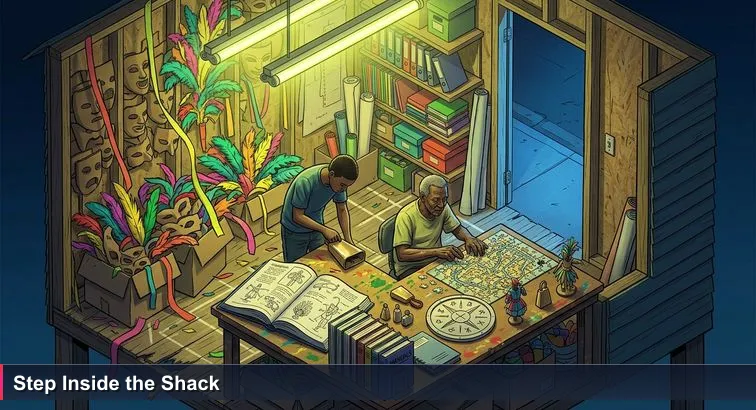
At 2 a.m. on Boxing Day, when Bay Street is finally quiet and the last taxis have rolled through Rawson Square, Bain Town is still humming. In a narrow Junkanoo shack, fluorescent bulbs fight the darkness. Cardboard masks lean against plywood walls, crepe paper clings to sweaty arms, and somebody’s half-finished curry from Potter’s Cay shares a table with a glue gun and a battered cowbell. An elder taps out a rhythm on the paint-splattered tabletop while a teenager argues that the brass line is “still off, man”.
By sunrise, most of the country will only see the polished side of all this: the glitter, the choreography, the perfect lines rolling down Bay Street. Very few will ever feel the heat in that shack or hear the real conversations - about what to cut, what to risk, and what will make the whole crowd shout when the bass drops at Rawson Square.
AI in The Bahamas works the same way. The headlines talk about national AI strategies and digital assets; government releases lay out plans to “take advantage of the benefits of AI” for a smart, services-led economy, as outlined in recent official policy briefings. News clips highlight big-ticket forums at resorts and global speakers flying through Nassau for a day. But the real understanding - the kind that turns into promotions at BTC or Scotiabank, or a startup idea tested at Crypto Isle - comes from much smaller rooms.
This guide is about those rooms. The Nucamp study group you stumble into after work, the UB lecture where ten students stay back to ask hard questions, the PBS-style innovation forums that local media like Eyewitness News now treat as front-page economic news. It exists to help you move from watching the “AI parade” on LinkedIn to sweating in the shack with the people actually building The Bahamas’ next wave of tools, careers, and policies.
In This Guide
- Inside the Shack: Why This Guide Matters
- The AI Wave Hitting The Bahamas in 2026
- Why Nassau Is Becoming an AI Networking Hub
- Types of AI Communities in The Bahamas
- Core AI & Tech Meetups in Nassau
- Major Conferences and High-Value Forums
- University and Academic AI Opportunities
- Nucamp and Local Bootcamps: Turning Learning into Work
- A Practical Monthly AI Networking Calendar
- How to Work the Room (Even if You’re Introverted)
- Turning Community Involvement into Career Moves
- The Bahamas vs the Region: Strategic Advantages and Tradeoffs
- Stepping Into the Shack: Your 60-Day Action Plan and Advanced Tips
- Frequently Asked Questions
See role breakdowns and salary ranges in our complete guide to AI careers in the Bahamas (2026).
The AI Wave Hitting The Bahamas in 2026
Across the islands, AI has stopped feeling like a distant tech buzzword and started sounding more like a weather report. At the RF Economic Outlook, Prime Minister Philip Davis did not mince words, calling artificial intelligence an “AI tsunami” and warning that, “you either prepare for it, or you get swept away… together, we can usher in a new era of national ambition.” That framing has shifted AI from a niche topic to a national development question on the same level as tourism arrivals or hurricane readiness.
In response, ministries and regulators have begun treating AI as core economic infrastructure. The Ministry of Economic Affairs and the Department of Information and Communications Technology now talk openly about “advancing strategies to take advantage of the benefits of AI,” emphasising a smart, services-driven economy built on strong regulation, digital identity, and payments rails rather than cheap labour. Those same rails underpin the Sand Dollar and the wider digital asset framework that set The Bahamas apart in regional policy discussions highlighted in the Annual AI Governance Report.
On the ground, employers are already moving. Resorts like Atlantis and Baha Mar are testing AI for dynamic pricing and guest experience, while BTC, Cable Bahamas and Digicel Bahamas are experimenting with AI in customer support and network optimisation. Banks such as RBC, Scotiabank and FirstCaribbean are quietly rolling out AI for compliance and fraud, especially around Sand Dollar transactions. For Bahamians with the right skills, mid-level data or AI roles in these sectors commonly sit in the BSD 70,000-100,000 range, and with no personal income tax, that purchasing power is globally competitive.
At the same time, youth initiatives - from UB’s hackathon teams to robotics crews representing the country at events like the FIRST Global Challenge - show that this wave is reaching classrooms and community groups, not just boardrooms. The opportunity, and the risk, is now spread across the whole population.
Why Nassau Is Becoming an AI Networking Hub
Nassau has quietly become one of the most strategically connected AI cities in the region. On a single weekday you can pass a BTC engineer testing a new chatbot on Shirley Street, a Scotiabank analyst modelling risk scenarios in a Bay Street office, and UB students heading to a Research Edge talk on AI ethics on Thompson Boulevard. That density of decision-makers, practitioners and learners inside a small metro area is rare in the Caribbean.
The tax structure is the first unfair advantage. With no personal income tax, high-skilled tech and data salaries stretch much further than comparable roles in North America or Europe. When an AI engineer or data scientist lands a mid-level role in Nassau, more of that paycheque can go into savings, side projects, or seed money for a startup rather than tax deductions.
The second advantage is the cluster of industries actively experimenting with AI. Major resorts like Atlantis, Baha Mar and Sandals are exploring AI for pricing, marketing and guest experience; telecom operators BTC, Cable Bahamas and Digicel Bahamas are piloting AI for network optimisation and customer support; and banks such as RBC, Scotiabank and FirstCaribbean are testing AI-driven compliance and digital banking products. At the same time, the University of The Bahamas is anchoring academic and public debate through its Research Edge seminar series, which routinely features talks on AI, fintech and regulation.
Finally, Nassau has embraced a “high-value networking” model. Rather than chasing sheer volume of hackathons, the city leans on venues like Baha Mar and Atlantis to convene regulators, CEOs and global AI leaders for focused summits and forums. Even everyday business networking has gone digital, with tools like Nassau-focused networking platforms making it easier to turn a quick introduction into an ongoing professional relationship.
Types of AI Communities in The Bahamas
Once you realise AI in The Bahamas lives in lots of small “shacks” rather than one big scene, it helps to know what kinds of rooms you’re walking into. Different spaces play different roles in your growth - from hands-on coding to C-suite strategy - and the smartest Bahamian professionals deliberately rotate through several types each month.
At a high level, you’ll find at least 7 types of AI-related communities across Nassau, Grand Bahama and the Family Islands:
- Grassroots & practitioner meetups - groups like the Bahamas Agile & Project Management Community and The AI Whisperers Club, where you see how real projects are planned, shipped and debugged.
- Coworking & startup hubs - Crypto Isle and similar spaces where fintech and AI founders share desks, investors drop by, and Sand Dollar or digital asset ideas are stress-tested.
- Corporate & government forums - invite-only rooms where policy makers, bank CIOs and telecom execs debate regulation, ethics and workforce impact.
- Conferences & summits - big stages at resorts and convention centres that compress a year of networking and vendor demos into a few days.
- Academic talks & research seminars - University of The Bahamas and Bahamas Technical and Vocational Institute sessions that dive into theory, ethics and regulation.
- Structured learning communities - bootcamps and courses such as Nucamp, where cohorts move through a syllabus together instead of learning alone.
- Virtual & regional communities - online summits and Caribbean networks that you join from home, widening your circle beyond our shores.
Structured programmes deserve special mention. Nucamp’s AI-focused bootcamps, for example, offer options from the 16-week Back End, SQL & DevOps with Python course at about BSD 2,124 up to the 25-week Solo AI Tech Entrepreneur path around BSD 3,980. With employment outcomes near 78% and a Trustpilot rating of 4.5/5, they give Bahamians an affordable alternative to overseas schools that often cost BSD 10,000 or more.
Meanwhile, virtual ecosystems like ITU’s Young AI Leaders, ODSC’s AI conferences and regional summits mean that even if you’re based in Abaco or Exuma, you can still plug into global best practice while keeping your feet - and your future - firmly planted in the Bahamian economy.
Core AI & Tech Meetups in Nassau
On any given week in Nassau, you can step into at least one room where people are not just talking about AI, but putting it to work in Bahamian companies. These aren’t giant expos at Baha Mar; they’re 20-50 people in borrowed boardrooms, coworking spaces and UB lecture halls, swapping war stories about network outages, Sand Dollar pilots and half-broken chatbots.
The backbone of this scene is the Bahamas Agile & Project Management Community. Meeting roughly once a month, usually on the last Thursday, BAPMC sessions feel like a behind-the-scenes tour of how Atlantis, BTC, Cable Bahamas, banks and government departments actually deliver tech projects. Talks cover everything from structuring an AI proof-of-concept inside a regulated bank to managing risk on a chatbot rollout for a telecom call centre.
Just down the road, Crypto Isle functions as an oceanfront lab for anyone mixing fintech, digital assets and AI. On a normal weekday you’ll find founders, lawyers and engineers sharing desks; in the evenings, masterclasses and mixers unpack topics like AI-driven fraud detection or Sand Dollar analytics. Local media have already highlighted Crypto Isle’s role in hosting high-profile AI and innovation forums that bring together regulators, CEOs and technical teams under one roof, as seen in coverage from Eyewitness News Bahamas.
For smaller, more experimental sessions, The AI Whisperers Club offers hands-on evenings where a dozen people crowd around laptops, testing prompts, building mini-bots and sharing how they use tools like ChatGPT to automate real work at places like Scotiabank, Digicel or local SMEs. And when you want the societal picture, DigiLearn’s public forums - often hosted at the University of The Bahamas with support from partners like the OWN Foundation and Island Luck’s ILCares - dive into job security, retraining and what AI means for teachers, civil servants and front-line staff.
If you hit even one of these four rooms each month, you’ll start to hear the unpolished version of AI in The Bahamas long before it makes the evening news: the concerns, the experiments and, crucially, where new roles and contracts are actually appearing.
Major Conferences and High-Value Forums
The big conferences and forums are where Nassau and Grand Bahama compress a year of AI discussion into a couple of days. Instead of twenty people in a meetup room, you suddenly have cabinet ministers, resort CTOs, bank CIOs and senior engineers from BTC, Cable Bahamas and Digicel passing each other in the foyer at Baha Mar or Atlantis.
Each event has its own rhythm and role in the ecosystem, from policy-heavy economic outlooks to product-driven vendor expos and research conferences. The table below maps out the main gatherings shaping how AI actually rolls out across tourism, finance, telecoms and government.
| Event | Primary Focus | Typical Attendees | Key Opportunity |
|---|---|---|---|
| PBS AI & Innovation Forum (Nassau) | AI strategy, cybersecurity, national adoption | CEOs, senior developers, government tech leaders | Pitch yourself to decision-makers driving early AI projects |
| RF Economic Outlook (AI track) | Macro-economy, AI productivity, regulation | Bank executives, policy makers, institutional investors | Understand where AI fits in the country’s economic plan |
| RSVP Bahamas Caribbean Symposium | Luxury events, tourism, AI-driven guest experience | Planners, hoteliers, brand and creative directors | Spot AI niches in weddings, MICE and destination events |
| VARTECH 2025 (Atlantis) | Emerging tech, hardware, enterprise solutions | Vendors, VARs, resort and telecom IT teams | See which AI-enabled tools local enterprises are buying |
| ICAIML (Lucaya) | Scholarly AI & ML research | Academics, postgraduate students, R&D engineers | Connect with researchers for projects and further study |
| Caribbean AI Summit | Regional business use-cases | Founders, CIOs, product leaders, consultants | Benchmark Bahamian efforts against regional peers |
Coverage of the PBS AI & Innovation Forum by outlets like Eyewitness News has already described it as the largest dedicated AI event in the country and a potential catalyst for a wider tech transformation, underscoring how closely these gatherings are watched by business and government alike.
On the vendor side, conferences such as VARTECH at Atlantis bring in international partners showcasing AI-infused security, networking and retail systems, giving Bahamian IT teams an early look at the tools they’ll be asked to deploy next. Event details from organisers like BlueStar make it clear that AI is now embedded across everything from point-of-sale terminals to computer vision solutions.
To turn these forums into career momentum, treat each one as a focused campaign: choose two or three talks aligned with your goals, identify five people you want to meet (by company or role, not just name), and block time the week after to send follow-ups and refine your CV or portfolio based on what you heard in the rooms.
University and Academic AI Opportunities
For Bahamians who want more than YouTube tutorials, the country’s classrooms and lecture halls are becoming serious training grounds for AI. The University of The Bahamas, the Bahamas Technical and Vocational Institute and partners abroad are stitching together a path from first-year coursework to research collaborations and specialist fintech roles.
At UB, the Research Edge seminar series has evolved into a regular forum where faculty and guest speakers unpack topics like AI ethics, generative AI in software engineering and digital transformation in small states. These talks are usually free, open to the public and a direct line to lecturers who can supervise projects or recommend you for internships. UB’s students have already proved their potential on the global stage by winning a Harvard AI hackathon, signalling that our talent can stand toe-to-toe with peers from much larger countries.
On the finance side, UB’s FinTech Regulatory Innovation Programme, built in collaboration with experts from Cambridge, focuses on digital assets and AI-enabled compliance, from AML and KYC to risk scoring and supervisory technology. Graduates of this track are well-placed for roles at local operations of RBC, Scotiabank and FirstCaribbean, as well as at the Central Bank or Sand Dollar-focused fintechs. Details from UB emphasise that the programme is designed to push The Bahamas to lead the digital assets sector regionally, rather than simply follow others’ regulations.
Beyond Nassau, the academic conversation also extends to Grand Bahama. The International Conference on AI and Machine Learning (ICAIML), listed on platforms like Free Conference Alerts, brings researchers and postgraduate students to Lucaya to present technical papers and posters. For UB or BTVI students eyeing postgraduate study, simply attending a day of these sessions can clarify which branches of AI - from deep learning to reinforcement learning - genuinely excite you.
Then there is BASIC, the Bahamas Advanced Study Institute & Conferences, supported by the University of Miami’s Physics Department. While framed around physics and high-level computational science, BASIC events frequently touch on data-intensive simulations and scientific computing - skills that overlap heavily with modern machine learning. According to the BASIC conference overview, participants range from senior scientists to early-career researchers, making it one of the few local venues where a Bahamian student can discuss algorithms with globally recognised experts over coffee between sessions.
Nucamp and Local Bootcamps: Turning Learning into Work
For many Bahamians, the gap between “interested in AI” and “getting hired to work on it” is not talent, it is structure. Local meetups and UB talks are powerful, but they do not always give you a syllabus, deadlines or portfolio pieces that a hiring manager at BTC, Scotiabank or Atlantis can easily understand. That is where structured bootcamps come in.
Nucamp has emerged as one of the most accessible options for AI and software training that still fits around a full-time job. With tuition ranging from about BSD 2,124 to BSD 3,980 for its core paths - far below the BSD 10,000+ price tags charged by many overseas schools - it offers Bahamian learners payment plans, small cohorts and a clear path from first lesson to deployable project. Independent reviews report an employment rate near 78%, graduation around 75% and a Trustpilot score of 4.5/5, with roughly 80% five-star ratings.
| Programme | Duration | Tuition (BSD) | Main Focus |
|---|---|---|---|
| Solo AI Tech Entrepreneur | 25 weeks | 3,980 | AI products, LLMs, SaaS monetisation |
| AI Essentials for Work | 15 weeks | 3,582 | Workplace AI, prompt engineering |
| Back End, SQL & DevOps with Python | 16 weeks | 2,124 | Python, databases, cloud deployment |
| Full Stack Web & Mobile | 22 weeks | 2,604 | Front end + back end development |
| Cybersecurity Bootcamp | 15 weeks | 2,124 | Security fundamentals and tooling |
| Complete Software Engineering Path | 11 months | 5,644 | End-to-end software career prep |
Because Nucamp builds community into the model - with weekend workshops, peer support and local study groups across islands - it pairs naturally with Nassau’s meetup circuit. A BTC employee might use the 15-week AI Essentials track to automate reporting in their current role; a UB graduate could take the 25-week Solo AI Tech Entrepreneur path and build a prototype Sand Dollar analytics tool for local merchants. Course pages such as the detailed Nucamp AI bootcamp overview outline exactly which skills map to back-end, data or product roles.
The final piece is career support: CV feedback, mock interviews and a job board aimed at junior and mid-level roles. Combined with the country’s no personal income tax environment, that makes bootcamp-to-job transitions in Nassau particularly attractive. A move from front-line hospitality or customer service into an AI-involved analyst or developer role can lift you into the BSD 40,000-90,000 bracket while keeping you rooted in the local economy.
A Practical Monthly AI Networking Calendar
To move from spectator to participant, you need rhythm. A simple monthly calendar turns Nassau’s scattered meetups, UB talks and global livestreams into a steady beat that works even if you’re juggling shift work at Atlantis or a desk job at RBC.
Think of your month in four passes. In week one, focus on foundations and global context: watch one online session from a major event like AI for Good or ODSC; The Bahamas sits in the Eastern time zone, so US East Coast events fit neatly after work. The full ODSC AI East 2026 schedule shows how many talks are available virtually, from LLMs to MLOps.
Week two is for deepening skills. Aim to attend one academic or training session - a UB Research Edge talk, a BTVI workshop or a DigiLearn public forum on AI in the workforce. Block two focused evenings for your Nucamp or UB coursework and push your capstone or side project forward.
In week three, prioritise industry exposure. Drop into a Crypto Isle masterclass or mixer to hear how fintech founders are using AI with the Sand Dollar or digital assets. If your schedule allows, add one virtual business-focused event; analyses of conferences like Enterprise Connect, where AI is reshaping customer contact platforms, highlight how fast tools are landing in real call centres and service desks, as noted by commentators at the Futurum Group.
Finally, week four is for leadership and reflection. Join a Bahamas Agile & Project Management Community meetup or similar group to see how teams structure AI projects. Then, review the month: what did you learn, who did you meet, and what one small step will you take before the next calendar cycle - update your CV, publish a GitHub repo, or book a coffee with someone you met in the “shack”?
How to Work the Room (Even if You’re Introverted)
Walking into a Nassau tech event can feel like stepping into a packed church fair: clusters of people who all seem to know each other, fast conversations about things you have only half-heard of, and a quiet pressure to “work the room”. For introverts, or anyone new to AI, that can be enough to stay home - which is exactly how opportunities slip by.
The easiest fix is to lower the bar. Before you reach Baha Mar for a PBS-style forum, or Crypto Isle for a fintech mixer, decide that your goal is not to meet everyone; it is to have three genuine conversations. Prepare a 10-second introduction that mentions what you are learning (Nucamp, UB, BTVI) and one area you are curious about, like chatbots in banking or AI for guest experience at Atlantis. Arriving early helps: it is far easier to start a chat with one person at the coffee station than to break into a circle of six later.
Once the event starts, let the content do the heavy lifting. Ask short, practical questions in Q&A - “What skills would you look for in a junior hire on your AI team?” - then introduce yourself to that speaker afterwards. Regional leaders increasingly stress this shift from hype to usefulness; as one founder put it after the Caribbean AI Summit, we are moving “from hype to real, practical AI that actually transforms how businesses operate and serve customers”, a point captured in his post-conference reflections.
Afterwards, a simple follow-up turns a chat into a relationship. That same day, send a brief LinkedIn message reminding them who you are and one thing you found helpful. Within a week, share a small update - a GitHub link, a revised CV, or a question about how to tailor your Nucamp or UB project for telecoms, banking or tourism. You are not asking for a job; you are showing that you listen, take action and are serious about stepping from the sidewalk into the shack.
Turning Community Involvement into Career Moves
Showing up at meetups and forums is a powerful start, but your job title, pay and daily work only change when you turn those rooms into concrete steps. The people you see moving from front desk roles into data teams, or from UB classrooms into fintech startups, are not “luckier” - they are using the same communities more deliberately.
Three common Bahamian paths keep showing up. A customer service rep at BTC, Cable Bahamas or a major resort starts by attending DigiLearn forums and The AI Whisperers Club, then takes an evening bootcamp such as Nucamp’s AI Essentials and pilots a simple chatbot or reporting script inside their department. A UB or BTVI student joins Research Edge talks and Crypto Isle sessions, layers on structured training like Nucamp’s back-end or Solo AI Tech Entrepreneur programme, and ships a small Sand Dollar or compliance tool that impresses a bank or fintech hiring panel. A creative professional in events or marketing goes to the RSVP-style tourism conferences, learns prompt engineering to speed up proposals, and quickly becomes the in-house person who can pair creative vision with AI tooling.
- Use communities to spot problems real teams are facing.
- Use courses and bootcamps to build solutions to one of those problems.
- Use conferences and forums to show your work to people who can promote or hire you.
Local AI training masterclasses hosted at the University of The Bahamas, backed by groups like the OWN Foundation and ILCares, underline this same pattern. Coverage of these events highlights how they are designed not just to inspire, but to give participants practical tools for advancement in an AI-driven economy, with organisers stressing “empowerment through education” in reports carried by Eyewitness News Bahamas.
“AI training… is about empowerment through education, ensuring Bahamians have the tools to excel in the modern AI-driven economy.” - Carlo Ramsey, Executive, Island Luck / ILCares
Bootcamps like Nucamp then close the loop with structured curricula, mentors and career services that help you turn that community-informed project into a CV bullet, GitHub repo and talking point in interviews. The most effective strategy is simple: pick a problem you keep hearing about in the “shacks”, build a small solution around it, and make sure the people who care about that problem see your work.
The Bahamas vs the Region: Strategic Advantages and Tradeoffs
On a regional map, The Bahamas looks small next to Jamaica, Puerto Rico or Panama, but in AI and digital finance circles it punches well above its weight. When policy-makers, bank executives and technologists talk about how AI will reshape financial services in the Caribbean, Nassau is now one of the default reference points rather than an afterthought.
One major advantage is strategy. Government agencies have framed AI as part of a broader “smart nation” and financial centre vision, building on earlier moves in digital assets and the Sand Dollar. That means discussions about machine learning are happening alongside debates on regulation, compliance and cross-border business at events like The Nassau Conference, where sessions on risk, governance and technology make it clear that financial services are expected to stay globally competitive. The 2025 agenda published by The Nassau Conference shows how closely digital innovation is tied to the jurisdiction’s future.
The ecosystem’s shape is also different from peers. Kingston has a louder, more grassroots developer culture with frequent hackathons; Panama City is building a robotics and logistics hub, hosting global competitions like FIRST; San Juan has a larger pool of engineers tied into the US mainland. By contrast, Bahamian AI conversations are more tightly woven into tourism, banking, telecoms and regulation. In a single forum at Baha Mar you might hear from a Central Bank official, a BTC network architect and an Atlantis IT lead on the same panel.
There are tradeoffs. The local talent pool is smaller, and there are fewer pure “Big Tech” engineering roles than in San Juan or Miami. Infrastructure constraints still come up in public debates, from patchy connectivity to questions about data centres. But for Bahamians willing to lean into these realities, the mix of regulatory credibility, financial expertise and proximity to decision-makers creates a niche: AI professionals who can bridge code, compliance and Caribbean business culture, and sell that expertise across the region.
Stepping Into the Shack: Your 60-Day Action Plan and Advanced Tips
The next two months are where you decide whether you stay on the Bay Street sidewalk or start sweating in the shack with everyone else. You do not need to quit your job at Atlantis, BTC or the Ministry to begin; you just need a clear, simple plan and the discipline to treat AI like part of your weekly routine, not an occasional curiosity.
Over the next 60 days, focus on four moves:
- Pick one learning path - Nucamp, UB, BTVI or a solid online course - and block two evenings a week for it, no matter what.
- Choose two recurring communities - for example, BAPMC and Crypto Isle, or a UB seminar series and The AI Whisperers Club - and attend every time they meet.
- Register for one major event - a PBS-style forum, RF Economic Outlook, or a regional summit - and plan questions and follow-ups in advance.
- Define one local project - a prototype that would genuinely help a Bahamian employer in tourism, banking, telecoms or government.
Advanced tactics turn this into a career accelerator. Keep a simple “AI field notes” document where you record who you met, what problems they mentioned, and how your project could evolve to solve one of those problems. When you hear the same pain point twice - compliance paperwork, call-centre wait times, tour dispatching - treat that as a signal to refine your prototype.
If you discover you love the technical side, look beyond our shores without leaving home. Contributing to open-source projects, or even aiming one day at programmes like the OpenSearch Ambassadors, can position you as a Bahamian voice in global AI conversations. The point is not to escape The Bahamas, but to let what you build in our shacks echo far beyond them.
Frequently Asked Questions
Where can I find the most active AI meetups and hubs in The Bahamas in 2026?
The densest activity is in Nassau - look for Crypto Isle on East Bay Street, the Bahamas Agile & Project Management Community (BAPMC), the AI Whisperers Club, and University of The Bahamas Research Edge talks; major conferences like the PBS AI & Innovation Forum and VARTECH also draw heavy local attendance. These rooms connect you directly to employers such as Atlantis, BTC/Flow, RBC, Scotiabank and fintech founders working with the Sand Dollar.
If I use meetups to look for AI work in Nassau, what kind of salary should I expect and does tax change things?
Entry-level AI-adjacent roles often start around BSD 40,000, mid-level data/ML roles commonly sit in the BSD 70,000-100,000 range, and senior positions can exceed that depending on employer; remember Nassau’s no personal income tax means take-home pay is effectively higher than many North American cities. Use meetups to target employers like Atlantis, BTC, and local banks where those ranges are realistic for applied AI roles.
Which single events should I prioritise if I can only attend one or two each year?
Prioritise the PBS AI & Innovation Forum for C-suite and practical deployments, the RF Economic Outlook when it highlights AI for policy and industry leaders, and RSVP Bahamas at Baha Mar if you’re focused on hospitality and events tech; Caribbean AI Summit is worth a virtual ticket for regional connections. These gatherings concentrate decision-makers and hiring leads from resorts, banks and telecoms in just a few days.
I’m new to tech and an introvert - what are the friendliest entry points for networking?
Start with the AI Whisperers Club and Nucamp study groups for small, hands-on sessions, attend BAPMC for practical project skills, and volunteer at events to meet people with a role to play. Arrive early, prepare a 10-second intro (e.g., studying Nucamp, building a chatbot), and aim for 3 genuine conversations rather than trying to work the whole room.
How do I get involved with Sand Dollar and fintech AI projects through these communities?
Go to Crypto Isle meetups and masterclasses, join UB’s FinTech Regulatory Innovation Programme, and pitch small, useful projects (e.g., KYC document analyzer or Sand Dollar analytics dashboard) to founders or bank contacts you meet; a day pass strategy at Crypto Isle - talking to a founder, an engineer and a non-technical person - works well. Many fintechs in Nassau are actively looking for prototype help and collaboration, so a concrete demo or GitHub project will get you noticed.
This comprehensive Bahamas scholarships and funding guide for coding bootcamps shows how to combine MOE grants, Lyford Cay, and corporate awards.
Looking for the best incubators and coworking hubs in the Bahamas (Top 10)? This guide covers Nassau and Grand Bahama.
Top 10 Bahamas tech apprenticeships, internships & graduate placements for 2026
Find out which AI engineer jobs in The Bahamas (2026) pay the most and offer growth without personal income tax.
AI salaries Bahamas 2026: a practical guide to negotiating by role and employer

Irene Holden
Operations Manager
Former Microsoft Education and Learning Futures Group team member, Irene now oversees instructors at Nucamp while writing about everything tech - from careers to coding bootcamps.