









Top 10 Tech Startups Hiring Junior Developers in South Africa in 2026
By Irene Holden
Last Updated: April 27th 2026
Too Long; Didn't Read
Stitch leads the pack for junior developers in South Africa, paying up to ZAR 136,000 per month and treating juniors as architects from day one. Overall, junior roles rebounded 14% in 2026 thanks to startups like Luno, Naked Insurance, and Yoco, which offer real production responsibility and AI-focused work.
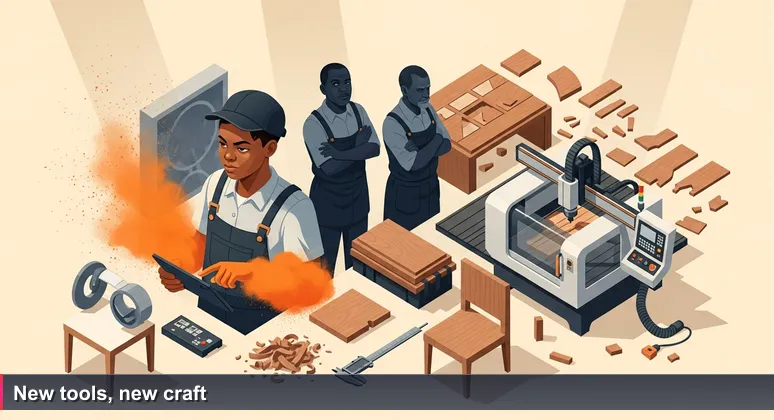
The sawdust still hangs in the air, but the hum of the CNC has replaced the scrape of the chisel. The master watches from the shadows as the apprentice uploads the design - no sharpening, no sweeping. Just building. That apprentice could be you, and this is the moment the old path burns down. Traditional junior roles in South Africa dropped 40% since 2023, reports TechCentral, while 62% of junior devs feel underpaid according to The Open Letter's 2026 survey. The masters complain you can't sharpen a chisel - but here's what they miss: the wood no longer needs sharpening.
A 14% rebound in junior hiring during 2026 reveals a different truth: the recovery is driven entirely by startups, not corporates. These companies seek architects who speak to the machine. Python now appears in 74% of junior postings, and 32% explicitly require LLM experience. They don't want code typists. They want digital artisans who wield AI like a CNC routing bit - precision work, fast, from day one.
The 10 South African startups that follow understood this shift first. They don't hire apprentices to sweep floors. They hand them a tablet, point to the blueprint, and say build. They're also paying like the old model is dead - because it is.
Table of Contents
- The New Apprenticeship
- Zoie Health
- Welo Health
- Cerebrium
- Pineapple
- Yoco
- BBD
- TymeBank
- Naked Insurance
- Luno
- Stitch
- Ready to Pick Up the Tablet?
- Frequently Asked Questions
For a comprehensive guide to starting an AI career in South Africa in 2026, including salary benchmarks and hiring trends, read this full article.
Zoie Health
In Johannesburg, where the Acalytica list of startups to watch notes its rapid scaling, Zoie Health is rewriting the rules for junior engineers. This women's wellness platform recently participated in Google's AI for Health program, signalling its commitment to integrating artificial intelligence into digital clinic operations. For a junior, that means you touch production AI from week one, not after months of fixing CSS bugs. The tech stack is React Native, Node.js, and Python with AI/ML pipelines - a combination that mirrors what 74% of 2026 job postings demand.
Your day-to-day involves building patient-facing mobile apps that integrate AI triage agents, performing LLM prompt engineering, and shipping features that directly impact women's healthcare access across South Africa. The team is lean, which means you own more responsibility faster than you would at a corporate. Compensation sits at ZAR 20,000 to ZAR 28,000 per month - competitive for a seed-stage startup that's still establishing its engineering culture.
The trade-off? Less structured onboarding. You'll need to self-learn infrastructure, testing, and deployment workflows. Zoie recruits primarily through its engineering leads' LinkedIn networks, so following them and engaging with their content is your entry point. This isn't a role for someone who needs hand-holding - it's for a builder who's ready to read the blueprint and start cutting.
Welo Health
Cape Town's Welo Health represents a different breed of HealthTech opportunity: a hybrid digital and in-person platform expanding into East Africa, backed by accelerator cohorts from Startupbootcamp AfriTech. For junior developers, this means production access comes early. You'll work with TypeScript, AWS, and GraphQL - a modern stack that mirrors what 68.5% of 2026 job postings now demand. The role focuses on building APIs that connect physical clinics with digital triage systems, handling real-time messaging and sensitive patient data pipelines.
Welo's expansion into new markets adds a layer of complexity that accelerates learning. You're not maintaining a stable product; you're building infrastructure for growth. The team's reputation for trusting juniors with real code means you'll likely ship features that cross borders within your first few months. Compensation lands at ZAR 18,000 to ZAR 25,000 per month - reflecting the startup's stage and the practical experience you'll gain working on cross-continental health systems.
The trade-off is the time zone stretch: East Africa expansion means occasional late meetings and asynchronous collaboration with teams in Nairobi and Lagos. To break in, monitor the Silicon Cape newsletter for their hiring pushes, which often precede formal job board listings. This role suits a builder who thrives on integration challenges and wants to see their code deployed across multiple countries, not just multiple servers.
Cerebrium
Cerebrium is building AI-native cloud infrastructure in Cape Town, and they raised $8.5 million in seed funding during March 2026, as reported by Tech Gist Africa. This isn't another SaaS wrapper - they're building the underlying infrastructure that lets AI models run in production. For junior developers, this means you learn MLOps from day one, not just model training in a Jupyter notebook. The tech stack is Python, Docker, and Kubernetes - the exact combination that power the most demanding AI workloads.
Cerebrium explicitly hires "AI-augmented developers" who can ship production models quickly. Your daily work involves deploying machine learning models, monitoring inference pipelines, and building the infrastructure that keeps them running reliably. You'll learn how to handle model versioning, automated scaling, and cost optimization - skills that are increasingly rare in a market flooded with junior devs who only know how to train models on static datasets. Compensation sits at ZAR 25,000 to ZAR 35,000 per month, reflecting the specialized nature of the work.
The trade-off is the pace. Seed-stage means weekends sometimes blur, and the team expects you to own problems end-to-end. To break in, follow Cerebrium's founders on X (formerly Twitter) - they recruit heavily through personal networks rather than job boards. This role isn't for someone who wants guardrails. It's for a builder who wants to learn what actually happens after a model is trained, and who isn't afraid to ship infrastructure that other companies depend on.
Pineapple
Cape Town's Pineapple has carved out a reputation as one of the few startups consistently hiring junior full-stack engineers through 2025 and 2026, according to Glassdoor listings. This peer-to-peer insurance platform runs on React, Node.js, and Go for backend services - a stack that gives juniors exposure to both modern frontend patterns and performant backend systems. You'll be building claim-handling workflows and customer-facing features, with heavy emphasis on user experience and real-time data processing. The app-driven engineering culture means you're not maintaining legacy systems; you're shipping features that hundreds of thousands of users interact with daily.
What sets Pineapple apart is the regulatory layer. Insurance in South Africa is governed by the Financial Sector Conduct Authority, which means you'll spend time understanding compliance requirements, just as much as you'll write code. This isn't a drawback - it's a rare opportunity to learn how production systems handle data privacy, audit trails, and financial reporting. Compensation lands at ZAR 22,000 to ZAR 32,000 per month, competitive for an insurtech startup that values modern engineering practices. You'll ship production code alongside seniors who've built systems for Standard Bank and Old Mutual.
The trade-off is clear: compliance constraints slow iteration cycles. You won't push code daily without legal review. But the team is tight-knit and you'll own specific features end-to-end, not just tickets. To break in, attend Cape Town tech meetups at the Bandwidth Barn - Pineapple engineers regularly speak there and often recruit face-to-face before posting roles publicly.
Yoco
Cape Town's Yoco processes payments for over 200,000 merchants across South Africa - a scale that means junior developers here ship code that directly handles millions of rands in transactions. The tech stack spans TypeScript for frontend, Kotlin for Android, Swift for iOS, and Python for backend orchestration, giving you exposure to the full mobile payments ecosystem. Yoco's engineering culture treats juniors as contributors from day one: you'll work on features for the merchant dashboard or mobile app, and you ship to production within your first quarter.
The responsibility is real. Merchant-facing bugs hit the customer directly, which means the pressure is higher than internal-tool roles. That trade-off comes with accelerated growth - you learn how production systems fail and recover, not just how to write code that passes unit tests. Compensation sits at ZAR 25,000 to ZAR 38,000 per month, reflecting the fintech premium and the real accountability you carry. You'll pair with senior engineers who've built payment rails for some of the country's largest banks, gaining insights into regulated financial infrastructure that most juniors never touch.
To break in, Yoco recruits through the Grindstone accelerator network and directly at university career fairs from UCT and Stellenbosch - two of South Africa's strongest computer science programs. Attending these fairs or hackathons where Yoco engineers present is your entry point. This role suits a builder who wants to see their code in the hands of 200,000 real businesses, not just in a staging environment, and who understands that fintech pressure is the fastest teacher in the room.
BBD
BBD operates across Johannesburg, Cape Town, and Pretoria as a software development services firm that has maintained one of the few structured graduate programs left in South Africa's contracting tech landscape. While not a startup, BBD's engineering culture treats new hires with the same velocity-oriented approach that defines the best young companies on this list. The tech stack spans C#, Java, AWS, Azure, and modern web frameworks - enterprise tools that power banking, insurance, and telecommunications systems. Dirco Liebenberg, a junior developer at BBD, told Goodfirms that "BBD is a company that takes care of their employees… we always strive to be the best" - a sentiment reflected in their consistent ranking among top South African development firms.
As a junior, you'll pair program with seniors, rotate through different product teams, and learn enterprise security patterns and cloud architecture - skills that transfer directly to fintech, insurtech, and banking roles later. Compensation varies significantly by city, ranging from ZAR 16,000 to ZAR 35,000 per month based on Indeed listings, with Johannesburg commanding the higher end. BBD visits all three major universities (UCT, Wits, and Stellenbosch) for graduate intake, making direct applications through their careers page the most reliable entry route.
The trade-off is a longer runway to architectural ownership. BBD builds what clients pay for, which means you'll ship features specified by external product owners, not your own team. But the structured mentorship and production exposure - handling real enterprise data - provide a foundation that pure startups rarely offer. This role suits a builder who wants a safety net while learning systems that process billions of rands daily, trading velocity for depth.
TymeBank
TymeBank, South Africa's largest digital bank, is undergoing a rapid international rebrand in 2026 and actively expanding its tech teams - with a public commitment to hiring junior developers as part of that scaling. This is rare for a regulated banking institution, where most engineering headcount goes to seniors. The tech stack runs Java, React, and Kotlin, the kind of enterprise-grade combination that prepares you for any backend-heavy role in fintech. According to the Acalytica list of South African startups to watch, TymeBank's digital-first approach makes it a standout for developers who want to build core banking infrastructure without the legacy systems that plague incumbents.
Your daily work involves building transaction processing, account management, and fraud detection flows - the plumbing of modern banking. You'll work alongside engineers who have built systems for Standard Bank, FirstRand, and Absa, but with the velocity of a digital-native organisation. Compensation ranges from ZAR 28,000 to ZAR 40,000 per month, making it one of the higher-paying options for juniors outside the startup equity game. The trade-off is slower iteration cycles: banking regulation means code goes through compliance reviews, legal sign-offs, and multiple testing phases before it reaches production.
To break in, TymeBank recruits from the JoziHub network and Wits' Tshimologong Precinct in Johannesburg - two physical hubs where their engineers host workshops and hackathons. This role suits a builder who wants the stability of a well-funded digital bank with the hands-on ownership of a startup. You won't ship daily, but when you do ship, your code will handle millions of customer transactions across South Africa's growing digital banking ecosystem.
Naked Insurance
Naked Insurance, the Cape Town-based AI-powered insurtech, operates on a fundamental premise: automation replaces manual processes, which means juniors who understand LLMs are not optional luxuries but core engineers. In late 2025, they hired a cohort of four juniors explicitly assigned to their LLM integration team - a signal that the company treats AI-native skills as a requirement, not a bonus. The stack runs Python with Django, React, and proprietary AI automation pipelines, giving you direct exposure to production machine learning systems that process claims without human intervention. According to analysis of Indeed junior developer listings in 2026, roles demanding AI experience command higher compensation and faster promotion cycles.
Your daily work involves writing prompts, fine-tuning models on claims data, and building automation flows that replace manual underwriting. You'll work directly with data scientists, not as a junior tagging along, but as an engineer shipping features. Compensation ranges from ZAR 24,000 to ZAR 36,000 per month. One anonymous developer captured the reality in the 2026 junior job market analysis on Medium: "The market is rough for junior devs as companies focus on seniors since AI can do the mundane tasks. You have to be able to contribute production code in your first week."
The trade-off is stark. Automation means the team is lean; you won't have seniors reviewing every commit or handholding through deployments. You'll own entire workflows from design to monitoring. To break in, follow Naked's CTO on X (formerly Twitter) - they often post open roles there before LinkedIn picks them up. Hackathons and startup weekends in Cape Town also funnel directly into their hiring pipeline. This role is for a builder who understands that in an AI-native company, junior doesn't mean protected - it means trusted to build the automation that defines the entire business model.
Luno
Cape Town's Luno remains one of the few crypto-native companies in South Africa that explicitly invests in junior engineering talent. Their job listings for Software Engineer - Web roles consistently state a "passion for developing junior talent", with emphasis on frequent 1-on-1s between senior developers and new team members. The tech stack runs Go, React, and TypeScript - tools that power a high-volume crypto exchange handling millions of transactions. According to TechCentral's 2026 analysis of the junior market, such deliberate mentorship structures are increasingly rare as companies prioritise senior-only hires.
As a junior at Luno, you build out the crypto exchange user interface and backend trading services. The company gives juniors ownership of specific features, not just isolated tickets. You'll ship code that directly affects how users buy, sell, and transfer digital assets across borders. Compensation sits at ZAR 25,000 to ZAR 35,000 per month, based on Glassdoor and Indeed data for entry-level engineering roles in Cape Town during 2026. The trade-off is product volatility: crypto markets shift fast, and when Bitcoin drops 20% in a day, feature roadmaps get reprioritised overnight.
Luno recruits from the Startupbootcamp AfriTech talent pool and directly from UCT's computer science department. This role suits a builder who thrives on uncertainty and wants to learn how to ship features under the pressure of a 24/7 global market. You won't have the stability of a traditional bank - but you will learn how to build systems that survive volatility, which is the real lesson crypto teaches.
Stitch
Stitch sits alone at the top of this list for one reason: they pay juniors like they're seniors. The Cape Town-based payments infrastructure company raised a $55 million Series B in April 2025, bringing total funding to $107 million from investors including Musha Ventures as reported by NextBillion. According to Glassdoor data for 2026, junior full-stack developers at Stitch earn between ZAR 97,000 and ZAR 136,000 per month - a figure that doubles what most Cape Town startups offer. This is not a typo. Stitch treats juniors as architects from day one, and their compensation reflects that philosophy.
Your work involves building payment infrastructure that connects merchants with banks, handling systems that process millions of rands in transactions daily. The tech stack runs React, Node.js, and TypeScript - standard modern tools, but applied to regulated financial rails that require precision. While TechCentral reports that fintech entry-level salaries dropped 26% year-over-year across the sector, Stitch is bucking the trend entirely. They're proof that the new apprenticeship pays - literally.
The trade-off is the intensity. You'll ship production code in your first week, with no training wheels and no junior shield. Stitch hires through the Knife Capital network and directly from Stellenbosch University's engineering faculty. Contributing to open-source projects they maintain on GitHub is your strongest signal. This role is for the builder who understands that when a company pays you like an architect, they expect you to think like one from day one. No sweeping. Just building.
Ready to Pick Up the Tablet?
The master cabinetmaker finally nodded. The apprentice made a perfect dovetail joint - by hand - using the CNC for the rough cut, then finishing with a chisel he learned to sharpen on his own time. The world didn't get easier. The entry barrier just shifted. As the OfferZen 2026 report on junior job postings makes clear: "AI has removed the need for traditional juniors, but increased demand for seniors. Juniors who want to survive must transition from 'Coders' to 'Architects'."
The 10 startups on this list don't want someone who's been sweeping the floor for two years. They want someone who can read the blueprint, talk to the machine, and build something real. Stitch pays juniors over R100k a month because they understand that value flows from architectural thinking, not ticket completion. Naked Insurance trusts juniors with LLM pipelines. Cerebrium hands them Kubernetes clusters. The common thread is trust in the new baseline: Python, prompt engineering, full-stack ownership, and the ability to ship production code on day one.
The old economy saw 62% of junior devs feel underpaid because they were treated as apprentices who needed years of sweeping before earning the right to build. These startups have burned that model down. They're paying juniors like architects because they hire architects from the start. The sawdust still hangs in the air, but the machine is humming. The question isn't whether you have enough experience. It's whether you're ready to pick up the tablet.
Frequently Asked Questions
Which startup on the list pays junior developers the best?
Stitch leads with junior full-stack salaries of ZAR 97,000-136,000 per month, according to Glassdoor. That's far above the market average and reflects their $107M funding and growth ambitions.
How do I apply to these startups if I don't see job postings online?
Many startups hire through accelerators like Grindstone and Startupbootcamp AfriTech, or via physical hubs like JoziHub and Bandwidth Barn. Follow founders on X (Twitter) and attend hackathons - that’s where the real hiring happens.
Are these startups stable enough to risk a junior role?
Most have disclosed funding rounds (e.g., Cerebrium’s $8.5M seed, Stitch’s $107M total) and recurring revenue from major clients like banks or merchants. Check their GitHub activity and government ties (DTI, SEDA) for extra stability signals.
Do any of these startups offer remote work for junior developers?
Yes, many are remote-friendly - especially those in infrastructure (Cerebrium) and fintech (Luno, Yoco). However, startups like Zoie Health and Pineapple prefer hybrid or in-office for juniors to accelerate learning. Always check their job descriptions.
How do I stand out as a junior developer applying to these startups in 2026?
Show AI-native skills: LLM prompt engineering, MLOps, or full-stack with Python/TypeScript. Contribute to open-source projects maintained by these startups on GitHub - it’s a direct path to getting noticed by their engineering teams.
Check out the best AI startups in South Africa identified by local experts.
For a complete guide to tech salaries vs cost of living in South Africa 2026, read our analysis.
Explore the best free tech training options in South Africa 2026 for career changers and beginners.
Everything you need to know about cybersecurity jobs in South Africa in 2026 is in this comprehensive guide.
Find government grants for tech bootcamps in South Africa in this detailed resource.

Irene Holden
Operations Manager
Former Microsoft Education and Learning Futures Group team member, Irene now oversees instructors at Nucamp while writing about everything tech - from careers to coding bootcamps.