









Top 10 Tech Coworking Spaces and Incubators in Timor-Leste in 2026
By Irene Holden
Last Updated: April 24th 2026
Too Long; Didn't Read
The Timor-Leste Innovation Hub and Knua Juventude Fila-Liman lead the ranking: TLIH offers premium infrastructure with backup generators and investor links for growth-stage startups at $80/month, while KJFL provides free hot desks for youth under 30 and a strong alumni network that feeds into major employers like Timor Telecom.
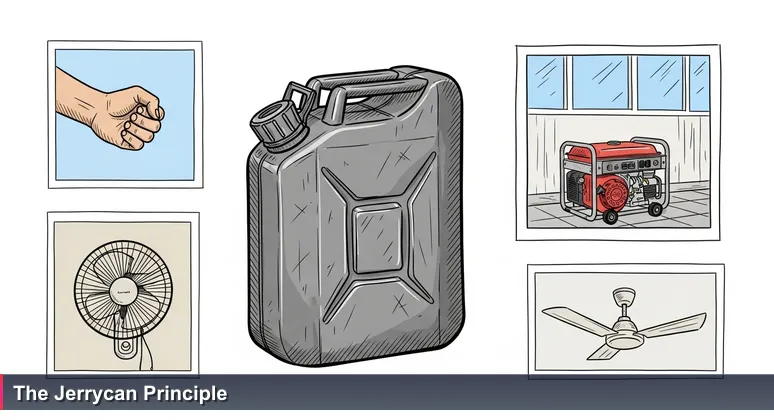
You've just stepped into a potential workspace in Dili. The manager says the internet is "very reliable," but you spot the backup generator in the corner - and that's when you know. Choosing a coworking space in Timor-Leste isn't about square meters or sleek furniture. It's about infrastructure, community, and what happens when the grid flickers. The same instinct you use when house-hunting in Farol - checking the jerrycan, asking the neighbor about blackouts - applies here.
Listing a "top 10" implies you can compare spaces like products. But a space perfect for a solo freelancer building a Tetun-language chatbot might sink a growth-stage fintech startup raising capital. 74% of Timor-Leste's population is under 35, the youngest demographic in ASEAN according to the Asia Foundation - yet the ecosystem remains thin enough that a bad space choice can stall a team for months. What gets lost when we rank ecosystems as commodities is the texture of daily reality: who else works here, what happens when the power cuts, and whether the landlord answers calls at 10 PM.
The best hubs in Dili aren't the ones with the fastest Wi-Fi - though that matters. They're the ones with the strongest community safety nets: backup generators, mentor networks, and government connections. Like a good rental, a good hub makes you resilient. This list is not a verdict - it's a toolkit. Use it to ask the right questions. The jerrycan isn't a flaw; it's a clue.
Table of Contents
- Introduction
- Youth Hubs (WYCF Network)
- Waterfront Tech Precincts
- Dili Convention Center (DCC)
- Universidade Católica Timorense (UCT)
- UNTL Accelerator Lab
- Uma Amerika at UNTL
- Government Business Incubation Centre (Matadouro)
- USAID-Funded Business Incubator Center (IOB)
- Knua Juventude Fila-Liman (KJFL)
- Timor-Leste Innovation Hub (TLIH)
- Final Take: The Jerrican Principle
- Frequently Asked Questions
Build your AI portfolio with projects tailored to Timor-Leste using this guide to local AI opportunities.
Youth Hubs (WYCF Network)
If you're a student or early-stage entrepreneur outside Dili, these three youth hubs - part of the USAID-funded Women and Youth Creating Our Future (WYCF) activity - are your entry point to the tech ecosystem. They offer free or subsidized workspace, computer labs, and basic internet. The goal is ambitious: by 2027, the program aims to help 22,000 young people and women gain market-ready skills, according to the NCBA CLUSA program overview.
Best for students, young women, and first-time entrepreneurs who need a low-risk space to learn. The real value isn't just the desk - it's the pipeline. Many WYCF partners recruit directly from these hubs, creating a direct line from computer lab to employment at local NGOs, micro-credit programs, and even government ministries. Use the hubs to connect with these organizations. This is where foundational digital skills meet real-world opportunity in districts that otherwise lack Dili's infrastructure.
Access is free or heavily subsidized, making it the most affordable option on this list. The trade-off: limited hours, less reliable internet than premium spaces, and no backup generator. But for someone testing a business idea without burning cash, the math works. Think of it as the training ground before you graduate to a paid desk at Knua Juventude Fila-Liman or the Timor-Leste Innovation Hub.
Waterfront Tech Precincts
New commercial developments along Dili's waterfront are quietly reshaping the city's workspace landscape. These aren't formalized hubs with names and membership tiers - at least not yet. Instead, they're flexible office components integrated into mixed-use buildings, designed to attract foreign consultancies and remote workers. Premium amenities include dedicated generators, fiber-optic connections, and sea views - the trifecta that matters most when you're running a distributed team from a country still building grid reliability.
As Timor-Leste pushes toward full ASEAN membership and WTO integration, these precincts are positioning themselves as the go-to for international teams needing short-term leases without the bureaucracy of a formal office registration. Pricing remains unpublished, but expect $150 to $300 per month per desk - comparable to high-end coworking in Jakarta or Manila, with the advantage of USD stability and proximity to key ministries along the waterfront corridor. Best for foreign digital nomads, NGO staff, and small consulting firms that need turnkey infrastructure.
The real draw isn't the aesthetic - it's the reliability. These precincts understand that in Dili, the backup generator is the true differentiator. For teams coming from Singapore or Kuala Lumpur, the sticker shock is real, but the calculation changes when you factor in time saved from not chasing power cuts. If your work depends on uninterrupted connectivity and you have the budget, these waterfront spaces are worth the premium - just confirm the generator's fuel supply before signing.
Dili Convention Center (DCC)
Located near the waterfront, the Dili Convention Center has become the default venue for major tech forums including the Tourism Investment Forum 2025 and regular hackathons. While it isn't a daily coworking space, it offers day passes and event-hosting facilities with backup power, high-speed Wi-Fi, and catering. For a one-day workshop or product launch, day rates start around $50 USD - a fraction of what you would pay for a hotel conference room. As Timor-Leste pushes deeper into digital transformation despite infrastructure challenges, DCC fills the gap between informal hub seating and full-scale corporate event space.
- Teams hosting meetups or product demos
- Startups pitching to local investors and development partners
- Organizations running training sessions for government or NGO stakeholders
The smart play is to treat DCC as a launchpad, not a home base: book a day pass for a high-stakes event, then shift follow-up conversations to nearby cafes in the Farol district, where much of Dili's informal networking actually happens. The real value is the concentration of decision-makers that a single day at DCC can attract - ministry officials, program directors from UNDP and USAID, and executives from Timor Telecom cross paths here more reliably than anywhere else in the city. Pair your booking with a clear list of who you want to meet, not just what you want to present.
Universidade Católica Timorense (UCT)
Though established only in 2022, the Universidade Católica Timorense is rapidly building a tech curriculum anchored in agrotechnology and social communication - two sectors that map directly onto Timor-Leste's growing digital content economy. Its incubator space remains informal: shared computer labs and mentorship rooms rather than dedicated desks, but the university compensates through strong ties to local cooperatives and international development partners. According to its profile on Wikipedia, UCT is deliberately constructing its "scientific teaching and research" capacity to serve national economic priorities beyond oil and gas.
Access is free for enrolled students, while external startups can apply for semester-long residencies at minimal cost - typically covering only utilities. This makes it one of the most affordable dedicated tech-oriented spaces in Dili, especially for teams working on agri-tech, digital media, or community-based solutions. The trade-off is tangible: limited weekend access and no 24/7 desk options, constraints that matter for teams sprinting toward a product launch or investor deadline.
Best for early-stage ventures that need academic mentorship and testing ground for rural or agricultural applications. The real advantage isn't the infrastructure - it's the pipeline: UCT's focus on social communication means students trained in digital content creation, Tetun-language media, and community engagement. A startup building an AI-driven extension service for coffee farmers, for example, could prototype with UCT students and faculty before seeking formal incubation at the Timor-Leste Innovation Hub. Think of it as R&D lab rather than full-time workspace.
UNTL Accelerator Lab
The National University of Timor-Leste hosts the UNDP Accelerator Lab, a space where academic research meets real-world startup execution. Its flagship programs include the YECAP Climate Education-Entrepreneurship Bootcamp, which integrates UNTL engineering students directly into venture teams working on renewable energy and ICT projects. According to YECAP's program coverage, this bootcamp is specifically designed to channel university talent into the local startup ecosystem, making it one of the few places in Dili where academic mentorship and commercial ambition coexist under one roof.
The space offers free Wi-Fi, project rooms, and access to professors who serve as technical advisors. No membership fees exist - participation is through competitive application to specific programs. This selectivity is the real value: you're not just renting a desk; you're joining a curated cohort with structured mentorship from both UNDP specialists and UNTL faculty. Recent cohorts have produced three startups that secured seed funding from the Timor-Leste Innovation Hub, demonstrating a clear pipeline from academic lab to private sector acceleration.
Best for student-led ventures and research-oriented AI or machine learning teams that need academic rigor as much as they need desk space. If your project involves Tetun-language natural language processing, agricultural sensor networks, or renewable energy forecasting, the Accelerator Lab's faculty network is unmatched in Dili. The trade-off: no drop-in access and no guarantee of admission. Apply early and come prepared with a clear research question - the selection committee prioritizes teams with defined problem statements over vague ideas.
Uma Amerika at UNTL
On the UNTL campus, Uma Amerika has quietly become the go-to venue for technology-focused workshops that bridge academia and the growing Dili tech scene. In 2025 it hosted sessions on "Exploring the future of technology in Timor-Leste" featuring artificial intelligence and digital literacy talks, drawing students, professors, and a handful of external entrepreneurs. The event reflected a broader push to make UNTL a player in Timor-Leste's digital transformation, with speakers covering both the promise and the practical hurdles of deploying AI in a Tetun-language context.
Let's be clear: Uma Amerika is not a drop-in coworking space. You cannot walk in off the street, set up a laptop, and claim a desk. It is a venue for organized events and workshops. The upside is that access is completely free for approved events - just submit a proposal outlining your activity. The community remains heavily academic, but the doors are opening wider for external entrepreneurs who bring structured programming that benefits students rather than purely commercial pitches.
Best for networking with UNTL talent, attending free tech talks on AI and digital literacy, or running a recruiting workshop to find engineering interns for your startup. If your venture needs a low-cost space to host a meetup or training session while tapping into Timor-Leste's largest university talent pool, this is one of the smartest options in Dili. Just remember: bring a clear agenda, not just a laptop - the selection committee wants to see mutual benefit, not a sales pitch.
Government Business Incubation Centre (Matadouro)
In the Vila Verde neighborhood, a purpose-built incubator is expanding its footprint through 2026. The $3.16 million Government Business Incubation Centre represents one of the most significant single investments in Timor-Leste's startup infrastructure, part of the national strategy to diversify the economy away from oil and gas according to the Government of Timor-Leste's project announcement. When complete, it will offer professional-grade office suites, training rooms, and specialized facilities for micro, small, and medium enterprises.
Pricing hasn't been finalized, but early indications suggest heavily subsidized rates of $30 to $60 per month for a dedicated desk - dramatically below market rates for comparable private office space in Dili. The facility's strategic location in Vila Verde places it within walking distance of the Ministry of Tourism, Commerce and Industry, making it the ideal base for startups seeking government procurement contracts or policy engagement. The real advantage here is proximity to power in the most literal sense: direct access to the ministries shaping Timor-Leste's digital transformation agenda.
Best for early-stage startups ready to formalize their operations and pursue government contracts. If your venture needs to demonstrate legitimacy to win bids with state-owned enterprises or international development partners, the address alone carries weight. The trade-off: expect bureaucratic processes for membership approval and limited after-hours access typical of government-run facilities. Plan your schedule around standard business hours and factor in a few extra weeks for the application paperwork.
USAID-Funded Business Incubator Center (IOB)
Launched in late 2024 at the Institute of Business (IOB), this incubator directly targets young entrepreneurs and women with a structured mentorship program designed to build lasting ventures. U.S. Ambassador Donna Ann Welton described it as a place for "mentorship, training, and networking" to help youth compete in modern markets, while Minister of Trade and Industry Filipus Nino Perreira added that the hub focuses on "empowering individuals to create employment opportunities while making a positive contribution to their community," as reported by TATOLI news agency.
Pricing makes this one of the most accessible formal incubators in Dili. Students pay $10 to $20 per month, while external early-stage startups pay $40 to $80 per month - rates that include dedicated computer labs, printing services, and direct internship placement with private sector partners. The center is part of the broader Women and Youth Creating Our Future (WYCF) activity, a USAID-funded initiative aiming to help 22,000 young people and women gain market-ready skills by 2027, according to the NCBA CLUSA program overview.
Best for women-led ventures and student teams that need more than just a desk - they need structured support, accountability, and direct employment tracks with private partners. The real differentiator is the mentorship pipeline: the center actively connects members with established businesses in Dili, creating pathways from incubator to full-time employment. If you are building a venture that could benefit from corporate partnerships or government contracts, prioritize this space over general co-working options.
Knua Juventude Fila-Liman (KJFL)
Knua Juventude Fila-Liman stands as Dili's longest-running innovation hub, anchored by UNDP support and a decade of community building. It isn't the flashiest space on this list, but it is the most proven - a track record that matters when you are choosing where to root your first venture. The hub offers free hot desks for anyone under 30, and paid desks starting at just $20 per month, making it the most accessible entry point in Dili for solo founders conserving capital.
The real value extends beyond the desk. KJFL functions as a "one-stop-shop" for business registration, saving founders weeks of navigating SERVE.I.P. bureaucracy alone. The hub regularly hosts Youth Co:Lab bootcamps and the National Innovation Challenge, consistently producing winning teams according to UNDP's coverage of the challenge. These programs connect participants directly with mentors from UNDP, government ministries, and private sector partners who scout for talent.
Best for freelance developers and solo founders testing an idea on a shoestring budget. The alumni network is the hidden asset - graduates routinely land roles at Timor Telecom, international NGOs, and government agencies, creating an informal referral pipeline that no other hub in Dili can match. If you are building alone, start here: the community will carry you further than the infrastructure alone.
Timor-Leste Innovation Hub (TLIH)
The Timor-Leste Innovation Hub is the primary private-sector driver for tech entrepreneurship in Dili, operating as a direct bridge between academia, industry, and investors. Its focus sectors include fintech, ICT, sustainable agritech, and green energy - areas that align directly with the government's economic diversification strategy and the broader push toward ASEAN integration. The hub provides high-speed fiber and satellite internet, backup generators, meeting rooms, and collaborative event spaces - the full infrastructure stack that startups need to operate reliably in Dili's grid environment.
The hub has cultivated strong ties with multinational players like SLB (formerly Schlumberger) for oil and gas technology applications, and recently partnered with local firm Milrex Rego to represent Timorese tech at Energy Exchange Australia 2026. Through its affiliation with the SAFE Acceleration Program run by Villgro and SEARCA, the hub offers agritech startups structured mentorship and potential funding pathways. These connections make TLIH the most network-rich environment in the country for growth-stage ventures.
Hot desks start at $80 per month, with private offices ranging from $200 to $400 per month - pricing that competes with regional hubs in Southeast Asia while offering the stability of USD currency and proximity to Dili's key ministries and development partners. Best for growth-stage startups looking for venture capital connections and regional scale rather than early-stage tinkering. If your startup is ready to move beyond prototyping into active fundraising and market expansion, this is the space where the right introductions happen.
Final Take: The Jerrican Principle
Look past the marketing. Every space on this list has a backup plan - and that is the metric that matters most in Dili. The jerrycan in the corner tells you more than any promotional brochure: who provides the generator fuel, how often the grid fails, and whether the landlord answers calls at 10 PM. The best hub is the one that makes you resilient, not the one with the fastest advertised Wi-Fi. As Timor-Leste pushes forward with digital transformation despite persistent infrastructure challenges, the spaces that survive are those that have solved for reliability first and aesthetics second.
What you are really choosing is a community safety net. A free desk at Knua Juventude Fila-Liman connects you to a UNDP alumni network. A subsidized office at the Matadouro incubator places you steps from ministry decision-makers. A premium waterfront desk gives you the generator redundancy a foreign-funded AI project demands. No single space is objectively best - the right choice depends on what you are building and who you need around you when the power cuts.
Use this list as your starting point, not your verdict. Visit each space during an afternoon. Lift the jerrycan. Ask the person at the next desk how often the generator runs. Listen for the hum that never appears in the brochure. That is the sound of a hub that will carry you through the long nights of building something new in Dili.
Frequently Asked Questions
Which coworking space is best for an AI/ML startup in Dili?
The Timor-Leste Innovation Hub (TLIH) is your top pick - it offers high-speed fiber/satellite internet, backup generators, and direct links to investors. For a more academic edge, the UNTL Accelerator Lab provides free Wi-Fi and professor mentorship for research-oriented teams.
How much does a dedicated desk cost at these spaces?
Prices vary widely: free hot desks for youth at Knua Juventude Fila-Liman (KJFL), $10-$80/month at the USAID-funded incubator (IOB), and $80/month at TLIH for a hot desk. Government-run spaces like Matadouro may offer dedicated desks for $30-$60/month once they open.
Do any of these spaces have reliable backup power and internet?
Yes - TLIH and the Waterfront Tech Precincts boast backup generators and fiber-optic connections. Even budget-friendly KJFL has reliable bandwidth. Always check for a jerrycan or generator on-site; that's the real test of reliability in Dili.
What free or low-cost options are there for young entrepreneurs?
KJFL offers free hot desks for under-30s, and the USAID-funded WYCF Youth Hubs outside Dili provide free computer labs and internet. The UNTL Accelerator Lab and Uma Amerika are also free for program participants - great for students testing ideas.
Can I find mentorship and investor connections at these spaces?
Absolutely - TLIH connects startups to venture capital and programs like the SAFE Acceleration Program (Villgro/SEARCA). The UNDP-backed KJFL hosts Youth Co:Lab bootcamps and has an alumni network working at Timor Telecom and NGOs. The USAID incubator at IOB offers structured mentorship for women-led ventures.
Find out the best tech companies to work for in Timor-Leste by total compensation.
Explore the top 10 tech bootcamps in Timor-Leste for 2026.
- Read about entry-level tech jobs in Timor-Leste that don't need a diploma.
A must-read for junior devs looking for top tech startups hiring in Timor-Leste for junior devs.
For a balanced view of Timor-Leste's potential for tech workers, see our deep dive.

Irene Holden
Operations Manager
Former Microsoft Education and Learning Futures Group team member, Irene now oversees instructors at Nucamp while writing about everything tech - from careers to coding bootcamps.