









AI Meetups, Communities, and Networking Events in Timor-Leste in 2026
By Irene Holden
Last Updated: April 24th 2026
Key Takeaways
Timor-Leste's AI community in 2026 isn't a single weekly meetup - it's a constellation of government workshops, university events like the Sci-Tech EXPO, and WhatsApp groups fueled by 129% mobile penetration. Start by joining a Facebook community, then attend the AI Impact Summit or UNESCO sessions to connect directly with employers like Timor Telecom and UN agencies.
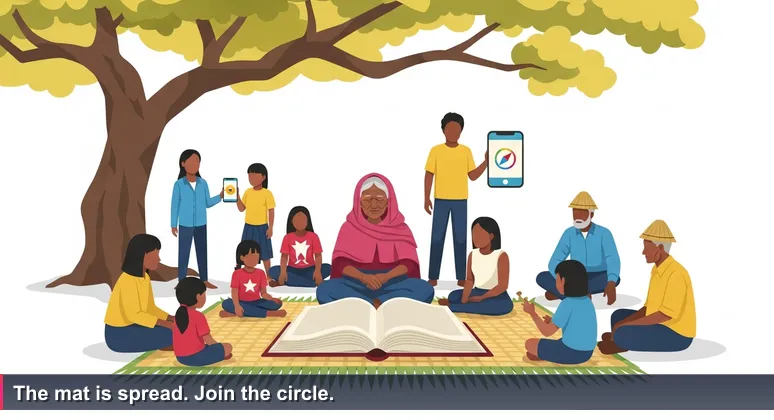
In every suco across Timor-Leste, there is a moment when the mat is spread - the nahe biti. Under a tamarind tree in Dili's Comoro, on a concrete porch in Baucau, in the shade of a ministry building, people sit and speak. An elder listens. A young developer pulls out a smartphone, showing a Tetum-language AI prototype that predicts local rainfall. This is not a Silicon Valley hackathon with name badges and catered lunches. This is a meetup. This is how knowledge has moved in Timor-Leste for generations - person to person, on the ground, in the language of the community.
That rhythm is quietly transforming. The UNESCO AI Readiness Assessment for Timor-Leste has become a national blueprint. The SEA-LION open-source LLM project is building the first large-language models in Tetum. A scattered but determined community of developers, students, and government technologists is weaving a new kind of mat - one made of code, WhatsApp groups, and conference floors. %40.4 active internet users may seem small, but 129% mobile connection rate means almost every adult carries a thread of this digital mat in their pocket.
Major employers are taking notice. Timor Telecom and Telemor are exploring AI for network optimisation. National government ministries are piloting AI tools for public service delivery. The Petroleum Fund of Timor-Leste is evaluating AI for financial modelling. International NGOs and UN agencies - including UNDP, UNESCO, and Catalpa International - are running flagship AI readiness programmes. The community scene reflects this transition: government-led workshops, university-based events at UNTL and Politécnico, international conferences in Dili, online communities on WhatsApp and Facebook, and project-based collaborations through initiatives like SEA-LION.
The mat is already spread. It is at the Sci-Tech EXPO in November. It is in the WhatsApp group from the last UNESCO workshop. It is in the SEA-LION Slack where Timorese developers are helping build the first Tetum AI model. It is under the tamarind tree in your suco, where a young developer is showing their grandmother how the phone can now speak her language. The only question is whether you will sit down.
In This Guide
- The Mat is Spread: Setting the Scene
- State of the AI Scene in 2026
- AI Impact Summit (February)
- UNESCO AI Readiness Workshops (March-May)
- Dili International Trade Expo (August)
- International Skills Week (September)
- Tech Community & Student Events (Oct-Dec)
- Sci-Tech EXPO (November)
- The Digital Mat: Online Communities
- The University Pipeline
- Regional Context: Dili vs. Jakarta, KL, Singapore, Darwin
- Practical Networking Tips for Introverts
- Career Paths from Community Involvement
- Weaving Your Own Thread: A Call to Action
- Frequently Asked Questions
Build your AI portfolio with projects tailored to Timor-Leste using this guide to local AI opportunities.
State of the AI Scene in 2026
Let’s be honest about where we stand. Timor-Leste is not Singapore - there is no weekly AI meetup with sponsored pizza. Only 40.4% of the population are active internet users as of late 2025, which limits purely digital communities. But the mobile connection rate sits at 129% - nearly every adult has a phone, even if not always online. This gap shapes how the AI scene operates: heavily dependent on Facebook groups, WhatsApp threads, and in-person gatherings in Dili.
The professional landscape is shifting rapidly. The government is revising its Timor Digital 2032 strategy to formally incorporate AI, moving the nation from a passive consumer of foreign technology to an active participant in shaping its digital future. Major employers are noticing: Timor Telecom and Telemor are piloting AI for network optimisation, national ministries are testing AI tools for public service delivery, the Petroleum Fund is evaluating AI for financial modelling, and international agencies like UNDP, UNESCO, and Catalpa International are running flagship readiness programmes. The Catalpa AI Readiness project has been a catalyst, working with local partners to design AI applications that serve Timorese development goals rather than importing solutions from abroad.
The community scene reflects this transition. There is no single “AI Meetup” brand in Dili - instead, the ecosystem consists of government-led workshops linked to national AI strategy, university-based events at UNTL and Politécnico, international conferences hosted in Dili, online communities on WhatsApp and Facebook, and project-based collaborations through initiatives like the SEA-LION open-source LLM project. Affordable training options are emerging: Nucamp’s AI bootcamps, ranging from USD 2,124 to USD 3,980 with monthly payment plans, are making AI education accessible to learners in Dili and across the municipalities. The Timorese AI community is not a single room - it is a constellation of touchpoints. Your job is to find the ones that fit your career stage and show up.
AI Impact Summit (February)
Held annually in Dili, the AI Impact Summit represents a turning point for Timor-Leste's AI ecosystem. The February 2026 edition, themed "Shaping a Human-Centric Future for AI", was the first major conference explicitly linking artificial intelligence to national development goals. Coverage by Tatoli highlighted panels on ethics, government strategy, and practical applications in agriculture and health - sectors where Timorese developers are already prototyping solutions.
The summit typically draws 100 to 200 participants, including government technologists, students, NGO staff, and international consultants. Registration is free or carries a nominal fee of $10 to $20 USD. The venue - often the Dili Convention Center - is walkable from central Dili hotels and accessible via mikrolet routes. This is where you meet decision-makers shaping the country's AI direction, from ministry officials to UNESCO advisors.
As UNESCO and partners emphasize through their consultative workshops, Timor-Leste is positioning itself to establish AI regulations that safeguard human rights and dignity while fostering global opportunities. The AI Impact Summit is the primary forum where these commitments are debated and refined.
"AI for efficiency, AI for effectiveness, and AI as a force reshaping development trajectories" - these three lenses, noted by observer Geordie Fung, frame the summit's core conversations around poverty, governance, and the future of Timorese society.
UNESCO AI Readiness Workshops (March-May)
These collaborative workshops between UNESCO and the Ministry of Transport and Communications (MTC) run periodically from March through May, with 2 to 4 sessions held each year. They are working meetings, not lectures - participants actively assess Timor-Leste's AI readiness across three dimensions: governance frameworks, digital infrastructure, and human capacity. Each workshop typically gathers 50 to 100 participants at venues such as ministry offices or the Dili Convention Center, and attendance is free of charge.
These sessions are designed for civil servants, academics, and private sector AI practitioners who want to shape the national AI agenda directly. The networking value is moderate to high: you work alongside international consultants from UNESCO and senior government officials responsible for implementing the Timor-Leste AI Readiness Assessment, giving you direct access to decision-makers who will define the country's AI policies for years to come.
The workshops build on a broader commitment by Timor-Leste to position itself as an active participant in the global AI conversation. Through the Global AI Ethics and Governance Observatory, UNESCO is helping the country establish regulations that safeguard human rights while enabling innovation in areas like agriculture, health, and public service delivery.
To find upcoming sessions, monitor the UNESCO Timor-Leste website and official government portals. Many participants report that joining a single workshop led directly to invitations for follow-up projects and policy working groups - a fast track into the emerging AI governance community in Dili.
Dili International Trade Expo (August)
The Dili International Trade Expo (DITE), held annually in late August, is the largest event on Timor-Leste's commercial calendar. Organised by the Ministry of Industry and Commerce, the expo draws thousands of attendees including SMEs, international partners, and government agencies. The 2025 edition set a new standard for scale, and subsequent editions have included a dedicated technology track for AI and digital innovation - making it a vital stop for anyone working at the intersection of tech and business.
The expo format combines an in-person exhibition with conference sessions. Exhibition entry is free, while conference sessions may require registration. This is the broadest networking event in the country - you will meet people across industries, not just AI, including potential clients, collaborators, and investors from the private and public sectors. Registration details are available via the Timor-Leste Trade Portal.
For AI entrepreneurs and startup founders, the technology track is the primary draw. Past editions have featured demonstrations of locally-built prototypes in agriculture monitoring, health diagnostics, and language processing - proof that Timorese developers are already shipping real products. The expo also attracts international delegations from ASEAN member states, offering a rare opportunity to build cross-border partnerships.
The venue, typically the Dili Convention Center, is accessible by mikrolet and walkable from central Dili hotels. Plan to spend at least a full day walking the exhibition floor and attending relevant sessions. Bring business cards and a demo-ready phone - you never know who will be standing at the next booth.
International Skills Week (September)
Announced for September in Dili, the International Skills Week has become a cornerstone event for workforce development in Timor-Leste. The second edition builds on the success of the inaugural gathering, featuring a dedicated AI skills track alongside workshops, training sessions, and a career fair. Tatoli's coverage of the event highlighted the government's commitment to bridging the digital skills gap through practical, employer-aligned training.
The AI skills track is designed for students, early-career professionals, and job seekers who want to move beyond theory into hands-on practice. Participants have worked through real-world problems - from building simple chatbots in Tetum to analysing public service datasets - using tools that are immediately applicable in local workplaces. The career fair connects attendees directly with employers who are actively hiring for tech roles: Timor Telecom, national ministries, NGOs, and startups all send recruiters.
The AI workshop hosted at UmaAmerika UNTL demonstrated the appetite for such events - over 50 students attended to discuss challenges and opportunities for AI in national development. International Skills Week scales that energy across multiple days, with free or heavily subsidised registration to ensure accessibility for participants from all municipalities.
The networking value here is highest for entry-level connections and internship leads. Unlike policy-focused events, Skills Week centres on employment pathways. Bring a laptop with a project you have already started, and be ready to discuss it with potential employers who are actively looking for locally trained AI talent.
Tech Community & Student Events (Oct-Dec)
The final quarter of the year brings a surge of campus-based activity across Dili. Universidade Nacional Timor-Leste (UNTL) and Polytécnico de Timor-Leste become hubs for hands-on learning, with student-led workshops, hackathons, and coding competitions filling the calendar from October through December. These events are where the next generation of Timorese AI practitioners cut their teeth - building prototypes, debugging code, and presenting their work to peers and potential employers.
At UNTL, the partnership with UmaAmerika produces regular tech workshops that draw strong student engagement. A June 2025 workshop on AI saw over 50 students participate in discussions on challenges and opportunities for the technology in national development. The UmaAmerika UNTL Facebook page is the primary channel for announcements - follow it to catch upcoming sessions in October through December. Meanwhile, Politécnico de Timor-Leste's computer science department runs hackathons that emphasise practical engineering skills, often culminating in working prototypes presented at the annual Sci-Tech EXPO.
These events serve a dual purpose: they build technical capability while creating a visible portfolio of work that employers can assess. To get involved, check physical noticeboards in the computer science faculties, follow university social media pages, and ask senior students about active tech clubs. The Timorese tech community is small - showing up consistently to three events will make you a recognised face, and that recognition often translates directly into internship and job leads from organisations like Timor Telecom and government ministries.
Sci-Tech EXPO (November)
Each November, the Nicolau Lobato Presidential Palace transforms into Timor-Leste's premier showcase of scientific and technological talent. The Sci-Tech EXPO is the crown jewel of the national science calendar, attracting students, educators, and international laureates for a multi-day exhibition of demonstrations, talks, and hands-on projects. Entry is free, and the event draws over 50 student developers alongside members of the general public eager to see what Timorese innovators are building.
The expo features working prototypes across AI, robotics, and software engineering - many developed by UNTL and Politécnico students as part of their coursework or independent projects. For AI practitioners, this is the highest concentration of AI-curious youth in one room anywhere in the country. Past editions have included demonstrations of Tetum-language chatbots, climate prediction models, and health diagnosis tools that show how local developers are applying machine learning to national challenges. Government coverage of the Sci-Tech EXPO highlights the event's role in bridging academic research and practical deployment.
For students and early-career professionals, the Sci-Tech EXPO offers a rare opportunity to present your work directly to potential employers from Timor Telecom, government ministries, and international NGOs who attend specifically to scout new talent. Bring a laptop with a working prototype - even a simple one - and be ready to explain your approach in Tetum or English. The expo is walkable from central Dili and accessible by mikrolet. Mark mid-November on your calendar and prepare your best project to present.
The Digital Mat: Online Communities
Physical events in Dili are invaluable, but they leave out the majority of Timorese who live outside the capital. The digital mat is expanding through Facebook groups, WhatsApp networks, and regional Slack channels that connect developers from Dili to Baucau, Same, and beyond. Facebook remains the primary platform for Timorese tech networking - join these active spaces to stay informed about workshops, job postings, and study groups:- UmaAmerika UNTL Facebook Page - Regular event announcements for AI workshops and talks at Universidade Nacional Timor-Leste
- Timor-Leste Tech Community - A network of developers, designers, and tech enthusiasts sharing resources and opportunities
- Promoting Timor-Leste Tech Communities - A group focused on growing the ecosystem and connecting practitioners across municipalities
- SEA-LION open-source Slack - A regional channel that includes Timorese contributors working on Tetum-language LLMs; ask at a workshop for an invite
Every major event in Dili spawns a WhatsApp group - these are the true backbone of the Timorese AI community. Informal, active, and essential, they carry job postings, questions about AI tools, sharing of Tetum-language resources, and announcements of ad-hoc study groups. The SEA-LION project's open-source community also maintains a regional Slack where Timorese developers connect with AI engineers from Singapore, Thailand, and Vietnam.
Adoption of Discord remains low compared to Facebook, but is growing among younger developers. Watch for regional webinars organised through ASEAN AI networks, which often include Timorese speakers discussing localised LLMs and ethical AI deployment. The UmaAmerika UNTL Facebook page remains the most reliable source for workshop announcements.
Actionable takeaway: Join two Facebook groups and one WhatsApp group this week. Introduce yourself with your name, your technical interests, and what you are working on. The Timorese tech community is small enough that a single introduction can lead to meaningful collaborations and career opportunities.
The University Pipeline
Universities are the engine of Timor-Leste's AI talent pipeline. At Universidade Nacional Timor-Leste (UNTL), the computer science and engineering departments partner with UmaAmerika to host regular tech workshops drawing over 50 students per session. The June 2025 AI workshop focused on practical applications for national development - from crop disease detection to Tetum-language processing. The UmaAmerika UNTL Facebook page is the best source for upcoming workshop announcements. Polytécnico de Timor-Leste offers a complementary pathway with a stronger engineering focus. Their events tend to be more hands-on, featuring coding workshops and hardware demonstrations where students build working prototypes. The engineering faculty office and campus noticeboards are the primary channels for finding these opportunities. Student-led tech clubs at both institutions organise regular hackathons leading up to the annual Sci-Tech EXPO. Employers are watching these events closely. Timor Telecom has recruited interns who demonstrated AI skills at university workshops. Government ministries have hired graduates who contributed to policy-focused AI sessions. NGOs and UN agencies seek students who have applied AI to development problems like climate forecasting or public health monitoring. Catalpa International's AI Readiness project actively partners with university programmes to identify emerging talent. The actionable takeaway: do not just attend events - contribute. Present a project. Volunteer to help organise. The Timorese tech community is small; people remember who shows up ready to build. A single hackathon project can become the portfolio piece that opens your first AI role in Dili.Regional Context: Dili vs. Jakarta, KL, Singapore, Darwin
It is important to set realistic expectations. Comparing Dili's AI scene to Singapore's is like comparing a suco market to a shopping mall - both serve their purpose, but at different scales. You do not need to fly anywhere to build a successful AI career in Timor-Leste, but strategic regional travel - even once a year - dramatically expands your network and exposure. Here is how the nearby hubs stack up for Timorese practitioners.
| City | Events & Networking | Travel & Cost | Best For |
|---|---|---|---|
| Jakarta, Indonesia | Weekly AI meetups with 50-200 attendees; major conferences like Indonesia AI Day | Flights from Dili from $200-300 USD return | Exposure to Southeast Asia's largest AI market; language gap (Bahasa Indonesia) |
| Kuala Lumpur, Malaysia | Monthly meetups; hosts the ASEAN AI Summit with official Timorese participation | Similar to Jakarta for travel; events often have free online streaming | ASEAN integration - Timor-Leste sent delegates to the ASEAN AI Summit 2025 |
| Singapore | World-class: weekly meetups, ATxSummit, headquarters of SEA-LION project | High - accommodation + registration totals $500-1000 USD | Direct line to regional AI industry; need visa; Tetum contributors welcome remotely |
| Darwin, Australia | Smaller but growing; Charles Darwin University hosts tech events | Closest and cheapest - flights $150-250 USD return | Proximity, English language, natural Australian hub for Timorese professionals |
Plan one regional trip per year if your budget allows. Start with Darwin - closest and cheapest. Graduate to a SEA-LION-related event in Singapore - most relevant to AI work in Tetum. Focus on conferences that offer scholarship or volunteer opportunities for attendees from developing nations. The SEA-LION open-source community actively recruits Timorese contributors and has invited local developers to regional summits, making Singapore more accessible than the price tag suggests.
Practical Networking Tips for Introverts
Networking in the Timorese context is different from the direct, transactional style common in tech hubs like San Francisco or Singapore. The key is to embrace the nahe biti spirit: in traditional gatherings, silence is not awkward - it is respectful. If you are nervous, sit down, listen, and smile. People will approach you. Prepare a simple introduction: "I am [name], a student at UNTL researching AI for Tetum language translation." That is enough to open a conversation.
Before the event, set a small goal. Do not aim to "network" in the abstract. Aim to have one meaningful conversation with someone working on something you find interesting. Arrive early - Timorese events often have a relaxed start time, but arriving early gives you a chance to speak with organisers. Research the attendee list if available, particularly for government or UNESCO-led workshops where participant lists are shared in advance.
At the event, ask better questions. Instead of "What do you do?", ask "What AI problem in Timor-Leste are you most excited about?" The Timorese tech community is mission-driven - show you care about the country, not just your career. Use Tetum when you can. Even basic phrases like "Obrigadu barak" signal respect and belonging. The UmaAmerika UNTL workshops are excellent places to practice this approach in a student-friendly environment.
After the event, follow up within 48 hours. Send a simple LinkedIn message or Facebook comment referencing something you discussed. Join the event's WhatsApp group - this is non-negotiable. The WhatsApp group is where the real community lives, with job postings, study group announcements, and ongoing technical discussions. Consistency matters more than charisma: the same faces at three events will recognise you as part of the community. UNESCO's AI Readiness Assessment for Timor-Leste notes that skills development is a national priority - your consistent participation signals you are part of the solution.
Career Paths from Community Involvement
Timor-Leste's formal AI job market is small but growing, and community involvement is the fastest path to career opportunities. The UNESCO AI Readiness Assessment explicitly identifies skills development as a national priority, and employers are hungry for locally trained talent who have demonstrated their abilities through university projects, hackathons, and workshops. Affordable training options like Nucamp's bootcamps - with programs ranging from USD 2,124 to USD 3,980 and monthly payment plans - are making AI education accessible to learners across Dili and the municipalities.
| Sector | Typical Salary (USD/year) | How Community Helps | Recommended Training |
|---|---|---|---|
| Government & Policy | $8,000 - $15,000 | UNESCO workshops connect you to ministry officials; AI Impact Summit debates policy direction | AI Essentials for Work (15 weeks, USD 3,582) |
| Telecommunications | $10,000 - $20,000 | Timor Telecom and Telemor recruit at university events and tech expos | Back End, SQL & DevOps with Python (16 weeks, USD 2,124) |
| NGOs & UN Agencies | $15,000 - $30,000 | Catalpa International and UNDP run AI readiness events that are direct hiring pipelines | Solo AI Tech Entrepreneur (25 weeks, USD 3,980) |
| Private Sector & Startups | Variable (equity or lower salary early-stage) | SEA-LION contributors recruited by regional tech companies; Dili startup ecosystem emerging | Full Stack Web & Mobile (22 weeks, USD 2,604) |
| Freelance / Remote | Market rates | AI skills in data annotation, model fine-tuning, Tetum language processing in demand globally | Complete Software Engineering Path (11 months, USD 5,644) |
The SEA-LION open-source LLM project represents the single most important career opportunity for Timorese AI practitioners. It needs Tetum language experts for training data, software developers to build and fine-tune models, and data scientists to evaluate performance. Contributors have been invited to regional summits and connected with AI engineers from Singapore, Thailand, and Vietnam - a direct line to the regional AI industry. Nucamp's programmes, with a reported 78% employment rate and 4.5/5 stars on Trustpilot, provide structured pathways to build the skills these employers seek.
Pick one pathway and be intentional. If you want government policy work, attend UNESCO workshops. If you want technical work, join the SEA-LION community. If you need foundational skills first, enrol in an affordable bootcamp with monthly payments. Attend events, contribute projects, and follow up - the Timorese tech community is small enough that consistent participation leads directly to job offers.
Weaving Your Own Thread: A Call to Action
In Timor-Leste, the nahe biti tradition is not just about sitting together - it is about deciding together what matters. The AI community being built now is no different. It is still small enough that your voice can shape it. You do not need to wait for a formal "AI Meetup" brand to arrive in Dili. The mat is already spread. It is at the Sci-Tech EXPO in November. It is in the WhatsApp group from the last UNESCO workshop. It is in the SEA-LION Slack where Timorese developers are building the first Tetum AI model. It is under the tamarind tree in your suco, where a young developer is showing their grandmother how the phone can now speak her language.
The Sci-Tech EXPO at the Presidential Palace draws the highest concentration of AI-curious youth in the country each November. The AI Impact Summit in February brings together decision-makers shaping national policy. Between these anchors, university workshops at UNTL, UNESCO readiness sessions, and online communities on Facebook and WhatsApp keep the conversation alive year-round. With 129% mobile connection rate, the digital threads already outnumber the people - the infrastructure for connection exists. What remains is the willingness to sit down and participate.
Three things to do this week:
- Join one of the Facebook groups or WhatsApp communities listed in this guide - the Timor-Leste Tech Community or UmaAmerika UNTL page
- Put the Sci-Tech EXPO dates in your calendar - mid-November at the Presidential Palace, entry is free
- Prepare a simple introduction about your AI interests - "I am [name], working on [project] because I believe AI can help [problem]" - so when someone asks, you are ready
The digital landscape in Timor-Leste is still emerging, with 40.4% active internet users but a population that is deeply connected through mobile phones and community networks. The threads are here. It is time to weave your own into the mat. Show up, contribute, follow up - and watch your career grow alongside the nation's AI ecosystem.
Frequently Asked Questions
I'm a student at UNTL, where should I go to meet other AI enthusiasts in Dili?
Start with UmaAmerika at UNTL's Facebook page for regular AI workshops - their June 2025 session drew 50+ students. Also attend the annual Sci-Tech EXPO in November at the Presidential Palace, which is the highest concentration of AI-curious youth in one room. Both are free and walkable from campus.
Are there any AI events outside of Dili, or do I need to travel to the capital?
Most major events like the AI Impact Summit and Sci-Tech EXPO are in Dili, but bus fares from municipalities like Baucau or Same cost only $5-15 USD. For remote participation, join the Timor-Leste Tech Community Facebook group and WhatsApp groups spawned from events - these are the true backbone of the community beyond Dili.
How can I contribute to the SEA-LION Tetum language model project without being a programmer?
SEA-LION urgently needs Tetum language experts for training data, not just developers - your language skills are invaluable. Attend a UNESCO AI Readiness workshop or join the SEA-LION regional Slack (ask for an invite at a workshop) to connect with the team actively recruiting Timorese contributors.
I'm shy and introverted - how do I network at these events without feeling awkward?
Use the Timorese 'nahe biti' spirit: arrive early, sit down, listen, and smile - people will approach you. Set a small goal of just three meaningful conversations, prepare a one-sentence introduction about your AI interests, and follow up within 48 hours. Consistency matters more than charisma.
I'm a data scientist at Timor Telecom - are these events relevant for experienced professionals, or just for beginners?
Absolutely relevant. The AI Impact Summit in February draws government technologists and senior decision-makers, while UNESCO workshops place you alongside international consultants shaping national strategy. These events directly connect you to the policy and business leaders driving Timor Telecom's own AI adoption.
For a detailed breakdown of the top tech coworking spaces and incubators in Timor-Leste in 2026, read our guide.
If you're serious about AI, start with this detailed guide to become an AI engineer in Dili in 2026.
If you're considering a move, this comprehensive analysis of tech salaries in Timor-Leste is essential reading.
Read about the startups shaping Timor-Leste's digital future through artificial intelligence.
What you need to know about Timor-Leste as a tech destination: salaries, roles, and lifestyle explained.

Irene Holden
Operations Manager
Former Microsoft Education and Learning Futures Group team member, Irene now oversees instructors at Nucamp while writing about everything tech - from careers to coding bootcamps.