









Top 10 Tech Coworking Spaces and Incubators in Pittsburgh, PA in 2026
By Irene Holden
Last Updated: March 20th 2026
Too Long; Didn't Read
For Pittsburgh's tech professionals in 2026, AlphaLab and Carnegie Mellon's Swartz Center top the list of coworking and incubator spaces, offering specialized support that has helped startups secure over $1.3 billion in funding. These hubs leverage the city's 30% lower cost of living than San Francisco and deep talent pipeline from CMU, making them ideal for innovators in AI, robotics, and healthtech.
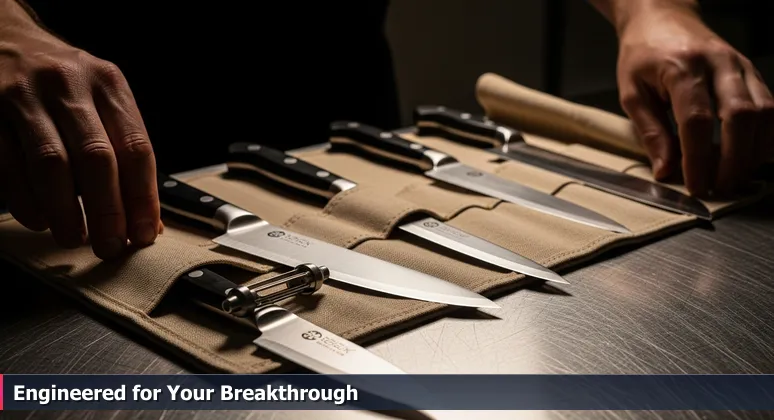
The most innovative kitchens don’t have just one perfect knife. They have a roll of them, each designed for a different cut. In 2026, Pittsburgh’s tech ecosystem operates on the same principle. It’s no longer a single hub but a specialized toolkit where the value lies in choosing the right component for your specific ambition, not the generic "best" space.
The city’s transformation is powered by a deep intellectual and manufacturing foundation. A talent pipeline from Carnegie Mellon University and the University of Pittsburgh fuels innovation, while a cost of living nearly 30% lower than San Francisco provides unparalleled financial runway for startups and remote professionals alike.
This ecosystem has moved from experimental to execution-ready. According to the Pittsburgh Technology Council, the region now excels at delivering "production-ready examples of sustainability and engineering." From the $1.3 billion in follow-on funding raised by AlphaLab companies to sportstech firm Diamond Kinetics securing a $12M investment, the proof is in the outcomes.
For AI and machine learning professionals, this specialized landscape is a career accelerator. Whether you're a bootcamp grad from a program like Nucamp's AI Tech Entrepreneur Bootcamp seeking a collaborative community or a seasoned developer looking to spin out CMU research, Pittsburgh offers a component engineered for your next cut.
Table of Contents
- Pittsburgh's Tech Ecosystem in 2026
- AlphaLab & AlphaLab Gear
- Carnegie Mellon University Swartz Center for Entrepreneurship
- OneValley at the Roundhouse
- The Robotics Factory
- Avenu Workspaces
- Industrious
- Alloy 264
- Spaces
- Pitt Innovation Institute
- Catapult Pgh
- Is a Coworking Space Worth the Cost in 2026
- Frequently Asked Questions
To understand the AI job market in Pittsburgh for 2026, refer to this guide to AI careers in Pittsburgh.
AlphaLab & AlphaLab Gear
For founders building product-ready ventures, AlphaLab and its hardware-focused sibling AlphaLab Gear are the precision chef's knives of Pittsburgh’s startup toolkit. This is not traditional coworking; it’s an equity-based accelerator program by Innovation Works, where accepted companies typically receive an initial investment of $50,000 to $100,000 for a small equity stake.
The focus is intensely specialized: AlphaLab for software, and AlphaLab Gear explicitly for hardware and robotics companies needing physical prototyping space. The program is built for high-growth trajectories, immersing founders in a cohort-driven environment deeply connected to the region's manufacturing and software backbone.
The Pittsburgh advantage here is launch infrastructure. As of 2026, companies from these programs have collectively raised over $1.3 billion in follow-on funding. Director of Accelerator Programs Aaron Tainter states the ecosystem is designed for founders "whether you're building in AI, robotics, or life sciences," providing unparalleled access to mentors and lab space. A recent success story, SeaLion Energy from the 2026 cohort, raised $2.5 million to scale advanced battery coatings.
"Whether you're building in AI, robotics, or life sciences, we have the mentors, lab space, and community to make it happen." - Aaron Tainter, Director of Accelerator Programs
For job seekers, these cohorts are a direct pipeline to the city’s fastest-growing tech employers. Networking at a demo day or engaging with the Pittsburgh Robotics Network connected to these programs is a strategic move to connect with hiring managers at the cutting edge.
Carnegie Mellon University Swartz Center for Entrepreneurship
If AlphaLab is the launchpad, the Carnegie Mellon University Swartz Center for Entrepreneurship is the forge where raw, cutting-edge research is tempered into venture-backable companies. Access is typically tied to being a CMU student, alum, faculty, or part of a sponsored venture, creating a high-octane, academic-deep-tech environment focused on commercializing world-class AI and robotics discoveries.
This center is the definitive tool for founders spinning out hard tech from one of the world’s top research institutions. It’s ideal for those in programs like the VentureBridge accelerator, providing structured mentorship and resources explicitly designed to transform laboratory breakthroughs into market-ready solutions. The dedicated entrepreneurship space is a nexus where theoretical meets practical.
The unparalleled Pittsburgh advantage is direct proximity to the source. Being embedded here places you in the primary talent pipeline from Carnegie Mellon’s School of Computer Science and Robotics Institute, making recruiting elite technical co-founders and early engineers significantly more feasible. This access is a competitive edge that coastal founders often spend years and millions to replicate.
For freelancers and contractors, while not a traditional coworking space, the Swartz Center is a critical networking node. Attending public lectures and mixers is a prime strategy to connect with deep-tech founders who require specialized contract work in machine learning, robotics integration, or algorithm development, often long before they publicly post roles.
OneValley at the Roundhouse
Planting a flag in Pittsburgh's most ambitious new innovation district, OneValley at the Roundhouse represents the city's tech-driven resurgence. Housed in the historic, industrial-chic Mill 19 complex at Hazelwood Green, it offers a forward-looking environment where shared desk memberships start around $250 per month.
This space is engineered for startups in robotics, sustainability, and AI that seek more than a desk - they want to be part of a larger, amenity-rich ecosystem. As noted by Pittsburgh Startup News, it provides a specialized platform for high-growth companies, placing them at the intersection of cutting-edge innovation and community redevelopment on a massive scale.
The Pittsburgh advantage is strategic positioning. Being in the burgeoning Hazelwood Green development means proximity to major corporate partners and research initiatives anchoring the city's future. It’s a statement of intent, offering a "corporate-plus" environment with modern design and services without the downtown premium.
For remote workers, especially those employed by coastal tech firms, OneValley is an ideal solution. It provides an impressive, professional space for hosting clients or investors, effectively bridging the gap between a Pittsburgh cost of living and the polished image expected by Silicon Valley or New York counterparts. This makes it a powerful tool for maintaining career optionality and local credibility.
The Robotics Factory
When your startup needs more than a desk, but a factory floor, The Robotics Factory is your specialized tool. This is primarily an accelerator program by Innovation Works with a gritty, hands-on focus on hardware scaling. Access to its specialized "Robotics Row" facilities in the Strip District is typically program-based, providing lab space, manufacturing tools, and a community of hardware engineers essential for moving from prototype to production.
This space is engineered for robotics hardware startups that require physical infrastructure. The Pittsburgh advantage is location: you are embedded in the Strip District’s "Robotics Row," the physical heart of the city's industry. This provides direct access to a dense network of suppliers, testing facilities, and engineering talent, forming the critical manufacturing backbone for real-world robotics.
For founders, being here dramatically reduces iteration time. The community can help solve immediate supply chain and fabrication challenges unique to physical products. It’s a cornerstone of the broader ecosystem, connecting directly to the network and resources championed by the Pittsburgh Robotics Network. This environment is designed to transform innovative designs into manufacturable, market-ready solutions.
While not a traditional co-working rental, its value is unmatched for hardware teams. It exemplifies how Pittsburgh’s ecosystem provides specialized, production-oriented components that snap together, offering a tangible runway for robotics ventures that would face significantly higher barriers and costs in coastal tech hubs.
Avenu Workspaces
For healthtech founders and academic researchers transitioning to entrepreneurship, Avenu Workspaces in Oakland is the specialized scalpel of Pittsburgh's ecosystem. Operated by InnovatePGH, it offers day passes from $25-$30, hot desks for $150-$200/month, and dedicated desks at $300/month, creating an academic-adjacent, collaborative environment strategically nestled between the region's intellectual powerhouses.
This space is engineered for university spin-offs and early-stage tech teams that need to be embedded directly within the flow of groundbreaking research. Its value proposition is unparalleled proximity: you are steps away from the University of Pittsburgh, Carnegie Mellon, and the clinical networks of UPMC. This location is deliberately designed to leverage world-class research and foster essential clinical partnerships.
The Pittsburgh advantage here is direct access to the problem sets that fuel innovation. As highlighted by Technical.ly's coworking guide, Avenu is a preferred space for precisely this reason, acting as ground zero for transforming academic discovery into commercial ventures in AI-driven healthcare and biotechnology.
For job seekers and bootcamp graduates, especially those from programs focusing on AI and data science, coworking here offers a strategic advantage. Oakland is a daily hub for thousands of researchers, clinicians, and graduate students. Inserting yourself into this environment facilitates the casual conversations and connections that often lead to opportunities in Pittsburgh's burgeoning AI-in-healthcare sector, long before positions are formally listed.
Industrious
For tech professionals and startup founders who require a polished, "corporate-plus" environment to operate and impress, Industrious offers the premium instrument. With locations at Liberty Center and the 31st floor of One PPG Place, memberships start around $299 per month for coworking, with private offices from $550/month and day passes available for $50.
The vibe is consistently high-end across its national brand, featuring concierge-level service, premium amenities, and designed spaces intended to facilitate focused work and professional meetings. The One PPG Place location, in particular, is noted for its stunning views and has earned a 5.0-star member rating for its "incredible space" and "top-notch hospitality," as highlighted in local reviews.
The Pittsburgh advantage is the convergence of national-brand consistency and local affordability. You gain access to a global network of 65+ locations, a valuable asset for traveling founders, while enjoying the professional polish of coastal hubs at a Pittsburgh price point. This makes it an ideal tool for mid-to-senior remote teams from larger companies or startups in a growth phase where investor and client perceptions matter.
For freelancers and consultants, the value proposition is clear. If your client work demands hosting professional meetings, the on-demand conference rooms and premium downtown address at locations like 1001 Liberty Avenue can justify the higher monthly cost, transforming it from an expense into a business development asset.
Alloy 264
For founders and independent developers seeking scale and energy without corporate polish, Alloy 264 is the expansive workshop of Pittsburgh's toolkit. With a $30 day pass, $135/month for unlimited flex access, and dedicated desks at $240/month, it offers low overhead within a massive, 50,000-square-foot complex in Allegheny Center.
The environment is high-energy and collegial, built for startup founders and small tech teams who value a vast array of on-site amenities - including a gym and multiple restaurants - within a decidedly non-corporate setting. As one of the city's largest and most established hubs, its scale ensures a constant buzz of activity, from tech meetups to specialized talks on topics like AI-first product engineering.
"Conducive to concentration and creativity." - Alloy 264 member review on the space's atmosphere.
The Pittsburgh advantage is its role as a one-stop shop that minimizes friction. Its size and longstanding presence foster a dense, accessible network. Members frequently praise features like the "stadium seating" for events, and the space is regularly highlighted in local guides like NEXTpittsburgh's roundup of the best coworking environments for collaborative work and community building.
For recent bootcamp graduates, particularly from affordable, community-focused programs, Alloy 264 presents an ideal next step. The low price point for flex desks and the constant community activity make it a perfect environment to build a professional network, find collaborative projects, and transition from learner to practitioner within Pittsburgh's supportive tech scene.
Spaces
Nestled in the live-work-play environment of Bakery Square, Spaces offers a vibrant, modern tool for software engineers and tech teams who thrive on dynamic surroundings. With memberships starting at $220 per month and private offices from $500/month, it provides a professionally designed base within Pittsburgh's most prominent tech corridor.
This space is engineered for those who want to be at the heart of the "Google-effect" ecosystem, where networking happens as organically in the plaza's coffee shops as in formal meeting rooms. The integrated neighborhood, anchored by Google's Pittsburgh office, fosters serendipitous connections with employees from major tech firms and other innovative companies.
The Pittsburgh advantage is immersion in a walkable innovation district. As highlighted in local guides like the Pittsburgh Startup News roundup, the value extends beyond the physical desk to include the energy and opportunity of the entire Bakery Square community. This environment is particularly effective for data scientists and developers who draw inspiration from a bustling, creative atmosphere.
For remote employees of larger tech companies, Spaces serves a dual purpose. It offers an environment that mirrors the feel of a corporate campus, potentially easing collaboration with distributed colleagues, while also providing a local network that can protect and enhance long-term career optionality within the Pittsburgh market.
Pitt Innovation Institute
The Pitt Innovation Institute serves as the specialized incubator for healthtech and biotech entrepreneurs spinning out research from the University of Pittsburgh. Access is tied to university affiliation, fostering a research-driven environment with unparalleled strength in life sciences, healthcare IT, and biomedical innovation.
This institute is the definitive tool for founders whose ventures require strong, direct ties to clinical networks. The Pittsburgh advantage is immediate, deep access to one of the nation's top medical centers, UPMC. For a health-focused AI startup, the ability to pilot and validate technology within a real-world clinical setting is an advantage that coastal founders might spend millions and years trying to secure.
The institute has a proven track record of commercializing high-tech research, with success stories including companies like Apollo Neuroscience (wearable wellness) and ALung Technologies (respiratory care). This pipeline from academic discovery to venture-backed company is a cornerstone of the region's life sciences corridor.
For AI and machine learning specialists, this environment offers a unique edge. Talent focused on biomedical applications will find a rich network of clinical partners, researchers, and complex, impactful problem sets here that are largely unmatched in other cities, providing a direct pathway to apply technical skills in a sector with massive growth potential.
Catapult Pgh
At the opposite end of the spectrum from premium brands lies Catapult Pgh, the versatile paring knife of Pittsburgh's toolkit - simple, essential, and accessible to all. It operates on a unique "name your price" model starting as low as $10, with suggested rates of $75/month for flex desks and $150/month for dedicated space.
The vibe is intentionally informal, creative, and fiercely community-driven, stripping away financial barriers to entry. With 24/7 access, free coffee, and a focus on collaboration over luxury, it's engineered for earliest-stage creators, developers, and creative technologists turning a side hustle into a main venture.
The Pittsburgh advantage is its embodiment of the city's grassroots, collaborative spirit. As covered by Pittsburgh Startup News, it’s built for makers and embodies the raw, unfiltered energy of the indie tech community. This space isn't about impressing clients with sleek design; it's about providing a no-frills home base where the primary amenity is authentic connection.
For anyone new to the city's tech scene, especially bootcamp graduates or remote workers seeking connections outside the corporate circuit, Catapult Pgh is an ideal starting point. The low commitment allows you to tap into a diverse network of developers and artists, fostering relationships that can lead to collaborative projects and opportunities, all with minimal risk. It's a featured space in guides like NEXTpittsburgh's roundup, celebrated for its unique contribution to the ecosystem's diversity.
Is a Coworking Space Worth the Cost in 2026
The calculation for Pittsburgh's tech professionals in 2026 has fundamentally shifted. The question is no longer merely about the cost of a desk, but the value of the specialized component you're snapping into within a larger, production-ready system.
For the freelancer or independent developer, the value lies in escaping isolation and landing the next client through community. A space like Catapult Pgh or Avenu Workspaces acts as a business development engine, where connections made over coffee can translate into contracts. Resources like Technical.ly's local guide underscore how these environments are curated for professional networking and growth.
For the remote worker commanding a coastal salary, a $300/month dedicated desk is a strategic investment. It protects focus, provides a professional setting for important calls, and, crucially, builds a local network that safeguards career optionality. This is especially powerful in a market where the cost of living is nearly 30% lower than San Francisco, dramatically extending the runway of that investment.
For the founder, the right incubator or accelerator is non-negotiable fuel. Programs like AlphaLab or access to the Pitt Innovation Institute provide the essential trinity of capital, mentorship, and sector-specific credibility that can accelerate growth by years. As the Pittsburgh Technology Council notes, the ecosystem's strength is in delivering "production-ready" innovation, and embedding your venture in the correct specialized hub is how you access that manufacturing-ready backbone.
Ultimately, Pittsburgh's ecosystem excels because its parts are purpose-built. The real task isn't finding a generic "best" space, but diagnosing whether you need the robotics factory floor, the healthtech clinic-adjacent lab, or the grassroots community hub. Choose the tool engineered for your specific cut.
Frequently Asked Questions
How were these coworking spaces and incubators selected as top in Pittsburgh for 2026?
They were ranked based on specialization, cost-effectiveness, and integration with Pittsburgh's tech ecosystem, such as access to AI and robotics talent from CMU. For example, AlphaLab focuses on high-growth startups with over $1.3 billion in follow-on funding, highlighting impact over generic amenities.
What's the typical cost range for coworking spaces in Pittsburgh?
Costs vary from budget-friendly options like Catapult Pgh's 'name your price' model starting at $10 to premium spaces around $300/month at Industrious. For instance, Alloy 264 offers flexible desks for $135/month, making it affordable for freelancers and early-stage teams in the city.
Which coworking space or incubator is best for AI and robotics professionals in Pittsburgh?
AlphaLab Gear and the Robotics Factory are ideal for hardware and robotics startups, offering prototyping labs on the Strip District's 'Robotics Row'. For AI research spin-offs, the CMU Swartz Center taps into Carnegie Mellon's deep-tech talent, with proximity to major employers like UPMC.
Are these spaces suitable for remote workers, or are they just for local startups?
Many cater to remote workers; for example, OneValley provides a professional setting for client meetings without the coastal price tag, and Spaces in Bakery Square offers a vibrant environment near Google's office. This allows remote tech employees to leverage Pittsburgh's lower cost of living while staying connected.
What makes Pittsburgh a unique place for tech professionals using coworking spaces?
Pittsburgh offers a cost of living nearly 30% lower than San Francisco, with a strong talent pipeline from CMU and Pitt for AI and robotics. Incubators like Avenu Workspaces provide direct access to healthtech opportunities at UPMC, giving startups an edge in specialized sectors.
Get insights into the compensation leaders in Pittsburgh's tech scene for 2026 with this analysis.
This complete guide to Pittsburgh tech salaries and living costs in 2026 provides all the insights you need.
Explore the top 10 free tech training programs in Pittsburgh, PA for 2026 to kickstart your career.
Explore the Top 10 Companies Hiring AI Engineers in Pittsburgh, PA in 2026 to guide your career search.
Discover the top 10 tech startups hiring junior developers in Pittsburgh, PA in 2026 for career growth.

Irene Holden
Operations Manager
Former Microsoft Education and Learning Futures Group team member, Irene now oversees instructors at Nucamp while writing about everything tech - from careers to coding bootcamps.