









Top 10 Tech Coworking Spaces and Incubators in Canada in 2026
By Irene Holden
Last Updated: April 10th 2026
Too Long; Didn't Read
Velocity in Waterloo and DMZ in Toronto are the top picks in Canada’s 2026 list: Velocity shines for zero-fee, zero-equity programs and a community that has created over CA$40 billion in enterprise value, while DMZ delivers a structured, global-facing launchpad that has helped alumni raise more than CA$1 billion for roughly two percent equity. Choose Velocity as a non-dilutive build base and DMZ when you’re ready to scale into enterprise buyers, and bear in mind that desks in Toronto and Vancouver typically cost about CA$275 to CA$850 per month while Montreal and Waterloo can stretch your runway further.
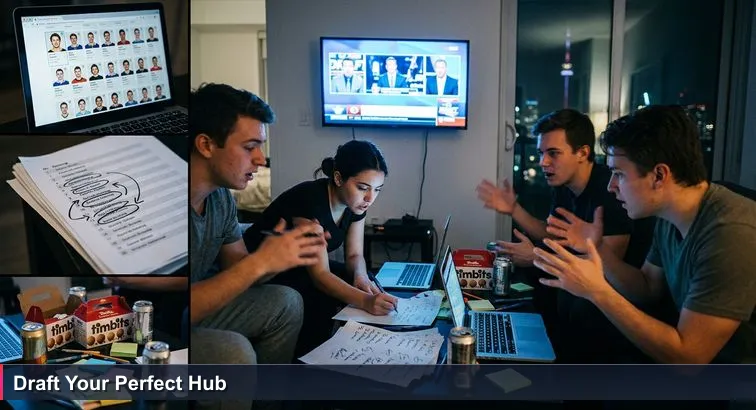
The room goes silent as the draft clock bleeds into single digits. Laptops glow with player models, spreadsheets rank prospects by WAR and age curve, and that one friend is still scrolling, convinced there’s a “consensus #1” you’d be insane to pass on. But your actual roster holes tell a different story: you don’t need the flashiest winger, you need the centre who fits your system.
Founders, indie devs, and AI engineers in Canada replay this scene every time they search “best coworking space” or “top incubator.” Lists hand you neat rankings - MaRS, DMZ, Velocity, CDL, Notman House, WeWork - while real life throws messier tradeoffs at you: equity vs. free, Toronto density vs. Waterloo burn rate, Mila vs. Vector, remote flexibility vs. in-person momentum.
Underneath the noise, a few hard numbers shape the ice. Analysts like Peony Data Room note that Canada’s startup operating costs are roughly 40-60% lower than Silicon Valley, helped by federal programs like SR&ED and IRAP and a national CA$2B Sovereign AI Compute Strategy aimed at GPUs and talent. Desk studies from firms such as 2727 Coworking put flexible coworking in Toronto and Vancouver in the CA$275-$850/month band, while Waterloo, Montreal, Calgary, and Ottawa typically come in well below that.
At the same time, Canada’s ecosystem runs on a hub-and-spoke model. National accelerators like Creative Destruction Lab and NEXT Canada sit on top of local engines - Velocity in Waterloo, District 3 at Concordia, Notman House in Montreal, HiVE in Vancouver - letting you “stack” support: zero-equity university incubators, targeted AI accelerators, and flexible desks you can dial up or down with your runway.
So don’t read this Top 10 as a podium. Treat it as a scouting report. Each space is a different position type: some are two-way centres (corporate + research), some are pure goal scorers (AI accelerators), some are glue guys (cheap community desks). Your job isn’t to chase the highest-ranked name - it’s to draft the combination of hubs that fits your game plan in tech and AI right now.
Table of Contents
- Drafting Your Home Rink
- Velocity
- DMZ
- MaRS Discovery District
- Creative Destruction Lab
- NEXT Canada
- District 3
- McGill Dobson Centre
- WeWork Canada
- Spaces
- HiVE Vancouver
- How to Choose Your Home Rink
- Frequently Asked Questions
Velocity
Velocity is the classic “hard-minutes centre” on your roster: not glamorous on the surface, but it quietly drives results. Run out of the University of Waterloo, it offers dedicated startup workspace, fabrication resources, and coaching while charging founders CA$0 and taking 0% equity across its core programs, as confirmed on the Velocity program pages.
Why it’s a standout in Waterloo
According to Velocity’s own community report, alumni companies have created more than CA$40B in enterprise value, with names like Clearpath Robotics and Vidyard frequently cited as flagships. The incubator supports both software and hardware, which matters if your AI work touches robotics, edge devices, or custom sensors rather than pure SaaS.
Founders can also tap the Summer Accelerator, which offers selected teams CA$12,000 fellowships to build full time. On top of that, the University of Waterloo has seeded a new fund with CA$5M from its endowment, creating a clearer capital path from prototype to seed, as reported by BetaKit’s coverage of the Waterloo VC fund.
How AI and ML founders actually use it
For AI and ML teams, Velocity’s value is in the stack you can build around it: strong technical talent from Waterloo, proximity to employers like Shopify and Google Canada, and enough breathing room on rent to funnel cash into GPUs and data. Instead of paying for a premium desk, you trade in: time in the lab, office hours with experienced operators, and early access to pilot customers moving through the Waterloo ecosystem.
In practice, many founders treat a Velocity desk as their “home rink,” then layer on grants (IRAP, SR&ED), AI research ties, and later-stage accelerators once the product starts to click.
DMZ
DMZ plays the role of an aggressive, top-line winger: high tempo, relentless pressure, built for teams that already know how they want to attack. Based at Toronto Metropolitan University, it runs structured incubator and accelerator programs that charge CA$0 in fees but typically take around 2-2.5% equity, as outlined on the DMZ startup incubator overview.
Traction and Toronto firepower
Over the past decade, DMZ has become one of Canada’s most recognisable startup brands. According to a funding milestone reported by BetaKit’s coverage of DMZ alumni, companies coming through its programs have raised more than CA$1B collectively. Its downtown location drops you into Canada’s densest cluster of enterprise buyers and financial institutions, from the Big Five banks to telcos and large insurers that increasingly run formal innovation and AI adoption programs.
Fit for SaaS, fintech, and applied AI
DMZ is particularly tuned for founders who already have an MVP, pilots, or early revenue and want a structured path to scale. The environment skews toward high-growth SaaS, fintech, and AI-enabled platforms rather than lifestyle or small agency work. You’re surrounded by other teams aiming for venture-scale outcomes, plus a steady stream of mentors, investors, and partner reps cycling through the space.
How to play the equity trade-off
For many Canadian AI and software founders, the key question is whether that 2-2.5% equity slice is a smart trade for network and support. In a city where standalone desks can easily cost hundreds of dollars a month, some teams treat DMZ’s equity as their “all-in membership fee”: workspace, programming, warm intros, and signal in one package.
If you’re already comfortable in the Toronto ecosystem, DMZ can be your accelerant rather than your entry point - the moment you move from quietly building to actively chasing larger rounds, bigger customers, and international expansion.
MaRS Discovery District
MaRS is the polished, two-way centre on your lineup: part research lab, part corporate boardroom, part startup bullpen. Sitting in Toronto’s Discovery District beside the University of Toronto, it brings together growth-stage companies, hospital networks, public-sector agencies, and venture funds under one roof, as showcased in the official MaRS Discovery District overview.
Where MaRS really shines
The hub is engineered for companies selling into complex institutions rather than just chasing app-store downloads. Healthtech, cleantech, and fintech/AI ventures can walk from their desks to meetings with hospital research teams, utilities, or banks like RBC and Manulife clustered nearby. For AI teams, that adjacency to U of T and Vector-linked labs makes it easier to line up joint pilots, research collaborations, and data-sharing agreements.
Costs and expectations
Flexible space at MaRS typically tracks downtown Toronto averages, with coworking-style desks often landing in the ~CA$400-CA$800/month range depending on configuration and services. That’s premium compared with Waterloo or Ottawa, but you’re effectively paying to be embedded where enterprise decisions get made. Many founders offset occupancy costs through SR&ED credits or IRAP support once their R&D spend grows.
The cultural fit test
Employee and founder reviews on platforms like Glassdoor consistently mention a strong mission-driven culture, but also the “ambiguity” that comes with any large, multi-stakeholder institution. For some teams, that means invaluable access to partners; for others, it can feel slower than a scrappy indie coworking space.
As a practical play, early-stage startups often start with program-based access rather than full tenancy. You use MaRS as your home ice for enterprise sales meetings, investor days, and clinical or pilot work, while keeping your everyday burn lower in a smaller office or remote setup elsewhere in the GTA.
Creative Destruction Lab
Creative Destruction Lab is the superstar you only draft if you’re serious about contending. It’s a mentor-driven, deep-tech accelerator with nodes in Toronto, Montreal, Vancouver, Calgary and beyond, designed for teams with a real scientific or algorithmic moat. Independent analyses of Canadian accelerators report that CDL companies have created more than CA$55B in equity value, while the program itself takes 0% equity and admits only about 10-15% of applicants.
Inside CDL’s objective-based model
Unlike many accelerators that focus on pitch polish, CDL runs a series of intensive sessions where you present measurable objectives to a room of seasoned founders, operators, and scientists. Hit your milestones, and you’re invited back; miss repeatedly, and you’re cut from the cohort. The Canada School of Public Service’s overview of “Innovation Accelerators: The Big Three” highlights CDL’s distinctive emphasis on evidence, not hype, as what makes it stand out in the federal innovation landscape.
Why AI and deep-tech teams aim for it
For AI, quantum, robotics, and other science-heavy ventures, CDL’s theme streams (AI, Quantum, Space, Blockchain and more) function as a global showcase. The AI streams in Toronto and Montreal plug directly into corporate innovation teams and international investors scanning Canada for frontier models and infrastructure plays. A profile in Boring Business Nerd’s ranking of university accelerators notes that CDL’s university links make it especially effective at spinning research out of labs and into companies.
How to make CDL work for your “line”
CDL is not a place to find free desks or learn to code; it assumes you already have research-grade tech, some form of validation, and a team ready to be pushed hard. Most founders pair it with a separate low-cost base - often in Waterloo, Montreal, or Calgary - then fly in for CDL sessions. If you treat it as your high-performance training camp rather than your home rink, the program can compress years of trial-and-error into a single, brutal, game-changing season.
NEXT Canada
NEXT Canada is the development camp for ambitious Canadian founders who still feel closer to “prospect” than “veteran.” Instead of just renting you a desk, it drops you into tightly structured programs - Next 36, Next AI, and Next Founders - designed to compress years of entrepreneurial learning into one intense season.
What the programs actually put on the table
Across its tracks, NEXT typically offers investment of up to ~CA$150K in a mix of cash and in-kind support in exchange for around 5-7% equity, according to public summaries of the Next 36 funding model. Program calendars are demanding: recent cohorts saw Next 36 running full-time from May to August, while Next AI operated March through September with weekly sessions and intensive sprints, as outlined in NEXT’s own cohort and deadline updates.
Why AI and ML builders aim for Next AI
NEXT Canada’s program descriptions emphasise partnerships with leading universities and AI institutes in Toronto and Montreal, making Next AI a natural bridge between research labs and commercial products. For early-career ML engineers, data scientists, or technical product managers, it offers something most coworking spaces can’t: a formal curriculum, operator-led workshops on model deployment and go-to-market, and a peer group equally obsessed with GPUs, unit economics, and ethics.
When equity-for-support makes sense
The real calculus is whether that equity slice beats bootstrapping. If you’re a student or recent grad without a deep network, the trade often looks favourable: you get capital, credibility, and a national community of alumni in one move. Many founders treat this as “tuition paid in shares” rather than cash, then use the alumni map - publicly showcased in NEXT’s 2025 cohort list - to unlock introductions to engineers in Waterloo, AI researchers in Montreal, or product leaders in Toronto’s banks and tech giants.
If your priority is learning how to build a scalable AI company rather than just renting a chair, NEXT Canada is less a workspace decision and more a bet on your own acceleration curve.
District 3
District 3 is the rare incubator that throws its doors open beyond campus. Based at Concordia in downtown Montreal, it offers founders coworking, structured coaching, and access to a cross-disciplinary community while charging CA$0 and taking 0% equity, as outlined on the main District 3 program site. For student and non-student founders alike, it’s a way to test serious ideas without burning cash or cap table.
Zero-cost runway in the core
District 3’s programming is built around staged learning. Tracks such as Systems Mapping (6 weeks) and Validation (12 weeks) walk teams from initial problem framing through customer discovery and early experiments, detailed on the incubator’s application pages and spotlighted in its Systems Mapping announcements. Throughout, founders can use shared workspace and book time with experienced coaches, effectively getting the structure of an accelerator with the flexibility of a coworking pass.
Where AI meets bio, health, and social innovation
Rather than siloing “pure tech,” District 3 intentionally mixes Bio, Health, and High Tech teams, including AI-driven social ventures, as described on its sector and social innovation pages. Montreal’s overall costs often sit roughly 40-50% lower than Silicon Valley while still undercutting Toronto, and the city’s proximity to Mila gives AI and ML founders unusual access to cutting-edge research talent and datasets.
How founders turn it into a home rink
In practice, Canadian AI and impact-focused teams use District 3 to:
- Validate AI-enabled health, climate, or social products before raising equity rounds
- Combine free space with provincial support (e.g., Investissement Québec) and federal SR&ED credits to extend runway
- Recruit interdisciplinary co-founders from computer science, design, and life sciences programs
- Build traction and credibility before applying to national accelerators like CDL-Montreal or Next AI
If you’re exploring an AI project that touches people’s lives directly - patients, communities, the environment - District 3 offers a grounded, research-friendly rink where you can stress-test both your model and your impact thesis.
McGill Dobson Centre
Dobson feels less like a quiet incubator and more like playoffs: brackets, judges, live pitches, and the very real possibility of walking away with non-dilutive capital. For McGill students and alumni, the McGill Dobson Centre turns entrepreneurship into a competition-driven training ground rather than just another club on campus.
At the heart of it is the McGill Dobson Cup, an annual startup competition and bootcamp where teams across multiple tracks compete for over CA$200,000 in grants each year. McGill’s official summary of Dobson Cup prize recipients highlights recent winners like Arvo A.I. in the Tech track and Biomë in Health Sciences, underscoring how often AI and deep science ventures reach the podium.
The process is deliberately intense. Bootcamp programming pairs teams with mentors, investor-judges, and sector experts, then runs them through customer discovery, business model refinement, and pitching. A 2025 recap from the Dobson Centre’s Bootcamp & Cup announcement frames it as a launchpad for ventures spanning tech, health, and social innovation. Crucially, Dobson takes no equity - winnings are pure grant money.
AI and ML builders at McGill often use Dobson less as an endpoint and more as a signal and springboard. It’s where capstone projects, research code, or hackathon prototypes get pushed through a reality check: is there a real customer, a viable business model, and a team ready to execute beyond the semester?
In practice, founders treat Dobson as a way to:
- Pressure-test AI or data-heavy ideas with experienced mentors before raising capital
- Win non-dilutive funding to cover early cloud, data, and validation costs
- Build credibility that opens doors at Montreal incubators, national accelerators, and local investors
- Assemble cross-faculty teams that mix ML, health sciences, and social impact
WeWork Canada
For many AI and software people in Canada, WeWork is the default neutral zone: predictable, corporate enough for client meetings, but still relaxed compared with a bank tower. Across Toronto, Vancouver, Montreal, Calgary and other metros, its locations give remote engineers, data scientists, and startup teams a stable base when home and coffee shops stop cutting it.
Pricing sits in the upper-middle of the market but buys you consistency. Typical 2026 rates from WeWork’s own Canadian workspace overview put a hot desk at roughly CA$300/month, a dedicated desk from around CA$466/month, and a day pass near CA$54. In return, you get high-speed internet, phone booths, bookable meeting rooms and, crucially for distributed teams, the ability to drop into multiple cities on a single membership via “All Access” style passes.
This portability lines up with how Canada’s tech sector is evolving. A national market analysis from Next Move Strategy Consulting notes growing demand from enterprises using coworking for satellite teams and hybrid workers. For AI folks employed by global companies (Amazon, Google, Meta) but based in Canadian cities, that translates to one contract that works whether you’re in downtown Toronto for a week of meetings or spending a month in Vancouver’s startup scene.
In practice, WeWork tends to fit three profiles best:
- Remote employees who need a quiet base a few days a week
- Small, funded teams wanting polished space without signing a long lease
- Consultants and freelancers who regularly host clients in multiple cities
The playbook many Canadians use is simple: start with day passes to test specific locations, then move to a part-time or All Access plan once you know where your clients, collaborators, and commute patterns really are. As your “lineup” of projects and team members shifts, your workspace can follow you instead of locking you in.
Spaces
Spaces, part of the IWG family, is the slick, systems-first defenceman on your roster: quiet, reliable, and built to impress clients more than other founders. Across Toronto, Vancouver, Montreal, Ottawa and other metros, its locations lean into Scandinavian-style interiors, café-style common areas, and concierge-style reception, positioning themselves as more “consulting firm” than “startup garage,” as highlighted in IWG’s own overview of creative coworking spaces in Canada.
On pricing, Spaces often undercuts premium boutique hubs while still feeling high-end. Usage-based plans can bring a dedicated desk down to about CA$5/day (roughly CA$150/month equivalent) and wider “All Access” style passes to around CA$10/day, according to national coworking pricing analyses that benchmark IWG offerings against other brands. For an AI freelancer or small data consultancy, that makes it realistic to maintain a polished downtown presence without the commitment and overhead of a traditional lease.
Where Spaces fits especially well is for:
- Freelance developers and data consultants billing enterprise clients
- Small AI or analytics agencies needing credible rooms for workshops
- Solo founders who want a quiet, professional environment instead of a loud, event-heavy startup space
Because IWG runs a global network, Canadian teams can also piggyback on membership when visiting US or European clients. Guides like Imfounder’s 2026 coworking rankings consistently flag Spaces as a strong option for professionals who care more about reliable Wi-Fi, meeting rooms, and perception with CIOs than about weekly founder mixers.
If your workday is more client calls, dashboards, and SOC2 questions than hackathons, Spaces is often the right kind of understated home rink.
HiVE Vancouver
HiVE Vancouver is the scrappy third-line that quietly wins shifts while the stars chase headlines. Tucked into Gastown, it’s a community-first coworking space that blends social impact organisations with indie technologists, making it a rare fit for AI builders who care as much about climate, civic tech, or equity as they do about model performance.
On cost, HiVE consistently shows up in “most affordable” lists for an otherwise pricey city. Recent listings on CoworkBooking’s HiVE profile put part-time or hot desk memberships from around CA$49/month, with full-time desks topping out near CA$280/month. That’s materially lower than many polished downtown options, freeing up budget for GPU credits, conference travel, or that extra contract data annotator.
The crowd is deliberately mixed: non-profits, social enterprises, climate projects, and a steady trickle of indie devs and data people. For AI and ML practitioners, that means access to domain experts you won’t find at a pure dev hub - urban planners, health advocates, educators - who can help you frame better problems and build datasets that reflect real communities.
Founders and remote workers typically use HiVE in three ways:
- As a low-commitment base while bootstrapping an AI or software product
- As a community hub for finding collaborators, early adopters, or pilot partners in impact sectors
- As a counterweight to solo apartment work, with just enough structure to keep focus high
Guides like Cowrk Club’s rundown of cheap Vancouver coworking highlight HiVE as an outlier in price-to-community ratio. If you’re trying to build meaningful tech from an expensive West Coast city, it’s one of the few rinks where the monthly fee doesn’t feel like a tax on your ambition.
How to Choose Your Home Rink
In every draft room there’s a moment where you stop chasing the highest-ranked player and start drafting for your own system. Choosing between MaRS and DMZ, Velocity and District 3, or a WeWork pass versus your kitchen table works the same way: it’s not about what’s “top,” it’s about what moves the needle for your skills, stage, and runway.
Read the ice: when a hub actually helps
Spaces and programs are most valuable when they shorten feedback loops or unlock people you couldn’t reach alone. Canada’s hub-and-spoke ecosystem, mapped in resources like ShoutEx’s startup ecosystem guide, makes it possible to mix national accelerators with very local communities.
- If you’re validating an AI product, incubators give you mentors, pilot users, and honest “no’s” faster.
- If you’re selling into enterprises, polished hubs near downtown cores make buyer meetings easier.
- If you’re job-hunting or freelancing, daily proximity to founders and hiring managers beats cold applications.
When to stay lean and local
There are seasons when a paid desk or equity-based program is overkill. If you’re still learning to code, exploring AI as a career move, or iterating on ideas nights-and-weekends, public libraries, campus labs, and meetups can give you community at almost zero cost. City resources like the City of Toronto’s coworking and incubator directory help you spot free or low-cost options before you commit.
Test, negotiate, and stack your lines
Before locking in, treat every space like a prospect: ask for a trial day, check noise levels, and talk to current members about what actually gets done there. Negotiate on term length and meeting-room credits, especially if you can commit for a few months. Then think in line combinations, not single stars: a zero-equity university incubator for build season, a flexible coworking pass for networking season, and a selective accelerator only when you’re truly ready to chase bigger ice.
Frequently Asked Questions
Which coworking space or incubator is best for my startup stage - idea, early, or scale-up?
For idea-stage founders, free university incubators like Velocity (Waterloo) and District 3 (Montreal) are ideal - both offer 0% equity and free workspace. For early-stage teams aiming to raise or scale, programs like DMZ (Toronto) or Next AI provide structured support but often take equity (DMZ ~2-2.5%; Next may invest up to ~CA$150K for ~5-7%); for enterprise-focused scale-ups, MaRS offers downtown access and desks in the CA$400-800/month range.
I'm an AI researcher - which hubs give the best access to research, compute, and industry partners in Canada?
Target nodes colocated with Mila, Vector Institute or major universities - Toronto, Montreal and Waterloo are top choices: CDL and Next AI run deep-tech cohorts, Velocity and District 3 offer research ties, and the federal CA$2B Sovereign AI Compute Strategy is strengthening national compute access. That mix gives you academic mentors plus corporate partners like Shopify, RBC and Google Canada for pilots.
How much should I budget for coworking across Canadian tech hubs in 2026?
Expect wide ranges: Toronto and Vancouver commonly run CA$275-850/month for flexible desks; WeWork hot desks are about CA$300/month and dedicated desks from ~CA$466/month, while Spaces can average ~CA$150/month on flexible plans. Remember many high-quality incubators are free (Velocity, District 3) or equity-based (DMZ ~2-2.5%), so factor program terms into your runway.
Can I combine a free incubator with paid coworking - is stacking programs common and useful?
Yes - stacking is common and recommended: founders often use a zero-equity incubator (e.g., Velocity) as their base while buying a WeWork or Spaces pass for client meetings and remote hiring flexibility. That lets you keep rent low (or get stipends like Velocity’s CA$12,000 fellowship) and reallocate savings to GPU credits, data labelling, or pilot costs.
How should I weigh an equity-taking accelerator versus a zero-equity university incubator?
Weigh immediate cash and structured support against dilution: equity accelerators (Next, DMZ) can provide funding, mentorship and investor intros - Next programs can invest up to ~CA$150K for ~5-7% - while university incubators (Velocity, District 3) give non-dilutive space, coaching and networks but less direct capital. Choose based on whether you need cash and rapid market access now, or prefer to preserve equity while validating product and customers.
Get the complete guide: Who’s Hiring Cybersecurity Professionals in Canada in 2026? to identify teams, roles, and training pathways.
Want to learn which events actually lead to jobs? Read the AI meetups and networking events guide for Canada 2026 for recruiter-focused strategies.
Comprehensive Canadian guide: Tech salaries and cost of living in 2026
Explore the Top 10 free tech training at libraries and community centres to start your AI or coding journey in Canada.
Read our complete guide to paying for tech training in Canada in 2026 covering scholarships, grants and government programs.

Irene Holden
Operations Manager
Former Microsoft Education and Learning Futures Group team member, Irene now oversees instructors at Nucamp while writing about everything tech - from careers to coding bootcamps.