









Top 10 Industries Hiring AI Talent in Tuscaloosa Beyond Big Tech in 2026
By Irene Holden
Last Updated: March 31st 2026
Too Long; Didn't Read
Automotive manufacturing and healthcare are the top industries hiring AI talent in Tuscaloosa beyond big tech in 2026, driven by local giants like Mercedes-Benz and DCH Health System. Automotive roles, such as Vision Control Engineers, offer salaries up to $135,000 with a focus on physical AI integration, while healthcare sees a 67% surge in AI deployment, blending high-paying positions with mission-driven work. These sectors highlight Tuscaloosa's advantage of lower cost of living and a growing tech ecosystem, making AI careers here both lucrative and impactful in real-world applications.
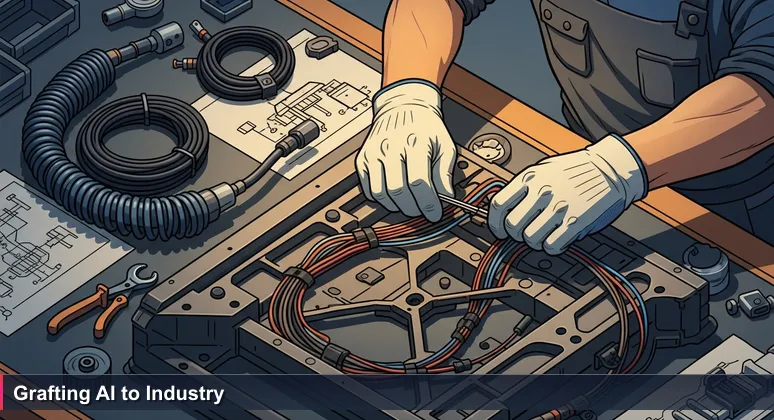
The most sophisticated part of a modern Mercedes isn't its engine or its logo - it's the nervous system of wires being threaded through its frame on a line in Vance, Alabama. That act of precise, physical integration is the blueprint for Tuscaloosa's AI future, built not in abstract labs but within the durable foundations of our regional economy.
We often romanticize AI as something that happens in sterile data centers, causing us to overlook the vast, complex landscape where it's actually being applied - and hired for. The narrative of talent fleeing to Silicon Valley is outdated. Here, a quieter, more substantial revolution is underway, powered by grafting intelligence onto the working skeletons of our factories, hospitals, and power grids.
The evidence is in the data: AI roles in the region command a 27% salary premium over non-AI IT positions. The premium skill is no longer just coding a model, but successfully integrating it, a shift underscored in local manufacturing tech priorities highlighting "Physical AI." This is seen in the 19% surge in AI investment for manufacturing operational efficiency and the accelerated adoption in healthcare to combat provider burnout.
The most exciting AI careers in Tuscaloosa aren't in big tech satellites; they're in the industries that have always powered our community. The future is being built by those who can wire intelligence into the automotive spine in Vance, the clinical workflows at DCH, or the grid lines managed by Alabama Power, redefining what a tech career looks like in West Alabama.
Table of Contents
- Tuscaloosa's AI Revolution
- Automotive Manufacturing & Suppliers
- Healthcare & Biotech
- Education & EdTech
- Advanced Manufacturing
- Fintech & Banking
- Logistics & Supply Chain
- Energy & Utilities
- Government & Public Sector
- Retail & E-commerce
- Real Estate & PropTech
- Why AI in Tuscaloosa Matters
- Frequently Asked Questions
For a detailed resource, read The Complete Guide to Starting an AI Career in Tuscaloosa, AL in 2026.
Automotive Manufacturing & Suppliers
At the epicenter of Tuscaloosa's industrial AI landscape is the automotive manufacturing hub in Vance, anchored by Mercedes-Benz U.S. International (MBUSI) and its supplier network. Here, the focus has moved beyond basic robotics to sophisticated "Physical AI," where intelligence is embedded directly into the production floor.
Roles like Vision Control Engineers deploy AI-enabled cameras for micron-level quality inspection, while Predictive Maintenance Analysts build models that forecast machine failures before they halt a line. The critical skill shift involves integrating machine learning models with industrial hardware - Programmable Logic Controllers (PLCs), sensors, and robotic arms - rather than solely with cloud software. This hands-on integration is what defines the sector's high-value talent.
With a competitive salary range of $85,000 to $135,000, these positions are in high demand. The adoption of "Agentic AI" for autonomous systems and shift handovers is accelerating, as highlighted in analyses of 2026 manufacturing tech priorities. This growth trajectory makes automotive manufacturing a primary driver for AI hiring in the region.
This sector is ideal for career-changers with backgrounds in mechatronics, industrial engineering, or even skilled trades. It offers a direct, tangible path to apply AI to large-scale production challenges, providing the satisfaction of seeing code operate in the physical world of steel and assembly.
Healthcare & Biotech
Tuscaloosa's healthcare sector, led by the DCH Health System and research at the University of Alabama, is strategically deploying AI to combat provider burnout and improve patient outcomes. The integration focuses on practical applications like predictive patient volume forecasting and automated insurance verification, moving AI from experimental pilots to core operational tools.
Roles such as Health Informatics Specialists and Clinical Data Analysts build these models, while research labs hire AI-driven Drug Discovery Researchers to accelerate new therapies. The work is uniquely governed by the need for interpretable AI - where clinicians must understand why a model makes a prediction - and strict HIPAA compliance, creating a distinct skillset compared to consumer software development.
“Organizations have moved beyond pilots and are now strategically deploying solutions that directly impact provider burnout and the bottom line.” - Trish Rivard, CEO at Eliciting Insights
This mission-driven sector offers a salary range of $75,000 to $136,000 and is experiencing rapid growth, with a 67% increase in multi-solution AI deployment according to a 2026 analysis of health system trends.
It's a perfect fit for nurses, medical technicians, or biology graduates looking to pivot into tech, allowing them to leverage deep domain knowledge to create AI tools that directly and ethically improve community health.
Education & EdTech
Driven by the University of Alabama's launch of dedicated BS and MS programs in AI in Fall 2026, the education sector itself has become a major employer of specialized AI talent. This creates a self-reinforcing cycle: the university trains new AI professionals while simultaneously hiring experts to teach and advance the field.
The industry hires for roles like AI Literacy Teachers, faculty for AI-powered research, and EdTech Curriculum Developers who design how Large Language Models (LLMs) are used in learning environments. The focus is less on raw model development and more on the critical applied areas of AI ethics, student data privacy, and pedagogical integration.
Salaries reflect the range of opportunities, from around $65,000 for instructional roles to over $142,000 for specialized tenure-track faculty positions, as seen in UA's own professorial job postings. This rapid growth trajectory is fueled by the need to future-proof both K-12 and higher education curricula.
This growing niche is perfect for former educators, instructional designers, and PhDs who want to move into tech. It allows them to directly shape the responsible adoption of AI in classrooms across Tuscaloosa County, ensuring the next generation is both skilled and ethically grounded in using intelligent tools.
Advanced Manufacturing
Beyond automotive, Tuscaloosa's broader advanced manufacturing base - including companies like GAF, Hunt Refining, and Phifer Incorporated - is investing heavily in AI to optimize core processes. This sector focuses on using intelligence to enhance efficiency in chemical processing, materials science, and energy management, representing a significant diversification of local AI applications.
Roles like Process Automation Engineers and Industrial Data Scientists work on optimizing complex chemical processes, conducting AI-driven materials research, and managing plant-wide energy consumption. The key technical differentiator here is expertise in edge computing - running lean AI models directly on factory-floor machines for real-time decision-making - and seamless integration with enterprise resource planning (ERP) systems like SAP.
This sector reported a 19% surge in AI investment for operational efficiency in 2026, as highlighted in industry outlook reports. With salaries ranging from $90,000 to $145,000, it offers lucrative, stable careers that compete with national tech hubs but are anchored in West Alabama's cost-effective living.
This field is ideally suited for professionals with chemical, mechanical, or industrial engineering experience seeking to enter the AI space. It allows them to apply data science to tangible problems like yield optimization and predictive maintenance, creating immediate value from the factory floor up.
Fintech & Banking
Local financial institutions like Alabama ONE Credit Union and Regions Bank are engaged in an aggressive hunt for AI talent, but with a distinct, pragmatic focus. They are not building consumer fintech apps; they are fortifying core operations against sophisticated fraud and optimizing lending in a regulated environment.
Key roles include Fraud Detection Analysts using anomaly detection algorithms and Revenue-based Financing Underwriters deploying machine learning models for granular risk assessment. The crucial, differentiating skillset here is a deep understanding of RegTech (regulatory technology) and financial risk modeling, prioritizing compliance and stability over rapid software iteration.
Salaries in this sector have a notably wide band, from $74,000 to $192,000 for senior specialized roles, reflecting the high value placed on niche expertise that bridges finance and AI. This range is supported by ZipRecruiter data for fintech jobs in Alabama, which shows competitive compensation even outside major coastal hubs.
This field is an excellent pivot for career-changers from accounting, auditing, or financial analysis. It offers a compelling blend of high-stakes problem-solving, the stability of the banking sector, and the opportunity to apply AI where it directly protects assets and enables responsible growth in the local economy.
Logistics & Supply Chain
Tuscaloosa's strategic location and dense manufacturing base have cultivated a robust logistics industry, with firms like Schnellecke and ARD Logistics operating at its core. In 2026, their AI investment has pivoted sharply from long-term planning to real-time "Supply Chain Execution," using intelligence to navigate volatility and ensure seamless material flow.
Companies hire Supply Chain Analytics Managers and Logistics Flow Analysts to build dynamic models for real-time routing, inventory optimization, and disruption mitigation. The required technical proficiencies are in geospatial data analysis, complex routing algorithms, and integration with warehouse management systems (WMS), moving goods smarter and faster.
This is a high-growth area for AI talent, with 34 supply chain job postings in the area as of early 2026. Salaries are competitive, ranging from $80,000 to $130,000, reflecting the critical importance of resilient supply chains to the regional economy.
This sector is ideal for professionals with backgrounds in operations management, transportation, or military logistics. These individuals understand the physical movement of goods and can apply AI to solve tangible problems - making the entire system more responsive and cost-effective, from Vance's factory gates to destinations nationwide.
Energy & Utilities
As Alabama's energy grid modernizes and electric vehicle adoption accelerates, Alabama Power and research centers like the Alabama Mobility & Power (AMP) Center are hiring AI talent for a critical, stability-focused mission. The integration challenge here is monumental: balancing an increasingly complex grid fed by renewable sources and strained by new demand from EV charging networks.
Roles like Grid Stability Engineers and Energy Management Data Scientists build AI models to forecast electricity demand with pinpoint accuracy, dynamically balance loads, and preemptively manage potential outages. This field requires niche, non-negotiable knowledge of high-voltage systems and electrical distribution planning, making it a highly specialized and secure career path within the AI ecosystem.
Salaries are competitive, ranging from $101,000 to $142,000, as evidenced by job postings for Alabama Power in the region. This compensation reflects the high stakes and deep technical expertise required to maintain one of society's most fundamental infrastructures.
It’s a prime field for electrical engineers, power systems specialists, or physics graduates seeking to apply AI to deeply impactful, long-term projects. The work offers the profound satisfaction of ensuring community resilience, literally keeping the lights on and powering the future through intelligent, reliable systems.
Government & Public Sector
The City of Tuscaloosa and federal contractors like Camgian are building "Mission-Ready AI" for public service and national defense applications. This work moves at the deliberate pace of governance, focusing on reliability and ethical deployment over cutting-edge novelty.
Roles include Data Mining Analysts for public safety initiatives and Smart City Policy Coordinators who apply AI to civic challenges like traffic management and infrastructure planning. The unique constraint here is the frequent need for security clearances and the ability to develop robust AI that operates in secure, air-gapped environments disconnected from the public internet.
The focus extends to regulatory compliance ("RegTech") to manage evolving standards, including new 2026 AI safety regulations. Salaries in the public sector are stable and highly competitive for the region, ranging from $97,000 to $133,000, offering a compelling balance of impactful work and financial security.
This path is well-suited for veterans, former law enforcement personnel, or policy experts who want to transition into tech. It allows them to ensure AI is used ethically and effectively in the public interest, providing a deep sense of purpose by working on systems that enhance community safety and civic resilience.
Retail & E-commerce
While Tuscaloosa isn't a traditional retail tech hub, its large retail centers and proximity to major distribution networks drive substantial demand for practical, bottom-line AI applications. Large regional retailers and distribution centers deploy AI not for flashy consumer tech but for core operational challenges like multi-channel inventory management and localized demand forecasting.
These companies hire Customer Experience Personalization Leads and ML-based Pricing Strategists. The focus is intensely local and practical, such as using AI to forecast demand spikes linked to major local events like University of Alabama football games, or deploying Generative AI to handle routine customer support and service inquiries efficiently.
This transition from basic automation to more sophisticated AI is part of a broader industry shift, as noted in analyses of operational technology trends. Salaries in this sector offer a solid entry point into applied AI, ranging from $70,000 to $125,000. This reflects the value of implementing AI that directly boosts sales and slashes operational costs.
This sector is an excellent entry point for professionals with deep domain knowledge in retail management, marketing, or business analysis. They can leverage their understanding of customer behavior and supply chain logistics to implement AI solutions that provide clear, measurable impact on the balance sheet, bridging the gap between data science and daily store operations.
Real Estate & PropTech
Driven by Tuscaloosa's ongoing physical and economic expansion, the real estate sector is an emerging but significant adopter of AI. This represents the logical extension of the region's integration theme: applying data science to the very land and structures that house its growth, modernizing traditional appraisal and development practices.
Local firms and civil engineering consultants hire Real Estate Data Scientists for AI-powered property valuation modeling and GIS (Geographic Information Systems) Analysts to assess development opportunities and infrastructure needs. The unique skill crossover involves integrating AI models with CAD software and granular local zoning and parcel data, requiring an understanding of both data science and the physical constraints of the built environment.
With a salary range of $65,000 to $115,000, this growing niche offers competitive compensation, as seen in broader AI job market data for Tuscaloosa. It's a field poised for growth as the city's footprint expands, creating more complex valuation and planning challenges.
This industry is perfect for career-changers from real estate, civil engineering, or urban planning. It allows them to directly modernize their own field, building AI tools that understand the specific texture, regulations, and value drivers of the Tuscaloosa market, turning local knowledge into intelligent analysis.
Why AI in Tuscaloosa Matters
The takeaway for building an AI career in Tuscaloosa is a compelling trade-off. While salaries may not reach the astronomical peaks of Silicon Valley, they are highly competitive - with AI roles commanding a 27% premium - and are amplified by West Alabama's significantly lower cost of living. This financial reality stretches early-career earnings further and reduces the intense hiring competition found in coastal tech hubs.
More importantly, the work is inherently mission-driven and tangible. The premium skill is integration: successfully grafting intelligence onto the durable foundations of healthcare, manufacturing, and the power grid. This offers the profound satisfaction of seeing your code operate in the physical world, solving concrete problems for your community.
This accessible, integrated market is why programs like the affordable AI and coding bootcamps from Nucamp, with tuition from $2,124, are so vital. They provide a practical, low-barrier pathway for career-changers in Tuscaloosa to acquire the precise skills - like Python, data integration, and system deployment - that local industries demand.
The future is not just built by those who invent new algorithms in isolation, but by those who successfully wire them into the working skeleton of our existing world. In Tuscaloosa, that future is being assembled now, offering a robust, meaningful, and accessible alternative to the well-worn path to the coasts.
Frequently Asked Questions
Why should I look for AI jobs in Tuscaloosa instead of bigger tech hubs?
Tuscaloosa offers a lower cost of living and proximity to major employers like Mercedes-Benz U.S. International in Vance and the University of Alabama, which are driving AI integration in industries like manufacturing and healthcare. In 2026, roles here focus on applying AI to physical systems, with salaries up to $192,000 in fintech, providing unique, mission-driven career paths.
How did you decide which industries made the top 10 list?
We ranked industries based on hiring velocity, salary competitiveness, and their unique AI integration challenges. For instance, automotive manufacturing leads due to rapid adoption of 'Physical AI' and salaries from $85,000 to $135,000, while healthcare's 67% increase in AI deployment highlights its growth potential.
What are the salary ranges for AI roles in these Tuscaloosa industries?
Salaries vary by sector, from around $65,000 in education roles to over $142,000 for specialized faculty or senior fintech positions. In automotive manufacturing, you can earn $85,000 to $135,000, and healthcare offers up to $136,000, reflecting competitive pay against the lower living costs in West Alabama.
I don't have a tech background. Which industry is best for switching into AI?
Healthcare is ideal for non-tech professionals, as roles like Health Informatics Specialists value medical expertise and pay up to $136,000. Similarly, education welcomes former teachers for AI ethics roles starting at $65,000, leveraging your domain knowledge to shape responsible AI use in schools.
Are there specific companies in Tuscaloosa I should target for AI jobs?
Yes, focus on employers like Mercedes-Benz U.S. International in Vance for automotive AI, DCH Health System for healthcare applications, and the University of Alabama for edtech. Companies like Alabama Power and local credit unions also have growing AI teams, with salaries ranging from $74,000 to $192,000 depending on the role.
Access salary data for tech roles in Tuscaloosa, AL in this 2026 report to gauge earnings.
For those in Tuscaloosa, this guide to scholarships and grants for 2026 tech programs is essential reading.
This article provides a comprehensive list of support networks for female technologists in Tuscaloosa for 2026.
This article highlights the best AI companies to monitor in Tuscaloosa next year, including niche innovators.
Understand cybersecurity recruitment in Tuscaloosa, AL with this resource.

Irene Holden
Operations Manager
Former Microsoft Education and Learning Futures Group team member, Irene now oversees instructors at Nucamp while writing about everything tech - from careers to coding bootcamps.