









Top 10 Industries Hiring AI Talent in Sweden Beyond Big Tech in 2026
By Irene Holden
Last Updated: April 24th 2026
Too Long; Didn't Read
Healthcare and fintech are the top industries hiring AI talent in Sweden beyond big tech in 2026, with healthcare offering purpose-driven roles at Karolinska Institutet and AstraZeneca and fintech paying senior AML AI managers up to 120,000 SEK per month. While 90% of municipalities have launched AI initiatives, demand is surging as 35% of enterprises now use AI - and nearly 75% of non-adopters cite a lack of in-house expertise as their main barrier.
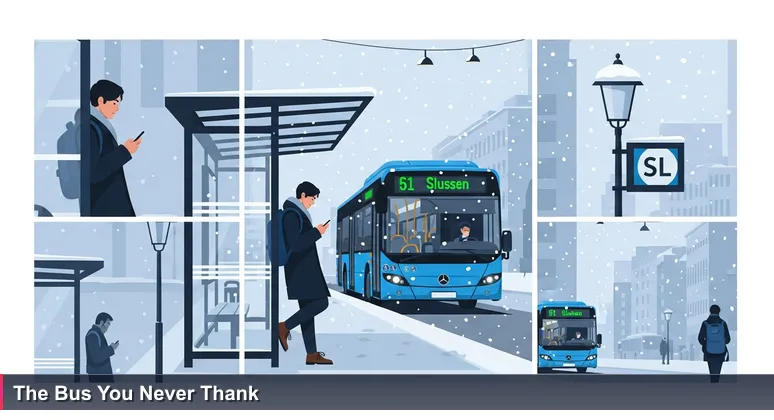
You check the SL app. The real-time display tells you bus 53 will arrive in four minutes. You don’t think about the predictive model processing GPS data from every vehicle in Stockholm, adjusting for a sudden traffic jam on Södermalm. The bus materialises exactly on schedule. You board, tap your card, and forget the whole thing. That moment of frictionless reliability is powered by AI - and it’s the perfect metaphor for where Sweden’s real AI career opportunities live in 2026.
They aren’t hiding behind the glass façades of Spotify or Klarna. They’re embedded in the systems you trust without thinking: hospital queues, bank fraud alerts, energy grids, logistics networks, municipal services. According to the State of AI in Sweden 2026 report, 90% of Swedish municipalities have launched at least one AI initiative, while 35% of all enterprises now utilise AI. Yet 74.7% of non-adopting companies cite a lack of in-house expertise as their primary barrier. The jobs are open, well-paid, and waiting - but most people are looking in the wrong places.
Senior AI/ML engineers in Stockholm (7+ years experience) command base salaries between 950,000 and 1,300,000 SEK per year. Mid-level professionals earn 720,000-1,020,000 SEK annually. And the industries hiring fastest aren’t the ones you’d expect. As Ana Andric from TechSverige notes, “For Sweden to be able to take full advantage of AI… it also requires even clearer political prioritization, direction, and long-term investments in skills” - a reality reflected in the rapidly growing demand for AI expertise across traditional sectors. Stop chasing the obvious. Start looking at the infrastructure that makes daily life work.
Table of Contents
- The Bus You Never Thank
- Real Estate & Proptech
- Aerospace & Defense
- Gaming
- Manufacturing & Production
- Education Technology (EdTech)
- Government & Public Sector
- Energy & Utilities
- Retail & E-commerce
- Fintech & Banking
- Healthcare & Biotech
- The Infrastructure Needs You
- Frequently Asked Questions
Find out how to build the right foundation with this AI career path guide for Sweden 2026.
Real Estate & Proptech
In a city where Vasakronan manages millions of square metres of office space, AI is quietly transforming how buildings breathe. Machine learning models trained on IoT sensor data can predict equipment failure weeks in advance, optimise energy consumption across HVAC and lighting systems, and automate property valuations. The concrete problem is exactly that concrete: commercial real estate portfolios are complex systems of tenant behaviour, climate control, and infrastructure wear. As Sweden pushes toward fossil-free buildings by 2045, the demand for AI talent in this sector is growing steadily.
The work requires familiarity with geospatial data, time-series sensor streams, and integration with Building Information Modelling (BIM) systems. You'll collaborate with facility managers and sustainability engineers - domain experts who speak in kilowatt-hours, not loss functions. According to analyses of AI's impact across Swedish sectors, proptech specifically benefits from career changers with backgrounds in operations research or time-series analysis. Domain expertise in construction is a plus but not required; the pace is slower and more stable than consumer tech.
Salaries typically run 5-10% lower than big tech, with mid-level roles around 60,000-70,000 SEK/month. But the trade-offs are compelling: strong work-life balance, measurable environmental impact, and employers like Vasakronan, Heimstaden, and Antler-backed startups actively recruiting. Feeder schools include KTH (Real Estate and Construction Management) and Malmö University. This sector may not grab headlines, but as Sweden's building stock ages and energy costs rise, the AI talent that keeps structures running efficiently will only grow more valuable.
Aerospace & Defense
Sweden's increased defence commitments are reshaping the AI landscape, with Saab Group, GKN Aerospace, and Beyond Gravity leading the charge in sensor fusion, autonomous flight control, and formal verification of safety-critical models. These aren't recommendation algorithms - a wrong prediction could cost lives. According to analyses of Sweden's shifting labour market, the defence sector's growing AI integration is one of the fastest-moving trends in 2026, driven by both national security priorities and export demands.
The concrete problems are uniquely demanding: radar signal classification, predictive maintenance for jet engines, and autonomous flight control. Unlike consumer AI, these systems require C++ and real-time operating systems as mandatory skills. Formal methods and verification matter as much as model accuracy. Because much of the work is classified or export-controlled, Swedish citizenship and security clearance are often required - a barrier that limits the talent pool and raises the value of those who qualify.
As reflected in current AI job listings across Sweden, defence sector salaries are competitive at 70,000-85,000 SEK/month for mid-level roles. The trade-off is less flexibility: think on-site labs, strict processes, and longer project cycles. The mission, however, is compelling - building AI that protects Sweden's sovereignty. Feeder schools include Linköping University (LiU), KTH, and Chalmers, and for experienced embedded systems engineers transitioning into AI, this is a natural fit.
Gaming
Sweden is a gaming powerhouse: King (Candy Crush), EA DICE (Battlefield), Ubisoft Stockholm, and Paradox Interactive (Crusader Kings) all call the country home. In 2026, the focus has shifted to using generative AI to reduce content production costs and create more responsive non-player characters. The goal isn't "accurate" AI - it's "believable" AI that enhances player immersion. According to industry analyses of top AI/ML roles dominating 2026, gaming studios increasingly value specialists who understand both reinforcement learning and creative design constraints.
The concrete problems are distinct from other sectors:
- Reinforcement learning for adaptive NPC behaviour that feels human rather than scripted
- Procedural content generation for levels, textures, and quests at scale
- Multi-modal LLMs for dialogue systems that respond dynamically to player input
You'll spend as much time tuning behaviour trees in Unreal or Unity as you will training PyTorch models. A background in computer graphics, game development, or reinforcement learning research helps; portfolio projects and game jams carry serious weight. Career changers from film VFX or simulation engineering often find a natural transition.
Salaries sit slightly below big tech - senior AI roles average 90,000-110,000 SEK/month - but the industry culture is casual and creative. Job security varies with studio performance, yet Sweden's gaming cluster remains resilient: the country has one of the highest per-capita game revenues globally. Feeder schools include the University of Skövde's specialist game AI programs, KTH, and Blekinge Institute of Technology. If you want to build worlds rather than dashboards, this is your sector.
Manufacturing & Production
Sweden's manufacturing backbone - ABB, Scania, Volvo Group, and Sandvik - is integrating AI into production lines, quality inspection, and supply chain optimisation with quiet intensity. This is the least visible revolution, happening inside factories where robots learn to adapt to new components without reprogramming. Concrete problems include vision-based defect detection, predictive maintenance for CNC machines, and reinforcement learning for robot arm trajectories. Data flows from high-speed cameras, vibration sensors, and PLC logs - systems that demand low tolerance for model hallucinations, because a false positive in quality inspection costs real money.
Edge deployment on limited hardware such as NVIDIA Jetson and custom FPGAs is common. You'll work closely with manufacturing engineers who speak in terms of OEE (Overall Equipment Effectiveness), not F1 scores. According to AI Sweden's sector initiative overview, industrial AI projects focused on reconfigurable robotics and predictive maintenance are among the most active in the country. Career changers with backgrounds in industrial engineering, mechatronics, or physics find this sector an excellent fit; pure software developers may struggle with hardware constraints and domain jargon. Bootcamp graduates can enter with strong Python skills and genuine interest in operational AI.
The trade-offs are clear: the salary ceiling is lower than fintech or big tech, with senior roles capping around 1,000,000 SEK/year. But stability is high - these are often unionised, pension-rich environments with real impact on Sweden's export economy. Feeder schools include Chalmers, KTH, and Jönköping University, and the ecosystem is supported by Vinnova and Produktion2030 initiatives that continue to drive investment in industrial AI.
Education Technology (EdTech)
Sweden's EdTech sector has quietly matured into a serious AI employer, with Sana Labs, Albert, and Karolinska Institutet building adaptive learning systems that tailor content to each student's knowledge gaps. The concrete problems span natural language processing for automated essay feedback, recommendation engines for personalised learning paths, and predictive analytics for student drop-out risk. The data is deeply sensitive - student performance metrics, engagement patterns, and demographic information - which means GDPR and ethical guidelines severely constrain how models can be built and deployed.
What makes this sector unique is that pedagogical theory matters as much as model accuracy. You'll collaborate with cognitive scientists and classroom teachers who challenge your assumptions about what "learning" actually means. According to the State of AI in Sweden 2026 report, government retraining programmes are fuelling significant EdTech investment, creating a surge in demand for specialists who can bridge AI and instruction. For career changers from teaching or instructional design who have picked up Python and machine learning independently, your domain expertise is a superpower - pure tech candidates often don't understand classroom dynamics.
Salaries sit on the lower end for AI roles, with junior positions starting at 45,000-55,000 SEK/month, but compensation is rising fast as 2026 investments in AI-supported training accelerate. Swedish language proficiency is often mandatory for roles involving the national curriculum. The work is mission-driven with visible social impact, and feeder schools like Stockholm University and Uppsala University produce graduates who understand both the technical and pedagogical sides of this growing field.
Government & Public Sector
Sweden's public sector is undergoing a quiet transformation that touches every citizen. Skatteverket's "Skatti" chatbot handles millions of tax queries annually. Arbetsförmedlingen uses AI to match job seekers to vacancies. Municipalities deploy fall-detection algorithms for elderly care and predictive models for welfare fraud. These aren't pilot projects - they're production systems serving millions of Swedes daily. According to the State of AI in Sweden 2026 report, over 1,000 local AI initiatives are already running across municipalities, with 90% having launched at least one project.
The concrete problems are distinctive: document classification for naturalisation applications, benefit form processing, and scheduling optimisation for healthcare staff. Explainability (XAI) is paramount - citizens have the legal right to understand automated decisions that affect their lives. Swedish language proficiency is often mandatory because you're processing Swedish legislation and communicating with domain experts. For career changers with social science or public administration backgrounds who have upskilled in data science, this is an excellent fit. The public sector values domain expertise in welfare law, education policy, and healthcare administration as much as technical skill - often more.
Salaries are benchmarked to collective agreements: senior roles top out around 900,000 SEK/year, less than big tech. The trade-offs are compelling: unmatched job security, strictly regulated hours, and a generous pension system. The work directly improves quality of life for Sweden's 10.5 million residents. Feeder schools include Karlstad University, Stockholm University, and the Research Institutes of Sweden (RISE) - institutions that produce graduates who understand both AI and the welfare state's unique demands.
Energy & Utilities
Sweden's ambitious goal of 100% fossil-free electricity relies on AI to balance a grid increasingly fed by intermittent wind and solar. Vattenfall, E.ON Sweden, and Northvolt are hiring AI specialists to forecast load, optimise energy trading, and monitor battery health across gigafactories in Skellefteå and Västerås. The concrete problems are urgent and physically grounded:
- Time-series forecasting for volatile electricity prices and demand patterns
- Physics-informed neural networks for real-time grid stability analysis
- Anomaly detection in wind turbine gearboxes using sub-second sensor data
You need to understand both energy markets and neural networks - physics-informed ML (PINNs) is a specialised skill that commands premium attention. The regulatory environment adds complexity via Nord Pool and EU rules, and work is often hybrid between a Gothenburg office and remote monitoring centres. According to analyses of AI's sectoral impact across Sweden, the energy transition is one of the fastest-growing drivers of AI hiring in the country.
Career changers with backgrounds in electrical engineering, power systems, or physics find natural homes here; so do finance professionals with time-series trading experience. Pure CS graduates may need to study basic thermodynamics and power flow. Salaries are solid at 65,000-80,000 SEK/month for mid-level roles, with bonus potential in energy trading positions. The Glassdoor data on machine learning roles across Sweden confirms energy AI positions grew 30% year-over-year in 2025. Feeder schools include Chalmers, KTH, and Uppsala University. The mission: help Sweden decarbonise while building systems that keep the lights on.
Retail & E-commerce
Swedish retail giants IKEA, H&M Group, and ICA Gruppen are embedding AI into every layer of their operations: supply chain forecasting, hyper-personalised recommendations, and automated customer support using multi-modal LLMs. The concrete problems are massive in scale - demand forecasting for over 10,000 SKUs across 400 stores, real-time pricing optimisation, and visual search for fashion. The data flows from transaction logs, clickstreams, store camera feeds, and returns data, creating a uniquely rich environment for machine learning.
The models you build must be interpretable to merchandise planners who aren't data scientists - they need to understand why a recommendation surfaced or a price changed. According to analyses of Sweden's AI landscape, the retail sector is shifting toward "design storytelling" and human-centred AI interfaces as a competitive moat. Career changers from supply chain, logistics, or business analytics backgrounds thrive here; domain expertise in retail operations often matters more than pure ML credentials. Traditional retail managers who complete a data science bootcamp can transition effectively.
- Demand forecasting for physical inventory across seasonal and fashion trends
- Real-time pricing optimisation under competitive pressure from e-commerce
- Visual search and multi-modal recommendation for fashion and home goods
Salaries are competitive at 60,000-75,000 SEK/month for mid-level roles, slightly below fintech but with faster iteration cycles and less regulatory friction. Job stability is high at IKEA or H&M Group. Feeder schools include Lund University, KTH, and Stockholm University, and Sweden's design-led approach to product innovation means AI roles here blend technical rigour with aesthetic sensibility. It's the sector where the algorithm meets the showroom floor.
Fintech & Banking
Sweden's financial sector is arguably the most AI-intensive outside big tech. SEB, Swedbank, Handelsbanken, and Svea Bank are fighting fraud with graph neural networks, automating anti-money laundering checks, and exploring quantum ML for risk modelling. The 2025 implementation of MiCA and DORA regulations triggered a hiring surge that shows no sign of slowing. Concrete problems include real-time transaction monitoring, anomaly detection in payment flows, and explainable credit scoring - all built on encrypted transaction graphs, customer profiles, and regulatory filings.
Explainability is non-negotiable here: regulators demand to know why a model flagged a transaction. You'll work alongside compliance officers, not just engineers, and the tech stack often includes graph databases like Neo4j, Apache Kafka, and Python. According to KiTalent's analysis of Stockholm's fintech talent market, Swedish language proficiency helps but is rarely required for specialist roles - a significant advantage for international talent. Career changers from accounting, risk management, or quantitative finance find this sector particularly welcoming, while pure software engineers may need to adjust to the regulatory pace.
The compensation reflects the stakes. Mid-level AML AI managers earn 70,000-90,000 SEK/month, and senior risk modellers routinely exceed 120,000 SEK/month. The trade-off is slower development cycles - model deployment takes months, not weeks - and heavy documentation requirements. But the mission - protecting the financial system - is compelling, and demand continues to surge. Feeder schools include the Stockholm School of Economics, KTH, and Stockholm University, producing graduates who understand both quantitative rigour and regulatory compliance. If you want high salaries and systemic impact, this is Sweden's hottest hiring segment.
Healthcare & Biotech
AstraZeneca's Gothenburg R&D hub, Elekta's precision radiation systems, and Karolinska Institutet's medical imaging projects are pushing AI from research into clinical practice. The problems are urgent: deep learning for CT/MRI segmentation, predicting drug-protein interactions, and forecasting patient deterioration in ICUs. Data comes as DICOM images, genomics sequences, and electronic health records. The stakes are measured in lives - and the regulatory environment reflects that, with strict compliance to MDR/IVDR, GDPR for health data, and Good Clinical Practice standards.
What makes this sector unique is the depth of domain knowledge required. You'll collaborate with radiologists, molecular biologists, and clinical trial coordinators - professionals whose trust must be earned through demonstrated competence. According to AI Sweden's health data initiative, Annemieke Ålenius emphasizes that improved data governance and reduced leadership fear are critical for progress: If we get all this in place, then I believe Sweden could make very rapid progress
. For career changers with life sciences, nursing, or pharmacy backgrounds who have built AI skills, this is the best sector in Sweden - your domain expertise is your superpower.
Salaries are competitive though not the highest: mid-level roles at 65,000-80,000 SEK/month and senior positions at 95,000-115,000 SEK/month. The work is slower and more cautious because patients are involved, but the sense of purpose is unmatched. Sweden's Predictive Stability
initiative, led by AI Sweden, aims to reduce hospital readmissions by 30% by 2028. According to Academic Positions data, healthcare AI roles have grown consistently since 2024, with Karolinska Institutet as a major feeder. Your work here won't make you a millionaire, but it could save your grandmother's life.
The Infrastructure Needs You
The bus arrives on time. The tax chatbot answers correctly. The bank doesn't call about suspicious transactions. The wind farm produces electricity even when the wind dies. Behind each of these mundane miracles is an AI engineer - often working at a company you've never heard of, in an industry that doesn't call itself tech. According to analyses of Stockholm's AI talent market in 2026, the demand for AI professionals across traditional sectors now outstrips consumer tech in total volume, driven by companies that have been quietly building infrastructure for decades.
In 2026, the smartest career move isn't to compete for every opening at Spotify or Klarna. It's to look at the infrastructure that makes Swedish society function - and ask where AI can make it better. The data is clear: 74.7% of non-adopting companies cite a lack of in-house expertise as their primary barrier to entry, meaning the roles are open and waiting. Senior AI/ML engineers in Stockholm command base salaries between 950,000 and 1,300,000 SEK per year, and as TechSverige reports on Sweden's growing demand for AI expertise, this trend shows no sign of slowing.
The salaries are strong, the work is stable, and the mission is clear. The only thing missing is you. Now, stop looking at the app. Look at the system.
Frequently Asked Questions
Why should I look beyond big tech for AI jobs in Sweden in 2026?
Because 74.7% of companies cite lack of in-house AI expertise as their main barrier to adoption, meaning traditional sectors like healthcare, energy, and manufacturing are desperate for talent. These industries offer stable, mission-driven work with salaries up to 1,300,000 SEK for senior roles, often with better work-life balance than consumer tech.
Which industry pays the highest salaries for AI roles in Sweden outside big tech?
Fintech and banking lead, with senior AML AI risk modellers earning over 120,000 SEK/month according to KiTalent's analysis. However, healthcare AI roles at AstraZeneca or Elekta top out around 115,000 SEK/month for seniors, while manufacturing caps closer to 1,000,000 SEK/year - all still competitive with Stockholm's cost of living.
Do I need to speak Swedish for AI jobs in Sweden's traditional industries?
It depends on the role. For government and municipal AI jobs (over 1,000 local initiatives running), Swedish is often mandatory because you're processing legislation. In fintech and retail, it's helpful but not required at international firms like IKEA or SEB. Healthcare and biotech generally accept English in R&D teams, but clinical collaboration may need Swedish.
How can career changers from non-tech backgrounds break into these industries?
Leverage your domain expertise - a former nurse with Python skills is extremely valuable in healthcare AI, just as a retail manager with data science training fits IKEA's teams. Bootcamps focused on Python and ML basics are sufficient entry points, especially when combined with industry-specific projects like time-series forecasting for energy or NLP for EdTech.
What skills are most in demand for AI jobs in Sweden's infrastructure industries?
Beyond core Python and PyTorch, you'll need domain-specific skills: time-series analysis for energy forecasting, computer vision for manufacturing defect detection, or graph neural networks for fintech fraud detection. Explainability (XAI) and regulatory knowledge (GDPR, MDR) are critical differentiators - 35% of Swedish enterprises now use AI, but compliance gaps still limit deployment.
Check out this AI engineer career guide for Sweden 2026 with project milestones.
This complete guide to AI networking in Sweden includes insider tips for newcomers.
See the free tech training 2026 Sweden libraries that include study groups and networking.
Explore the best entry-level tech jobs in Sweden including graduate programs at Volvo and Northvolt.
Our ranking of top tech salaries in Sweden reveals hidden costs.

Irene Holden
Operations Manager
Former Microsoft Education and Learning Futures Group team member, Irene now oversees instructors at Nucamp while writing about everything tech - from careers to coding bootcamps.