









Top 10 Industries Hiring AI Talent in Luxembourg Beyond Big Tech in 2026
By Irene Holden
Last Updated: April 18th 2026
Too Long; Didn't Read
In 2026, Luxembourg's AI talent demand is booming beyond big tech in industries like financial services and space, driven by a 23% adoption rate that's double the regional average. These sectors offer a 56% wage premium for AI-skilled workers, with senior finance roles paying up to €180,000 and space engineers earning around €140,000, highlighting the value of domain-specific AI expertise.
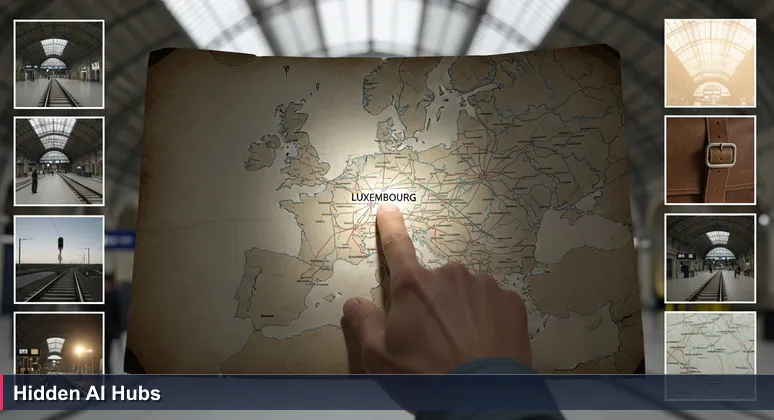
You're at the Gare Centrale, scanning the departures board for the fastest route to the obvious capitals - the Frankfurt financial hubs or the Parisian tech giants. This instinct to follow the brightest lights is natural, but it creates a strategic blindness. While Luxembourg hosts major players like Amazon, the real story of its AI revolution is written on the lesser-highlighted lines of its economic map.
Luxembourg’s AI adoption rate now stands at 23% - nearly double the average of its neighbors, according to a study by LISER. This isn't just about big tech; it's about a profound, sector-wide rewiring. The demand has exploded within traditional industries that form the bedrock of the Grand Duchy's economy, seeking not just AI builders, but "AI orchestrators" - professionals who can direct intelligent systems to solve deep, domain-specific problems.
Forget a single destination. Your career opportunity lies in becoming a vital conductor within this complex, resilient network, where AI-skilled workers command a 56% wage premium according to Luxembourg Times market data. Let's explore the industries where this is happening.
Table of Contents
- Introduction
- Financial Services
- Insurance and Reinsurance
- Space and Satellite
- Logistics and Supply Chain
- Healthcare and Biotech
- Energy and Utilities
- Government and Regulatory Bodies
- Automotive and Mobility
- Real Estate and Proptech
- Retail and E-commerce
- Conclusion
- Frequently Asked Questions
Get insights on starting an artificial intelligence career in Luxembourg in 2026.
Financial Services
The financial sector is automating 60-80% of routine operations, but the new frontier is combating sophisticated financial crime and managing algorithmic risk. The work here is unique for its deep integration with CSSF (Commission de Surveillance du Secteur Financier) standards, AML/KYC directives, and EU frameworks. You're building auditable, compliant systems that must explain decisions within Luxembourgish and EU law.
This sector drives roughly 9% of Luxembourg's total AI advantage, making it a primary engine of demand. The multilingual, cross-border nature of fund administration presents a rich, complex data environment for AI professionals at major employers like BCEE (Spuerkeess), BGL BNP Paribas, and Clearstream.
Ideal for those with finance or compliance backgrounds looking to supercharge their expertise, senior AI roles here combine technical oversight with prestigious "Conducting Officer" status. Leadership compensation reaches €180,000+, according to Y-Axis Overseas Careers. As recruitment experts note, your best advantage is "to become the kind of professional AI makes more powerful, not more replaceable," a principle that defines success in this high-stakes field.
Insurance and Reinsurance
Moving beyond simple automation, the sector now uses AI to process complex, non-linear risk scenarios - from climate damages to sophisticated fraud rings. In Luxembourg, a hub for captive insurance, development is tightly coupled with Solvency II capital requirements and GDPR, creating models that are predictive yet transparent enough for stringent regulatory calculations.
This is a perfect niche for quantitative analysts and actuaries interested in applied probabilistic modeling. It's a smaller, more specialized community than finance, offering close collaboration with underwriters. Salaries for AI specialists here range from €80,000 to €140,000, as noted in analysis by 20more.lu.
Growth is driven by the need for real-time risk assessment and fraud detection, making roles at employers like Foyer and LALUX increasingly critical. The work provides a mission-driven focus on societal protection, leveraging AI as a predictive shield for an industry fundamental to the Grand Duchy's economy.
Space and Satellite
Luxembourg's "SpaceResources.lu" initiative makes it a global outlier, where AI tackles physical challenges at orbital scale. Work here involves physics-informed machine learning and edge computing for on-orbit processing, optimizing satellite constellations and analyzing petabytes of Earth observation data for climate and agricultural insights.
The proximity to the Interdisciplinary Centre for Security, Reliability and Trust (SnT) at the University of Luxembourg fuels cutting-edge R&D in computer vision for satellite imagery and autonomous mission planning. You're solving problems with data that literally has a global view, supporting a sector poised to tap into a global AI space market expected to reach $3.5 billion.
This high-tech sector is a magnet for engineers and scientists from aerospace or physics. Compared to larger European defense hubs, Luxembourg's ecosystem is agile and collaborative. Senior AI engineers at pioneers like SES and ispace Europe command €125,000 - €140,000+, working at the bleeding edge of what LUDCI identifies as a transformative industry for the Grand Duchy.
Logistics and Supply Chain
As a European air and road freight hub, Luxembourg is transforming its logistical arteries through AI-driven dynamic route planning, customs validation, and warehouse automation. The challenge is trilingual and multi-modal, integrating data from air cargo leaders like Cargolux, last-mile delivery from POST Luxembourg, and cross-border trucking networks to meet both efficiency and stringent EU sustainability targets.
Systems must navigate complex EU customs codes while optimizing for carbon footprint, not just speed and cost. This sector is actively hiring AI talent to manage this complex transit, with growth steadily focused on operational efficiency and sustainable "green" logistics, as analyzed by the ERI Economic Research Institute.
The career path here is excellent for operations research specialists and software engineers interested in tangible, real-world optimization. The pace is fast and the impact on daily European commerce is direct. Salaries range from €70,000 to €135,000 for specialized senior roles, according to 20more.lu, offering more hands-on implementation work compared to pure algorithm development in tech giants.
Healthcare and Biotech
Driven by the national "Digital Health" initiative, AI in Luxembourg supports automating administrative workflows, stratifying patient populations for personalized care, and accelerating biomedical research through genomic analysis. This is AI operating under the microscope of GDPR and strict medical ethics, requiring robust anonymization and federated learning techniques to handle sensitive data.
Projects often involve linked datasets from the Luxembourg Institute of Health (LIH) and the National Health Laboratory (LNS), creating a compelling environment for research-driven applications. This work is heavily supported by public funding and aligned with the national vision, with significant government backing identified through the "AI Strategy 2030".
This field is ideal for biologists, clinicians, and data scientists driven by social impact. It requires patience with regulatory processes but offers unparalleled purpose. Specialist salaries range from €80,000 to €130,000, as reported by LUDCI. While the ecosystem is smaller than in Paris or Basel, it's growing rapidly with a mission-focused approach to healthcare innovation.
Energy and Utilities
The sector faces the critical challenge of managing the transition to renewable energy by forecasting grid load from decentralized solar and wind sources, while optimizing efficiency across buildings and automating complex ESG reporting. AI development here is directly driven by EU Green Deal mandates and national CO2 reduction targets, integrating smart meter data, weather patterns, and building management systems.
The work involves creating a responsive, sustainable energy network for an advanced economy, with applied projects that are critical to national infrastructure. This positions Luxembourg's energy sector as an emerging but vital field for AI applications focused on carbon tracking and grid resilience.
This career path suits engineers and data scientists passionate about sustainability and climate tech. Salaries are competitive, ranging from €75,000 to €130,000, especially for roles focused on renewables at key players like Encevo/Creos and SEO, as seen in listings from MeetFrank. The growth trajectory is fueled by escalating ESG reporting requirements, making it a stable and purpose-driven niche within Luxembourg's tech landscape.
Government and Regulatory Bodies
Public administrations and regulators themselves are becoming "AI-augmented," hiring talent to audit the AI systems used by corporations, optimize civil services, and formulate data-driven policy in line with the EU AI Act. Working for bodies like the CSSF or STATEC means being on the front lines of defining what ethical, compliant AI looks like in practice within a major European regulatory hub.
This creates a unique career path for legally-minded technologists or policy experts who want to shape the rules of the game. As Dr. Esli Spahiu, Manager at the LHoFT AI Experience Centre, notes: "AI stops being uncertain once it can be experienced, tested, and challenged firsthand... This exists to create that moment." Government roles operationalize this testing within a regulatory framework.
Civil service positions offer stability and influence, with senior management compensation between €70,000 - €110,000, as detailed by 20more.lu. The intellectual challenge of setting standards that ripple across the continent offers significant non-financial reward, even if direct compensation lags behind the private sector's peak.
Automotive and Mobility
While not about mass-producing cars, Luxembourg's automotive focus lies in high-value components, predictive maintenance for heavy industry, and smart mobility systems. The AI problem centers on computer vision for sensors and real-time logistics optimization, often developed through applied R&D in partnership with the University of Luxembourg's SnT research centre.
The work is characterized by sensor fusion and real-time embedded systems, fostered by concentrated ecosystems like the "Automotive Campus" in Bissen. This creates a stable career in advanced manufacturing and industrial innovation, attracting hardware-aware software engineers and robotics specialists to solve deep engineering challenges.
Salaries at leading firms in this space, such as Goodyear and IEE, are competitive, ranging from €80,000 to €130,000 according to data from Halian. The industry offers a stable career path with a long innovation cycle, positioning AI as the critical industrial sensor within Luxembourg's advanced manufacturing and mobility landscape.
Real Estate and Proptech
The sector is revolutionizing building management by using AI to optimize energy consumption, predict maintenance, and enhance valuation models for Luxembourg's vast real estate portfolios. This "proptech" transformation is fundamentally driven by escalating ESG compliance demands from investors and regulators, requiring smarter asset management.
In Luxembourg, the unique challenge lies in integrating AI models with legacy Building Management Systems (BMS) and aligning outcomes with international sustainability certifications like LEED and BREEAM. The focus is dual: maximizing the financial performance and the green credentials of premium real estate assets, a critical concern for the Grand Duchy's investment fund industry.
This creates a compelling intersection for data scientists with an interest in urban planning, sustainability, or finance. The field is growing steadily as ESG reporting becomes mandatory, with roles at proptech firms and property fund managers offering salaries from €75,000 to €125,000, according to market data compiled by MeetFrank. It represents a stable, applied niche where AI directly shapes the sustainable future of Luxembourg's built environment.
Retail and E-commerce
Local retail groups are adopting AI to compete with giants, using it for hyper-localized inventory forecasting, personalized marketing in a trilingual market, and optimizing last-mile delivery networks. The challenge involves working with nuanced consumer data in French, German, and Luxembourgish to achieve the agility of a tech startup within trusted local brands.
This field represents a hands-on application where models quickly affect store shelves and customer inboxes, transforming operations from manual data compilation to AI-generated insights. As noted in analysis on the shifting job market, this adoption is part of a broader trend where AI augments roles rather than replaces them, creating new efficiencies in traditional sectors.
The career path is ideal for marketers and operations professionals looking to add AI to their toolkit, or for data scientists interested in consumer behavior. Salaries at established groups like Cactus and Auchan Luxembourg range from €70,000 to €120,000, according to recruitment data from Halian. It offers a direct line to the local community and economy, providing a tangible impact within Luxembourg's distinctive retail landscape.
Conclusion
The narrative that AI talent must flock to monolithic tech giants is obsolete. The real opportunity - and the 56% wage premium for AI-skilled workers confirmed by Luxembourg Times - lies in the junctions where technology meets profound domain expertise. Your career map is the entire, interconnected system.
The trade-off is clear: potentially less headline-grabbing salaries than at a global FAANG company, but in return, you gain mission-driven work, closer ties to industry-defining problems, and collaboration with world-class research institutes like SnT. You secure a seat at the table where European regulations are put into practice, shaping standards for the continent.
In Luxembourg, the most critical AI work isn't about building a better app; it's about building a more efficient, secure, and sustainable future for industries that power Europe. Becoming the "AI orchestrator" within this resilient network is the destination worth planning for, offering a career of impact at the heart of a continent's digital transformation.
Frequently Asked Questions
Which industries in Luxembourg are hiring AI talent beyond big tech in 2026?
Beyond big tech, Luxembourg's AI talent is in high demand in traditional sectors like financial services, insurance, and space and satellite, where AI orchestrators are needed to solve domain-specific problems. For example, financial services integrate AI with EU regulatory frameworks, offering roles with compensation up to €180,000+. Other key industries include logistics, healthcare, and energy, all driven by Luxembourg's unique position as a multilingual hub with strong ties to EU institutions.
What salary can I expect for an AI role in Luxembourg's non-tech industries?
Salaries vary by industry but are competitive, with AI-skilled workers earning a 56% wage premium in Luxembourg. For instance, in insurance, specialists make €80,000 to €140,000, while senior roles in space and satellite can reach €125,000-€140,000+. In financial services, leadership positions with 'Conducting Officer' status can exceed €180,000, reflecting the high value placed on domain expertise.
I have a finance background; which industry in Luxembourg is best for my AI career?
Financial services in Luxembourg are ideal for those with finance or compliance backgrounds, as AI roles here involve building auditable systems that align with CSSF standards and EU regulations. You'll work on high-stakes problems like combating financial crime, with opportunities to gain 'Conducting Officer' status and compensation over €180,000. Major employers like BCEE and Clearstream offer stability and deep industry impact.
Is Luxembourg's space sector actively hiring AI talent, and what's the outlook?
Yes, Luxembourg's space sector, fueled by initiatives like SpaceResources.lu, is a growing hub for AI talent, focusing on physics-informed machine learning and edge computing for satellites. Senior AI engineers at firms like SES earn €125,000-€140,000+, and the sector is poised to tap into a global AI space market expected to reach $3.5 billion. Collaboration with research centers like SnT adds to its innovative edge.
How does Luxembourg's AI job market compare to other European countries?
Luxembourg's AI adoption rate is 23%, nearly double the average of its neighbors, highlighting a robust demand across diverse industries beyond tech. This is supported by the country's multilingual workforce, strong finance and tech sectors, and proximity to EU regulations, making it a unique hub for AI professionals seeking roles in regulated environments with competitive salaries and growth potential.
For a complete guide on Luxembourg tech salaries and cost of living in 2026, check this out.
Find out how to navigate AI salary negotiations in Luxembourg in 2026.
For a list of the best startups for junior developers in Luxembourg, refer to this article.
For details on how to pay for tech training in Luxembourg in 2026, read our comprehensive guide.
For a detailed overview, read our guide to AI Meetups, Communities, and Networking Events in Luxembourg in 2026.

Irene Holden
Operations Manager
Former Microsoft Education and Learning Futures Group team member, Irene now oversees instructors at Nucamp while writing about everything tech - from careers to coding bootcamps.