









Top 10 Industries Hiring AI Talent in Greenville, North Carolina Beyond Big Tech in 2026
By Irene Holden
Last Updated: March 6th 2026
Too Long; Didn't Read
Healthcare and biotech lead the pack for AI talent hiring in Greenville, NC beyond big tech in 2026, driven by high salaries and mission-driven roles in the growing medical district. Healthcare AI positions average $101,524 with ECU Health as a key employer, while biotech data scientists earn around $117,586 in pharmaceutical manufacturing, benefiting from Greenville's lower cost of living and proximity to the Research Triangle.
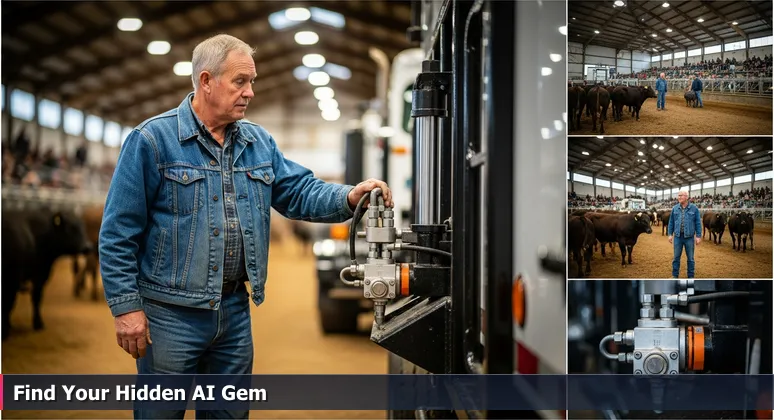
The weathered farmer at the Pitt County Fairgrounds knows value isn't always the obvious prize bull. It's the feed truck with the custom hydraulic lift - a retrofit that unlocks new potential. This is the exact mindset needed for AI careers in 2026: seeing the adaptable engineering hidden within Greenville's foundational industries, not just chasing "Big Tech."
As experts note, 2026 is the year businesses move beyond rapid AI adoption to focus on governance and generating real business results, creating demand for specialists who can integrate these tools into day-to-day operations. This shift is fueling the hiring of tech talent in non-tech sectors, a trend playing out strongly in Eastern North Carolina. The region offers a powerful advantage: you can engage in this mission-driven work while enjoying a lower cost of living, where the median home price is a fraction of coastal tech metros.
You're also positioned at a strategic crossroads. The vibrant healthcare and biomedical research cluster of the Greenville Medical District provides a live laboratory for AI in clinical informatics. At the same time, you're just 90 minutes from the immense tech ecosystem of the Research Triangle (Raleigh-Durham), allowing for expanded opportunities and networks. This unique blend makes Greenville an ideal place to build a career and a life, retrofitting intelligence into the community's vital machinery.
Table of Contents
- Adaptive AI Careers in Greenville
- Healthcare & Clinical Informatics
- Biotech & Pharmaceutical Manufacturing
- Banking & Financial Services
- Advanced Manufacturing & Automation
- Higher Education & Research
- Government & Public Sector
- K-12 Education Technology
- Energy & Utilities
- Logistics & Supply Chain
- Gaming & Digital Entertainment
- Building Your AI Future in Eastern NC
- Frequently Asked Questions
This resource provides everything you need to know about AI careers in Greenville in 2026.
Healthcare & Clinical Informatics
In Greenville's healthcare sector, the core AI challenge is reducing clinical friction and burnout by automating administrative burdens and enhancing predictive diagnostics. The goal is a seamless transition from disjointed systems to AI-by-design workflows, allowing clinicians at major hubs like the growing Greenville Medical District to focus on patients. This work is directly tied to improving outcomes and operational efficiency at anchor institutions like ECU Health.
The uniqueness of this field lies in its constraints. It's not about building generic models but integrating AI within the strict confines of clinical workflows and Electronic Health Record (EHR) systems while ensuring unwavering HIPAA compliance. As industry leaders note, 2026 represents a pivotal shift toward ensuring these tools are safe and valid.
"2026 is the 'year of governance,' where the focus shifts to ensuring AI outputs are safe and clinically valid." - Insights from Wolters Kluwer experts on 2026 healthcare AI trends
This makes the field an excellent fit for career changers. Professionals with backgrounds in nursing, medical coding, or hospital administration possess the crucial domain knowledge needed to train and validate effective, trustworthy AI tools, bridging the gap between technology and patient care.
The local snapshot is compelling. Roles like Clinical Informaticists command salaries from $72,260 to $119,250, with the average AI healthcare role in Greenville paying around $101,524. Driven by ECU Health, growth is rapid in areas like telemedicine and diagnostic AI, offering stable, high-impact careers right in the heart of Eastern North Carolina.
Biotech & Pharmaceutical Manufacturing
In biotech and pharmaceutical manufacturing, the core AI problem is ensuring uncompromising data integrity and accelerating quality control in drug production and clinical trial analysis. AI systems are deployed to validate complex processes and perform statistical analysis under the stringent framework of Good Manufacturing Practices (GMP), where accuracy is non-negotiable.
What makes this field unique is the absolute zero margin for error. AI work here is a precise blend of computational skill and deep regulatory science. The goal isn't just optimization for accuracy but for auditability and compliance within life-saving production lines at local employers like Thermo Fisher Scientific. You're building systems that must satisfy both data scientists and federal auditors.
This creates a strong career changer fit for professionals already familiar with the environment. Lab technicians, quality assurance analysts, or chemistry majors possess the essential hands-on knowledge to bridge the critical gap between the wet lab and the data science platform, ensuring AI solutions are both technically sound and practically applicable.
The local opportunity is clear. According to regional job data, Pharmaceutical Data Scientists earn an average of $117,586, while specialized AI Validation Engineers see salaries ranging from $65,000 to $85,000. Growth remains steady as Eastern North Carolina's life sciences sector focuses on automating intricate quality assurance and data integrity protocols to enhance both safety and speed to market.
Banking & Financial Services
The central AI challenge in Greenville's banking and financial services sector is dual-focused: preventing sophisticated fraud in real-time and powering automated, personalized wealth management. AI models must instantly detect anomalous transactions while simultaneously navigating a dense web of financial regulations like KYC (Know Your Customer).
This demands a unique hybrid skill set that blends technical prowess with regulatory knowledge. Success requires expertise in fraud detection algorithms paired with a firm understanding of compliance frameworks. The models built for institutions like First Citizens Bank, which has a significant regional footprint, must be both powerful and interpretable to satisfy internal compliance teams and external regulators.
This hybrid nature makes the field a very good fit for career changers from finance. Former bank tellers, loan officers, or compliance staff bring invaluable domain knowledge of financial products and the regulatory landscape. This context is essential for building AI tools that are not just computationally clever but also operationally effective and legally sound.
For those with the right skills, the local market is promising. Fintech Analysts in the Greenville area can earn approximately $86,939, with broader AI finance roles averaging around $111,436. Demand is consistently high as regional and national financial institutions seek a competitive edge through smarter, faster, and more secure AI-driven services.
Advanced Manufacturing & Automation
The core AI problem in advanced manufacturing is creating the responsive and efficient "Smart Factory." Here, AI optimizes production lines, predicts machine failures through predictive maintenance, and manages complex supply chains for local manufacturers like the renowned Grady-White Boats. The goal is maximizing tangible horsepower and uptime.
This field is distinct because it's hands-on, industrial AI. It moves beyond cloud APIs to involve the physical integration of AI with machinery, Programmable Logic Controllers (PLCs), and shop-floor ERP systems. As noted in industry analyses on AI demand in non-tech sectors, this practical application is driving significant hiring.
The career changer fit is ideal for those with direct industry experience. Industrial engineers, machinists, or production supervisors who intimately understand manufacturing processes and pain points are perfectly positioned to identify where AI can eliminate bottlenecks and retrofit intelligence into existing operations.
Investment in this area is strong. AI Automation Engineers in the region command an average salary of $111,712, and Robotics AI Software Engineers earn about $119,296. This growth is fueled by Eastern NC manufacturers actively investing in Industry 4.0 initiatives to stay competitive, creating a stable demand for this hybrid technical skillset.
Higher Education & Research
Within higher education and research, the central AI challenge is two-fold: accelerating the translation of academic discoveries into practical applications and embedding AI literacy across all disciplines. At institutions like East Carolina University's Center for AI in Business, AI is leveraged to speed up data analysis in diverse fields from coastal studies to biomedical research, applying these tools to regional business challenges.
The unique aspect is the distinct pace and priority compared to corporate tech. Work here often involves academic grant writing, interdisciplinary collaboration, and curriculum development rather than rapid commercial product cycles. The focus is on foundational understanding and ethical application, preparing the next generation of professionals.
This environment is a great fit for career changers with a background in education or specialized knowledge. Former teachers, academic researchers, or subject matter experts can thrive here, shaping how AI is taught and used ethically across various fields of study.
The local academic market offers solid opportunities. AI Educator roles at institutions like ECU range from $76,904 to $115,356, while specialized AI research positions in the Greenville area average around $124,364. Growth continues as AI competency becomes a core academic and research requirement across university departments.
Government & Public Sector
In the government and public sector, the central AI problem is improving public service efficiency while crafting and implementing ethical AI policy for transparent governance. This spans from optimizing city resource allocation in Greenville to analyzing public health data for Pitt County, all with the community's well-being as the primary KPI.
The unique driver here is public good, not profit. The work demands a strong focus on AI ethics, governance, and building transparent, explainable models that citizens can trust. It's about accountability, as highlighted in frameworks like the USDA's AI strategy which emphasizes responsible, data-informed decision-making.
This makes for an excellent career changer fit. Individuals with backgrounds in public administration, social work, or policy can leverage their understanding of community needs and systems to ensure technology is implemented equitably and serves the public interest first.
Local opportunities in this mission-driven field are stable. AI Policy Analysts in North Carolina earn about $91,743. Pitt County and the City of Greenville offer careers focused on the ethical implementation of AI, with moderate growth centered on enhancing public service delivery and civic trust through technology.
K-12 Education Technology
In K-12 education technology, the core AI problem centers on enabling truly personalized learning and providing crucial administrative support to alleviate teacher burnout. AI tools can tailor educational content to individual student needs and automate time-consuming tasks like grading and reporting, allowing educators to focus more on instruction.
The paramount concern that defines this field is student data privacy, strictly governed by FERPA. Success isn't about building flashy standalone apps, but about the seamless and secure integration of AI tools into the existing educational software suites already trusted by districts like Pitt County Schools. This requires a deep understanding of both pedagogy and privacy law.
This makes for a perfect career changer fit for education professionals. Former teachers, school counselors, or instructional coordinators bring an irreplaceable understanding of classroom dynamics, curriculum standards, and student developmental needs - the essential context for designing AI tools that genuinely support learning.
The local market reflects this specialized need. While foundational Ed Tech Specialist roles may start around $43,128, specialized AI curriculum developers and integrators command higher salaries. Growth is steadily fueled by increasing investment in AI-assisted, personalized learning tools designed with the classroom - and its legal safeguards - in mind.
Energy & Utilities
For the energy and utilities sector, the core AI problem revolves around managing the modern smart grid and optimizing the distribution of critical resources. Organizations like the Greenville Utilities Commission (GUC) leverage AI for predictive maintenance of infrastructure and forecasting energy demand with high accuracy, directly impacting community resilience and sustainability.
The uniqueness of this field is its focus on critical infrastructure. The AI models deployed must be exceptionally reliable and stable, with a primary mandate on grid resilience rather than consumer-facing features. It's about applying data science to ensure the lights stay on and resources are used efficiently, a form of applied intelligence with immediate community impact.
This creates a good career changer fit for professionals already within the energy sector. Engineers, grid technicians, or operations analysts who understand the physical and logistical complexities of utility operations are perfectly positioned to apply AI and data science to solve problems of efficiency, predictive failure, and renewable energy integration.
The local compensation reflects the specialized and critical nature of this work. AI Developers specializing in the utilities space can earn upwards of $123,918 in North Carolina. Adoption is increasing as the sector seeks greater efficiency and stability through smart grid management, offering technically challenging and community-essential careers in Eastern NC.
Logistics & Supply Chain
Within logistics and supply chain, the core AI problem tackles complex inventory forecasting and warehouse optimization. For Eastern North Carolina's growing network of distribution hubs, AI manages the relentless flow of goods, predicts shipping delays, and calculates the most efficient delivery routes, turning data into streamlined physical movement.
This field is uniquely grounded in the physical world. The required skills focus on integrating AI with warehouse management systems and ERP software, using data from industrial scanners and IoT sensors rather than social media feeds. As highlighted in the CBRE Scoring Tech Talent report, this sector shows aggressive growth in hiring tech talent, ranked second only to professional services in the region.
This creates an excellent career changer pathway. Warehouse managers, logistics coordinators, and procurement specialists who know the daily pain points of the supply chain firsthand possess the operational knowledge essential for training AI systems that actually work on the warehouse floor.
The local snapshot confirms strong demand. Supply Chain Systems Managers in Greenville earn about $96,104. This sector's expansion is driven by the need for resilience and efficiency, making it a cornerstone for AI professionals looking to apply their skills to the backbone of Eastern NC's commerce.
Gaming & Digital Entertainment
The core AI problem in gaming and digital entertainment is creating dynamic, engaging narrative experiences while building intelligent support tools for developers. Local interactive media studios use generative AI for character dialogue, asset creation, and complex player interaction systems, blending art and code in entirely new ways.
What makes this field truly unique is its focus on creative AI. Here, the priority shifts from traditional data analysis to narrative design, player psychology, and interactive storytelling. It's a domain where writers and artists guide AI to produce compelling content, with roles like AI Prompt Engineer becoming crucial for shaping creative outputs.
This presents a great career changer opportunity for creative professionals. Writers, narrative designers, artists, or game testers who understand what makes content engaging can pivot into these new hybrid roles. Their domain knowledge in storytelling and user experience is essential for training AI systems that enhance, rather than replace, human creativity.
The local market for this niche is innovating quickly. According to Greenville area job data, Prompt Engineer and AI Agent Builder roles can range from $60,000 to $80,000, with the average for AI roles in this creative space around $109,008. This represents a growing, innovative segment of Eastern North Carolina's economy, proving that tech and creative industries can successfully converge.
Building Your AI Future in Eastern NC
The future of AI work in Eastern North Carolina isn't about winning a spot at a distant tech giant. It's about becoming the specialist who can retrofit intelligence into the vital, existing machinery of our community - healthcare, manufacturing, education, and logistics. These roles offer a powerful trade-off: the opportunity for deep, mission-driven impact in sectors that form the backbone of Greenville's economy, all while enjoying a lower cost of living and a genuine sense of place.
Building this future starts with acquiring the right, adaptable skills. For career changers in Greenville, accessible education pathways are key. Bootcamps like those offered by Nucamp provide an affordable and flexible route, with programs like the AI Essentials for Work ($3,582) or the Back End, SQL and DevOps with Python ($2,124) building the precise foundational skills local employers need. These programs are designed for professionals who need to study on their schedule while gaining practical, immediately applicable expertise.
The auction block of 2026’s job market is full of hidden gems for those who know what to look for. It's about seeing the custom hydraulic lift on the feed truck - the potential to adapt and enhance. By combining new technical skills with your existing domain knowledge, you can secure a stable, well-compensated career in Eastern NC, contributing directly to the region's growth and resilience. The most promising lot is right here, waiting for the right eye to recognize its potential.
Frequently Asked Questions
Why should I consider AI careers in industries beyond big tech in Greenville, NC?
In Greenville, sectors like healthcare and manufacturing offer mission-driven AI roles with less hiring competition than big tech. You can enjoy a lower cost of living - median home prices are a fraction of major metros - while still accessing the Research Triangle's tech ecosystem just 90 minutes away.
Which industry in Greenville has the highest-paying AI roles?
Higher education and research lead with AI roles averaging around $124,364, thanks to hubs like East Carolina University's Center for AI in Business. Close behind, advanced manufacturing offers salaries like $119,296 for Robotics AI Software Engineers, reflecting high demand for industrial AI expertise.
How did you rank the top industries for AI hiring in Greenville?
We ranked industries based on factors like local job growth, salary data, and career-changer fit, focusing on sectors solving critical problems with AI. For example, healthcare tops the list due to ECU Health's expansion and roles paying an average of $101,524, while logistics shows aggressive hiring growth.
Can someone without a traditional tech background break into AI jobs in Greenville?
Yes, many roles value domain knowledge - for instance, former nurses excel in clinical informatics, and industrial engineers thrive in smart factory AI. With training, backgrounds in fields like banking or education can transition into AI, leveraging local opportunities that prioritize practical experience over pure coding skills.
What makes Greenville a better choice for AI careers compared to major tech cities?
Greenville offers a balanced lifestyle with lower living costs and stable AI roles in foundational industries like healthcare and manufacturing, where salaries like $111,712 for Automation Engineers are competitive. You're part of a growing community with easy access to the Research Triangle, without the high expenses of metros like San Francisco.
Explore 2026 job opportunities for junior devs in Greenville, NC.
Learn from a step-by-step guide to becoming an AI engineer in Eastern NC by 2026.
Read a guide to choosing AI bootcamps in Greenville based on local advantages like cost of living.
Understand what to expect for AI salaries by experience level in Greenville with this resource.
The 2026 ranking of women in tech groups in Greenville, NC is essential for networking.

Irene Holden
Operations Manager
Former Microsoft Education and Learning Futures Group team member, Irene now oversees instructors at Nucamp while writing about everything tech - from careers to coding bootcamps.