









How to Become an AI Engineer in Greenville, NC in 2026
By Irene Holden
Last Updated: March 6th 2026
Quick Summary
To become an AI engineer in Greenville, NC by 2026, focus on directing AI agents for local healthcare and tech, as 40% of enterprise applications will integrate AI agents. You can master production-grade skills through intensive bootcamps like Nucamp in 6-9 months or self-study in 12-18 months, using ECU resources and Greenville's lower cost of living to build a portfolio with healthcare projects.
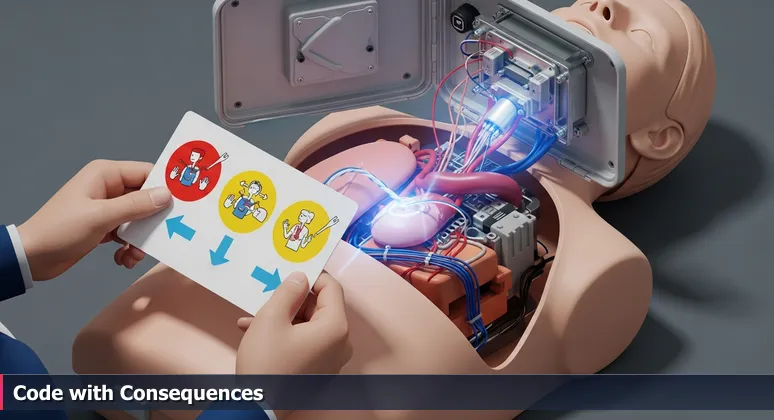
You’re handed a laminated card with three cartoon steps for performing CPR. Then you're told the dummy in front of you has a sensor that measures precise depth, rate, and recoil. Suddenly, the simple instructions feel terrifyingly inadequate. This is the exact vertigo aspiring AI engineers face with generic, global skills checklists - they lack the context and instinct for a real, living ecosystem like Greenville's.
By 2026, the role is converging into a meta-competency of directing AI agents, with experts forecasting 40% of enterprise applications will integrate AI agents. In Greenville, NC, this means directing AI toward tangible outcomes in our dominant local industries: healthcare, biomedical research, and the tech ecosystem flowing from the Research Triangle. Your roadmap must move beyond "notebook Python" to "Production Python" - code that is scalable, secure, and maintainable in systems that matter.
Greenville offers a unique launchpad. With a lower cost of living than major tech metros and proximity to major employers like ECU Health and East Carolina University, you can build a career where your work directly impacts the growing healthcare and biomedical research cluster. You’re also within easy reach of the Research Triangle's vast tech ecosystem, providing unparalleled career optionality. This roadmap is your guide to developing the clinical-grade skills needed to succeed here.
Steps Overview
- Kickstart Your Greenville AI Engineer Journey
- Prerequisites: Set Up for Success in Eastern NC
- Master Python and Data: Foundation for AI in Healthcare
- Diagnose with Machine Learning: Predict Outcomes for Patients
- Specialize in Deep Learning: AI for Medical Imaging and Beyond
- Integrate AI Agents: Boost Healthcare with LLMs and RAG
- Deploy to Production: Scale Your AI with MLOps and Cloud
- Assemble Your Portfolio: Showcase AI Projects That Matter
- Verify Your Readiness: Are You Set for Greenville in 2026?
- Common Questions
This resource provides everything you need to know about AI careers in Greenville in 2026.
Prerequisites: Set Up for Success in Eastern NC
Before confronting the complex training dummy of real-world AI, you need the right mental and physical tools. The prerequisite isn't a computer science degree; it's a strong logical mindset, basic computer literacy, and high school-level algebra. This foundation is your advantage in Eastern NC, where a lower cost of living means you can invest in quality training without the financial strain of a coastal tech hub.
Your primary tool is a reliable computer with internet access. All essential software - Python, code editors, and cloud platforms - are free to start. The critical shift is committing to active, project-based learning from day one to avoid the stagnation of passive tutorial consumption, a common trap noted by professionals in the field.
In Greenville, structured local pathways can accelerate this foundational phase. For instance, Pitt Community College offers a focused 9-month, 260-hour Data Science & AI course covering Python and AI-powered apps. For those seeking deeper theory, ECU's undergraduate and graduate certificates provide academic rigor. The goal is to establish your "vital signs" - the core logical and technical pulse - before moving to diagnose problems with code.
Master Python and Data: Foundation for AI in Healthcare
This phase establishes the vital signs: commanding Python and data. You must move beyond basic syntax to write clean, readable code from day one, focusing on data structures, control flow, and functions. This is the "Production Python" that employers demand over mere "notebook Python".
Core Technical Skills
Your focus areas are:
- Python Proficiency: Master lists, dictionaries, and object-oriented principles.
- Data Wrangling: Use Pandas for manipulation and NumPy for numerical computation to handle patient or research datasets.
- SQL Fundamentals: Learn SELECT, JOIN, and WHERE clauses to extract information from databases where real-world data lives.
Local Learning Pathway
Instead of piecing this together alone, consider an intensive foundational program. For example, Nucamp's Back End, SQL and DevOps with Python bootcamp delivers these exact production-ready skills in a 16-week, project-focused curriculum for a tuition of $2,124.
Your First Practical Application
Immediately apply your skills. Find a public health dataset from a source like data.ecu.edu. Use Python and Pandas to clean it, calculate basic statistics (average, median), and visualize trends with Matplotlib.
Pro tip: Avoid tutorial purgatory. The moment you grasp a concept, apply it to a small, personal dataset. Passive learning won't build the muscle memory required for Greenville's data-rich healthcare environment.
Diagnose with Machine Learning: Predict Outcomes for Patients
Now you move from describing data to making predictions from it. For Greenville employers, a model that can predict patient readmission risk or optimize clinic schedules is far more valuable than a clean dataset. This is where you begin diagnosing problems with algorithms.
Core Machine Learning Skills
Using Scikit-learn, focus on three areas:
- Supervised Learning: Implement regression (predicting numbers) and classification (predicting categories) algorithms.
- Model Evaluation: Master metrics like accuracy, precision, recall, and F1-score. In healthcare, a false negative can be catastrophic, so understanding these trade-offs is critical.
- Training Pipelines: Learn to properly split data into training and test sets to avoid the fatal flaw of overfitting - creating a model that only works on your sample data.
Grounding Theory in Greenville
Dive into the underlying theory. ECU’s Undergraduate AI Certificate offers coursework covering these ML fundamentals within an academic framework, providing the "why" behind the Scikit-learn "how."
Practical Application: Build a Predictive Model
Using a healthcare dataset (e.g., for diabetes readmission), build a classification model to predict a binary outcome. Document not just your code, but your reasoning for choosing a particular algorithm and how you interpret the evaluation metrics.
Key Insight: Focus on the business or clinical problem the model solves. The professional shift is toward directing AI for outcomes, not just chasing abstract model accuracy.
Specialize in Deep Learning: AI for Medical Imaging and Beyond
For complex tasks like analyzing medical images or parsing clinical notes, you need neural networks. This is the technology powering the most advanced AI in the Greenville Medical District, where analyzing X-rays or MRI scans with high accuracy is paramount.
Core Technical Skills
You must build proficiency in:
- Neural Network Architecture: Grasp layers, activation functions, loss functions, and optimizers like gradient descent.
- Frameworks: Gain hands-on experience with TensorFlow or PyTorch. Start with one; concepts transfer. TensorFlow is common in production, while PyTorch is popular in research.
- Specialized Networks: Explore Convolutional Neural Networks (CNNs) for image data and Recurrent Neural Networks for sequence data like clinical text.
Deepening Knowledge Locally
A formal credential can solidify this specialized knowledge. ECU’s Graduate Intelligent Systems Certificate covers machine learning and deep learning in detail, ideal for those with a bachelor's degree looking to specialize for the local biomedical research cluster.
Practical Application: Build a Medical Image Classifier
Use a public dataset of chest X-rays to build a CNN that classifies images as "normal" or "pneumonia." This project directly mirrors work in medical imaging AI and is a powerful portfolio piece for employers like ECU Health.
Warning: It’s easy to get lost in architectural tweaks. Professionals note the need for production-ready system building. First, ensure you can build, train, and evaluate a basic model. Complexity can come later.
Integrate AI Agents: Boost Healthcare with LLMs and RAG
By 2026, AI engineering is inseparable from Large Language Models. In Greenville, imagine an AI agent that can query a hospital's entire database of clinical guidelines and research papers to support a doctor's decision. This intelligent augmentation is built with Retrieval-Augmented Generation (RAG).
Core Skills for Modern AI
You must learn to direct AI, not just build isolated models. Key competencies include:
- Prompt Engineering: Craft precise instructions for LLMs to get reliable, structured outputs.
- RAG Systems: Build systems that fetch relevant information from a custom database (like medical journals) and inject it into an LLM's prompt to generate grounded, accurate responses.
- AI Agent Workflows: Use frameworks like LangChain or LangGraph to create multi-step, reasoning AI applications that can take action.
Local, Entrepreneurial Learning
To master these cutting-edge skills in a focused format, consider Nucamp's Solo AI Tech Entrepreneur Bootcamp. This 25-week program teaches you to build AI-powered products, integrate LLMs, and develop AI agents, with a focus on shipping real projects. At $3,980, it provides a direct, applications-focused path to these in-demand skills.
Practical Application: Build a Domain-Specific Assistant
Build a RAG-based Q&A system for a specific domain. For example, create a vector database of ECU's public health research papers and build a chatbot that answers questions based solely on that content. This demonstrates immediate value to local research institutions and embodies the expert shift toward directing AI for enterprise outcomes.
Deploy to Production: Scale Your AI with MLOps and Cloud
A model in a Jupyter notebook is a research experiment. A model integrated into a hospital's digital system is a tool. This step is about moving from lab to clinic - bridging the most critical skill gap new engineers face and turning your work into a live, impactful asset.
Core Production Skills
Master the trifecta of modern deployment:
- API Development: Learn FastAPI or Flask to wrap your model in a web API that other software systems, like an electronic health record, can call.
- Containerization: Package your model, its code, and its environment into a Docker container so it runs consistently on any machine, from your laptop to a cloud server.
- Cloud Deployment & MLOps: Deploy containerized models to a cloud service like AWS SageMaker or Google Cloud AI Platform. Understand basic CI/CD (Continuous Integration/Continuous Deployment) concepts for automated testing and updates.
Local Relevance: From Notebook to Hospital Ward
This is where "Production Python" becomes non-negotiable for Greenville employers. They need engineers who understand the full software ecosystem, as noted in discussions about the practical realities of entering the ML industry. Your ability to explain how a model fits into a larger system is as important as the model's accuracy.
Practical Application: Deploy a Model
Take your best model from a previous month (e.g., the X-ray classifier). Build a simple FastAPI around it, containerize it with Docker, and deploy it to a free tier of a cloud service. Create a one-page web app that allows a user to upload an image and see the prediction.
Pro tip: Start by deploying a simple "Hello World" API, then add your model. This builds confidence with the deployment pipeline before adding complexity.
Assemble Your Portfolio: Showcase AI Projects That Matter
Your portfolio is your proof of competency. For Greenville employers, it must tell a story of relevant problem-solving, not just technical exercise completion. It's the difference between holding the laminated instruction card and demonstrating you can operate in the high-stakes environment.
Strategy: Build "Hero" Projects
Focus on 2-3 end-to-end, locally relevant projects. Consider these areas:
- Healthcare Analytics Pipeline: A full project predicting patient length-of-stay, from SQL data extraction to a deployed API.
- AI-Powered Web App: An interactive tool using an LLM and RAG to summarize complex medical information for patients, demonstrating accuracy and usability.
- Computer Vision Prototype: A demo of a CNN model for analyzing a specific type of local biomedical imagery, directly applicable to the Greenville Medical District.
Portfolio Quality Standard
Each project must live on GitHub with a professional README explaining the business problem, your approach, the tech stack, and clear instructions to run the code. This shows you think like an engineer who writes maintainable systems, not a student completing an assignment.
Gain Real-World Experience
To build a foundation for these projects, structured learning can be key. Programs like Pitt Community College's 9-month AI course are designed to culminate in portfolio-ready, AI-powered web apps. Beyond coursework, contribute to open-source healthcare AI projects or volunteer your skills for a local non-profit. This demonstrates initiative and provides experience that resonates deeply with Eastern NC employers.
Warning: Avoid purely academic datasets without context. Frame every project around solving a tangible problem for a potential local stakeholder, like a clinic, researcher, or public health office.
Verify Your Readiness: Are You Set for Greenville in 2026?
You have not succeeded when you complete a course. You have succeeded when you can look at a local problem - like optimizing patient flow at a Pitt County clinic - and architect a realistic AI solution. Verification comes from three concrete proofs that you've moved beyond the laminated card to real-world competency.
Your Success Criteria
First, you can point to a portfolio of deployed projects that speak the language of healthcare and technology. Second, you can explain your model's decisions to a non-technical clinical stakeholder, fulfilling the critical need for explainability that local employers demand. Finally, you think in terms of outcomes, aligning with the expert shift toward directing AI agents for enterprise success.
Choose Your Timeline
Your path may take 6-9 months through intensive career training (like a bootcamp), 12-18 months of dedicated self-study, or 2+ years via a formal degree. For deep specialization in Greenville's dominant sector, ECU's MS in Data Science offers a healthcare-focused curriculum. The timeline depends on your start, but the destination is the same: becoming an AI engineer who can perform in the high-stakes operating room of Eastern North Carolina's tech landscape.
When you can confidently discard the oversimplified instructions and respond to the complex, sensor-driven reality of the local market, you are ready. Your training dummy is the vibrant, demanding ecosystem of Greenville itself.
Common Questions
Can I realistically become an AI engineer in Greenville, NC by 2026 starting from scratch?
Yes, it's very feasible with focused training. Programs like Nucamp's bootcamps in Greenville, such as the Back End, SQL and DevOps with Python bootcamp costing $2,124, provide intensive, project-based learning in 16 weeks. The growing local demand in healthcare AI and tech sectors supports career transitions even without prior experience.
What's the financial investment needed for AI training in Greenville, and how does the cost of living help?
Training costs vary, with bootcamps like Nucamp's Solo AI Tech Entrepreneur program at $3,980, but Greenville's lower cost of living offsets expenses. For example, housing here is about 30% cheaper than in Raleigh, allowing you to stretch your budget further while investing in your education.
How quickly can I expect to land a job as an AI engineer in the Greenville area?
With dedicated effort, bootcamps can make you job-ready in 6-9 months, while self-study might take 12-18 months. Local employers like ECU Health value practical portfolios, so focusing on projects like medical image analysis can accelerate your hiring timeline in Eastern NC's expanding tech scene.
What specific AI projects are local employers like ECU Health working on that I should target?
ECU Health and the Greenville Medical District often seek AI for medical imaging, such as CNN models for X-ray analysis, and predictive analytics for patient care. Building projects with TensorFlow or RAG systems for clinical Q&A can directly align with their needs and boost your employability.
What if I prefer self-paced learning over structured programs in Greenville?
Self-study is viable with online resources and local communities, but ensure you build a strong portfolio with healthcare-relevant projects. Alternatively, part-time options like ECU's evening courses or contributing to open-source AI projects can provide flexibility while leveraging Greenville's lower living costs to support your journey.
This article details the leading employers in Eastern North Carolina seeking artificial intelligence skills for growth in 2026.
The article breaks down total compensation for tech roles in Greenville, NC across various companies.
Stay updated on 2026 AI meetups in Greenville, North Carolina with this complete guide.
If you're looking for no-cost tech courses at Greenville libraries in 2026, this guide is essential.
If you're looking for coworking spaces in Eastern North Carolina for tech startups, this article has you covered.

Irene Holden
Operations Manager
Former Microsoft Education and Learning Futures Group team member, Irene now oversees instructors at Nucamp while writing about everything tech - from careers to coding bootcamps.