









Top 10 Industries Hiring AI Talent in Columbia Beyond Big Tech in 2026
By Irene Holden
Last Updated: February 27th 2026
Too Long; Didn't Read
Healthcare and biotech top the list for hiring AI talent in Columbia, MO in 2026, driven by MU Health Care with salaries reaching $158k for roles that enhance patient care through machine learning. Fintech and mortgage lending closely follow, as over 30% of firms like Veterans United expand AI teams for ethical underwriting systems, leveraging Columbia's lower cost of living and strong talent pipeline from Mizzou.
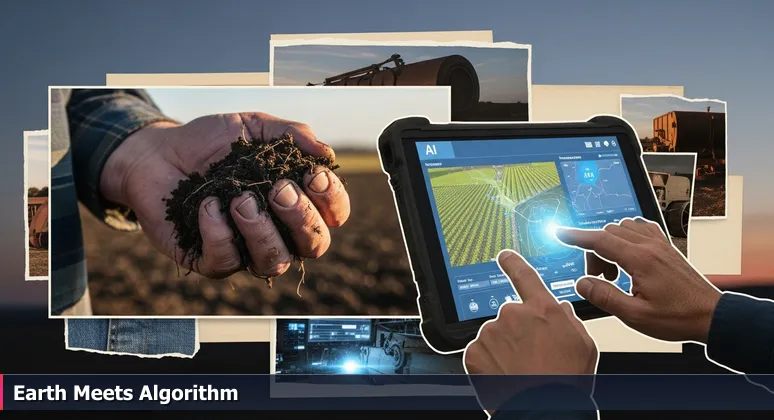
The most advanced AI job in Columbia might not involve a silicon chip, but soil. It's in the hands of a mid-Missouri farmer interpreting a predictive yield model at dusk, or a clinician at MU Health Care reviewing an AI-assisted diagnostic scan. These moments of hybrid expertise define the 2026 landscape here, where AI isn't displacing core industries but becoming their most sophisticated tool.
The narrative that AI talent must migrate to coastal tech hubs is being upended in Columbia. Our unique blend of a top-tier research university, a diverse economic base anchored by employers like Veterans United and Shelter Insurance, and a lower cost of living creates fertile ground for innovation. As noted in broader 2026 hiring trends, demand is soaring for talent that can bridge technical skill with deep domain knowledge.
This list ranks the top industries based on depth of AI integration and the unique hybrid roles they create. It proves you can build a cutting-edge career while improving a mortgage approval, a cancer screening, or a soybean harvest - work that is deeply rooted in community impact. The growth is evident, with sectors like insurance seeing 50% of carriers increasing AI headcount despite a tighter finance job market, and over 30% of local firms adding staff for AI reskilling initiatives.
Columbia's advantage is its Midwestern rootedness. Supported by the talent pipeline from the University of Missouri and the growing tech ecosystem at the Mizzou Research Park, the region offers a compelling alternative to coastal metros. You can engage in meaningful, applied AI work that solves tangible problems right here, as the evolving job market detailed by the Missouri Independent continues to demonstrate.
Table of Contents
- Introduction
- Healthcare and Biotech
- Fintech and Mortgage Lending
- Insurance and Financial Services
- Agriculture and Agritech
- Education and Higher Ed Technology
- Retail and E-commerce
- Logistics and Supply Chain
- Energy and Utilities
- Real Estate and Proptech
- Government and Public Sector
- Conclusion
- Frequently Asked Questions
This article details starting your AI journey in Columbia, Missouri with actionable advice.
Healthcare and Biotech
Columbia's healthcare sector, anchored by MU Health Care and Boone Hospital Center, is the undisputed leader in applied AI hiring. The work here is high-stakes and immediate, involving AI models that integrate directly into clinical workflows and electronic health records to assist in diagnostics, treatment planning, and operational efficiency.
Federally-funded diagnostic research is fueling demand for hybrid roles like Clinical AI Analyst and Medical Imaging Specialist. These positions command salaries from $110,000 to $158,000, reflecting the specialized expertise required to navigate HIPAA compliance and translate complex model outputs into actionable, life-saving insights for physicians and nurses.
The unique challenge in this sector is the non-negotiable need for domain knowledge. It’s the quintessential "handoff" moment: an AI highlights a potential anomaly on a scan, but the final judgment and patient care plan rests with the human expert. This makes the field ideal for career changers from life sciences, nursing, or medical administration who can bridge data science and patient care.
This trend is part of a national movement where, as highlighted in the 2026 healthcare workforce outlook, AI-driven forecasting becomes core to cost control and improved outcomes. In Columbia, it results in deeply mission-driven work that directly impacts community health, offering a powerful reason to build an AI career right here in the heart of Missouri.
Fintech and Mortgage Lending
Driven by industry leaders like Veterans United Home Loans, Columbia's fintech and mortgage sector is undergoing an AI reskilling revolution. The focus is on building transparent, ethical systems for fraud detection, risk modeling, and automated underwriting that must satisfy strict federal and state financial regulations.
Roles such as Mortgage Underwriting AI Lead are in high demand, requiring deep knowledge of explainable AI (XAI) to ensure every algorithm-driven loan decision is fair, defensible, and compliant. These specialized positions command competitive salaries ranging from $100,000 to $145,000, making them a lucrative pivot for professionals already in finance, accounting, or lending.
The work here involves less abstract experimentation and more engineering of robust, auditable systems that protect both the institution and the client - a perfect fit for those who value precision and ethical application. This growth is part of a national trend where, even in a distributed workforce, the demand for AI finance expertise continues to climb, with over 30% of firms adding new staff specifically for AI initiatives.
For AI talent, Columbia offers a unique proving ground: the chance to work on mission-critical financial systems that affect homeownership and community stability, all while benefiting from the region's lower cost of living and central Midwest location with access to broader markets.
Insurance and Financial Services
Exemplified by the transformation at Shelter Insurance, Columbia's insurance sector demonstrates how traditional finance is being reinvented by AI. While the overall finance job market may be tighter, there's a targeted surge for tech talent, with 50% of carriers actively increasing headcount for AI-specific roles that focus on governance, automation, and advanced analytics.
The work goes beyond simple automation to tackle foundational challenges in ethics and bias mitigation. Roles like AI Governance & Security Architect and Claims Automation Lead require integrating decades of actuarial science with modern predictive modeling to create systems that are not only smart but also fair and transparent. This demand is part of the broader national shift where, as Insurance Business reports, AI is reshaping hiring as general job openings hit a decade low.
These critical, framework-building positions command substantial salaries, ranging from $101,500 to $138,000, reflecting their importance to corporate integrity and risk management. This industry is a hidden gem for AI professionals fascinated by the policy and practical guardrails of responsible technology deployment.
The sector offers a compelling path for career changers from compliance, legal, or actuarial backgrounds. Their domain expertise is crucial for building the auditable systems that ensure AI tools protect both the company and the policyholder, making Columbia a center for ethical insurance innovation in the Midwest.
Agriculture and Agritech
The most advanced AI in Columbia isn't confined to server rooms - it's deployed in the rich soil of mid-Missouri fields. Leveraging groundbreaking research from the University of Missouri and the nearby USDA Agricultural Research Service, the region is a hub for "field-ready AI" that assists farmers with everything from yield prediction to resource optimization.
Demand is exploding for hybrid roles like Precision Ag AI Researcher and Geospatial Data Scientist. These professionals process torrents of data from drones and IoT sensors, transforming it into actionable insights for planting, irrigation, and harvest. As highlighted in the trend report "AI in Agriculture: Empowering Experts, Not Replacing Them", the goal is augmentation, not automation. Salaries in private agritech firms can reach $115,000, rewarding this specialized fusion of skills.
The unique requirement here is profound domain knowledge. Understanding soil science, weather patterns, and local agronomic practices is as critical as building the machine learning model itself. This makes the sector a fantastic fit for career changers with backgrounds in agriculture, environmental science, or biology who want to apply technology to tangible sustainability and food security challenges.
This growth aligns with broader smart agriculture technology trends, positioning Columbia at the forefront of a quiet revolution where AI becomes the most sophisticated tool in a farmer's arsenal, boosting both productivity and environmental stewardship across the Midwest.
Education and Higher Ed Technology
The University of Missouri is not just Columbia's premier talent pipeline - it's also a major engine for AI hiring in the education sector itself. The focus here is on leveraging technology to directly improve student outcomes, through roles like AI Learning Specialist and Educational Data Scientist that work on personalized learning, retention modeling, and AI literacy curriculum development.
This stable-growth sector offers salaries ranging from $69,000 to $135,000, often accompanied by the excellent benefits and job security characteristic of higher education institutions. The work is part of a broader national demand for research and engineering talent within academic settings, where innovation in teaching and administration is highly valued.
The unique differentiator in this field is the indispensable need to pair technical prowess with pedagogical understanding. Knowing how students learn, the challenges of curriculum design, and the dynamics of a classroom are crucial for creating tools that genuinely enhance education rather than just adding technological complexity.
This makes the field ideal for a smooth career pivot. Former educators, academic advisors, or instructional designers can transition into tech, where their domain expertise is the key to building effective AI-driven educational tools. It's mission-driven work that leverages Columbia's academic heart to shape the future of learning, right where groundbreaking educational research is happening. Current opportunities in this niche can be found among general AI job listings in Columbia that serve the university and surrounding colleges.
Retail and E-commerce
With a growing local presence from companies analyzing consumer trends and the logistics prowess of firms like EquipmentShare, Columbia's retail and e-commerce sector seeks AI talent for hyper-localized challenges. Roles such as Supply Chain Optimization Analyst and Dynamic Pricing Lead use predictive analytics to manage inventory and personalize customer engagement in the competitive Midwest market.
These positions command salaries ranging from $90,000 to $130,000, reflecting the value of connecting data science to tangible business outcomes. The work involves applying machine learning to marketing analytics and consumer behavior modeling to solve visible, everyday problems like stock management and targeted promotions.
The strategic shift in this sector is toward "hybrid talent" - professionals who can directly connect the outputs of an AI model to marketing ROI and physical inventory logistics. This trend is part of a broader recognition of the unexpected winners in AI hiring across various non-tech industries.
For professionals with experience in retail management, marketing, or local business operations, this field offers a direct and impactful path to applying AI. Their on-the-ground understanding of customer needs and operational constraints is invaluable for training models that are both accurate and practical, proving that cutting-edge tech has a vital place in Main Street commerce.
Logistics and Supply Chain
Columbia's central location on the I-70 corridor, strategically positioned between Kansas City and St. Louis, makes it a natural and growing hub for logistics innovation. Companies here are leveraging AI to solve the tangible, physical challenges of moving goods efficiently across the Midwest and beyond.
Firms like EquipmentShare and major regional carriers are driving double-digit growth for specialized roles such as Predictive Maintenance Engineer and Route Optimization Analyst. These positions, commanding salaries from $95,000 to $140,000, focus on processing real-time IoT data streams from vehicles and warehouse sensors to optimize fleet management, automate warehouses, and solve last-mile delivery puzzles.
This sector's expansion is part of a national recognition of logistics as one of the unexpected winners in AI hiring. The work epitomizes the "hybrid tool" motif - where algorithms directly inform decisions about diesel engines and delivery routes, creating massive efficiencies in the physical world.
This field is perfect for career changers with experience in transportation, industrial engineering, or operations management. Their hands-on understanding of the system's physical constraints - truck capacities, warehouse layouts, driver schedules - is irreplaceable for training AI models that don't just work in theory but excel in the complex reality of Midwest logistics.
Energy and Utilities
As Columbia Water & Light and Boone Electric Cooperative modernize aging infrastructure for a renewable future, AI talent has become critical for managing complexity and ensuring resilience. The focus is on balancing energy loads, integrating intermittent solar and wind power, and predicting demand with unprecedented precision to prevent outages and reduce costs.
Roles like Smart Grid Analyst and Load Forecasting Scientist are in demand, using historical SCADA system data and predictive modeling to optimize the entire energy network. These positions command salaries from $90,000 to $145,000, rewarding a hybrid skillset that combines data science with a practical understanding of power systems engineering and public utility operations.
The work is uniquely mission-driven, focused on public service and community resilience rather than pure profit. This sector offers stable, impactful careers for those with backgrounds in electrical engineering, environmental science, or public administration who want to work on the front lines of the clean energy transition right here in Missouri.
This growth is part of the broader 2026 trend where specialized research and engineering talent is in high demand across multiple industries. In Columbia, it means AI professionals can directly contribute to a sustainable future, ensuring the lights stay on and the water flows reliably for the entire community while building smarter, more efficient systems.
Real Estate and Proptech
The application of AI in Columbia's real estate sector extends well beyond mortgage lending at Veterans United. A growing proptech focus uses machine learning to streamline property appraisals, predict neighborhood value trends, and optimize the management of smart buildings, removing friction from one of life's most significant transactions.
Roles like Appraisal AI Analyst leverage computer vision to assess property conditions from imagery and integrate hyper-local market dynamics - from school district data to Mizzou expansion plans - into predictive models. These specialized positions offer solid salaries between $85,000 and $125,000, reflecting the value of combining technical and local market expertise.
The growth here is steady and practical, centered on creating efficiency and accuracy in valuation and transactions. Success in this field requires a nuanced understanding of Columbia's unique real estate landscape, proving that the most effective models are built by those who comprehend the context behind the data points.
This makes the sector an excellent fit for career pivots. Professionals already working in real estate sales, construction, property management, or urban planning possess the indispensable domain knowledge needed to train and refine context-aware AI systems. It’s a prime example of how, as identified in broader analyses of unexpected winners in AI hiring, non-tech industries are creating sophisticated new roles for hybrid talent.
Government and Public Sector
An emerging yet significant employer of AI talent, the City of Columbia and Boone County Government are increasingly investing in technology to enhance public services and community planning. They are funding R&D and creating roles like Urban Planning AI Specialist and Public Safety Data Analyst to tackle challenges from traffic flow optimization to equitable resource allocation.
While salaries in this sector range from $75,000 to $110,000 and may be lower than top private-sector roles, the work offers unique, mission-driven impact. The focus is squarely on ethical data use, transparent community needs assessment, and ensuring technological advances benefit all residents equitably. This aligns with broader 2026 hiring trends highlighting research and public sector roles.
This path represents the ultimate application of AI for public good, ideal for professionals with backgrounds in public policy, social work, urban studies, or non-profit management. Their understanding of community dynamics, regulatory frameworks, and social equity is critical for building AI systems that serve rather than surveil, fostering public trust in government technology.
For AI talent seeking purpose beyond profit, Columbia's public sector offers a compelling proposition: apply cutting-edge skills to directly improve the quality of life in the community where you live. It's a chance to ensure the benefits of the AI revolution are accessible to everyone, cementing technology's role as a tool for civic empowerment in the heart of Missouri.
Conclusion
The journey through Columbia's top AI hiring sectors reveals a clear and powerful thesis: the most impactful careers are being forged at the intersection of machine learning and mid-Missouri's established strengths. The future here isn't about becoming a satellite office for coastal tech; it's about leveraging our unique advantages - the lower cost of living, the strong talent pipeline from Mizzou, and our central Midwest location - to solve real-world problems in healthcare, agriculture, finance, and beyond.
From the clinical AI analyst at MU Health Care to the precision agriculture researcher in the fields of Callaway County, success demands hybrid expertise. This trend, where deep domain knowledge meets technical prowess, is creating a resilient and innovative job market that values rootedness. As the Missouri Independent has explored, the geography of opportunity is shifting, and Columbia is firmly on the map.
The narrative that ambitious AI professionals must leave for Austin or Silicon Valley is obsolete. Here, you can build a cutting-edge career while seeing the direct impact of your work on your community - streamlining a mortgage, optimizing a supply chain, or integrating renewable energy. The growing ecosystem supported by the Mizzou Research Park and local employers provides the fertile ground for this work to thrive.
Columbia, Missouri, stands as a compelling model for the future of tech employment: innovative, accessible, and deeply connected to the community it serves. For those ready to apply their skills where they matter most, the path forward is clear - and it runs right through the heart of the Midwest.
Frequently Asked Questions
Why should AI professionals consider careers in Columbia, MO instead of big tech hubs in 2026?
Columbia offers a lower cost of living compared to many coastal metros, allowing AI talent to thrive without high expenses. It also boasts a strong talent pipeline from the University of Missouri and growing opportunities in diverse industries like healthcare and fintech, making it a practical choice for impactful work.
What are the highest-paying AI industries in Columbia, MO based on your ranking?
Healthcare and biotech lead with salaries ranging from $110,000 to $158,000, driven by employers like MU Health Care. Fintech and insurance also offer competitive pay, with roles often exceeding $100,000, reflecting the specialized expertise needed in these sectors.
Can I transition into an AI career in Columbia without a traditional tech background?
Yes, many industries here value domain knowledge; for example, healthcare roles seek those with life sciences backgrounds, and agriculture needs expertise in soil science. This makes it feasible for career changers from fields like nursing or environmental science to pivot into AI.
How does the cost of living in Columbia affect AI job opportunities and salaries?
Columbia's cost of living is about 20% lower than the national average, so AI salaries, which can reach over $150,000 in top industries, provide greater purchasing power. This economic advantage supports innovation and helps attract talent to the region's growing tech ecosystem.
Who are the key employers driving AI hiring in Columbia beyond the University of Missouri?
Major employers include MU Health Care and Boone Hospital Center in healthcare, Veterans United in fintech, and Shelter Insurance in insurance. These organizations are actively integrating AI, with over 30% of firms in fintech adding AI staff, fueling local job growth.
Explore the cybersecurity job market in Columbia MO for 2026 with insights from local experts.
For aspiring tech professionals, discover the leading apprenticeships in Columbia, MO for the coming year.
Understand the 2026 AI salary trends in Columbia, Missouri with this article.
This one-year plan to become an AI engineer in Columbia covers phases from Python basics to advanced system integration.
Start building tech careers with free Columbia resources today.

Irene Holden
Operations Manager
Former Microsoft Education and Learning Futures Group team member, Irene now oversees instructors at Nucamp while writing about everything tech - from careers to coding bootcamps.