









Top 10 Free Tech Training at Libraries and Community Centers in the Philippines in 2026
By Irene Holden
Last Updated: April 21st 2026
Too Long; Didn't Read
Top free tech training in the Philippines for 2026 features DICT Tech4ED centers offering AI and cybersecurity modules with free equipment, and the TESDA Online Program with over 7 million enrollments for certifiable skills. Public libraries have become community tech labs, and national AI initiatives like the Naicri center ensure training supports the growing tech ecosystem.
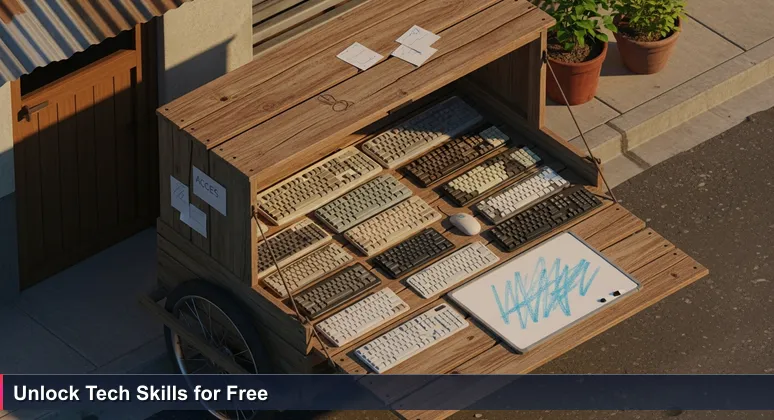
Imagine a government-sponsored tech kariton rolling into your community, its cargo not goods but gateways to the digital economy. That's the essence of the Department of Information and Communications Technology's (DICT) Tech4ED and Digital Transformation Centers. These hubs are the frontline of a national strategy to build the talent pipeline for our thriving IT-BPM and fintech sectors, moving well beyond basic literacy to offer critical modules on AI-driven productivity for small businesses and cybersecurity awareness - skills directly sought by employers in BGC or Cebu IT Park.
The initiative is a cornerstone of the country's climb in global digital readiness rankings, particularly in promoting emerging tech. At these centers, you can access everything from using e-Gov services to leveraging AI tools for market analysis, all for free. The biggest practical advantage is the free use of desktops and internet on-site, removing the barrier of device ownership for many Filipinos.
Centers are typically integrated into public spaces like municipal halls or libraries, such as the one at the Negros Occidental Provincial Library. They operate on walk-in access during municipal hours, though you can also tap into a selection of courses 24/7 through the official Tech4ED Portal. This model represents a powerful, grassroots answer to the Philippines' drive for inclusive learning, turning local communities into springboards for tech careers.
Table of Contents
- DICT Tech4ED & Digital Transformation Centers
- TESDA Online Program (TOP)
- Major City & Provincial Public Libraries
- National Library of the Philippines (NLP)
- University of the Philippines Open Resources
- DICT & PLDT-Smart Digital Upskilling Partnerships
- Specialized AI & Cybersecurity Webinars
- Barangay eCenters & Learning Hubs
- Free Online Resource Portals
- Community-Run Techy Grannies & Peer-Led Sessions
- Your First 30-Day Free Learning Plan
- Frequently Asked Questions
Find out how to leverage Filipino advantages in AI careers with this guide.
TESDA Online Program (TOP)
If physical centers are the tech kariton, the TESDA Online Program (TOP) is the nationwide digital convoy. By early 2026, this free platform had surpassed a staggering 7 million enrollments, a clear testament to its massive reach and the Filipino drive for self-improvement. It's your direct pipeline to structured, technical-vocational modules that align with National Certifications (NC), skills that can land you roles at companies like Accenture or PLDT.
The program has evolved with smart features to support learners, including its own AI-powered technical support chatbot named "TOPE" and a mobile app that allows for offline learning. This commitment to accessibility and innovation is a key reason why, in a Q1 2026 Publicus Asia poll, TESDA was ranked among the top-trusted national government agencies. You register for a free account online, and the entire library - from "Basic Computer Operation" to "Cyber Threat Monitoring" - is available 24/7 for self-paced study.
This model of free, quality, and flexible education is detailed in resources like the TESDA Newsletter, highlighting its role in national upskilling. For the self-starter aiming for a specific certification on their own schedule, TOP is an unparalleled resource, putting a career in tech within reach from your own home.
Major City & Provincial Public Libraries
The image of the quiet, book-filled library is a relic of the past. Today, your local public library has transformed into a vibrant community tech lab and a judgment-free portal for conquering digital intimidation. From the Quezon City Public Library to the six-story Valenzuela City Library with its dedicated computer floor, these spaces offer essential drop-in sessions on media literacy, smartphone basics, and social media navigation.
The human-centered approach is key. The Manila Public Information Office, for example, runs "anytime" digital literacy drop-ins for senior citizens, proving these institutions actively cater to all ages. The access model is beautifully simple: usually, a free library card or quick sign-in is all you need to use free computers and internet on-site, often with fair-use time limits.
This creates a powerful social learning environment. You're not learning alone; you're alongside manongs, manangs, and fellow students from your own barangay. As shared in testimonials, such as from a participant at the Villasis Municipal Library, this supportive setting builds the foundational confidence required before stepping into more formal tech training, turning a once-intimidating space into a launchpad for digital inclusion.
National Library of the Philippines (NLP)
The National Library of the Philippines (NLP) in Ermita, Manila, has evolved far beyond a repository of historical texts. Through its Public Libraries Division, it acts as the nerve center for professionalizing digital access nationwide, releasing a yearly Training Calendar packed with high-level workshops. In line with the 2026 launch of the National AI Center, these sessions now include seminars like "Optimizing Library Operations with AI", designed to equip professionals with future-proof skills.
What you can access here is specialized knowledge at the intersection of technology and information management:
- Curriculum: Digital resource management, virtual information services, and the ethical use of AI in knowledge work.
- Access Model: A mix of in-person workshops at the NLP and nationwide webinars, typically requiring registration via QR codes on their official pages.
- Credibility: The NLP provides steadfast support for professional development, partnering with institutions for major events. Learning here connects you to a national network of knowledge professionals.
Attending an NLP webinar isn't just about learning a tool; it's about understanding digital transformation strategy. Furthermore, for self-directed research, the library offers a vast e-Resources portal of academic journals and databases, honing the critical research skills needed for any tech career.
University of the Philippines Open Resources
What if you could attend lectures from the Philippines' premier state university without paying a single peso in tuition? Through the University of the Philippines Open University (UPOU), you can. The institution offers a treasure trove of Open Educational Resources (OERs) and Massive Open Online Courses (MOOCs) to the public, providing university-grade content on topics from data science to multimedia production.
This is where you access high-level, academic, and interdisciplinary knowledge. Think less "how to code in Python" and more "the societal impact of algorithms" or "advanced statistical modeling." This content is always available online through platforms like the UPOU MODeL (Massive Open Distance e-Learning) and the UP VINTA multimedia repository, requiring only your own device and internet connection.
The strategic value of these resources is immense. They complement the vocational skills from programs like TESDA, positioning learners for roles in research, policy, or advanced technical fields within the Philippines' growing AI and fintech sectors. For lifelong learners, career shifters aiming for advanced roles, or those preparing for formal graduate studies, UP's open resources are an invaluable portal to ivy-league level learning, directly supporting the nation's drive for a highly skilled, future-ready workforce.
DICT & PLDT-Smart Digital Upskilling Partnerships
The private sector plays a crucial role in public digital literacy, with strategic partnerships creating highly practical, community-based training. A prime example is the collaboration between PLDT-Smart and the DICT, which fuels "grassroots digital upskilling" initiatives. These often manifest as special workshop series in Tech4ED centers, delivering skills with immediate commercial application for the local economy.
The curriculum is designed for real-world impact, focusing on applied digital skills that empower micro, small, and medium enterprises (MSMEs). Participants can learn hands-on techniques for "Selling on Shopee/Lazada," "Social Media Marketing for Your Sari-Sari Store," or using cloud tools to streamline small business operations. This direct link to marketable skills is a key differentiator.
Access to these programs is typically announced through local government units and corporate social responsibility channels, with sessions hosted at community centers or libraries. A significant advantage is that training is frequently facilitated by professionals from the partner company, providing learners with direct insights into current industry standards and practices. For aspiring entrepreneurs or families looking to digitize a traditional business, these corporate-powered sessions offer a tangible, industry-relevant edge in the competitive digital marketplace.
Specialized AI & Cybersecurity Webinars
With the landmark 2026 launch of the National Artificial Intelligence Center for Research and Innovation (Naicri), the national focus on AI has created a direct pipeline to public upskilling. Government agencies like the DICT and NLP now regularly host free, specialized webinars that move beyond basic digital literacy to explore the cutting-edge concepts and ethical frameworks shaping the future.
The curriculum in these sessions is distinctly forward-looking. The DICT Bulacan office, for example, has hosted professional webinars on "Software Development & Design Thinking," while the NLP offers seminars on applying AI in knowledge work. These sessions provide a conceptual and ethical understanding of machine learning, cybersecurity principles, and how these technologies integrate into professional domains.
Access is primarily through online webinars requiring prior registration, with announcements made on official government social media pages. Participating in this training aligns you with national priorities, as it directly connects to initiatives like the P100-million AI center partnership with MIT aimed at modernizing the country's tech curriculum. For tech enthusiasts, professionals in adjacent fields, and anyone building a foundational understanding of AI, these webinars are a critical resource for riding the 2026 tech wave.
Barangay eCenters & Learning Hubs
Sometimes the most powerful resource is the one parked right on your street. Many progressive barangays now host their own eCenters or learning hubs, often in partnership with the DICT or funded by local budgets. These are the hyper-local incarnation of the tech kariton, sometimes just a dedicated room in the barangay hall with a few computers, bringing foundational digital access directly to your doorstep.
The curriculum here is practical and immediate, focused on skills for daily life and civic participation. You can learn basic digital literacy, get tutorials on online government transactions (PSA, Pag-IBIG, SSS), and youth may find introductory coding sessions. The access model is highly variable - schedules might be informal, so the best step is to inquire directly at your Barangay Hall or check community boards for posted hours.
This is fundamentally community-led upskilling. Training is often facilitated by a barangay IT officer or a local volunteer, fostering a strong sense of mutual aid and support within a familiar environment. For many, especially youth and seniors, these hubs provide the least intimidating, most convenient entry point. They represent the organic, human layer of the tech ecosystem, where learning begins with a neighbor's guidance before scaling up to more formal programs, embodying the grassroots spirit of accessible, communal growth.
Free Online Resource Portals
Beyond live workshops and courses lies a vast, quiet arsenal for the self-directed learner: the digital bookshelf of free online resource portals. These are not traditional classrooms but curated collections of knowledge - academic journals, technical manuals, industry reports, and thousands of e-books - that you can access from home to fuel your own projects and research.
In the Philippines, flagship resources include the National Library of the Philippines e-Resources portal, which requires free online registration to unlock a wealth of databases. Provincial initiatives like the Iloilo Provincial Library's curated list of free global digital libraries further expand this access. For multimedia and university-produced content, portals like the UP VINTA repository serve as invaluable archives.
Engaging with these resources develops a critical meta-skill for any tech professional: the ability to conduct independent, rigorous research. While a course teaches you how to use a tool, navigating these portals teaches you how to find, evaluate, and synthesize information to solve novel problems - a capability highly prized in fields like AI and data science where the landscape constantly evolves.
Perfect for students writing papers, professionals needing to stay updated with the latest academic research, or self-learners building a portfolio project, these portals provide the raw materials. They empower you to move from consuming structured curriculum to creating original work, turning your curiosity into a competitive advantage in the knowledge economy.
Community-Run Techy Grannies & Peer-Led Sessions
At the most human level of the tech upskilling ecosystem, you'll find community-organized learning blooming organically. Inspired by official programs, peer-led groups have sprung up in barangays and local centers, often advertised in Facebook community groups like "FREE SEMINARS/Trainings, WEBINARS and HOW TO." These are the sessions where a neighbor teaches another how to video call family abroad, use Facebook Marketplace, or navigate mobile banking apps.
"I can proudly say that I have learned a lot," shared Mr. Virgilio Tabogader, a participant in basic computer literacy at the Villasis Municipal Library, expressing the profound personal impact of overcoming initial struggles to master computer basics.
The curriculum here is peer-taught and need-based, focused on practical, daily digital life skills rather than formal certification. Access is completely informal - look for flyers in community centers, churches, or local social media groups. The magic lies in the human element: learning happens without pressure, driven by mutual aid and shared experience.
This represents the ultimate confidence-builder. For many, especially seniors, these judgment-free zones are the first step before engaging with more structured programs at a library or Tech4ED center. They transform tech from an intimidating mystery into a tool for connection, proving that sometimes the most powerful teacher is the supportive network already surrounding you.
Your First 30-Day Free Learning Plan
Week 1-2: Build Your Digital Foundation
Your first two weeks are about conquering initial intimidation and establishing a base. Begin by visiting your local City Public Library (like Quezon City or Manila) to get a free library card and spend an hour daily on their computers, practicing web browsing and creating a Gmail account. Simultaneously, visit your Barangay Hall to ask about any eCenters or basic computer tutorials. Then, register for a free account on the TESDA Online Program (TOP) and enroll in the "Basic Computer Operations" module.
Week 3-4: Connect Skills to Community & Resources
Now, deepen your skills and connect with the wider learning ecosystem. Dedicate time daily to complete your TOP module, using library computers if needed. Then, actively search for the Facebook page of your DICT Regional Office (e.g., DICT Region III) to find and register for a free upcoming webinar on digital literacy or online safety. In your final week, combine your growing confidence to explore advanced resources: enroll in a more advanced TOP course like "Introduction to ICT," watch a free lecture on the UP Open University MODeL platform, and use the National Library's e-Resources portal to find one article on "tech careers in the Philippines."
By your 30-day milestone, you will have a completed certificate, experience with live training, and firsthand knowledge of the country's major free learning portals. You are no longer a passive beginner but an informed, self-directed learner equipped to map your next move into the tech world.
Frequently Asked Questions
Are all the tech training programs listed really free, with no hidden costs?
Yes, all programs are completely free. For example, DICT Tech4ED centers provide free use of desktops and internet on-site, and TESDA Online Program has no enrollment fees, with over 7 million users by 2026.
How can I find these training centers if I don't live in Metro Manila?
These resources are available nationwide. Tech4ED centers are in communities across the Philippines, and public libraries in cities like Quezon City and Valenzuela offer tech labs. Barangay eCenters bring training to your local area through partnerships with LGUs.
What specific tech skills can I learn from these free programs, and will they help me get a job?
You can learn skills from basic digital literacy to advanced AI and cybersecurity. TESDA courses offer National Certifications aligned with employer needs, such as roles at Accenture or PLDT, boosting job prospects.
Do I need to own a computer or have internet access to join?
Not necessarily. Many centers like public libraries and Tech4ED hubs provide free computers and internet on-site. For online programs like TESDA TOP, you'll need your own device, but they offer mobile apps for offline learning.
Is there any age limit or prior experience required to attend?
Most programs are open to everyone. Public libraries have sessions for all ages, including seniors, and barangay eCenters cater to local residents without strict prerequisites, making them inclusive for beginners.
Explore the leading industries hiring AI experts in the Philippines for the coming years.
2026's top tech job opportunities for Filipino graduates are comprehensively reviewed here.
Explore which sectors are hiring cybersecurity professionals in the Philippines according to the latest data.
Discover the blueprint for AI careers in the Philippine tech ecosystem by 2026.
Read a detailed guide on the best tech startups for fresh graduates in the Philippines in 2026.

Irene Holden
Operations Manager
Former Microsoft Education and Learning Futures Group team member, Irene now oversees instructors at Nucamp while writing about everything tech - from careers to coding bootcamps.