









Top 10 Free Tech Training at Libraries and Community Centers in Saudi Arabia in 2026
By Irene Holden
Last Updated: April 23rd 2026
Too Long; Didn't Read
KAUST Academy's free AI summer camps and SDAIA Academy's open webinars lead the list as the highest-quality free tech training in Saudi Arabia, offering curriculum comparable to paid programs and direct alignment with Vision 2030. SDAIA has already trained over 334,000 citizens through its initiatives with 52% female participation, while KAUST's camps provide hands-on AI projects in multi-week intensive sessions.
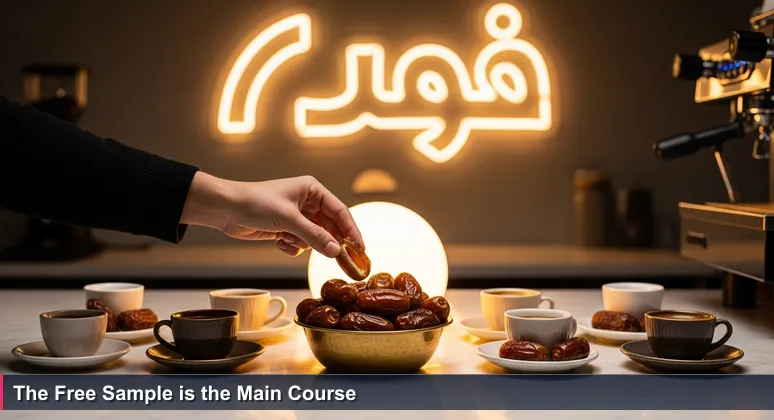
You bite into the complimentary date set near the register at a polished Riyadh café, expecting dry mediocrity. Instead, the sweetness hits first - butter-smooth, amber-rich - and suddenly you are asking the barista where they source them. Turns out they are from AlUla, a heritage farm you have never heard of. This is precisely how most of us approach free tech training: we assume tuition-free means content-light, so we scroll past the webinar link, certain that real value costs money.
That assumption is expensive. In a city where a private coding bootcamp can set you back 20,000 SAR, the free pathway requires only an Iqama and a walk to a municipal library. Yet enrollment lags behind paid courses - not because of quality, but because of perception. The Saudi Data and AI Authority (SDAIA) has already trained over 334,000 citizens through its One Million Saudis in AI program, with a remarkable 52% female participation rate. These are not stripped-down previews - they are the same curricula used by paid partners, offered through public libraries as a matter of national policy under Vision 2030.
KAUST Academy expanded its AI outreach to include free multi-week summer camps, executive sessions, and youth programs taught by faculty, with hands-on projects identical to what paying participants receive. The hidden farm nurturing all of this is the Kingdom’s public library system, backed by PIF investment and the Ministry of Communications and Information Technology’s Virtual Tech Talents Hub, which delivered up to 25 interactive workshops per session in 2026 - completely free. The free sample is the main course. The top 10 list that follows is not a menu of cheap alternatives. It is a guide to the best tech training in the Kingdom, price tag zero.
Table of Contents
- The Sweetest Free Tech Training in Saudi Arabia
- Saudi Digital Library (SDL)
- Municipal Branch Libraries
- British Council Digital Library
- MiSK Foundation Community Events
- KAUST Academy Open Lectures
- Ithra Library (Dhahran)
- King Fahd National Library (Riyadh)
- MCIT Virtual Tech Talents Hub
- SDAIA Academy Open Webinars
- KAUST Academy Free AI Summer Camps
- Your First 30 Days: A Free Learning Plan
- Honest Next Steps: What Free Training Can and Can't Do
- Frequently Asked Questions
Check out the complete guide to starting an AI career in Saudi Arabia in 2026 for actionable insights.
Saudi Digital Library (SDL)
With over one million academic and scientific references spanning every discipline, the Saudi Digital Library is the Kingdom's largest repository of specialized knowledge - and it costs you exactly zero riyals. Accessible to all citizens and residents via the official SDL platform, this online self-study hub works from home or from public computer terminals at universities and libraries. The library periodically offers free weeks of database access that open even more resources for deep technical research, as reported by Arab News.
SDL is not a structured bootcamp - it will not teach you Python syntax from scratch. But its real value emerges when you have completed a workshop and need to go deeper. After attending an SDAIA AI foundations webinar, for instance, you can pull up peer-reviewed papers on transformer architectures or statistical modeling directly from the same terminal where you watched the session. According to a CDO Magazine analysis, over 334,000 Saudis have already participated in national AI training programs - and SDL serves as the companion research engine for those who want to move beyond surface-level understanding.
This is a tool for the self-directed learner who knows what to look for. Use it after a KAUST Academy lecture to read the underlying research papers, or before a SDAIA bootcamp to build foundational vocabulary. The Saudi Digital Library does not hold your hand, but it hands you the keys to the Kingdom's entire academic knowledge base - free, with no application, available at any hour. That alone makes it an indispensable bridge between introductory training and genuine expertise.
Municipal Branch Libraries
Overseen by the Libraries Commission under the Ministry of Culture, Saudi Arabia's network of municipal public libraries serves as the first rung on the digital literacy ladder. At branches like the Rawdat Sudayr Public Library, you will find walk-in computer terminals and periodic workshops covering Absher portal navigation, email setup, and basic internet safety. Instruction is primarily in Arabic, and access requires only your national ID or Iqama - no application, no fee, no prior experience.
For a complete beginner who has never clicked a mouse, this is your starting point. The workshops are designed for digital inclusion, not immediate job readiness, but they build the foundational confidence needed to engage with more advanced offerings. According to Saudipedia's directory of public libraries, these branches are distributed across every region of the Kingdom, making them the most geographically accessible tech resource available.
This is not where you will learn Python or TensorFlow. The content remains intentionally basic - helping a retiree book a medical appointment through Sehhaty or guiding a new resident through Tawakkalna registration. But consider this: a learner who masters the digital fundamentals here can walk into any SDAIA webinar or MCIT workshop already comfortable with the tools. Municipal libraries do not build AI engineers. They build the digitally literate citizens who become AI engineers in the next step of the journey.
British Council Digital Library
For Saudi tech learners, English proficiency is often the hidden barrier blocking access to advanced resources. The British Council addresses this directly with a free digital library for English learners launched in Saudi Arabia, offering language courses, professional development tools, and downloadable technical resources. Registration requires only a few minutes and zero payment.
While this is not a tech curriculum per se, it directly supports your ability to consume English-language AI courses on platforms like Coursera or to follow KAUST Academy lectures. As Zawya reported on the library's launch, the collection includes technical and professional development materials alongside language instruction - a blend designed for the self-directed learner. Instruction is available in both Arabic and English, making it accessible regardless of your starting level.
Treat this as a supporting resource: use it to build technical vocabulary in English while you pursue SDAIA webinars or MCIT workshops. A learner who masters regression analysis, neural network architecture, and gradient descent in English will find every subsequent course significantly easier. The British Council Digital Library does not teach you machine learning, but it teaches you the language to learn it - and that is a prerequisite worth investing zero riyals to fulfill.
MiSK Foundation Community Events
The MiSK Foundation runs community labs at cultural events across the Kingdom, offering hands-on sessions in creative technology, digital design, and entrepreneurship. These drop-in labs are designed to introduce Saudis to tech concepts in an engaging, low-pressure environment - think building a simple game interface in two hours or prototyping a business idea using basic digital tools. Events are held in partnership with community centers in Riyadh, Jeddah, and Dammam, with instruction available in both Arabic and English.
What makes MiSK stand out is the zero-barrier entry: no registration, no prior skills, just a walk-in at a designated "MiSK City" location during events like cultural festivals or national celebrations. The foundation's broader mission under Vision 2030 focuses on empowering youth with 21st-century skills, and these labs serve as low-stakes introductions. The Digital Skills Library partner ecosystem often references MiSK's approach as a model for community-based tech education - practical, immediate, and fun.
The trade-off is clear: the offerings are event-based, not continuous. You will not find a fixed weekly class. You must monitor MiSK's social media channels for pop-up dates, which tend to cluster around National Day, LEAP conference periods, and school holidays. For a complete beginner curious about whether tech suits them, a single afternoon at a MiSK lab can answer the question faster than scrolling through online tutorials. But for consistent progression, you will need to layer this with more structured resources like SDAIA webinars or KAUST Academy programs.
KAUST Academy Open Lectures
KAUST Academy has expanded its AI outreach significantly across the Kingdom, building on its success in artificial intelligence to train Saudis through free summer camps, executive sessions, and public seminars. These open lectures on machine learning, robotics, and sustainable energy are designed for a technically literate audience - meaning you need basic programming familiarity to follow along. Sessions are held at KAUST's Thuwal campus and occasionally in Riyadh through partnership venues, with instruction in both Arabic and English.
The curriculum mirrors what paid participants receive at the same institution. According to KAUST News, the university's AI training model has expanded to meet Saudi demand for skilled talent across sectors including energy, healthcare, and smart cities. An employee at King Saud University found so much value in the KAUST Academy tech courses that she became an internal advocate, successfully pushing for additional programs to be delivered within her own university to empower more Saudis - a testament to the real-world impact of these open sessions.
The catch lies in the audience level. These lectures assume familiarity with concepts like supervised learning, gradient descent, and basic Python syntax. If you have completed an SDAIA foundations webinar and built a simple model, you are ready. If you are still learning what a variable is, start with the municipal library workshops first. For those at the right level, a single KAUST open lecture can collapse weeks of self-study into two hours of focused insight - offered at the same price as everything else on this list.
Ithra Library (Dhahran)
Perched within the King Abdulaziz Center for World Culture in Dhahran, the Ithra Library is one of the most architecturally stunning learning spaces in the region. Beyond the sweeping curves and natural light, it offers regular free workshops in coding fundamentals, digital design, and maker-space technologies - think 3D printers, CNC machines, and vinyl cutters ready for hands-on experimentation. Sessions marked "Free Entry" on the Ithra Library's events calendar require no payment and no application, just a walk-in with your Iqama.
The library's "Storyteller of the Day" sessions occasionally incorporate digital tools, teaching children and adults how to use technology for creative expression - a gentle entry point for those intimidated by pure code. Instruction is available in both Arabic and English, and the space itself functions as a quiet digital lab during non-workshop hours. The maker-space equipment alone rivals what many paid community studios offer across Riyadh, making this a hidden gem for anyone in the Eastern Province.
The catch is geography. Ithra sits in Dhahran, a four-hour drive from Riyadh and similarly distant from Jeddah. For residents of the Eastern Province, particularly those near Dammam, Khobar, or Dhahran itself, this is arguably the best free tech resource within reach. But for Riyadh-based learners, the travel time makes it a weekend trip rather than an after-work option. If you find yourself in the region for LEAP or a business visit, block out an afternoon - the maker-space alone justifies the detour.
King Fahd National Library (Riyadh)
In the heart of Riyadh, the King Fahd National Library offers the capital's most accessible free digital lab for self-directed learners. Walk in with your Saudi ID or Iqama, use a computer terminal, and access the Saudi Digital Library or explore basic research techniques with staff assistance. Instruction is primarily in Arabic, with some English materials available, and the library occasionally hosts one-off workshops on digital skills like database navigation and IT literacy.
Under the oversight of the Libraries Commission, this branch serves as a zero-commitment starting point for Riyadh residents who want to test the waters of tech learning without enrolling in anything. The digital lab is basic - no structured curriculum, no Python installers pre-loaded - but it offers exactly what a beginner needs: a quiet space, a connected computer, and a librarian who can point you toward the right academic databases. According to Saudipedia's directory of Kingdom-wide public libraries, this network spans every region, with the Riyadh branch being the flagship.
This is not where you will master neural networks. But it is where you can spend two hours exploring the SDL portal, watching a single SDAIA webinar on the library's terminal, and deciding whether the next step - a formal bootcamp, a KAUST lecture, a MiSK lab - fits you. No application. No cost. Just walk in, sit down, and take the first bite.
MCIT Virtual Tech Talents Hub
The Ministry of Communications and Information Technology concluded its Virtual Tech Talents Hub 2026 with up to 25 interactive workshops per session covering AI, cybersecurity, and cloud computing - all completely free with no application required. As reported on the MCIT official news page, these large-scale virtual events are designed for Saudis who want to understand how emerging technology connects directly to the labor market. Registration opens periodically via a simple link, and instruction is primarily in Arabic.
The hub's workshops target beginner to intermediate skill levels, making them accessible to anyone who has completed even a single SDAIA webinar or library-based digital literacy session. Topics span practical technical skills alongside labor market readiness - covering not just how AI works, but which Saudi industries are hiring for AI roles and what certifications employers like Saudi Aramco, STC, and SABIC actually recognize. The MCIT has also launched parallel initiatives like the collaboration with SAP to develop national digital capabilities, reinforcing the ministry's commitment to accessible upskilling.
The two catches are timing and continuity. These hubs run during specific event periods rather than year-round, so you need to monitor MCIT's announcements and register quickly when slots open. But for a concentrated dose of labor-market-aligned tech training that costs nothing and requires no prior credentials, the quality-to-price ratio is unmatched. Mark your calendar for the next hub announcement - missing it means waiting months for the next session.
SDAIA Academy Open Webinars
The Saudi Data and AI Authority (SDAIA) is the national body driving AI talent development under Vision 2030, and its open webinars offer direct access to the same curriculum used in their paid bootcamps - at zero cost. These one-off workshops and open-access sessions cover data science, AI literacy, cloud computing, and cybersecurity awareness, with instruction in both Arabic and English. Registration is free through the SDAIA Portal's initiatives page, with no application or prior experience required.
The authority's "One Million Saudis in AI" program has already trained over 334,000 citizens, with a remarkable 52% female participation rate, according to CDO Magazine's analysis. This scale means the open webinars are not niche experiments - they are proven pathways tested across hundreds of thousands of learners. A student from the parallel "One Million Arab Coders" initiative shared that the program was a "realistic translation" of his dreams, enabling him to develop over seven apps and games, including a sign language program for the deaf.
Completing a SDAIA webinar does more than teach you AI foundations. It gives you familiarity with the national AI ecosystem - the same vocabulary, frameworks, and certification pathways that Saudi Aramco, STC, and PIF-backed startups recognize when evaluating candidates. If you later apply for SDAIA's paid academy bootcamps or specialized programs like those listed on the SDAIA Programs and Bootcamps page, you will walk in already speaking the language. The open webinar is your backstage pass to the Kingdom's AI infrastructure - and it costs nothing to claim.
KAUST Academy Free AI Summer Camps
KAUST Academy's free AI summer camps top this list for a single, compelling reason: the curriculum is identical to what paid participants receive. These multi-week intensive programs cover machine learning, data science, and AI fundamentals, taught by KAUST faculty with hands-on projects that mirror real industry problems. As reported by KAUST News, the university has expanded its AI training across Saudi Arabia to meet the surging demand for skilled talent in sectors ranging from energy to healthcare.
The camps target beginner to intermediate skill levels, making them accessible to learners who have completed foundational training - say, an SDAIA webinar or a library-based digital literacy workshop - and are ready to dive deeper. Instruction is primarily in English with Arabic support, and the multi-week format allows for genuine skill building rather than a one-off overview. The broader context: Saudi Arabia's AI-ready workforce is being deliberately cultivated to power the digital economy, with national initiatives training citizens at scale through precisely these kinds of university-led programs.
The only constraints are limited seats and specific application windows. These camps fill quickly, so monitoring KAUST's announcements and applying early is essential. But for the highest-quality free training in the Kingdom - world-class faculty, rigorous curriculum, hands-on projects, zero cost - nothing else on this list comes close. If you complete a KAUST Academy free camp, you walk out with skills directly transferable to roles at Saudi Aramco, SABIC, or the growing AI startup ecosystem backed by PIF investments.
Your First 30 Days: A Free Learning Plan
You do not need to wait for an application window. Here is a practical 30-day plan using only the free resources from this list, designed to move you from complete beginner to confident self-directed learner. The goal is not mastery - it is momentum.
Week 1: Foundation. Visit King Fahd National Library's digital lab. Spend two hours exploring the Saudi Digital Library and create an SDL account using your Iqama. Register for the next available SDAIA AI foundations webinar and complete it. Use a municipal library terminal to practice navigating government portals like Absher - building the basic digital confidence that underpins everything else.
Week 2-3: Skills building and hands-on practice. Work through the British Council Digital Library's English for Tech module. Join any available MCIT Virtual Tech Talents Hub session and take notes on labor market trends. If near Dhahran, visit Ithra's maker space; if in Riyadh, use the National Library computers to practice typing and basic file management. Watch a KAUST open lecture - you will not understand everything, so write down unfamiliar terms and research them via the SDL portal.
Week 4: Integration. Use SDL to find beginner Python tutorials and code for 30 minutes daily. Complete a second SDAIA webinar on a different topic. Write a one-page summary of everything you learned and identify your next steps. By day 30, you will have built foundational digital literacy, completed at least two AI-focused workshops, and discovered whether you are ready for a formal program - all without spending a single riyal.
Honest Next Steps: What Free Training Can and Can't Do
Let us be clear about what this journey has delivered. The free resources on this list - the SDAIA webinars, the KAUST open lectures, the MCIT hub sessions, the library terminals - are excellent for building foundational skills and confidence. They give you the vocabulary, the curiosity, and the self-directed learning habits that every successful technologist needs. But they are not sufficient alone to make you job-ready for a data scientist or machine learning engineer role. They are the first mile, not the whole marathon.
After completing your free learning path, consider these next-step pathways available across the Kingdom. Paid bootcamps like SDAIA Academy's specialized programs offer deep, employer-recognized credentials in fields like ServiceNow and data science. Apprenticeship initiatives such as Mostaqbali - an Oracle and Ministry of Human Resources collaboration - aim to upskill 50,000 Saudis in cloud, AI, and IoT by 2027. Employer training programs at Saudi Aramco, STC, and SABIC all run internal upskilling pipelines, and many prioritize candidates who already have basic digital literacy from exactly the kind of free training you have just completed.
For fully funded pathways, explore the MCIT Future Skills Initiative and the FutureX national eLearning platform, which provide deeper training in collaboration with global institutions free of charge. The free resources have given you the vocabulary and confidence to walk into any of these paid or sponsored options prepared - not starting from zero. The dates were free. The rest of the meal is up to you.
Frequently Asked Questions
Are these free tech training programs really any good, or are they just basic computer classes?
Many of these programs are surprisingly high-quality. For example, SDAIA's open webinars use the same curriculum as their paid bootcamps - they've already trained over 334,000 Saudis, with 52% female participation. KAUST's free AI summer camps even offer multi-week intensive training identical to their paid programs.
I live in Riyadh. Which of these free programs can I actually access without traveling far?
King Fahd National Library in Riyadh has a walk-in digital lab where you can start immediately. SDAIA's webinars and MCIT's Virtual Tech Talents Hub are fully online, so you can join from anywhere. KAUST's summer camps occasionally have sessions in Riyadh through partner venues, so check their announcements.
Do I need to speak Arabic to participate in these free tech training programs?
Not necessarily. SDAIA webinars and KAUST camps are offered in both Arabic and English. The British Council Digital Library even includes English-for-tech modules. However, municipal library workshops are primarily in Arabic, so for those you'll need some Arabic proficiency.
How can I get into the KAUST AI summer camp? Is it hard to get a spot?
KAUST announces free AI summer camps on their news page with limited seats, so you need to apply early. The curriculum is rigorous - multi-week sessions on machine learning and data science taught by faculty. Competition is high because it's the best free training in the Kingdom, so prepare a strong application.
Will completing these free programs help me get a job in AI or data science?
They're an excellent starting point but not enough alone. After finishing free resources, you'll have foundational skills and familiarity with SDAIA's ecosystem, which helps if you apply for their paid programs. Employers like Aramco or STC often value candidates who show initiative, so these free trainings can strengthen your resume.
The 2026 Saudi AI communities and events guide explains how to navigate PyData, DeepFest, and more.
For a comprehensive guide on AI salaries in Saudi Arabia, we break down base pay, allowances, and zero-tax benefits.
For a curated list of best startups for bootcamp grads in Saudi Arabia, see this article featuring 10 companies hiring junior developers.
Learn which sectors are hiring AI talent in Saudi Arabia beyond the usual tech giants.

Irene Holden
Operations Manager
Former Microsoft Education and Learning Futures Group team member, Irene now oversees instructors at Nucamp while writing about everything tech - from careers to coding bootcamps.