









Cost of Living vs Tech Salaries in Liechtenstein in 2026: Can You Actually Afford It?
By Irene Holden
Last Updated: April 17th 2026
Key Takeaways
Yes, you can afford Liechtenstein on a tech salary in 2026, but it requires strategic planning based on your career stage. Mid-career professionals earning around CHF 120,000 can save over CHF 2,700 monthly after expenses like rent and health insurance, thanks to low effective tax rates starting from 2.5%. Entry-level roles may need tight budgeting or cross-border living, while senior experts can fully leverage the alpine lifestyle with high savings potential.
That initial click to purchase represents a powerful vision: a high-quality, alpine lifestyle coupled with a dynamic tech career in a stable, prosperous country. The marketing is compelling, promising the prestige of working for global players like Hilti or LGT Group within a favourable business and working location. The headline salary figures are indeed attractive, painting a picture of immediate financial success against a backdrop of mountain vistas.
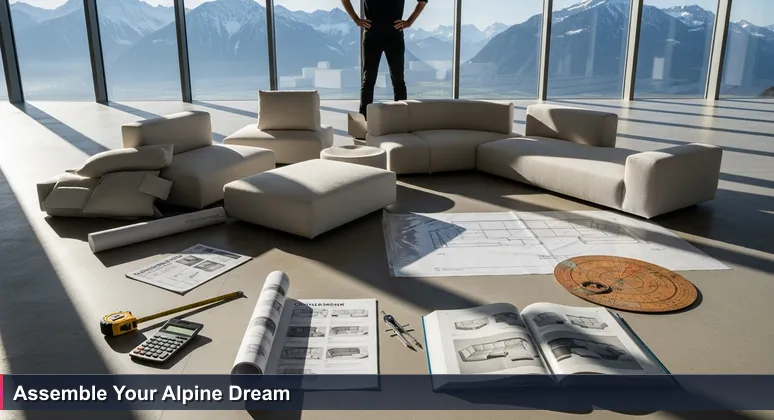
Yet, the moment of truth arrives when you unpack that dream on the floor of reality. You're surrounded by the individual, complex components of cost: housing, taxes, insurance, and commuting logistics. The simple question, "Can I afford it?" suddenly feels as daunting as assembling premium furniture with an incomplete manual.
The challenge is not the salary itself but assembling a sustainable life from the pieces. A critical, often overlooked, component is that over 57% of Liechtenstein's workforce commutes from neighbouring Switzerland or Austria. This isn't a fallback plan; for many tech professionals, it's the essential first step in the assembly process, dictated by a small housing market and strict residency quotas.
True affordability here is an exercise in strategic assembly. It requires measuring your net income against the true cost of the ecosystem. While the cost of living is high, data indicates that the average after-tax salary in Liechtenstein provides coverage for approximately 3.1 months of living expenses, a significantly stronger position than in many other developed nations. The dream is real, but building it requires the right tools and a clear understanding of the instructions.
In This Guide
- Unboxing the Liechtenstein Dream for Tech Pros
- Liechtenstein's 2026 Tech Economy and Salaries
- Housing Costs Across Liechtenstein and Beyond
- Taxes, Insurance, and Mandatory Monthly Costs
- Monthly Budget for Entry-Level Tech Professionals
- Building Comfort on a Mid-Career Tech Salary
- Maximizing Wealth as a Senior Tech Expert
- Pro Strategies to Make Liechtenstein More Affordable
- The Final Verdict on Affording Liechtenstein
- Frequently Asked Questions
This comprehensive guide to AI in Liechtenstein includes pathways and tips for success.
Liechtenstein's 2026 Tech Economy and Salaries
The Economic Powerhouse in a Microstate
Liechtenstein's economy is a unique package of stability, innovation, and global reach. It serves not only as home to industrial and financial champions but also as a progressive gateway to the broader Rhine Valley and Zurich's tech ecosystem. A forward-looking regulatory environment, especially for fintech and digital assets, nurtures a vibrant startup scene alongside corporate giants, creating diverse demand for tech skills from AI to cybersecurity.
2026 Tech Salary Trajectory
Salaries are competitively high to match the cost of living and attract specialized talent. The median for a Software Engineer is approximately CHF 95,000 annually. However, this is just the midpoint. Specialized roles command significant premiums, with senior positions in high-demand fields reaching between CHF 113,500 and CHF 367,900. Entry-level roles (0-2 years experience) typically start between CHF 70,000 and 85,000, making the initial affordability calculation more sensitive.
A defining feature of the labour market is the cross-border reality. Over 57% of the workforce commutes from Switzerland or Austria. This isn't an anomaly but a fundamental strategy, as the small local housing market and a strict annual quota on residence permits for foreigners make cross-border living a practical, often essential, component of a tech career here.
Housing Costs Across Liechtenstein and Beyond
In the budget assembly for Liechtenstein, housing is the foundational floor - it must be solid and level. The principality's rental market is small, high-quality, and expensive, with clear geographic tiers. For many, the most pragmatic solution lies just across the border, turning the Rhine River into a strategic financial tool rather than a barrier.
| Municipality / Town | Type / Tier | Description & Commute | Price Range (Monthly) |
|---|---|---|---|
| Vaduz & Schaan | Premium In-Country | The capital and primary commercial hub (home to Hilti). Central, modern apartments. | CHF 2,000 - 2,500+ for ~85m² |
| Triesen & Balzers | Balanced In-Country | Southern municipalities offering suburban feels and excellent alpine views. | CHF 1,600 - 2,100 |
| Eschen & Gamprin | Value In-Country (Unterland) | Northern, flatter region offering the best value within the principality. | CHF 1,400 - 1,800 for a 3-room apartment |
| Buchs SG, Switzerland | Cross-Border "Hack" | Directly across the Rhine; a major commuter hub with its own growing high-tech campus. Swiss G-permit for EU/EFTA nationals. | CHF 1,350 - 1,650 for a 3.5-room apartment |
| Feldkirch, Austria | Cross-Border Trade-Off | Offers the most significant rental savings, but higher Austrian income taxes offset gains. | Significantly lower than Liechtenstein |
This table reveals the core strategy: living within Liechtenstein requires aligning your apartment with your salary tier, while the cross-border option, particularly in Buchs, often provides more space for less money. The choice fundamentally shapes your monthly budget and net financial outcome.
Taxes, Insurance, and Mandatory Monthly Costs
Beyond the headline salary, the structural integrity of your budget depends on understanding the screws and brackets: taxes, social security, and mandatory insurance. These are the non-negotiable costs that determine your actual take-home pay. Liechtenstein's famous low-tax advantage is a key selling point, but it operates within a specific framework alongside fixed monthly obligations.
The Tiered Tax Advantage
The income tax system combines a national rate (0%-8%) with a municipal multiplier, typically between 150% and 180%. This results in an effective total tax rate ranging from about 2.5% to a maximum of 22.4%. For a high earner, this is dramatically lower than in neighbouring Switzerland or Austria, making it a powerful wealth-accumulation tool, as detailed in guides on the Liechtenstein payroll structure.
Social Security and the Health Insurance Imperative
As an employee, you contribute approximately 5.2% to 5.5% of your salary toward state pension (AHV), disability (IV), and unemployment (ALV) insurance. A critical, fixed monthly cost is basic health insurance, which employers rarely cover. Every resident must purchase it privately. For 2026, the average premium is around CHF 393 per month, though many adults pay CHF 465 or higher. This is a constant line item, independent of salary fluctuations, a fact underscored by the Swiss Federal Office of Public Health's premium FAQs.
Monthly Budget for Entry-Level Tech Professionals
For the entry-level tech professional, building a life in Liechtenstein is an exercise in precision budgeting. With a gross salary averaging CHF 85,000 (approximately CHF 7,083 monthly), the assembly requires conscious trade-offs. After taxes and social security, the net take-home pay is about CHF 5,800 per month, making every franc count.
The realistic housing choice is in the northern Unterland municipalities like Eschen or Gamprin, where a 3-room apartment costs around CHF 1,600. Adding mandatory health insurance (CHF 465), groceries (with savvy cross-border shopping in Austria), and modest leisure expenses, the estimated monthly surplus is roughly CHF 1,237. This slim buffer means forgoing a car and relying on the excellent, subsidized LIEmobil bus network.
This tier is challenging but feasible with disciplined choices. The financial tightrope is partly due to the principality's strict residency permit quota, which pushes many at this career stage toward the cross-border model. Living in Austrian Feldkirch can be a financial lifeway, trading a higher tax bite for significantly lower rent to improve cash flow.
Building Comfort on a Mid-Career Tech Salary
Reaching the mid-career bracket, with a gross salary of around CHF 120,000, transforms the Liechtenstein equation from feasible to comfortable. This translates to a monthly net take-home pay of approximately CHF 8,000, providing the financial space to assemble a balanced and enjoyable alpine lifestyle without constant budgetary strain.
At this level, you can afford a good-sized 3.5-room apartment with a view in municipalities like Triesen or Balzers, or a modest flat in Schaan, with rents around CHF 2,000. You have the flexibility to run a car for convenience, budget for dining out and fitness, and still save or invest a substantial amount - estimated at CHF 2,735 monthly. The cross-border choice evolves from necessity to lifestyle preference, such as opting for a larger house in Austria.
This comfort tier is where professionals can fully engage with the region's opportunities, from the innovative projects at major employers to the growing tech salary premiums for specialized skills. The favourable tax regime acts as a powerful accelerator for wealth building, making the strategic use of both the excellent public transport and private vehicle a realistic part of the monthly budget.
Maximizing Wealth as a Senior Tech Expert
For senior and specialist tech experts commanding gross salaries of CHF 160,000 and above, Liechtenstein transitions from a place to live to a powerful platform for wealth maximization. With a monthly net take-home pay exceeding CHF 10,500, the principality's unique economic model works decisively in your favor.
The core of this advantage is the low effective tax rate, which caps at 22.4%. This allows for exceptional net retention of a high gross income. As detailed in the Liechtenstein payroll guide, this favorable structure means a senior expert can allocate a significant portion of their income - potentially CHF 4,300 or more monthly - toward savings, investments, or premium lifestyle components, rather than to taxes.
This financial leverage affords premier living within the principality, such as a spacious apartment in central Vaduz or Schaan, while still accommodating substantial expenses for family, travel, and leisure. At this level, the trade-off is less about financial feasibility and more about personal preference for a close-knit, high-caliber community versus the anonymity of a larger metropolitan area.
Pro Strategies to Make Liechtenstein More Affordable
The standard manual for affording Liechtenstein is basic; true pros use a strategic toolkit. The most powerful lever is treating the entire Rhine Valley as your living space. Don't view commuting as a compromise, but as a strategic financial calculation. Compare the net income after Swiss or Austrian taxes against significantly lower rents - for many, living in Buchs SG offers the optimal sweet spot of Swiss stability, an easy commute, and access to its own high-tech campus.
Master the Logistics and Negotiate
Conquer the tiny housing market by starting your search early on platforms like Immoscout24 and leveraging your new company's internal network - many flats are passed on through word-of-mouth. During salary negotiations, understand that employers are familiar with high costs. Holistically discuss not just base salary but potential relocation assistance, commuting allowances (like an annual Swiss travel pass), or contributions toward supplementary insurance.
Leverage Systems and Invest in Yourself
Embrace the excellent, subsidized LIEmobil bus network. Residents often get 50% of their annual pass reimbursed by their municipality, making unlimited national travel essentially CHF 185 per year - a massive saving over car ownership. Ultimately, the most powerful strategy is increasing your earning potential before you move. Targeted upskilling is a direct investment in your budget. For professionals in the Rhine Valley, accessible programs like Nucamp's 16-week Back End bootcamp (~CHF 1,950) provide the focused, affordable path to the higher salary brackets that make Liechtenstein comfortably affordable.
The Final Verdict on Affording Liechtenstein
Returning to our unboxed sofa, now ideally assembled in a sunlit room with an alpine view, the final verdict on affording Liechtenstein is a nuanced but definitive yes - provided you are a strategic assembler. True affordability here is not about the headline salary price tag but about expertly fitting all components into a stable, functional life.
For Entry-Level Professionals, it is challenging but possible with disciplined budgeting, a willingness to live modestly in the Unterland or with roommates, and likely forgoing a car. The savings buffer is slim, making the cross-border option from Austria a practical lifeway at this stage.
For Mid-Career Professionals, the answer shifts to a comfortable yes. You can enjoy the quintessential Liechtenstein quality of life - a nice apartment, a car, travel, and dining - while building robust savings, turbocharged by the favourable tax regime.
For Senior & Specialist Professionals, the principality becomes a powerful platform for wealth accumulation. You can fully leverage its low-tax advantage, enjoy a premium lifestyle, and achieve significant financial growth. Your choice is less about cost and more about community preference.
The pieces for a prosperous tech career in the heart of the Alps are all here, from the innovative corporate giants to the growing startup scene. By understanding the real costs, embracing strategic tools like cross-border living, and measuring your net income against the full ecosystem, you can move from being surrounded by daunting components to enjoying the completed, rewarding build.
Frequently Asked Questions
Can I actually afford to live in Liechtenstein on a tech salary in 2026?
Yes, but it depends on your career stage. Entry-level roles around CHF 85,000 require tight budgeting and may mean living in affordable areas like Eschen, while mid-career salaries of CHF 120,000 allow comfort, and senior positions offer a premium lifestyle with high savings thanks to Liechtenstein's low taxes.
What tech salaries can I expect in Liechtenstein, especially for beginners?
In 2026, entry-level tech roles with 0-2 years experience average CHF 70,000 to CHF 85,000 annually. With experience, median salaries for software engineers hit around CHF 95,000, and specialized fields like AI can see senior roles earning between CHF 113,500 and CHF 367,900.
How expensive is housing in Vaduz compared to other parts of Liechtenstein?
Vaduz and Schaan are premium areas with rents for a 3.5-room apartment reaching CHF 2,000-2,500 per month. For better value, consider municipalities like Triesen or Balzers at CHF 1,600-2,100, or Eschen and Gamprin in the north at CHF 1,400-1,800, which are more suitable for entry-level budgets.
How do taxes in Liechtenstein compare to Switzerland or Austria for tech workers?
Liechtenstein offers a significant tax advantage, with effective rates ranging from about 2.5% to 22.4%, much lower than in neighboring Switzerland or Austria. This means higher net income, especially beneficial for mid to senior professionals earning over CHF 120,000.
Should I consider living in Buchs SG or Feldkirch instead of Liechtenstein to save money?
For many tech workers, cross-border living is a smart strategy. Buchs SG in Switzerland offers rents around CHF 1,350-1,650 and an easy commute, while Feldkirch in Austria has even lower rents but higher taxes, making it a trade-off to weigh based on your salary and lifestyle preferences.
Explore non-degree tech pathways in the Alpine region for 2026 to advance your career.
This article answers the question: Is Liechtenstein good for a tech career in 2026? with data and analysis.
Discover the top 10 industries hiring AI talent in Liechtenstein beyond Big Tech in 2026 for strategic career insights.
This article provides a detailed look at information security employment opportunities in Liechtenstein for next year.
Find out how to access funding for tech bootcamps in Liechtenstein in 2026 through various channels.

Irene Holden
Operations Manager
Former Microsoft Education and Learning Futures Group team member, Irene now oversees instructors at Nucamp while writing about everything tech - from careers to coding bootcamps.