









Cost of Living vs Tech Salaries in Honolulu, HI in 2026: Can You Actually Afford It?
By Irene Holden
Last Updated: March 7th 2026
Key Takeaways
Yes, you can afford Honolulu in 2026 on a tech salary, but it hinges on your income level, with mid-career professionals earning around $125,000 living comfortably while entry-level roles at $80,000 face tight budgets and trade-offs like shared housing. Key to thriving is targeting competitive sectors like defense tech or remote work, as housing in prime areas costs over $3,200 monthly, but strategic choices can make the paradise tax manageable for those in higher-paying roles.
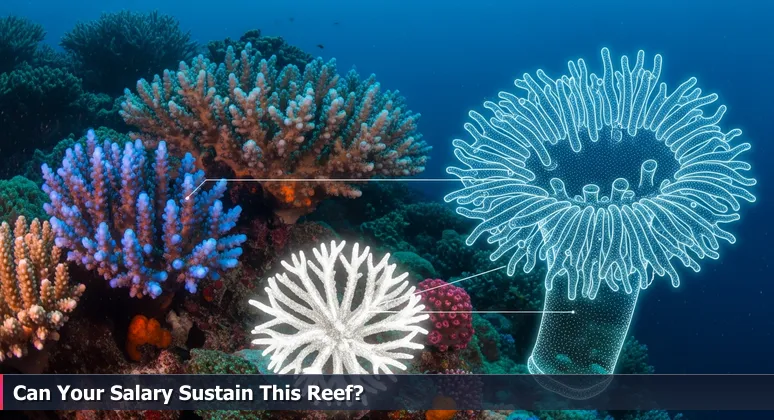
You're snorkeling off the coast of Honolulu, immersed in the breathtaking complexity of a coral reef. It's a vibrant system of interconnected life, a delicate balance of temperature, nutrients, and symbiosis. That silent patch of bleached, white coral amidst the thriving color is the central question for every tech professional considering a move here. Is the professional ecosystem you're entering a thriving reef, or is it showing early signs of distress?
The ecosystem of your career here depends on a similar, precise balance. The "temperature" is your tech salary. The "nutrients" are your take-home pay after Hawaiʻi's unique costs. A shift of just a few degrees - a salary that doesn't match the living expenses - can lead to financial bleaching, a slow drain that forces tough choices. According to a living wage calculation for Honolulu County, a single professional needs over $80,000 annually just to cover basic necessities, highlighting the fragile baseline.
Diagnosing this ecosystem's health requires looking beneath the surface beauty. The overall cost of living is approximately 86% higher than the national average, creating a "paradise tax." Yet, a 2026 comparison reveals a crucial insight: a $150,000 tech salary often goes further in Honolulu than in San Francisco, primarily due to lower housing costs. The vital signs are mixed, and your success depends on reading them correctly.
To assess the reef's vitality, focus on these key metrics:
- The balance between your projected salary and the 32% higher grocery costs.
- The impact of Hawaiʻi's progressive state income tax, which can claim up to 11% of your earnings.
- The stark reality that Honolulu was ranked #100 out of 100 U.S. metro areas for STEM worker housing affordability versus median wage.
This isn't just about lining up two numbers. It's about understanding if the conditions support growth or signal a slow, unsustainable bleed. The following sections will equip you to read these vital signs and make your diagnosis.
In This Guide
- Is Honolulu's Tech Ecosystem a Thriving Reef?
- Mapping Honolulu's Housing Costs: Urban vs. Suburban
- The Paradise Tax: Food and Transportation in Honolulu
- Deeper Financial Currents: Taxes and Healthcare
- Tech Salary Thermometer: What You Can Earn in 2026
- Vital Sign: The Stressed Entry-Level Budget
- Vital Sign: The Balanced Mid-Level Budget
- Vital Sign: The Thriving Senior Budget
- Strategic Symbiosis: How to Make Honolulu Work for You
- The Final Diagnosis: Can You Afford Honolulu in 2026?
- Frequently Asked Questions
Navigate the AI job market in Honolulu with this complete guide.
Mapping Honolulu's Housing Costs: Urban vs. Suburban
Charting Honolulu's housing terrain is your first critical task, as where you drop anchor dramatically changes your financial exposure. The cost isn't a monolith but a varied landscape of high peaks and deep valleys, with rental data showing a clear gradient from the urban core to the suburban expanses. This longitudinal analysis of rent affordability underscores how neighborhood choice impacts economic stability.
| Neighborhood Type | Key Areas | Monthly Rent (1BR) | Trade-off & Strategy |
|---|---|---|---|
| Premium Urban Core | Kakaʻako / Ward Village | $3,200 - $3,555 | Modern, walkable "live-work-play" epicenter; highest cost for maximum convenience. |
| Established Urban | Waikīkī, Mānoa, Downtown | $1,421 - $3,010 | Range from tourist-dense (Waikīkī) to residential/academic (Mānoa) to affordable urban (Downtown). |
| Suburban "Second City" | Pearl City, Kapolei | $1,550 - $3,080 | 20-30% savings on rent for significantly more space, traded for a 30-60 minute commute. Ideal for remote-flexible workers. |
This stratification means for the price of a studio in Kakaʻako, you can secure a larger one-bedroom in Kapolei. The suburban option, particularly for tech workers with hybrid schedules, transforms a potential cost sink into a livable budget line. As discussed in local forums like community housing groups, budgeting for a 2-bedroom to share with a roommate in these areas (costing $1,400-$1,800 per person) is a prevalent and effective cost-saving adaptation.
The strategic choice hinges on your salary and tolerance for commute. The urban core offers proximity to innovation hubs in Kakaʻako and networking spaces, while the suburbs provide the financial breathing room essential for building savings or enjoying island life.
The Paradise Tax: Food and Transportation in Honolulu
The "paradise tax" flows persistently through your grocery cart and gas tank, creating currents that can erode even a solid salary. Import dependency is the primary driver, making everyday essentials significantly more expensive than on the mainland.
For food and groceries, costs run about 32% higher than the national average. A single person who cooks at home can expect a realistic monthly budget of $500, before accounting for any dining out. This aligns with basic cost calculations for the county. Dining in tech hubs like Kaka'ako adds another layer, with lunch options typically costing $12-$18, while tourist-heavy Waikīkī can inflate prices to $18-$25 for the same meal.
Transportation presents another critical choice. Car ownership is expensive, with gas prices fluctuating between $4.40 and $5.20 per gallon and full coverage insurance adding $120-$180 monthly. In contrast, Honolulu’s public transit offers a strategic lifeline. By 2026, a monthly HOLO card pass for TheBus and the expanding Skyline rail is set to cost around $90.
The most symbiotic approach for many tech workers is a hybrid model. Using transit for daily commutes to areas like Downtown or Kaka'ako and relying on a shared car or ride services for weekends and errands can save $400-$850 per month compared to full car ownership. As noted in local cost analyses, this conscious trade-off is key to managing the island's unique financial currents.
Deeper Financial Currents: Taxes and Healthcare
Beneath the visible costs of housing and groceries, two powerful currents exert sustained pressure on your take-home pay: Hawaiʻi's tax structure and healthcare costs. These are the deep-water factors that can quietly strain your financial ecosystem.
Hawaiʻi maintains one of the highest progressive state income taxes in the U.S., with rates climbing to 11% for top earners. This directly reduces the nutrients flowing into your budget compared to states with no income tax. The effective tax burden is substantial, as illustrated by detailed income analyses for the region. For a tech professional earning $125,000, the combined federal, state, and FICA taxes can claim over 22% of gross income, resulting in a monthly net of approximately $7,950.
Healthcare presents another significant pressure. Premiums in Honolulu are 22-28% above the national average, with a typical monthly silver plan on the marketplace costing around $600. This makes employer-sponsored healthcare not just a benefit but a financial necessity. Fortunately, the local economy is anchored by major healthcare providers like Queen's Health Systems and Kaiser Permanente Hawaii, which are also major employers offering competitive tech roles in health IT and data analytics, often with heavily subsidized insurance plans.
For tech workers, securing a position with robust benefits at a major institution or a defense contractor supporting U.S. Indo-Pacific Command is a key strategy for mitigating this deep financial pressure. Without such coverage, the high cost of care can quickly erode the disposable income that makes island life sustainable.
Tech Salary Thermometer: What You Can Earn in 2026
To measure the health of Honolulu's professional ecosystem, you must read the "temperature" generated by its tech job market. The data for 2026 reveals a stratified water column, with significant variation between specialized, high-paying roles and more generalist positions.
| Role | Median / Average Salary (2026) | Market Context |
|---|---|---|
| Software Engineer | $133,028 - $134,138 | Core tech role with competitive pay, often found in defense, health tech, and local startups. |
| IT Specialist | $84,280 - $111,400 | Broad range reflecting support roles across major employers like the State, utilities, and healthcare systems. |
| Data Scientist | ~$179,000 (Average) | High-demand specialization, with premiums for roles in security analytics at defense contractors or patient data at health networks. |
| Engineering Manager | ~$437,800 (Average) | Leadership roles commanding top-tier compensation, often tied to managing remote teams or complex defense tech projects. |
These figures, sourced from local and national aggregators like Levels.fyi, tell a dual story. There is a thriving layer of high-paying roles, yet the median for many core positions can lag behind the cost of living. This creates what University of Hawaiʻi professor Steven Bond-Smith calls a "toxic economic brew" of high prices and stagnating local incomes, a sentiment echoed in local economic reporting.
The most telling vital sign is a 2026 national ranking that placed Honolulu #100 out of 100 metro areas for STEM worker housing affordability versus median wage. This indicates that while absolute salaries exist, their purchasing power in the local ecosystem is severely challenged, making strategic career positioning essential.
Vital Sign: The Stressed Entry-Level Budget
For an entry-level tech professional earning a gross salary of $80,000, the Honolulu ecosystem presents a fragile environment. After Hawaiʻi's significant state income tax and other deductions, the monthly net pay dwindles to approximately $5,233, creating an immediate tightrope walk between income and essential costs.
A sustainable budget requires immediate, significant trade-offs. Housing must be secured in the suburban shoals of Kapolei or through shared housing in Pearl City, with rent targeted at $1,550. A car is a considerable burden, but a stripped-down budget for payment, insurance, and gas might be held to $500. Groceries, leveraging cost-saving strategies, still command around $650 monthly. After accounting for utilities, insurance, and a minimal healthcare contribution, only about $1,650 remains for everything else - savings, emergencies, and any discretionary spending.
This scenario demands disciplined adaptation. As noted in local Reddit discussions, budgeting at this level is "real" and often requires living like a "monk" or committing to roommates to build any financial cushion. The savings rate is perilously thin at roughly 7% of net income, offering little resilience against unexpected expenses or economic shifts.
The diagnosis is clear: Stressed but Surviving. Affordability is achieved through sacrifice - a long commute, minimal lifestyle spending, and shared living spaces. While survival is possible, the ecosystem provides minimal margin for error, making financial growth and security a considerable challenge at this entry point.
Vital Sign: The Balanced Mid-Level Budget
At a gross salary of $125,000, the ecosystem's conditions shift dramatically toward balance. After federal and Hawaiʻi's progressive state taxes, the monthly net income reaches approximately $7,954, providing the nutrients needed for a stable and enjoyable professional life.
This income opens access to established urban neighborhoods like Mānoa or a nicer one-bedroom in Pearl City, with a realistic rent budget of $2,400. You can maintain a car with a higher comfort and safety margin, allocating around $700 for payments, insurance, and fuel. A generous grocery and food budget of $850 accommodates both home cooking and regular dining out, with an additional $500 specifically for enjoying Honolulu's restaurant and entertainment scene.
After covering utilities, healthcare, and personal expenses, this scenario leaves a robust $3,000 each month for savings, investments, and travel. As financial decodings of a $125k salary illustrate, this level of income transforms affordability. The savings rate is a healthy 17-19% of net income, enabling meaningful financial growth.
The diagnosis is Healthy & Balanced. This salary represents the sweet spot for a comfortable, professional single life in Honolulu. You can fully participate in the local lifestyle while building a secure future, embodying the common local observation that this range is "comfortable" but "not rich." It aligns perfectly with the living wage thresholds for the county, providing a buffer above mere survival.
Vital Sign: The Thriving Senior Budget
At a gross salary of $180,000, you transition from a participant to an apex predator in Honolulu's professional ecosystem. With a monthly net income of approximately $11,340 after taxes, you command the resources to not just live but to fully leverage the island's unparalleled lifestyle while building substantial wealth.
This financial stratum supports a premium habitat - a one- or two-bedroom in the vibrant, modern cores of Kakaʻako or Ward Village, with a housing budget of $3,500. A robust car allowance, high-quality groceries, comprehensive utilities, and healthcare are easily absorbed. Critically, you can allocate over $1,400 monthly for lifestyle and travel, turning Honolulu into a launchpad for Pacific exploration while still enjoying its finest dining and activities.
The most significant vital sign is the remaining $3,840 for savings and investments each month, representing a powerful savings rate of 25-31%. This financial capacity far exceeds the local living wage thresholds and even the $156,395 income required to afford a median Honolulu home, providing true economic security and growth potential.
The diagnosis is unequivocally Thriving. This level is typical for senior engineers, engineering managers, or professionals working remotely for high-paying mainland firms. It allows you to invest deeply in the innovation hubs and networking spaces of Kakaʻako while enjoying the work-life balance that defines the island's value proposition. Your financial temperature is perfectly aligned to prosper within this unique ecosystem.
Strategic Symbiosis: How to Make Honolulu Work for You
Merely diagnosing the ecosystem isn't enough; thriving requires strategic symbiosis. The most successful tech transplants actively adapt their careers and lifestyles to create a sustainable balance with Honolulu's unique environment.
First, pursue the remote work algae strategy. Securing a role at a mainland company before moving fundamentally changes the equation. As cost comparisons show, a $150,000 tech salary goes significantly further in Honolulu than in San Francisco, primarily due to lower housing costs. This flips the script, transforming the city into a relative value proposition while you earn a coastal salary.
Second, embrace local housing adaptations. Multi-generational living is a cornerstone of local affordability. For transplants, this translates to seriously considering shared housing with roommates, especially early in your tenure. Sharing a two-bedroom in areas like Kapolei can cost $1,400-$1,800 per person versus $2,000+ for a solo one-bedroom, freeing up crucial cash flow.
Third, navigate toward the strongest innovation currents. Target employers in sectors offering competitive local pay: defense tech supporting U.S. Indo-Pacific Command, health tech at major systems like Queen's or Kaiser, and travel tech serving the tourism industry. These sectors cluster in innovation hubs like Kakaʻako, supported by shared offices and coworking spaces that foster essential networking.
Finally, approach homeownership with clear-eyed realism. The dream often represents the reef's bleached patch. To afford a median home required an income of approximately $156,395 in 2026, while the median household earned only $115,665. Bridging this gap typically demands the high savings rate of a senior-level budget or dual high incomes, making it a long-term goal rather than an immediate expectation.
The Final Diagnosis: Can You Afford Honolulu in 2026?
The ultimate question receives not a simple yes or no, but a stratified diagnosis based on your position in the ecosystem. For the entry-level tech worker earning around $80,000, the environment is fragile; survival requires significant trade-offs like roommates and long commutes, offering minimal financial resilience. For the mid-level professional in the $100k-$150k range, the ecosystem is healthy and supportive, enabling a comfortable lifestyle in pleasant neighborhoods with solid savings. For senior or remote workers above $160k, the conditions are not just supportive but enriching, allowing you to fully leverage Honolulu's lifestyle while maintaining robust financial growth.
Critically, Honolulu's value proposition is distinct. It is not a cheaper San Francisco, but a different ecosystem entirely. While experts at the University of Hawaiʻi Economic Research Organization (UHERO) note its challenging economic profile, comparative analysis shows it is approximately 10-20% more affordable than the Bay Area, though unique pressures from high taxes and import costs persist. You pay a "paradise tax" not for a dense metro of tech giants, but for a balanced life in a culturally rich, strategically connected Pacific hub.
Therefore, the final diagnosis hinges on alignment. Can you afford Honolulu? You can if your salary meets the ecosystem's demands. The most telling warning sign remains the stark gap between the $156,395 income needed for homeownership and the median household income of $115,665. Yet for the right tech professional - one who secures a competitive salary through remote work, targets high-paying local sectors, and adopts strategic living arrangements - the reef isn't just surviving. Your informed choices can make it a place where both career and life don't just persist, but profoundly thrive.
Frequently Asked Questions
Can I actually afford to live in Honolulu on a tech salary in 2026?
It depends on your salary level. For entry-level tech workers earning around $80k, affordability is tight with high costs, but mid-level professionals at $125k can live comfortably, and senior or remote workers at $160k+ thrive in Honolulu's ecosystem.
What are the average tech salaries in Honolulu, and do they keep up with living expenses?
In 2026, median tech salaries in Honolulu range from $84k for IT Specialists to $179k for Data Scientists. However, Honolulu ranked #100 for STEM housing affordability, indicating a gap with costs like $3,200+ rents in areas like Kakaʻako.
Where's the best place to live in Honolulu for tech workers on a budget?
Consider suburban areas like Pearl City or Kapolei, where rents are around $2,600-$3,100 for more space. This trade-off involves a commute, but it's viable for remote or flexible workers in Honolulu's tech scene.
Which tech industries in Honolulu offer the highest salaries?
Defense tech, health tech, and travel tech sectors pay well, with roles at employers like U.S. Indo-Pacific Command or Queen's Health Systems. Senior positions or remote work for mainland companies can also yield salaries over $180k.
What strategies can help me afford living in Honolulu as a tech professional?
Secure a remote job with a mainland salary, as $150k goes further here than in San Francisco. Also, consider shared housing and target high-paying local industries, leveraging Honolulu's strategic proximity to Asia-Pacific markets.
Understand the 2026 AI career landscape in Honolulu and how local industries are leveraging talent.
Explore how to become an AI engineer in Honolulu, HI in 2026 with this step-by-step guide.
For junior developers in Honolulu, HI looking for tech jobs in 2026, this list is essential.
Understand how AI salary structures vary by experience in Honolulu with this resource.
Read the ultimate guide to Honolulu's AI scene in 2026 for insider tips.

Irene Holden
Operations Manager
Former Microsoft Education and Learning Futures Group team member, Irene now oversees instructors at Nucamp while writing about everything tech - from careers to coding bootcamps.