









The Complete Guide to Starting an AI Career in Wichita, KS in 2026
By Irene Holden
Last Updated: April 1st 2026
Key Takeaways
Starting an AI career in Wichita, KS in 2026 is highly feasible by focusing on in-demand roles like AI or Machine Learning Engineer, where salaries average $132,943 and are driven by local aerospace and manufacturing leaders. The city's lower cost of living, central U.S. location, and proximity to employers like Koch Industries make it a strategic choice for aspiring professionals. Leverage resources like Wichita State University or bootcamps to build the hands-on skills needed for success in this growing field.
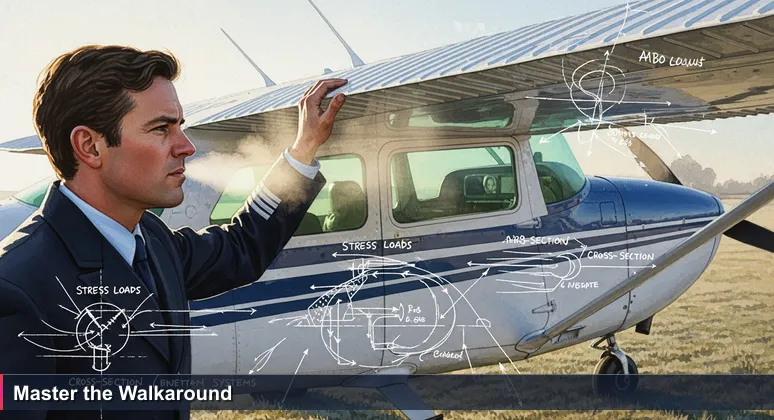
The pre-flight walkaround at McConnell Air Force Base or for a Textron Aviation pilot isn't a cursory glance; it's a ritual of deep inspection, a tactile understanding of the complex systems that enable flight. This exact mindset - shifting from a passive passenger to an engineer who understands the machinery from the rivets out - defines what it takes to launch an AI career in 2026.
The industry's frustration is palpable: while basic AI fluency is now expected, a critical gap exists between those who can follow a tool's checklist and those who can architect the intelligent systems beneath the interface. Data from Pave underscores this shift, showing the percentage of companies employing dedicated AI engineers surged from 2.7% in 2023 to 8.4% by early 2026. The message from employers is clear: they need builders, not just users.
This fundamental change is echoed by local IT leaders. Bill Ramsey, CISO at Market Advisory Group, observes that "AI is fundamentally altering everyday workflows for established IT professionals," indicating that for newcomers, mastery defines the entry gate. As noted in a recent Wichita Eagle report on the jobs of the future, the roles that matter are those that build and implement.
In Wichita, this revolution isn't about generating marketing copy or clever chatbot prompts. It's about Embedded Intelligence - welding AI as a critical subsystem into the physical world of factories, finance, and aircraft. Your career path becomes clear: aim not for superficial AI fluency, but for the engineering discipline that can take a model from a Jupyter notebook to the production floor at Spirit AeroSystems or into the autonomous systems at Textron Aviation.
In This Guide
- From AI Tourist to Engineer: The Walkaround
- Why Wichita is the AI Hub for 2026
- Top AI Career Paths in Wichita's 2026 Market
- Salary Benchmarks for AI Roles in Wichita
- Essential Skills for AI Engineers in 2026
- The Game-Changer: Context and Prompt Engineering
- How to Educate Yourself for an AI Career in Wichita
- Wichita's Major Employers Driving AI Innovation
- Your Action Plan to Land an AI Job in 2026
- Conclusion: Your Future in Wichita's AI Revolution
- Frequently Asked Questions
The Wichita developer community includes alumni working at Spirit AeroSystems, Textron Aviation, Koch-related firms, and regional startups.
Why Wichita is the AI Hub for 2026
Wichita is undergoing a quiet but profound transformation, positioning itself as a unique hub for applied artificial intelligence. The landscape here is defined by "hands-on" integration into the city's foundational aerospace and advanced manufacturing sectors, moving beyond theoretical research into production-ready deployment.
The city's structural advantages create an exceptionally fertile ground for career growth. A competitive tech salary in Wichita affords a significantly higher quality of life compared to coastal hubs, enabling professionals to invest in continued education or build substantial savings. Its central U.S. location offers strategic logistical benefits and facilitates collaboration across time zones with national partners.
Most critically, professionals are at the epicenter of applied AI innovation. Proximity to industry titans like Koch Industries, Spirit AeroSystems, and Textron Aviation means working on problems where AI directly impacts mission-critical applications. This industrial demand is catalyzing a vibrant startup ecosystem, evidenced by initiatives like the 2026 GenAI Pitch Contest at WSU, which awarded $75,000 to scale local AI ventures.
Local experts confirm 2026 as a turning point where AI competency has become the baseline. "Jobs are still available," notes Wichita State University's Cody Farlow, "but the expectation from our industry partners is that new engineers can appropriately use AI tools to support parts, projects, and day-to-day tasks." Furthermore, this integration is seen as a tool for growth, not displacement, with data showing that 82% of small businesses using AI in the region actually increased their workforce in the past year.
Top AI Career Paths in Wichita's 2026 Market
The local job market has matured beyond general software roles to specialized AI positions with clear trajectories. The specialization reflects Wichita's industrial needs, where AI is integrated into physical systems and complex workflows.
AI Engineer: The Integration Specialist
This has become the most anticipated role in 2026. The focus is less on creating novel algorithms and more on the critical task of integrating and optimizing existing large language models (LLMs) and AI frameworks into scalable, intelligent products for enterprises. These professionals bridge the gap between research and reliable application.
Machine Learning Engineer: The Production Backbone
MLEs design, build, and deploy the scalable pipelines that put models to work. Local demand for this role is projected to grow 22-31% through 2030, as they ensure models function reliably in real-world settings like a factory floor or financial system. They are the essential engineers of production AI.
AI/ML Research Scientist & Emerging Specialties
For those pushing algorithmic boundaries, the Research Scientist path often requires an advanced degree and involves work on next-generation problems in computer vision or predictive maintenance within corporate R&D. The market also shows maturation through niche roles like AI Adoption Program Managers, AI Ethics Advisors for responsible deployment, and specialized Data Annotators for high-stakes fields like aviation safety, reflecting the depth of AI integration at Wichita State University and beyond.
This specialization is a direct response to employer needs. As highlighted in discussions on the growing demand for AI talent, companies are seeking experts who can translate capability into concrete business and engineering outcomes, a skillset perfectly aligned with Wichita's industrial core.
Salary Benchmarks for AI Roles in Wichita
Salaries in Wichita for AI and ML roles are highly competitive, reflecting the premium that major aerospace, manufacturing, and financial firms place on this technical expertise. The compensation packages acknowledge the specialized skill required to deploy AI in mission-critical, industrial environments.
| Role | Average Annual Salary | Typical Range & Notes |
|---|---|---|
| Machine Learning Engineer | $132,943 | Top earners at major firms can reach over $201,370, according to ZipRecruiter salary data for Wichita. This role commands the highest premium due to its focus on production systems. |
| AI Engineer | $92,089 | Typically ranges between $59,000 and $118,500 for professionals focused on the integration and deployment of existing AI models into products and workflows. |
| Graduate Entry-Level | $65,000 - $80,000 | Technical degree holders in computer science or engineering from institutions like Wichita State University often secure strong starting salaries in this band, reflecting the baseline expectation of AI competency. |
These figures underscore Wichita's position as a serious tech market. When combined with the city's significantly lower cost of living, the financial upside and quality-of-life advantage become substantial, enabling professionals to build wealth while working on cutting-edge industrial applications. The competitive pay is a direct response to the surging demand for specialized talent capable of moving AI from prototype to production.
Essential Skills for AI Engineers in 2026
Transitioning from AI theory to the factory floor in Wichita requires a specific and evolving toolkit. In 2026, the essential skill set is firmly anchored in core engineering fundamentals that enable the building of reliable, production-grade systems.
Programming & Mathematical Foundations
Proficiency in Python remains the absolute cornerstone, with deep familiarity in data libraries like Pandas and NumPy. Complementing this, knowledge of R for statistical analysis, SQL for database management, and cloud platforms like AWS or Azure is a major advantage. Underpinning all of this is a solid grasp of linear algebra, calculus, and statistics - the mathematical language of machine learning.
ML Frameworks & Model Development
Hands-on experience with core frameworks is non-negotiable. Mastery of TensorFlow and PyTorch for building, training, and fine-tuning models is expected. This includes understanding neural network architectures, loss functions, and optimization techniques relevant to industrial applications like computer vision for part inspection or time-series forecasting for predictive maintenance.
Data Infrastructure & MLOps
An AI engineer in Wichita must understand the full lifecycle. This means building robust data pipelines, using version control (Git) for code and models, and applying basic Machine Learning Operations (MLOps) principles. These skills ensure models can be reliably deployed, monitored, and updated in real-world settings, which is critical for the mission-critical work at companies like Spirit AeroSystems or Koch Industries. Local initiatives like those from Wichita State University's Responsible AI@ICT group further emphasize the need for skills that encompass both technical deployment and ethical considerations.
The Game-Changer: Context and Prompt Engineering
Beyond core programming and model development, a new layer of skills has emerged as the definitive differentiator for high-impact AI roles in 2026. While prompt engineering - the craft of designing effective instructions for generative AI - is valuable, the true game-changer is its more sophisticated counterpart: context engineering.
This discipline moves beyond crafting clever chatbot queries to architecting the entire informational ecosystem that guides an AI system. It involves strategically curating the data, defining precise parameters, and structuring system instructions to ensure reliable, actionable outputs for complex industrial problems. For instance, feeding an AI the right context could mean providing它不仅包括详细的工程规范,还包括材料科学数据、历史故障模式和实时传感器输入,以准确预测飞机部件的维护需求。
In Wichita's landscape of embedded intelligence, this skill is invaluable. It's what enables an engineer at Koch Industries to build a hybrid model that faithfully combines first-principles physics with machine learning, or allows a team at Textron Aviation to ensure an autonomous system interprets sensor data correctly under variable flight conditions. Professionals who master context engineering command a premium because they ensure AI acts as a reliable partner in high-stakes environments.
This advanced competency is being actively cultivated through local forums and education. The AI Forums and Workshops series launched at Wichita State University provide a platform for professionals to explore these translational skills, focusing on how to effectively guide AI from prototype to ethical, industrial-scale application. As the field matures, the ability to engineer context, not just prompts, separates the technician from the architect.
How to Educate Yourself for an AI Career in Wichita
Gaining the skills for an AI career in Wichita is a strategic endeavor, with multiple runways tailored to different starting points and goals. The most effective approach combines formal education with hands-on, project-based learning focused on the city's industrial applications.
Academic Integration at Wichita State University
Wichita State University is proactively weaving AI competency across disciplines to enhance marketable skills. Its Artificial Intelligence initiatives are designed to bridge academic theory and industry practice. Crucially, the university's Responsible AI@ICT working group hosts forums and workshops to foster translational research and ethical discussions directly tied to local employer needs, creating a vital link between classroom learning and the factory floor.
Focused Bootcamps for Career Changers
For those seeking targeted, practical skills on an accelerated timeline, focused bootcamps provide an immersive pathway. Programs like Nucamp's 25-week Solo AI Tech Entrepreneur Bootcamp, with tuition around $3,980, concentrate on building AI-powered products and LLM integration - skills directly applicable to Wichita's startup ecosystem and industrial integrator roles. These affordable, community-supported programs create a direct pipeline from learning to application.
Strategic Online Learning & Community Engagement
Supplementing education with targeted online courses and local community involvement is highly effective. Engaging with events like the GenAI Pitch Contest at WSU provides real-world insight into what ventures are securing funding and scaling locally. This combination of structured learning and ecosystem immersion ensures your education is not only technically sound but also contextually relevant to the opportunities emerging on the Plains.
Wichita's Major Employers Driving AI Innovation
Wichita's AI revolution is characterized by Embedded Intelligence - the integration of AI as a core subsystem into the physical world of manufacturing, finance, and aerospace. The city's major employers are not experimenting with AI in the abstract; they are deploying it to solve mission-critical problems with tangible impact.
| Employer | Key AI/ML Focus Areas |
|---|---|
| Spirit AeroSystems | AI-driven manufacturing inspection & automation, utilizing laser radar and AI for real-time, 100% compliant part verification in its "Factory of the Future." |
| Koch Industries | Developing sophisticated hybrid models that combine first-principles physics with AI for industrial optimization, test automation, and design. The company actively hires for roles like ML/AI Algorithm Engineers to advance these initiatives. |
| Textron Aviation | Robotics, Unmanned Aerial Systems (UAS) engineering, and smart manufacturing, focusing on autonomous navigation software and sensor integration. |
| Deloitte (Wichita) | Building generative AI product experiences and agentic platforms for enterprise clients, representing the growing consulting and financial tech demand. |
| Equity Bank | Applying machine learning for advanced financial data analysis and implementing MLOps practices to operationalize models. |
This industrial application is complemented by a vibrant startup ecosystem. The recent 2026 GenAI Pitch Contest at WSU awarded $75,000 in development services to scale local AI ventures, proving that innovative AI solutions are being built from the ground up right here on the Plains. Together, these established giants and agile startups create a dynamic and demand-driven landscape for AI professionals.
Your Action Plan to Land an AI Job in 2026
The path from interested beginner to hired AI professional in Wichita is a deliberate, phased journey. Follow this actionable, 12-month walkaround to build the skills and connections needed for success.
-
Audit & Foundation (Months 1-3): Honestly assess your starting point. If you lack coding fundamentals, begin immediately with Python. Enroll in a focused local bootcamp or use structured online resources to build core competency. Graduates of such programs see strong outcomes, with employment rates around 78%. Your first milestone: complete a basic Python course and build one simple data analysis script using a public dataset.
-
Specialize & Build (Months 4-9): Choose your specialization lane - AI Integration or ML Systems - and deepen skills through project-based learning. Forge a connection with Wichita State University's applied learning programs or attend the new AI Forums launching in April to gain translational insight. Your key deliverable: build a portfolio project that solves a mini-version of a local industry problem, like a predictive maintenance simulation.
-
Connect & Launch (Months 10-12): Actively engage with the local ecosystem. Attend the GenAI Pitch Contest, participate in workshops, and network with professionals at target companies on LinkedIn. Use AI strategically in your job search, as students in the Shocker Career Accelerator do, to tailor resumes and gain career clarity. Secure an informational interview with a professional at a target employer to bridge the gap between learning and hiring.
This systematic approach aligns with the accelerating market. Data shows the percentage of companies employing dedicated AI engineers jumped from 2.7% in 2023 to 8.4% by early 2026, confirming the tangible opportunity for those with the rigor to prepare. Your action plan turns that opportunity into a career built on Wichita's industrial bedrock.
Conclusion: Your Future in Wichita's AI Revolution
The meticulous pre-flight walkaround leads to one outcome: confident flight. Similarly, the engineering mindset you cultivate transforms AI from a collection of intriguing tools into the intelligent systems powering Wichita's industrial future. Here, your career won't be about chasing the next hype cycle on social media, but about the tangible satisfaction of seeing your code help ensure an aircraft's structural integrity, optimize a billion-dollar chemical process, or guide an autonomous system across the Plains.
This applied revolution is solving real-world challenges. Dustin Burns of McCownGordon Construction identifies AI as a strategic solution to the looming 2030 workforce shortage, using it to "capture expert knowledge and accelerate training," ensuring critical industrial knowledge is preserved and scaled. Furthermore, this integration drives growth, with data showing that 82% of small businesses using AI in the region actually increased their workforce in the past year.
The ecosystem is ready to support this journey. From the translational research and ethics forums at Wichita State University to the collaborative exploration of AI's impact on main street businesses, Wichita provides a grounded, community-oriented environment for building expertise. Your opportunity is to contribute to the next chapter of American industry, where intelligence is embedded into the very fabric of manufacturing, finance, and flight.
The factory of the future isn't a distant concept - it's being built today in Wichita. It awaits engineers who understand that true mastery comes not from just using the cockpit controls, but from knowing the aircraft from the rivets out. Start your walkaround.
Frequently Asked Questions
Why should I consider starting an AI career in Wichita, KS in 2026?
Wichita offers a lower cost of living and proximity to major employers like Koch Industries and Spirit AeroSystems, where AI is being integrated into aerospace and manufacturing. In 2026, the focus is on hands-on roles like Machine Learning Engineer, with demand projected to grow 22-31% through 2030, making it an ideal time to enter the field.
What are the salary expectations for AI professionals in Wichita?
Salaries are competitive, with Machine Learning Engineers averaging around $132,943 annually and AI Engineers at roughly $92,089. Entry-level graduates from Wichita State University often start between $65,000 and $80,000, reflecting the premium local firms place on AI expertise.
What skills are most in-demand for AI jobs in Wichita in 2026?
Beyond core programming in Python and frameworks like TensorFlow, prompt and context engineering are key differentiators for guiding generative AI in industrial settings. Employers seek professionals who can apply these skills to real-world problems, such as AI-driven inspection in manufacturing.
Are there enough AI job opportunities in Wichita for beginners?
Yes, with major employers like Textron Aviation and a growing startup ecosystem, opportunities are expanding. The percentage of companies hiring dedicated AI engineers has jumped from 2.7% in 2023 to 8.4% by early 2026, showing increased demand for talent in the region.
How can I get AI training in Wichita without a tech background?
Options include bootcamps like Nucamp for immersive coding skills, Wichita State University's AI initiatives, and online courses. Participating in local events like the 2026 GenAI Pitch Contest at WSU can also provide practical experience and networking to kickstart your career.
If you're interested in 2026 cybersecurity job opportunities in Wichita, Kansas, check out this complete guide.
Get a step-by-step plan for AI engineering in Wichita tailored for local jobs.
A complete review of tech coworking in Wichita can help you make an informed decision.
For a comprehensive list, see the Top 10 AI Tech Bootcamps in Wichita, KS in 2026.
Discover the Top 10 Free Tech Training at Libraries and Community Centers in Wichita, KS in 2026 to kickstart your career.

Irene Holden
Operations Manager
Former Microsoft Education and Learning Futures Group team member, Irene now oversees instructors at Nucamp while writing about everything tech - from careers to coding bootcamps.