









How to Become an AI Engineer in Visalia, CA in 2026
By Irene Holden
Last Updated: March 31st 2026
Quick Summary
Becoming an AI engineer in Visalia by 2026 is achievable through a focused 6-12 month learning plan that targets local AgTech and healthcare opportunities. By leveraging affordable bootcamps like Nucamp's programs starting at $2,124, you can build skills for roles with salaries around $80,000 at employers such as Stratus Data Systems, all while benefiting from the region's lower cost of living and access to remote tech jobs.
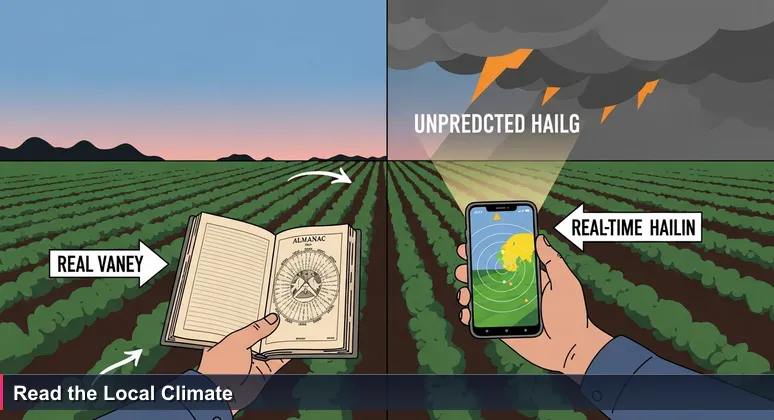
Every farmer in the Valley knows the almanac by heart. But the ones who thrive are the ones who also watch the real-time radar, adapting to sudden hailstorms and shifting conditions. This same principle defines the opportunity for AI careers in the Visalia-Porterville metro area. While rooted in our agricultural heritage, the region is transforming into fertile ground for applied artificial intelligence, particularly in the AgTech and healthcare sectors that dominate our local economy.
The traditional strengths of companies like Kaweah Health, Sun-Maid, and J.G. Boswell are now intersecting with modern data challenges. From optimizing crop yields with predictive models to analyzing medical imaging for faster diagnoses, these employers generate the "real messy complex systems" that are perfect for practical AI solutions. This creates a tangible local demand for technical talent, with firms like Stratus Data Systems in Visalia hiring AI engineers at salaries ranging from $75,000 to $90,000 - a competitive wage amplified by our significantly lower cost of living compared to coastal tech hubs.
Your career reach isn't limited by the city limits. The rise of remote work has opened direct pipelines to major innovation centers, as evidenced by Bay Area AI companies actively hiring remote contractors from the Central Valley. This hybrid model allows you to cultivate a high-value career rooted in Visalia while engaging with projects and networks across the state. The key is building a skill set that speaks directly to our region's unique climate of problems and opportunities.
For those ready to plant their first seeds in this field, accessible, local education is crucial. Affordable pathways exist, such as the part-time, community-based bootcamps offered by Nucamp in Visalia, with programs like Back End with Python starting at $2,124. These programs provide the structured fundamentals - the modern almanac - while teaching you to interpret the ever-changing radar of technology.
Steps Overview
- Cultivating AI Skills in the Heart of California
- Set Your Foundation for Success
- Master the Core Tools: Python and Mathematics
- Build Your First AI Models
- Dive into Advanced Neural Networks
- From Model to Product: Deploying AI Solutions
- Choose Your Learning Journey and Connect Locally
- How to Know You're Ready for AI Opportunities
- Common Questions
For insights on AI opportunities in the Central Valley, check out this guide to starting an AI career in Visalia.
Set Your Foundation for Success
Starting your journey toward an AI career in the Central Valley requires more than just ambition; it demands the right tools, a realistic timeline, and a distinctly local perspective. Before you write your first line of code, prepare your environment and mindset for the work ahead.
The Right Equipment for the Job
You don't need a Silicon Valley budget to start. A modern laptop with a decent processor and 8-16GB of RAM is sufficient for learning core concepts and running machine learning models. For more intensive deep learning tasks, you can immediately leverage free cloud resources like Google Colab. This low barrier to entry is crucial, allowing you to invest your resources into quality education rather than expensive hardware.
Commit to a Realistic Timeline
Be honest about your starting point and schedule. Industry timelines suggest that with existing programming experience, dedicated learners can reach employable AI fundamentals in 6-8 months. If you're starting from scratch, building production-ready competency typically requires 12-18 months of consistent study. This isn't a sprint; it's a carefully managed growing season that balances learning with building a portfolio.
Cultivate a Local Problem-Solving Mindset
From day one, orient your projects toward the industries that define our region. Your goal isn't to build generic image classifiers, but to solve tangible problems for employers like Kaweah Health or Sun-Maid. This means your portfolio must demonstrate an understanding of the complex, real-world data systems in agriculture and healthcare. Engaging with initiatives like the Fresno State AI Initiative, which focuses on regional workforce development, can help ground your learning in local needs.
Adopting this foundational mindset transforms your learning from a generic tutorial-following exercise into a targeted mission. You stop collecting abstract certificates and start cultivating the practical instincts needed to build AI that works in the fields and clinics of the Central Valley.
Master the Core Tools: Python and Mathematics
This initial phase is where you prepare the soil and understand its chemistry. Skipping a deep understanding of Python and the underlying mathematics is like trying to farm without knowing water cycles or soil pH - you might get something to grow, but you won't understand why it fails or how to improve it.
Become Proficient in Python
Focus on mastering the data manipulation libraries that are the true workhorses of AI. This means going beyond basic syntax to become fluent with NumPy for numerical operations and Pandas for data analysis. Learning to visualize insights with Matplotlib or Seaborn is equally critical. A practical local exercise is to find a dataset from the California Open Data Portal related to Central Valley water usage, clean it with Pandas, and chart trends. As emphasized in learning roadmaps, the goal is to build a portfolio of applied projects, not just complete tutorials.
Build Your Mathematical Foundation
You don't need a PhD, but you must grasp core concepts that govern how AI models learn. This includes Linear Algebra (vectors, matrices) for structuring data, Calculus (derivatives, gradients) for optimization, and Statistics & Probability (distributions, hypothesis testing) for evaluating your model's results. These topics form the essential grammar of machine learning. Interactive resources like Khan Academy or 3Blue1Brown's YouTube series are invaluable for making these abstract concepts visual and intuitive.
You'll know you've succeeded in this first cultivation when you can confidently load a messy local dataset - like Tulare County crop reports - clean missing data, perform statistical analysis, and visualize the results in a clear, insightful plot. This tangible skill is the first true yield from your learning investment.
Build Your First AI Models
Now you move from preparing the field to planting your first crop. This stage is where you apply your Python and math tools to make actual predictions and uncover hidden patterns in data, transitioning from theory to applied machine learning.
Learn Core Machine Learning with Scikit-learn
This powerful library is your gateway to building models. You must understand the crucial difference between Supervised Learning (predicting a known outcome, like tomorrow's crop yield) and Unsupervised Learning (finding hidden patterns, like customer segments for a local agribusiness). Using Scikit-learn's clean API, you'll implement algorithms like regression, decision trees, and clustering. A perfect foundational project is building a Crop Recommendation System. Use historical Valley soil and climate data to train a model that suggests the most suitable crop, demonstrating direct AgTech applicability.
Understand the Complete Model Lifecycle
Building a model is more than just training it. You must learn to properly split data into training and testing sets, evaluate performance using metrics like accuracy, and critically, identify overfitting. Warning: A model that performs perfectly on training data but fails on new data is useless. This is the equivalent of a plant thriving in a controlled greenhouse but dying in the actual field. Rigorous validation on unseen data is non-negotiable. Following a structured machine learning roadmap helps ensure you cover these essential workflow steps.
Success in this phase means you can execute an end-to-end project: from collecting and cleaning local data, to training multiple Scikit-learn models, to comparing their performance and articulating why one model is better suited for a specific Visalia-relevant task. This is where your skills begin to bear tangible fruit.
Dive into Advanced Neural Networks
For complex, unstructured problems like analyzing a chest X-ray or detecting blight on a citrus leaf, you need more sophisticated tools. This is where deep learning and neural networks become essential - your advanced irrigation system and greenhouse technology for tackling the most nuanced challenges in healthcare and agriculture.
Choose and Master a Deep Learning Framework
Industry proficiency requires mastery of either TensorFlow or PyTorch. Start by building basic neural networks to understand layers, activation functions, and how models learn through loss functions. A highly relevant project is creating a Medical Image Classifier. Using a public dataset of X-rays, you can build a model to classify images, directly aligning with the modernization efforts of regional employers like Kaweah Health. For those seeking deeper academic rigor, nearby institutions like UC Merced serve as a major regional hub for AI research in these areas.
Specialize in a Local Domain
Your learning should branch into domains with clear local demand. Computer Vision, powered by Convolutional Neural Networks (CNNs), is crucial for AgTech (automated fruit sorting, disease detection) and healthcare (diagnostic imaging). Alternatively, Natural Language Processing (NLP) is invaluable for analyzing patient notes at a clinic or processing agricultural compliance documents. Dedicating time to one of these specializations makes your portfolio far more compelling to Valley employers.
You'll know you've successfully navigated this advanced territory when you can build a functional, specialized model. The verification could be a CNN that takes an image of a peach leaf and classifies its health with reasonable accuracy, or an NLP model that extracts key information from a farm equipment maintenance log. This represents a significant yield from your deep learning investment.
From Model to Product: Deploying AI Solutions
A model trapped in a Jupyter notebook is merely a research experiment. A model integrated into a web application or hospital system is a product. This critical phase bridges the gap between theoretical knowledge and professional utility, transforming your work into something that can deliver real value to a Valley farm or clinic.
Learn Basic MLOps (Machine Learning Operations)
This skillset represents the #1 gap local employers seek to fill. You need to learn how to operationalize models. Start by using Flask or FastAPI to wrap your trained model in a web API, allowing other software to send data and receive predictions. Then, learn Docker to containerize your model and its entire environment. This ensures it runs identically on your laptop, a cloud server, or a hospital's on-premise system - a major concern for local IT departments.
Build an End-to-End Project
- Containerize Your Model: Package your crop recommendation model and its Python dependencies into a Docker image.
- Create the API: Build a simple FastAPI application that loads the model and exposes a POST endpoint (e.g.,
/predict). - Build a Front-end Interface: Develop a basic web page where a farmer could input soil pH, nitrogen levels, and forecasted rainfall.
- Connect It All: Have the front-end send the input data to your API and display the returned crop prediction.
Pro Tip: Programs like the Solo AI Tech Entrepreneur Bootcamp are specifically designed to teach this exact product-building skill, covering deployment, APIs, and monetization over 25 weeks.
Warning: A model's performance can degrade in production due to "data drift," where real-world input data changes over time. Monitoring and maintaining your deployed model is as important as building it.
Your verification of success is a public GitHub repository with a clean, documented project that includes a Dockerfile, application code, and instructions to run it. You should be able to demonstrate a live, simple web application that uses your AI model to solve a Central Valley problem.
Choose Your Learning Journey and Connect Locally
You can't cultivate a career in isolation. This phase is about selecting the right seeds for your growth and joining the local co-op - choosing a structured learning path and actively embedding yourself in the Central Valley's emerging tech network.
Select Your Educational Pathway
Visalia offers uniquely accessible and affordable routes into AI. Your choice depends on your goals, timeline, and budget, but the landscape is rich with options designed for working adults in the Valley.
| Program Type | Example & Duration | Investment & Focus |
|---|---|---|
| Career-Changing Bootcamp | Nucamp's Solo AI Tech Entrepreneur Bootcamp (25 weeks) | $3,980; Focus on building & deploying AI products. |
| Skill-Specific Bootcamp | Nucamp's Back End with Python (16 weeks) | $2,124; Foundational Python, SQL, and DevOps for AI. |
| Academic Certificate | Fresno State's AI in Business Certificate | Teaches strategic application of AI in organizations. |
| Community College Foundation | College of the Sequoias Data Science & AI Course | Provides affordable, career-oriented training locally. |
Bootcamps like those from Nucamp in Visalia provide the most direct on-ramp, offering part-time, project-based curricula that mirror the "practical application" local firms demand. For deeper theory, you can blend a bootcamp with online courses from platforms like Coursera or edX.
Engage with the Central Valley Tech Ecosystem
Structured learning must be paired with real-world connections. Begin by attending local workshops or meetups hosted by bootcamps and tech groups in the Visalia area. Proactively follow the work of the Fresno State AI Initiative to understand regional workforce needs. Most importantly, research specific local companies. Look beyond major employers to tech firms like Stratus Data Systems, which has posted AI engineering roles, and understand the tools listed in their job descriptions.
This two-pronged approach - formal education and community engagement - provides both the irrigation and the sunlight your career needs to grow. Your verification is enrollment in a structured program and attendance at your first local tech event, actively building the network that will support your journey.
How to Know You're Ready for AI Opportunities
You know you're ready when you stop blindly following the almanac and start confidently interpreting the radar. The transition from student to practitioner isn't marked by a certificate, but by a shift in how you think, what you've built, and how you communicate your skills to solve our region's unique challenges.
First, your portfolio must tell a cohesive story. It should demonstrate you can navigate "real messy complex systems" with projects that speak directly to Central Valley industries. This means having at least one substantial AgTech project (like plant disease detection) and one healthcare AI project (like clinical note analysis) that show end-to-end development, from data cleaning to a deployed prototype. This portfolio is your irrefutable proof of competency that local employers demand.
Second, you must be able to articulate the "why" behind the technology. Can you explain how a computer vision model could help a local almond grower reduce water waste by 15%? Or how an NLP system could streamline patient intake at a Tulare County clinic? This ability to connect technical solutions to business and community outcomes is what separates an AI technician from an AI engineer. As industry experts note, the role is converging with core software engineering, focusing on "integrating AI into practical, scalable systems."
Finally, recognize that your opportunity isn't binary - it's hybrid. You are ready to contribute to the modernization of local ag-tech and healthcare systems while also being positioned for the growing number of remote roles. The market has expanded, with Bay Area AI companies actively seeking talent in the Central Valley. Your readiness is defined by this dual capability: to cultivate a high-value career rooted in Visalia's needs, with the skills to reach markets everywhere. The season is right to start.
Common Questions
Is it feasible to build an AI career in Visalia, CA, given it's not a major tech hub?
Yes, it's entirely feasible. Visalia offers unique opportunities in ag-tech and healthcare AI, with local employers like Kaweah Health and Sun-Maid modernizing their systems. The lower cost of living compared to the Bay Area makes it attractive, and programs like Nucamp's bootcamps provide accessible pathways for skill development.
What are the essential skills I need to become an AI engineer in Visalia?
You'll need proficiency in Python, core math (linear algebra, calculus, statistics), and machine learning frameworks like Scikit-learn and TensorFlow or PyTorch. Focus on skills relevant to local industries, such as computer vision for ag-tech disease detection or NLP for healthcare data analysis at employers like Kaweah Health.
How long will it take me to become job-ready as an AI engineer in Visalia?
If you have prior programming experience, you can become employable in about 6-8 months with dedicated study. Starting from scratch, expect a 12-18 month timeline, which aligns well with part-time bootcamps like Nucamp's offerings, designed for working adults in the Valley.
What kind of AI jobs are available in the Visalia area?
AI roles in Visalia often involve ag-tech, healthcare, and data systems. For example, companies like Stratus Data Systems have hired AI engineers with salaries in the $75,000 to $90,000 range, and remote work options exist with Bay Area firms hiring contractors in the Central Valley.
What educational programs in Visalia can help me become an AI engineer?
Start with affordable options like Nucamp's bootcamps, such as the Solo AI Tech Entrepreneur Bootcamp for $3,980. For deeper academic grounding, consider courses at College of the Sequoias or certificates at Fresno State, blending resources to build a portfolio tailored to local needs.
For a detailed look at the top 10 tech startups hiring junior developers in Visalia, CA in 2026, check out this article.
For insights into the best tech incubators in Visalia for 2026, this guide offers detailed rankings.
Learn about the affordability of tech salaries in Visalia for 2026 in this complete resource.
For tech training at Visalia community centers, check this list.
This complete guide to funding AI education in Visalia for 2026 covers all essential resources.

Irene Holden
Operations Manager
Former Microsoft Education and Learning Futures Group team member, Irene now oversees instructors at Nucamp while writing about everything tech - from careers to coding bootcamps.