









Who's Hiring Cybersecurity Professionals in Virginia Beach, VA in 2026?
By Irene Holden
Last Updated: March 31st 2026
Key Takeaways
In 2026, cybersecurity professionals in Virginia Beach are being hired by defense contractors like Huntington Ingalls Industries, naval installations such as NIWC Atlantic, and critical infrastructure sectors including Sentara Healthcare and the Port of Virginia. Virginia leads the U.S. with over 53,000 cybersecurity job openings, fueled by the region's military and maritime dominance, offering salaries from $75,000 to over $160,000 based on roles and security clearances.
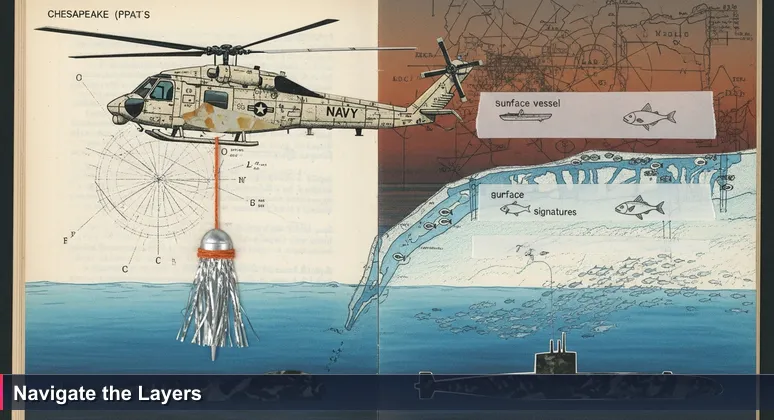
From a helicopter over the Hampton Roads harbor, the ocean looks like a single, vast job site. But on the sonar screen, the truth is revealed: three separate worlds, each with its own rules, threats, and inhabitants. This is the reality of the cybersecurity job market in Virginia Beach. The region is a premier hub, but simply broadcasting your resume is like a wide-beam sonar ping - it gets lost in the noise.
Mastery comes from understanding and targeting one of three distinct, co-existing hiring ecosystems: the Surface Warfare of defense contractors, the Deep-Sea Operations of naval commands, and the Coastal Infrastructure of healthcare, utilities, and government. With over 53,000 vacancies, Virginia holds the most cybersecurity job openings in the U.S., a concentration heavily influenced by the defense and maritime sectors of Hampton Roads. Locally, there are approximately 135 cyber security jobs in Virginia Beach at any given time, underscoring the intense local demand.
For career-changers, transitioning service members, and new graduates, success hinges on navigating these layers with precision. As noted in industry analysis, the "cybersecurity job market is expected to continue growing," but frustration often stems from a generic approach. Experts warn that "breaking into cybersecurity... is harder than ever - not because there are no jobs, but because most applicants skip the basics."
The opportunity is immense, but it is not monolithic. By tuning your search with the precision of a sonar operator, you can move from seeing a vast, opaque ocean of jobs to locking onto a clear, navigable career path in one of the nation's most dynamic cyber corridors.
In This Guide
- Unlocking Virginia Beach's Cybersecurity Job Market
- The Surface Warfare of Defense Contractors
- Deep-Sea Operations of Naval Installations
- Coastal Infrastructure Beyond Federal Defense
- Pathways for Career-Changers and New Graduates
- Leveraging Military Experience for Cybersecurity Roles
- Top Cybersecurity Specializations for 2026
- Mastering Your Cybersecurity Career Path
- Frequently Asked Questions
Navigate the AI job market in Hampton Roads with expert insights from this guide.
The Surface Warfare of Defense Contractors
This is the most visible and high-paying layer of the Hampton Roads cyber market, anchored by the massive Department of Defense industrial base. Hiring here is driven by contracts to secure naval systems, shipbuilding operations, and federal IT networks, with salaries often ranging from $80,000 to $160,000+. Compensation is heavily influenced by active security clearance levels.
Primary employers form the cornerstone of regional defense tech, each with specialized missions:
- Huntington Ingalls Industries (HII) / Newport News Shipbuilding: America’s largest military shipbuilder focuses on securing Operational Technology (OT) and Industrial Control Systems (ICS) that control nuclear propulsion and shipyard robotics.
- General Dynamics IT (GDIT), Northrop Grumman, & Peraton: These giants support the Navy’s digital modernization, hiring extensively for cloud migration, Zero Trust architecture, and network defense roles. For instance, Peraton actively recruits in Hampton for senior engineering positions.
- Booz Allen Hamilton, CACI, and Leidos: They recruit for cybersecurity architects and program management specialists supporting DoD initiatives across the region.
This layer operates under strict federal mandates. The DoD 8140/8570 directive requires specific certifications, with CompTIA Security+ as the foundational ticket and CISSP for higher-level positions. Possessing an active Secret or Top Secret clearance dramatically accelerates hiring, making transitioning service members prime candidates. Programs like the DoD SkillBridge program allow interns to pivot directly into firms like HII, creating a powerful local hiring pathway.
Deep-Sea Operations of Naval Installations
Beneath the contractor layer lies direct government employment within the myriad naval installations that define the region. These Civil Service (GS) roles focus on the operational security of the fleet itself, offering stability, strong federal benefits, and unparalleled mission focus. Salaries follow the GS pay scale, with IT Cybersecurity Specialists often starting between GS-11 to GS-13, translating to roughly $80,000 to $120,000 in the Hampton Roads locality pay area.
Key hiring centers include:
- Naval Information Warfare Center (NIWC) Atlantic: A top employer for technical talent working on ship-to-shore communications and tactical network defense.
- Defense Counterintelligence and Security Agency (DCSA): With a major field office locally, DCSA recruits for roles assessing the cybersecurity of private defense contractors, ensuring compliance with standards like CMMC. An IT Cybersecurity Specialist role in Virginia Beach exemplifies this mission-critical work.
- Base Support Roles: Every installation, from Naval Station Norfolk to NAS Oceana, requires personnel to manage enterprise networks and protect classified systems like SIPRNet.
“Companies will struggle to effectively balance cybersecurity vulnerabilities and expenses. While big enterprises might throw money that small businesses can't afford at cyber defense, both will have trouble assessing their risks and weaknesses.” - Cybersecurity Experts, Virginia Tech News
The challenge in this layer involves unique, large-scale problems like federated identity management across global bases and securing the world's most sensitive weapons systems. Success requires monitoring USAJobs.gov for series 2210 openings with "INFOSEC" keywords and tailoring resumes to explicit specialized experience questions, where Veterans' preference provides a significant edge.
Coastal Infrastructure Beyond Federal Defense
This final layer is the growing, often overlooked ecosystem of cyber hiring beyond the federal sphere. Fueled by the region's critical civilian infrastructure, new state laws, and digital transformation, it offers more accessible entry points and excellent work-life balance, with salaries typically ranging from $75,000 to $130,000.
Demand is driven by several key sectors with unique security challenges:
- Healthcare (Sentara Healthcare & EVMS): As the region’s largest provider, Sentara is a major employer focused on HIPAA compliance and securing IoT-connected medical devices, where a breach risks both data and patient safety.
- Maritime & Logistics (The Port of Virginia): The automation of one of the East Coast's busiest ports creates high demand for OT/SCADA security professionals to protect automated cranes and logistics networks from disruptive attacks.
- Utilities (Dominion Energy): Critical infrastructure protection analysts are needed to defend the power grid against cyber-physical threats and comply with NERC standards.
- Local Government & Education: Enforcement of the Virginia Consumer Data Protection Act (VCDPA) has increased demand for compliance and privacy officers in city governments and school districts to protect citizen and student data.
This differentiated market values operational technology experience and compliance knowledge over federal clearances. Certification requirements often emphasize CISM or GIAC credentials for governance roles, making it an ideal entry point for career-changers from IT or engineering. With over 340 cybersecurity jobs active across Hampton Roads at any time, a significant portion resides in this vital coastal infrastructure layer.
Pathways for Career-Changers and New Graduates
In today's market, the "entry-level" bar is defined by demonstrable skills rather than degrees alone. Success requires moving beyond theoretical knowledge to master practical fundamentals through hands-on experience, home labs, and contributions to open-source security tools.
Local education programs provide critical, accelerated pathways into the field. For those seeking an affordable and intensive route, the 15-week Nucamp Cybersecurity Bootcamp focuses on the practical analyst skills demanded by regional employers, offering a project-based alternative to traditional degrees. Concurrently, strong university pipelines from Old Dominion University, Hampton University, and Norfolk State University produce graduates with degrees in cybersecurity and computer science, many of whom secure pivotal internships with local employers like Sentara or naval commands.
Earning foundational certifications like CompTIA Security+ remains a crucial step to validate core knowledge. The most successful candidates combine formal education with self-driven initiative, building portfolios that tackle real-world scenarios, which resonates powerfully with Hampton Roads employers looking for problem-solvers who can hit the ground running.
Leveraging Military Experience for Cybersecurity Roles
Transitioning military personnel possess one of the strongest possible positions for entering the Hampton Roads cybersecurity market. Your active security clearance and hands-on experience with secure systems are invaluable assets that civilian candidates cannot quickly replicate, serving as a powerful accelerant in the hiring process.
The most effective strategy is to actively utilize the DoD SkillBridge program, which allows service members to intern with local defense contractors during their final months of service. This creates a direct hiring pathway and is a proven model used by firms like Huntington Ingalls Industries and others to convert skilled veterans into full-time employees seamlessly.
To capitalize on this advantage, you must strategically reframe your experience:
- Translate your military occupational specialty (MOS/NEC) into civilian cybersecurity terminology on your resume, highlighting incident response, network defense, or physical security controls.
- Your network of former shipmates and commanders now working at companies like Peraton, Leidos, or GDIT is your most powerful, organic job search tool.
- Pursue the foundational CompTIA Security+ certification if you haven't already, as it meets the DoD 8570 baseline requirement and validates your knowledge in the commercial lexicon.
This combination of proven discipline, pre-vetted trust via clearance, and mission-relevant skills makes you a prime candidate, particularly for the Surface Warfare and Deep-Sea Operations layers where understanding the operational environment is as critical as technical prowess.
Top Cybersecurity Specializations for 2026
Success in the Hampton Roads cybersecurity market increasingly requires strategic specialization. As industry experts emphasize, "picking a lane" is the fastest route to getting hired, moving candidates from generalists to sought-after experts. In 2026, several specializations stand out for their alignment with the region's core industries.
Cloud Security (AWS/Azure GovCloud)
Supporting the Department of Defense’s massive shift to cloud environments like IL5 and IL6 is a primary mission for local contractors. Professionals skilled in securing AWS and Azure GovCloud implementations are in critical demand to build and defend the Navy's next-generation digital infrastructure. The need is so pronounced that industry groups note cloud-skilled cyber professionals are needed to secure organizations globally, with a particular concentration in defense hubs.
Operational Technology (OT)/ICS Security
This niche, where physical and cyber security converge, is vital for the region's industrial backbone. Expertise is required to secure the industrial control systems at Huntington Ingalls' shipyard, the automated stacking cranes at The Port of Virginia, and the SCADA networks managing the regional power grid for Dominion Energy.
Governance, Risk, and Compliance (GRC)
Driven by two powerful mandates, GRC specialists are essential. The Cybersecurity Maturity Model Certification (CMMC) dictates compliance for all defense contractors, while the Virginia Consumer Data Protection Act (VCDPA) regulates data privacy for a wide range of local businesses. This dual pressure creates sustained demand for professionals who can navigate complex regulatory landscapes.
DevSecOps
Integrating security into the software development lifecycle is crucial for federal tech firms and contractors developing secure applications for naval and government use. This specialization bridges development and security operations, ensuring code is secure by design and by default from the outset.
Mastering Your Cybersecurity Career Path
The immense cybersecurity opportunity in Virginia Beach and the greater Hampton Roads region is not monolithic. The frustration of unanswered applications often stems from targeting the wrong layer with a generic message. Mastery requires moving from broadcasting a wide-beam resume toward the entire "Virginia Beach cyber market" to sending a targeted ping toward specific challenges - like securing a naval cloud migration or hardening a hospital network.
Your success hinges on choosing your operational depth and acquiring the specific certifications, clearances, and experience that layer demands. For the high-stakes defense contractor layer, this means aligning with DoD 8140 mandates. For the growing coastal infrastructure sector, it means building expertise in compliance frameworks like VCDPA or HIPAA.
Critically, you must leverage the region's unique structural advantages: the unparalleled military talent pipeline, the dense concentration of critical maritime and healthcare infrastructure, and the lower cost of living compared to Northern Virginia. These elements, combined with a steady talent supply from universities like Old Dominion and Norfolk State, create a dynamic, sustainable ecosystem. With Virginia holding over 53,000 cybersecurity vacancies, the nation's highest concentration, the strategic opportunity here is clear.
By tuning your search with the precision of a sonar operator - understanding the distinct ecosystems, leveraging local pipelines, and specializing decisively - you transform a vast, opaque ocean of jobs into a clear, navigable path to a resilient and rewarding career.
Frequently Asked Questions
Who are the main employers hiring cybersecurity professionals in Virginia Beach for 2026?
In 2026, key employers include defense contractors like Huntington Ingalls Industries and GDIT, naval installations such as NIWC Atlantic, and local infrastructure leaders like Sentara Healthcare. These sectors offer diverse roles, from securing shipbuilding operations to protecting healthcare data, all leveraging the region's military and maritime focus.
What salary ranges can I expect for cybersecurity jobs in Hampton Roads?
Salaries vary by sector: defense contractors often pay $80,000 to $160,000+, naval civil service roles range from $80,000 to $120,000, and healthcare or utilities offer $75,000 to $130,000. Factors like security clearance and specialization in areas like cloud security can influence earnings in this lower-cost metro area.
Do I need a security clearance to get hired in Virginia Beach's cybersecurity market?
For defense and naval roles, an active Secret or Top Secret clearance is often essential, giving transitioning military personnel an edge. However, in sectors like healthcare or local government, roles may prioritize technical skills and compliance knowledge over clearances, making them accessible entry points.
How can I start a cybersecurity career in Virginia Beach with no prior experience?
Begin with certifications like CompTIA Security+ and explore local pathways such as the Nucamp Cybersecurity Bootcamp or university programs at Old Dominion University. For veterans, leveraging the DoD SkillBridge program can provide direct internships with employers like HII, capitalizing on the regional military talent pipeline.
What certifications are most in-demand for cybersecurity roles in this region?
Defense employers value DoD 8140-aligned certs like Security+ and CISSP, while coastal infrastructure sectors often seek CISM or GIAC certifications for governance roles. Specializing in areas such as OT/ICS security for shipbuilding or cloud security for federal contracts can boost your prospects in Hampton Roads.
Read about the leading AI startups in Virginia Beach driving tech innovation locally.
This 2026 AI salary data for Virginia Beach covers all key roles and experience levels.
For a detailed guide, check out the Top 10 Tech Apprenticeships, Internships and Entry-Level Jobs in Virginia Beach, VA in 2026.
Connect with peers through The AI Collective Hampton Roads and other key groups featured in this article.
Learn about Virginia Beach tech startups hiring junior talent in 2026 and key evaluation tips.

Irene Holden
Operations Manager
Former Microsoft Education and Learning Futures Group team member, Irene now oversees instructors at Nucamp while writing about everything tech - from careers to coding bootcamps.