









How to Become an AI Engineer in Virginia Beach, VA in 2026
By Irene Holden
Last Updated: March 31st 2026
Quick Summary
To become an AI engineer in Virginia Beach by 2026, commit to a structured, year-long path mastering modern skills like Generative AI and MLOps. Use affordable resources like Nucamp's bootcamp at under $4,000 to build a portfolio focused on local defense and healthcare sectors. This leverages Hampton Roads' strong job market with roles at major employers and a lower cost of living compared to other tech hubs.
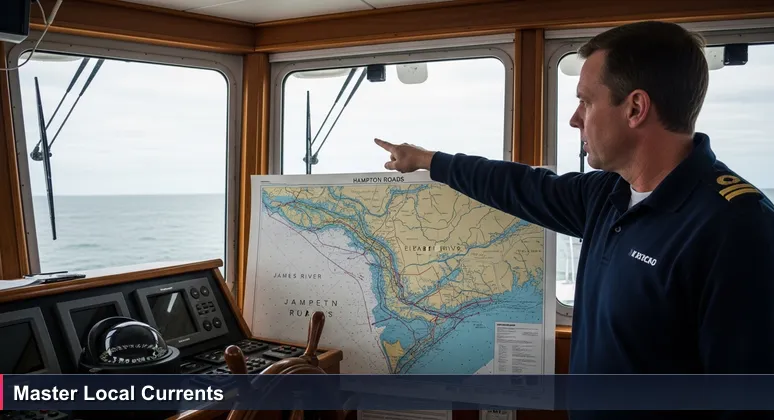
Every captain knows the charts are essential, but they’re useless if you can’t read the water right in front of you. Following a generic AI roadmap is a sure way to run aground in the complex, industry-specific channels of Hampton Roads. Your success depends on a structured 12-month voyage that maps global technical skills onto the local economic chart of defense, maritime, and healthcare.
This journey is less about solo discovery and more about expertly integrating and deploying existing powerful models to solve tangible problems. As noted in coverage of AI adoption in Hampton Roads businesses, the region's organizations are actively embracing this technology, creating demand for engineers who can build reliable applications.
Your starting coordinates are the unique advantages of the Virginia Beach metro area:
- Major Industry Anchors: Proximity to the U.S. Navy, Huntington Ingalls Industries, Sentara Healthcare, and major defense contractors provides a direct pipeline to complex, high-impact problems.
- Growing Tech Ecosystem: A lower cost of living than many coastal tech hubs fosters a burgeoning scene of startups and innovation.
- Steady Talent Pipeline: Universities like Old Dominion University and Hampton University supply both fresh talent and advanced research, detailed in regional analyses like the Hampton Roads Workforce Council Talent Pathways Report.
The destination is a career where technical skill meets local relevance. Salaries for AI roles here reflect this specialization, ranging from approximately $76,000 to $182,000+, with compensation tied to security clearances and niche expertise. The course is set for those ready to navigate beyond the generic map.
Steps Overview
- The AI Engineer Journey in Hampton Roads
- Your Starting Point and Toolkit Setup
- Building Programming and Data Fluency
- Mastering Core Machine Learning and Math
- Advancing with Deep Learning and LLMs
- Deploying with MLOps and Cloud Platforms
- Crafting a Locally-Relevant AI Portfolio
- Formalizing with Credentials and Local Connections
- Measuring Your Success as an AI Engineer
- Common Questions
Navigate the AI job market in Hampton Roads with expert insights from this guide.
Your Starting Point and Toolkit Setup
Before you plot your course, you must understand your starting coordinates and gather the essential navigation tools. This foundational step prevents the all-too-common "it works on my machine" failure, a critical discipline in local sectors where work may transition to secured, air-gapped systems.
Your essential toolkit requires three components:
- A capable computer with at least 16GB RAM and a decent multi-core processor. A dedicated NVIDIA GPU accelerates work, but cloud platforms can initially fill this gap.
- A foundational, problem-solving mindset. Prior professional experience in logistics, healthcare, or administration is a valuable asset that provides crucial domain knowledge.
- The core software stack: Python 3.9+ (set up via Anaconda or
pyenv), Git with GitHub for version control, and the VS Code editor with AI development extensions.
For Virginia Beach learners, local resources provide a significant head start. You can leverage the statewide "AI Launchpad" initiative designed to guide career switchers. Furthermore, building foundational understanding before coding is made accessible through courses like the "AI for Everyone" course offered locally by NetCom Learning.
Investing time here ensures your development environment is clean, reproducible, and ready to handle the complex data and deployment pipelines you'll encounter in Hampton Roads' key industries.
Building Programming and Data Fluency
This phase constructs the sturdy hull of your knowledge ship, focusing on the non-negotiable basics you'll use daily. Over months 1-2, your goal is achieving fluency in Python for data manipulation, a skill that constitutes roughly 80% of the real work in local AI engineering.
The essential skills and technologies are Python syntax, data structures, NumPy for numerical computing, Pandas for data analysis, SQL for database querying, and Bash/Shell for basic automation. This toolkit is directly applicable to Hampton Roads, whether you're preprocessing sensor data from shipyard equipment for Huntington Ingalls Industries or structuring patient intake data for Sentara Healthcare.
SQL is especially critical because legacy systems in large regional organizations run on databases. Mastery here allows you to access and transform the raw data needed for any model. A practical project to cement these skills is creating a Python script that uses Pandas to analyze a public dataset from the City of Virginia Beach, such as parking citations or public facility usage, and generate a summary report.
For structured learning, consider following a proven machine learning roadmap or exploring intensive local programs like the online AI & Machine Learning Bootcamp from Virginia Tech, which covers these foundational pillars. Building this fluency ensures you can handle the diverse data types - from naval systems logs to anonymized patient records - that define the region's AI opportunities.
Mastering Core Machine Learning and Math
With programming fluency as your hull, months 3-4 are about installing the engine: core machine learning theory and the mathematics that make it intelligible. Your goal is to understand and apply traditional ML algorithms using the Scikit-learn library, supported by essential mathematics.
This requires building a working knowledge of:
- Linear Algebra: Vectors and matrices for understanding data structure and model operations.
- Calculus Basics: Gradients for optimizing models during training.
- Statistics: Probability distributions and regression for evaluating model performance and uncertainty.
This foundation is vital for Hampton Roads because not every problem requires a deep neural network. Predictive maintenance for naval assets or optimizing Port of Virginia logistics can often be solved more efficiently with random forests or regression models. Understanding the math allows you to explain your model's decisions - a non-negotiable requirement for accountable AI in regulated defense and healthcare contracts.
A common, costly mistake is rushing through this phase to get to "sexy" AI. As emphasized in a practical roadmap discussion by tech professionals, "Build your core skills... then prove them with real projects." A shaky foundation will collapse when you later build complex, agentic systems. A practical project to solidify these skills is using Scikit-learn to build a model predicting housing price trends in Hampton Roads using Zillow or local assessor data, introducing regression on a familiar local dataset.
Advancing with Deep Learning and LLMs
Now you raise the sails to catch the prevailing winds of modern AI: deep learning and large language model orchestration. This transition, spanning months 5-6, moves you from understanding models to building the applications that local employers demand.
The goal is to learn to build with and around LLMs. This requires mastering:
- Deep Learning Frameworks: PyTorch or TensorFlow fundamentals.
- Transformer Architecture: The engine behind modern LLMs.
- Prompt Engineering & Orchestration: Using frameworks like LangChain or LlamaIndex to create robust applications.
This specialization is critical for Hampton Roads because regional industries need AI that can leverage proprietary, domain-specific knowledge. Creating a chatbot that answers questions from thousands of pages of shipbuilding specifications or healthcare compliance documents requires Retrieval-Augmented Generation (RAG). Industry experts cite RAG and vector databases as some of the "most hired" skills in 2026 for high-paying roles.
A practical project is to build a RAG-powered document Q&A system. Use a local corpus, like the Virginia Beach City Code or public health guidelines, as your knowledge base. For accelerated, structured learning in this challenging phase, consider targeted programs like Nucamp's Solo AI Tech Entrepreneur Bootcamp, a 25-week program focused on LLM integration, prompt engineering, and building AI-powered products.
Deploying with MLOps and Cloud Platforms
The final technical leg of your journey, spanning months 7-9, is about moving from prototype to production. This phase focuses on MLOps - the practices and tools for deploying, monitoring, and maintaining machine learning models reliably in real-world systems.
The core technologies you must master include:
- Containerization: Using Docker to package your model, code, and dependencies into a portable, reproducible unit.
- Cloud Platforms: Deploying services on AWS SageMaker, Azure AI, or Google Cloud Platform. Cloud certification (AWS/Azure) is a significant differentiator.
- Infrastructure & Monitoring: Basic CI/CD pipelines and tools for tracking model performance and data drift over time.
This skillset is not optional in Hampton Roads. Defense contractors require AI systems that run reliably in secure, often classified, cloud environments like AWS GovCloud or Azure Government. A job posting for an AI Systems Engineer at Northrop Grumman explicitly emphasizes experience with these cloud platforms and infrastructure. MLOps is the essential bridge between a data scientist's prototype and a naval engineer's usable, trusted tool.
Your practical project for this phase is to containerize your earlier RAG chatbot using Docker and deploy it as a live web application on a cloud service like Azure App Service or AWS Elastic Beanstalk. This end-to-end deployment experience is what translates theoretical knowledge into the production-ready engineering that commands top salaries in the region.
Crafting a Locally-Relevant AI Portfolio
Your portfolio is your professional sea chart, and to navigate the Hampton Roads job market, it must demonstrate not just technical skill but applied understanding of the local economy. Ditch generic Kaggle projects; build 2-3 end-to-end applications that tell a story about solving problems for defense, healthcare, or maritime sectors.
Consider these locally-relevant project ideas:
- A Defense/Maritime Logistics Agent: Build a multi-agent system using LangGraph that automates a supply chain workflow, demonstrating systems thinking for shipbuilding and defense logistics.
- Healthcare Diagnostic Assistant: Develop a computer vision model to analyze medical images from a public dataset like CheXpert, with a front-end interface and documentation on ethical guardrails for patient data.
- Full-Stack AI Integration: Create a web application that integrates an LLM for a local business use case, such as a tourism insight generator for Virginia Beach, showing the versatility prized by local startups.
These specialized projects align with the region's high-value roles. For instance, a Senior Software AI Engineer role in Virginia Beach can command a salary reflecting this niche expertise. As emphasized in professional discussions, "learning is only half the game, proof matters more... resumes that translate AI work into business impact" get noticed. Your project’s README should clearly articulate the local business problem, your solution, and the modern technologies used, from LangChain to Docker.
Formalizing with Credentials and Local Connections
With a skilled-built portfolio, the final step is formalizing your credentials and weaving yourself into the fabric of the Hampton Roads tech community. This phase is about building the bridges that connect your capabilities to the region's specific gateways and opportunities.
Your first task is to pursue the non-negotiable credentials:
- Security Prerequisites: For defense and maritime roles with employers like Northrop Grumman or HII, U.S. Citizenship is required to obtain a security clearance, often starting at the Secret level.
- Technical Certifications: Actively pursue a cloud certification such as the AWS Certified Machine Learning - Specialty or Microsoft Azure AI Engineer Associate. These are explicitly valued in local job postings and demonstrate production-ready skills.
Next, engage directly with the local ecosystem. Attend meetups hosted by Startup Virginia Beach or tech talks at Old Dominion University. Connect with professionals from major employers on LinkedIn and engage with local tech news, such as the Virginian-Pilot's coverage of AI adoption in Hampton Roads, which highlights how local businesses are integrating this technology.
For those seeking deeper specialization, the region offers excellent formal education. Hampton University's ABET-accredited B.S. in Artificial Intelligence and Machine Learning provides a rigorous four-year foundation, while Old Dominion University offers comprehensive AI research initiatives and professional bootcamps. This final step transforms you from a skilled individual into a connected professional within the region's unique economic currents.
Measuring Your Success as an AI Engineer
You will know you have successfully navigated the journey to becoming an AI engineer in Virginia Beach when you can drop anchor at four specific coordinates. These are not abstract goals but concrete indicators that you are ready to contribute to the region's key industries.
First, you possess 2-3 deployed portfolio projects hosted on GitHub that utilize the modern toolchain - LangChain, Docker, cloud services - and solve problems with clear business impact for sectors like defense or healthcare. Second, you can confidently explain these projects, articulating the technical trade-offs you made and how your solutions connect to local industrial challenges in maritime logistics or patient care.
Third, your skills demonstrably align with specific local job descriptions. This means understanding requirements like "MLOps in classified environments" for defense contractors or "implementing ethical AI guardrails" for healthcare systems, as outlined in reports like the Hampton Roads talent pathway analysis. Fourth, you have begun building a professional network within the Hampton Roads tech community and understand the specific prerequisites, like security clearances, that unlock doors at its largest employers.
Reaching this destination means your career is not just future-proof but integral to the future of the local economy. With salaries for these specialized roles ranging significantly, as seen in regional AI job postings on LinkedIn, your deliberate voyage from foundational skills to locally-relevant expertise ensures you are not just another candidate, but a sought-after engineer who knows how to read these waters.
Common Questions
How long does it take to become an AI engineer in Virginia Beach?
With a structured plan, you can become job-ready in about 12 months, building foundational skills in the first 4 months and advancing into specializations like LLMs and MLOps. Local bootcamps like Nucamp's Solo AI Tech Entrepreneur Bootcamp can accelerate this to 25 weeks, focusing on hands-on projects for the 2026 job market.
What industries in Hampton Roads hire AI engineers, and what skills do they need?
Hampton Roads has strong demand in defense, healthcare, and maritime sectors, with employers like Huntington Ingalls and Sentara Healthcare. They prioritize skills in MLOps, cloud platforms (e.g., AWS GovCloud for defense), and ethical AI, as seen in local job postings that require experience with secure environments and responsible data handling.
Can I transition to an AI career in Virginia Beach without a computer science degree?
Yes, many succeed through bootcamps like Nucamp's, which is designed for career switchers and costs under $4,000. Domain knowledge from fields like logistics or healthcare is an asset, and local programs like Hampton University's AI degree offer formal paths for those preferring deeper specialization.
How much does it cost to train for an AI engineering role locally?
Training costs are accessible; for instance, Nucamp's bootcamp has tuition under $4,000 with payment plans. Virginia Beach's lower cost of living than coastal tech hubs makes it affordable, and resources like the AI Launchpad initiative provide free guidance for starters in the region.
Do AI jobs in Virginia Beach require security clearances, and how do I qualify?
For defense roles with employers like Northrop Grumman, yes - U.S. citizenship is a prerequisite for security clearances. Engaging with local defense contractors and understanding cloud platforms like Azure Government is key, as highlighted in job descriptions emphasizing secure AI deployment in classified environments.
Explore funding tech education in Virginia Beach for 2026 with scholarships and workforce programs.
Find female technology communities in Hampton Roads detailed in this article.
This guide to tech careers in Virginia Beach that don't require a degree in 2026 offers valuable insights.
Learn how tech salaries compare to living expenses in Hampton Roads with this in-depth guide.
Get the 2026 guide to tech workspaces in Virginia Beach to find your perfect fit.

Irene Holden
Operations Manager
Former Microsoft Education and Learning Futures Group team member, Irene now oversees instructors at Nucamp while writing about everything tech - from careers to coding bootcamps.