









How to Become an AI Engineer in Tucson, AZ in 2026
By Irene Holden
Last Updated: March 30th 2026
Quick Summary
To become an AI engineer in Tucson by 2026, follow an 18-month roadmap that blends Python, math, and machine learning with local projects tied to Tucson's aerospace and healthcare sectors. Leverage the city's lower cost of living and resources like UArizona bootcamps to build a portfolio that catches the eye of employers such as Raytheon and Banner Health, integrating into Tucson's growing AI ecosystem for a successful career launch.
Before you can navigate Tucson's unique AI landscape, you need to pack the right gear. This journey requires a foundational kit: high-school level math proficiency, with algebra as the non-negotiable starting point, and basic computer literacy. You must have consistent access to a reliable computer and internet - your basecamp for every project and tutorial.
Yet the most critical prerequisites aren't technical. Tucson’s employers, from Raytheon to growing startups, value engineers with a tenacious problem-solving mindset. This is about navigating complex, real-world challenges, like optimizing water infrastructure or building resilient systems for the desert environment. As Arizona Technology Council CEO Steven G. Zylstra notes, "AI and advanced computing are redefining how organizations operate... position[ing] our state at the forefront of digital innovation."
Your commitment must be paired with practical first steps. A great local entry point is the affordable, structured Artificial Intelligence and Machine Learning Suite offered through Pima Community College. This allows you to build fundamentals while understanding the local terrain, where starting salaries for roles like a Raytheon P1 Software Engineer begin around $91,000 - a strong income in a city with a significantly lower cost of living than coastal tech hubs.
Steps Overview
- Essential Prerequisites for Your AI Journey
- Adapting to Tucson's AI Landscape
- Build Your Computational Foundation
- Mastering the Math Behind AI
- Diving into Machine Learning Basics
- Advancing with Deep Learning
- Specializing and Joining the Local Ecosystem
- Verifying Your Success as an AI Engineer
- Common Questions
For a comprehensive resource, see The Complete Guide to Starting an AI Career in Tucson, AZ in 2026.
Adapting to Tucson's AI Landscape
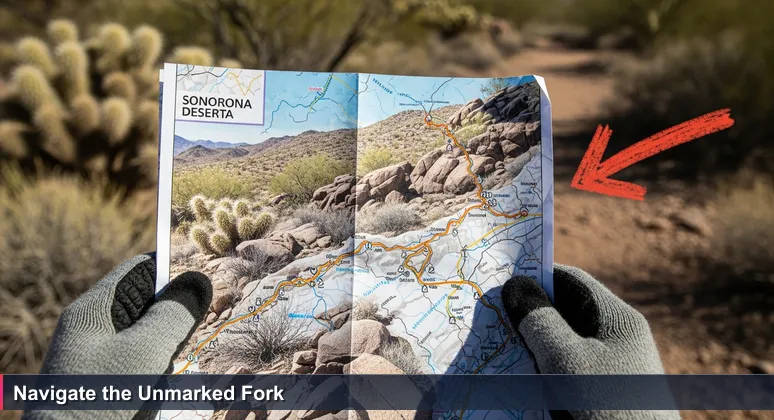
Following a generic AI engineer roadmap is like trusting a standard Sonoran Desert trail map - it shows the main path but misses the critical fork hidden by a saguaro where the real route begins. The universal steps are necessary, but in Tucson, they are insufficient. Success requires layering those fundamentals with an intimate understanding of the local terrain.
The frustration many feel comes from this gap between the checklist and the landscape. Why do aspiring engineers learn Python and study math but still struggle to land a role here? The answer is that Tucson’s tech ecosystem isn't a carbon copy of Silicon Valley. It's a unique blend of aerospace physics, desert-data problems, and a collaborative community. As highlighted in Inside Tucson Business, the region is having a "tech moment," fueled by its affordability and growing innovation.
Your advantage is building in an ecosystem where giants like Raytheon collaborate directly with academia on projects like the autonomous golf-putting robot developed by a UArizona team. Industry leader Minky Kernacs, CEO of Mercurio Analytics, observes, "Between industry giants in the hardware space... to a growing number of startups... we expect Arizona to become a global hub of activity and innovation in AI."
Your journey, therefore, shifts from passively following steps to actively navigating. It’s about using universal fundamentals to build solutions grounded in the Sonoran Desert’s unique challenges and opportunities, turning a generic journey into a targeted mission for the Old Pueblo.
Build Your Computational Foundation
Every enduring structure in the desert needs a solid foundation. For your AI career in Tucson, this is programming and data manipulation. The local tech sector, heavily influenced by the engineering rigor of employers like Raytheon, expects clean, efficient code from day one.
Your first three months should be dedicated to achieving fluency in Python, focusing on object-oriented programming and data structures. Simultaneously, learn SQL for querying databases. A practical local starting point is the introductory Artificial Intelligence and Machine Learning Suite offered through Pima Community College. Set up your development environment with Git, GitHub, and Jupyter Notebooks.
- Apply Skills Locally: Don’t just solve abstract problems. Find a Tucson-centric dataset, like those from Tucson Water's public portals, and write a Python script to clean and summarize it.
- Build Algorithmic Thinking: Participate in online coding challenges (LeetCode) to hone skills valued in technical interviews at local employers.
Warning: Jumping into advanced machine learning libraries without solid Python fundamentals is a common mistake that will hinder debugging and production work. For a more intensive, project-focused path, consider the University of Arizona's Online Machine Learning Engineering & AI Bootcamp to accelerate this phase.
Mastering the Math Behind AI
AI models are built on mathematical principles, not magic. To understand why a model works or fails - a critical skill for roles at University of Arizona research labs or on Raytheon's advanced projects - you must grasp the underlying math. This foundational knowledge is what separates an engineer who can implement from one who can innovate and troubleshoot.
You need active proficiency in three core areas. First, Linear Algebra for vectors, matrices, and eigenvalues - the core data structures of neural networks. Second, Calculus, focusing on derivatives and the chain rule, which are essential for understanding the gradient descent optimization algorithm. Third, Statistics & Probability for distributions, Bayes’ theorem, and evaluating model performance.
Pro Tip: Don't learn math in a vacuum. Actively relate each concept to a machine learning idea. Connect matrix multiplication to a neural network's forward pass, or partial derivatives to how a model learns from error.
For structured, local education, the University of Arizona’s Graduate Certificate in Foundations of Data Science provides a rigorous option. This aligns with the university's holistic, human-centered approach to AI education. For a deeper dive, their Master of Science in Data Science offers a comprehensive path, leveraging Tucson's advantage as an affordable place to pursue advanced credentials.
Diving into Machine Learning Basics
This is where you transition from theory to building intelligent systems. Tucson’s growing AI startup ecosystem and established employers need engineers who can translate mathematical concepts into functioning prototypes that address real-world problems.
Your focus should be on achieving proficiency with core libraries: NumPy for numerical computing and Pandasscikit-learn, which you'll use to implement these algorithms.
Warning: A common mistake is treating tutorial completion as project experience. Your first project must start with a genuine question, involve data you've sourced and cleaned yourself, and end with a meaningful interpretation of results.
For a Tucson-centric project, build an end-to-end model using local data. Inspired by Tucson Water's use of AI to predict infrastructure needs, you could create a model to forecast residential water usage based on weather and neighborhood data. To connect with the local professional community, start monitoring upcoming AI conferences and meetups in Tucson. This exposure is invaluable for understanding the specific challenges local engineers are solving.
Advancing with Deep Learning
Deep learning powers the most advanced AI applications, and specializing here opens doors to cutting-edge work in Tucson. This is particularly relevant for computer vision in Raytheon's aerospace systems and natural language processing across healthcare and startup sectors. Mastery of these tools transforms you from a practitioner of established methods to an engineer who can build novel solutions.
Begin by achieving working proficiency in either TensorFlow or PyTorch. For a project-intensive local path, the curriculum of the University of Arizona's Online Machine Learning Engineering & AI Bootcamp heavily features these frameworks. Focus on understanding and building key neural network architectures: Convolutional Neural Networks (CNNs) for image data and Transformers for sequence data.
Your portfolio must now demonstrate this advanced capability. Build a deep learning application with a local twist. For example, create a CNN that classifies Sonoran Desert flora from images, or fine-tune a language model on regional news text. This mirrors innovative local work, such as the University of Arizona team's autonomous golf-putting robot, "Gopher," sponsored by Raytheon.
Pro Tip: A model in a Jupyter notebook isn't complete. Tucson startups highly prize deployment skills. Learn to use Flask or FastAPI to create a simple web API for your model and Docker to containerize it. To formalize expertise in managing such projects, consider professional credentials like the PMI-CPMAI certification for AI project management, offered through local training in Tucson.
Specializing and Joining the Local Ecosystem
By this stage, differentiation is key. You must move from learner to contributor by aligning your deep skills with Tucson's economic drivers: aerospace, defense, health tech, and data-intensive startups. This phase is about choosing your fork in the trail and proving you can navigate it.
Select a specialization track that connects to local industry needs:
- Arizona Aerospace & Defense Track: Dive into computer vision, sensor fusion, and embedded AI. Study reinforcement learning for autonomous systems and explore C++ for performance-critical applications, directly relevant to major employers like Raytheon.
- Data-Intensive Applications Track: Master large-scale data processing with Spark, cloud platforms (AWS/GCP), and advanced MLOps. This is vital for roles in health tech at institutions like Banner Health and scalable startups.
Your proof of readiness is a sophisticated, public-facing capstone project. For the aerospace track, this could be simulating a computer vision system for a desert rover. For the data track, build a full pipeline that ingests and models a public stream of Tucson data.
Pro Tip: Isolating yourself is a major mistake. Actively integrate into Tucson's collaborative tech community. Attend events like the Arizona Technology Council’s TechFusion: AI, IT and Innovation Conference. Contribute to open-source projects or write technical blogs. This engagement, combined with a formal credential like the University of Arizona’s Master of Science in Data Science, solidifies your place as a navigator of the local ecosystem.
Verifying Your Success as an AI Engineer
Success isn't marked by a certificate of completion, but by your demonstrable ability to navigate and contribute to Tucson's tech landscape. You'll know you're on the right path when you can move beyond following instructions to charting your own course within the local ecosystem.
First, your portfolio must tell a compelling Tucson story. It should feature 2-3 public projects on GitHub that use local data or solve problems relevant to Southern Arizona's key industries - aerospace, water, healthcare, or optics. Each project needs a clean README, production-quality code, and demonstrate the full pipeline from data to a deployed endpoint.
Second, you must be able to discuss engineering trade-offs. Can you explain not just how your model works, but why you chose it, its limitations, and how it would evolve in a production environment at Raytheon or a UArizona lab? This critical thinking reflects the holistic, human-centered approach to AI championed by local institutions.
Finally, you are part of the conversation. You regularly engage with the local tech community, understand the major employers and research initiatives, and have begun building a professional network. You appreciate the strategic advantage of building a career in a city with a lower cost of living and a growing, collaborative tech ecosystem. When you reach this point, you’re no longer following a map - you’re helping to chart the trail for Tucson's tech future.
Common Questions
What is the typical timeline to become an AI engineer in Tucson by 2026?
Becoming an AI engineer in Tucson typically involves an 18-month roadmap, starting with foundational programming and math, then advancing to machine learning and deep learning. Local programs, like those at Pima Community College and UArizona, provide structured paths to help you meet this timeline by 2026.
What are the essential skills I need to focus on for Tucson's AI job market?
Focus on mastering Python, linear algebra, and statistics, as these are crucial for roles at employers like Raytheon and UArizona research labs. Additionally, gain experience with frameworks like TensorFlow and work on Tucson-centric projects, such as analyzing water usage data, to stand out in applications.
How can I find local resources and support for learning AI in Tucson?
Tucson offers affordable learning options through Pima Community College courses and UArizona bootcamps, with a lower cost of living than coastal hubs. Engage with the local tech community by attending events like the Arizona Technology Council's TechFusion conference to network and access mentorship.
What job opportunities are available for AI engineers in Tucson?
AI engineers in Tucson can find roles in aerospace with Raytheon, healthcare with Banner Health, and the growing startup ecosystem at UA Tech Park. The region's unique focus on desert-data problems and autonomous systems, like those inspired by UArizona's research, creates diverse opportunities.
Is a formal degree necessary to become an AI engineer in Tucson?
While a degree can help, many Tucson employers value practical skills and portfolios from programs like UArizona's online bootcamps. Certifications combined with hands-on projects, such as building models with local data, can qualify you for roles without a traditional degree.
Explore Tucson's top-paying tech employers for 2026 and their compensation details.
Get insights into Tucson's precision tech ecosystem and its career outlook for 2026 for AI and machine learning professionals.
Navigate the constellations of Tucson's AI ecosystem with this detailed guide.
Learn about UA-associated tech hubs in Tucson for researchers and academics.
This guide highlights the highest-paying AI roles in Tucson for 2026 at leading employers.

Irene Holden
Operations Manager
Former Microsoft Education and Learning Futures Group team member, Irene now oversees instructors at Nucamp while writing about everything tech - from careers to coding bootcamps.