









How to Become an AI Engineer in Toledo, OH in 2026
By Irene Holden
Last Updated: March 30th 2026
Quick Summary
To become an AI engineer in Toledo by 2026, follow a structured 12-month plan that blends universal AI skills with Toledo-specific expertise for industries like automotive and healthcare, where Generative AI Engineer salaries can reach $208k. Dedicate 15-20 hours weekly to master tools and projects aligned with local employers such as Stellantis and ProMedica, ensuring your portfolio addresses real-world challenges in Northwest Ohio's growing tech ecosystem.
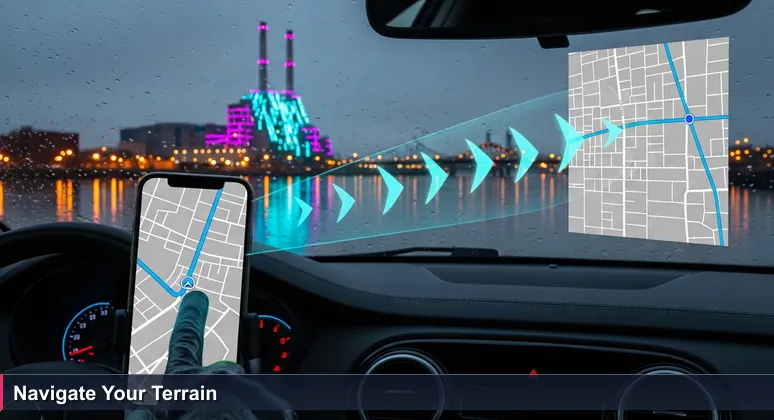
You’re following the GPS turn-by-turn, but you have no idea where you are. The blue line cuts through a generic gray grid, ignoring the smokestacks of the Stellantis Toledo Assembly Complex outside your window. This is exactly how most “how to become an AI engineer” guides fail you here. They provide universal coordinates - learn Python, study statistics - but leave out the local map of Northwest Ohio's economic landscape.
In 2026, Toledo's major employers, from advanced manufacturing to healthcare, aren't hiring generic AI theorists. They need engineers who can bridge algorithms with the gritty realities of production lines, supply chains, and clinical data. The opportunity is significant, with Generative AI Engineer roles in Toledo seeing estimated salary ranges between $73k and $208k and approximately 70 combined AI and AI/ML engineering roles currently listed in the area.
Your learning path must be a hybrid: part universal tech skills, part deep immersion in the industries that define our community. Following a generic roadmap is like navigating without recognizing the Maumee River - you'll miss the turns that lead to real opportunity.
Steps Overview
- Why AI Roadmaps Fail Toledo's Aspiring Engineers
- Lay the Foundation: Essential Setup for Your AI Journey
- Build Your Digital Toolkit with Python and Data Skills
- Unlock Predictive Power with Machine Learning Basics
- Specialize in Deep Learning for Toledo's Key Sectors
- Engineer Ethical and Deployable AI Systems
- Showcase Your Skills and Connect with Toledo's Tech Community
- From Learning AI to Building for Toledo's Future
- Common Questions
Explore education paths for AI in Toledo, OH, from university degrees to bootcamps like Nucamp.
Lay the Foundation: Essential Setup for Your AI Journey
Before starting your journey, you must build a strong foundation with the right mindset and resources. As Professor Leron Ma of Miami University notes, the field increasingly requires specialists who can "adapt generic AI tools for specific industry needs like healthcare and finance." Adopting this specialist-in-training mindset from day one is crucial.
"Specialists are increasingly needed to adapt generic AI tools for specific industry needs like healthcare and finance." - Professor Leron Ma, Miami University (Ohio)
The practical prerequisites are straightforward but non-negotiable. You need a comfort with logical problem-solving and algebra, basic computer literacy for installing software, and a commitment of 15-20 hours of dedicated study per week for this accelerated path.
Your toolkit should include a reliable computer with at least 8GB of RAM (16GB recommended), free software like Python and VS Code, and a plan to leverage local academic resources like UToledo's AI initiatives or foundational courses from Owens Community College. This setup ensures you're building on solid ground, not generic sand.
Build Your Digital Toolkit with Python and Data Skills
The first three months are about constructing your basic digital foundry. In Toledo, this isn't just learning to code; it's learning to manipulate the kinds of data that fuel local industry, from Jeep Wrangler sensor streams at Stellantis to production efficiency logs at Owens-Illinois.
Your primary focus must be on achieving true proficiency in Python and its essential data libraries. This includes:
- Python Proficiency: Mastering syntax, data structures, control flow, and functions.
- Data Wrangling: Using NumPy and Pandas to clean, filter, and aggregate messy real-world datasets.
- Basic Visualization: Creating clear charts with Matplotlib or Seaborn to communicate data stories.
Leverage local learning resources like the online Artificial Intelligence and Machine Learning Suite at Owens Community College for foundational concepts, or consider their Associate of Applied Science in Computer Programming for a structured path. Your verification of success? Taking raw Toledo data - like public energy consumption stats - and using Python alone to clean it, calculate metrics, and produce a telling visualization.
Unlock Predictive Power with Machine Learning Basics
Months four through six transition you from handling data to teaching with it, focusing on classic machine learning (ML). This is the predictive workhorse behind patient readmission models at ProMedica or equipment failure forecasts at Dana Incorporated, where understanding simpler, efficient models is often more valuable than jumping straight to complex neural networks.
Your focus should be on mastering these core areas:
- Core Concepts: Supervised learning (regression, classification) and unsupervised learning (clustering).
- Scikit-Learn Mastery: Implementing algorithms to predict numerical values and categorize items.
- Model Evaluation: Judging performance with metrics like accuracy and precision - a model that fails on critical edge cases is useless on a manufacturing line.
Apply these skills locally. Build a model predicting Toledo metro house prices, teaching you regression and feature engineering. As industry expert Aishwarya Srinivasan argues, "projects matter more than tools." Focus on completing an end-to-end project. Success means you can clearly explain the difference between regression and classification, select the right Scikit-Learn algorithm, train a model, and interpret its performance.
Specialize in Deep Learning for Toledo's Key Sectors
This stage is where you diverge from the generic path and start building your local expertise. You'll delve into deep learning while focusing your projects on Toledo’s key sectors, because neural networks power the advanced AI that inspects Jeep paint jobs at Stellantis or analyzes medical scans at ProMedica.
Your focus must be targeted:
- Deep Learning Frameworks: Gain proficiency in TensorFlow or PyTorch to build and train neural networks.
- Specialized Architectures: Study CNNs for image data (vital for quality control) and RNNs/Transformers for sequence data (like sensor logs).
- Domain Immersion: Choose one Toledo industry. For manufacturing, research predictive maintenance and computer vision. For healthcare, study clinical prediction models and HIPAA-compliant data.
Leverage local pathways like the online bootcamps marketed to Toledo residents by Coding Temple, or explore the new, industry-aligned programs the University of Toledo is launching. As one professional's journey showed, leading a community and "building a focused portfolio was key to landing a role."
Warning: Don’t try to be an expert in everything. One excellent, locally-relevant project - like a CNN to classify glass defects inspired by regional research - is far more impressive than three shallow, generic ones.
Engineer Ethical and Deployable AI Systems
Building a model in a notebook is one thing; deploying it reliably and ethically in a hospital or factory is another. This phase is about engineering maturity, where you learn to manage the full lifecycle of an AI system in Toledo's regulated environments.
Focus on these critical areas:
- MLOps Basics: Learn model deployment, versioning, and monitoring to ensure your model performs as data evolves.
- AI Ethics & Governance: Study bias, fairness, and explainability. As retired Toledo administrator J. Michael Hull emphasized, experts are focused on ensuring AI is "ethically used and contained."
- Cloud & APIs: Get familiar with serving a model through an API so other software can use it.
Contextualize this for Toledo. For a healthcare project, you must understand HIPAA compliance. For automotive, consider the safety implications of a faulty prediction. Engage with regional professional development like the free NSF ACCESS Regional Workshop on AI at Ohio State University. Success means you can articulate potential biases in your project, propose a basic deployment plan, and explain relevant local data privacy regulations.
Showcase Your Skills and Connect with Toledo's Tech Community
The final phase is synthesis and connection. You will refine your projects into a compelling portfolio and actively integrate into the local tech ecosystem. In a connected region like Toledo, where the lower cost of living allows you to thrive while having access to major metros, local relationships are invaluable.
Polish your portfolio with a professional GitHub profile. For each project, write a clear README explaining the Toledo-relevant problem - like optimizing a supply chain for Libbey Glass or analyzing regional health trends - your approach, tools, and results. Engage with hubs of innovation like UToledo’s Herb Innovation Center, which connects researchers and students to explore AI's potential.
Treat your job search like a data science project. Analyze postings from Toledo employers to identify required skills and keywords. For example, a recent posting for a Senior Electrical Engineer - Data Centers at SSOE Group listed adjacent tech skills highly valuable in AI roles. Attend local events and make LinkedIn connections within Northwest Ohio. Success means having 2-3 polished, locally-connected projects and actively building your professional network in the region.
From Learning AI to Building for Toledo's Future
By following this map, you stop navigating a generic blue line and learn the actual terrain. You understand that the data from the Jeep plant differs from that in a ProMedica ICU, but both are opportunities for the AI engineer who has done their local homework. You transition from someone learning AI to an AI engineer building for Toledo.
The journey is challenging but structured, leveraging Toledo's unique advantages: a lower cost of living, a central Great Lakes location with access to Detroit and Cleveland, and a growing tech ecosystem anchored by major employers. This path leads to roles where you don't just implement algorithms but solve real problems for the industries that define our community.
For those seeking a guided environment, exploring focused, cohort-based learning that bridges coding with in-demand AI skills can be the most efficient next step. The goal is in sight - to build intelligence that understands both Python and the landscape of Northwest Ohio.
Common Questions
How can I realistically become an AI engineer in Toledo by 2026?
Start with a structured, month-by-month plan that blends core AI skills like Python and machine learning with Toledo-specific projects, such as analyzing manufacturing data or healthcare logistics. Leverage local resources like Owens Community College's AI programs to build fundamentals before specializing in areas relevant to employers like Stellantis or ProMedica. This approach ensures you're job-ready for Toledo's growing tech scene by 2026.
What kind of salary can I expect as an AI engineer in Toledo?
Generative AI Engineer roles in Toledo have estimated salary ranges from $73,000 to over $200,000, with competitive opportunities in sectors like automotive and healthcare. Coupled with Toledo's lower cost of living, these salaries offer great value, especially compared to nearby major metros like Detroit or Cleveland.
Do I need a college degree or prior experience to start learning AI in Toledo?
No, a degree isn't mandatory, but comfort with logical problem-solving and basic computer literacy is key. Many in Toledo use affordable local options like Owens Community College's online courses or bootcamps like Coding Temple to build skills from the ground up, focusing on practical projects over formal education.
Which industries in Toledo are hiring AI engineers, and why focus on them?
Toledo's key industries, including advanced manufacturing at Stellantis and Dana Incorporated, plus healthcare at ProMedica, are actively seeking AI engineers for roles in predictive maintenance and data optimization. Specializing here taps into a growing ecosystem with unique challenges, like supply chain logistics or glass manufacturing innovations, setting you apart from generic candidates.
Are there local or affordable training programs for AI in Northwest Ohio?
Yes, Toledo offers accessible options like the Artificial Intelligence and Machine Learning Suite at Owens Community College and targeted bootcamps from providers like Coding Temple. With the University of Toledo launching new AI degree programs in 2026, you can gain job-ready skills while staying connected to the regional job market.
A detailed look at the highest tech salaries in Toledo with cost-of-living insights.
Explore high-demand AI careers in Toledo's traditional sectors for 2026.
Explore Toledo tech salaries and expenses for 2026 in this informative article.
For a detailed look at who's hiring cybersecurity professionals in Toledo, OH in 2026, refer to this guide.
For a comprehensive overview, read about Top 10 Tech Coworking Spaces and Incubators in Toledo, OH in 2026.

Irene Holden
Operations Manager
Former Microsoft Education and Learning Futures Group team member, Irene now oversees instructors at Nucamp while writing about everything tech - from careers to coding bootcamps.