









Is San Marino a Good Country for a Tech Career in 2026?
By Irene Holden
Last Updated: April 23rd 2026
Quick Explanation
Yes, but only if you're a senior specialist in fintech, blockchain, or security - or a remote worker maximizing savings. With effective tax rates around 12%, a €100,000 salary nets roughly €88,000, and annual living costs of €30,000-€35,000 leave you saving over €50,000 - about 2.5 times more than in Milan or Berlin. The job market is tiny (53 open roles), so early-career engineers should look elsewhere, but for those who fit, the financial and lifestyle advantages are unparalleled.
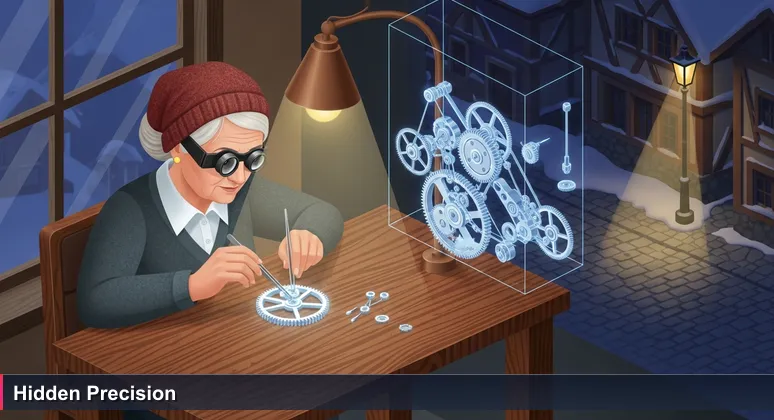
The watchmaker adjusts a gear smaller than a grain of rice. Outside her window, the Alpine street is empty - no commuters, no noise. From here, you would never guess she builds mechanisms that cost more than a car. Now cut to Mount Titano. A tourist buys commemorative stamps near the Three Towers. The street is quiet. This is the postcard the world sees when it looks at San Marino: a medieval relic, a tax haven, a day trip from Rimini. But behind those facades, something else is being assembled.
According to data from Glassdoor’s April 2026 listings for software engineering roles in the republic, a material signal emerges. Fifty-three open positions may sound modest for a country of roughly 34,000 people, yet the compensation tells a different story. Senior Security Engineer roles have been posted in the range of $130,000-$220,000, while monthly gross salaries for software consultants start around €5,000 and senior database administrators can reach €12,500 per month - or €150,000 annually. These are not tourist-economy numbers.
The driving force behind this shift is San Marino Innovation, a government-backed institute that has quietly built a high-tech certification ecosystem. As Sfera Professionisti Associati reports, the Innovation Decree - a legislative package offering tax incentives for R&D and high-tech startups - has produced "record-breaking results" in company registrations. The institute now hosts approximately 80 high-tech firms, with the sector focus deliberately narrow: blockchain, fintech, and digital assets. The point is not volume. It is precision. San Marino is the watchmaker’s workshop - small, specialised, and building something the factory floor cannot replicate. For those who know where to look, the interesting work is already here.
What We Cover
- Beyond the Postcard: What You Don't See
- What the Data Reveals: Salaries & Jobs
- The Tax Advantage That Changes Everything
- Life on Mount Titano: Safety, Health & Leisure
- Who Thrives Here (And Who Won't)
- The Emilia-Romagna Triangle: Bologna, Rimini, Urbino
- Salary vs. Cost of Living: A Concrete Comparison
- Where Skills Come From: Education & Bootcamps
- Honest Downsides: Market Size, Isolation, Red Tape
- The Verdict: Precision Over Scale
- Common Questions
What the Data Reveals: Salaries & Jobs
The numbers paint a picture the postcard cannot. As of April 2026, Paylab’s salary data for San Marino shows that senior database administrators can command up to €12,500 per month - €150,000 annually - while software consultants consistently start above €5,000 monthly. For a microstate of roughly 34,000 residents, these are not tourist-economy figures. A Senior Security Engineer role recently posted in the republic offers between $130,000 and $220,000 depending on experience, signalling that the local market pays top dollar for specialised talent.
What makes this possible is the government’s deliberate focus. The San Marino Innovation institute now hosts approximately 80 high-tech firms, with the Innovation Decree driving record company registrations. The sector concentration is narrow but strategic: blockchain, fintech, and digital assets. The VeChain Foundation’s choice of San Marino as an official partner for its sustainability and blockchain showcase is a concrete sign of international credibility. When a small state picks a lane and legislates aggressively, the professionals in that lane become scarce and valuable.
"San Marino Innovation supports the new legislation... fostering a more solid capacity to attract foreign talent and capital." - San Marino Innovation
The practical takeaway for professionals: if you specialise in distributed ledger technology, smart contract auditing, or application security, you are not competing against thousands of candidates. The typical roles open today include:
- Blockchain developer
- Fintech engineer
- Smart contract auditor
- Application security specialist
These are high-value, high-precision roles in a market where your expertise is the rare component. The job market may be small, but the compensation reflects the scarcity - and the quiet mountain setting is simply where the workshop happens to be.
The Tax Advantage That Changes Everything
The arithmetic shifts dramatically when you factor in taxation. A qualifying remote senior engineer earning around €100,000 can face an effective tax rate of approximately 12% in San Marino, according to a complete guide to tech careers in the republic. Compare that to 43% in Belgium, 45% in the Netherlands, or roughly 43% in Italy's top bracket for the same income. This is not a marginal difference - it is the difference between taking home €88,000 and taking home €57,000. The spreadsheets do not lie.
Now stack that against the cost of living. According to Livingcost.org comparisons, a single person's monthly expenses in San Marino run roughly €1,300-€1,900 including rent. That is significantly lower than Milan (€2,500-€3,000), Amsterdam (€3,000+), or Berlin (€2,200+). Run the numbers: at €100,000 gross with ~12% tax, your net is about €88,000. Annual living costs of €35,000 leave you with €53,000 in savings. In Amsterdam, the same gross yields roughly €60,000 net; living costs of €40,000 leave you with €20,000. The purchasing power advantage is roughly 2.5x.
One honest caveat: the 12% rate typically applies to specific categories of remote workers and registered professionals. You cannot simply show up and claim it. Navigating the residency and tax framework between San Marino and Italy requires professional guidance - firms like Toccaceli Bronzetti specialise in exactly this cross-border setup. Factor in a consultation fee; it is worth it. For those who take the time to understand the system, the reward is financial independence on a timeline that most European hubs simply cannot match.
Life on Mount Titano: Safety, Health & Leisure
San Marino consistently ranks among the world's safest countries, with a UNECE Smart Sustainable Country Profile recording a life expectancy of 86 years. Violent crime is nearly non-existent. The healthcare system is public, well-funded, and accessible to residents. If you have children, the school system integrates with Italian standards, giving you access to both local institutions and the nearby University of Bologna - one of Europe's oldest and most respected universities, approximately 90 minutes by car.
The physical environment is extraordinary by any measure. The republic sits on Mount Titano, with immediate access to the Apennine Mountains for hiking, trail running, and cycling. The Adriatic coast - with beaches stretching from Rimini to Cattolica - is a 25-minute drive downhill. You can literally ski in the morning and swim in the afternoon during spring and autumn. This combination of mountain and coastal access within a single day is rare anywhere in Europe, let alone within a country the size of a small town.
For those who need a dedicated workspace, San Marino Coworking Spaces offers hot desks starting at €245 per month and private offices at €1,000 per month - roughly one-third the cost of comparable space in central Milan. The internet infrastructure is solid, and the time zone (CET/CEST) overlaps cleanly with both US East Coast afternoons and Asian mornings. For the remote professional, the infrastructure supports the lifestyle: quiet, safe, affordable, and surrounded by natural beauty that most urban tech hubs cannot touch.
Who Thrives Here (And Who Won't)
Let me be direct. San Marino is not for everyone, and pretending otherwise helps no one. Senior engineers with five-plus years specialising in fintech, blockchain, or application security will find themselves in an environment designed precisely for their skillset. Your expertise is rare here - you control the negotiation. Founders launching a regulated crypto or fintech startup benefit from the Innovation Decree's corporate tax breaks and a government that responds quickly. Remote-first senior engineers earning €80k-€150k who value quiet and high savings rates will find the digital nomad-friendly pathways increasingly accessible.
"Employees appreciate the friendly atmosphere and supportive staff, highlighting a strong sense of community among colleagues." - Glassdoor review, San Marino
But the same logic excludes others cleanly. Early-career engineers with zero to two years of experience need a liquid job market to job-hop and absorb knowledge at scale - San Marino is too small for that. Bologna, Milan, or Berlin will serve you better. People who thrive on constant social stimulation will find this place oppressive: there is no startup pub scene, no five-nights-a-week meetup circuit. The social life exists - the San Marino Crypto Summit draws the relevant crowd - but it is not a firehose. You must be comfortable with your own company.
- Thrives here: Senior fintech/blockchain/security specialists, regulated startup founders, remote senior engineers seeking savings
- Struggles here: Early-career job-hoppers, those needing a large dating pool, people who require daily urban energy
The honest assessment: San Marino is excellent for the accumulation phase of a career, less so for the peak or the start. If your ambition matches its precision, it works beautifully. If not, the mismatch will be costly.
The Emilia-Romagna Triangle: Bologna, Rimini, Urbino
One of the most underappreciated advantages of living in San Marino is not inside its borders at all - it is access to the surrounding Emilia-Romagna region. This creates a practical commuter triangle that dramatically expands opportunity beyond what the local market alone provides.
Bologna, 90 minutes north, is a major European tech and research hub. The University of Bologna produces a steady pipeline of engineering and computer science graduates. The city hosts a growing startup ecosystem, corporate R&D centres, and co-working spaces. Randstad is active throughout Emilia-Romagna, placing tech talent across manufacturing, logistics, and IT services. If you live in San Marino and want access to a larger organisation, Bologna is feasible for weekly commutes or hybrid arrangements. Rimini, 25 minutes east, offers a thriving tourism and events industry that generates demand for digital infrastructure, booking systems, and marketing technology - plus a beach, a train station to Bologna and Milan, and summer energy San Marino lacks. Urbino, 45 minutes south, is home to another respected university with strong programs in information science and design.
- Bologna (90 min): Major tech hub, startup ecosystem, university talent pipeline
- Rimini (25 min): Tourism tech jobs, beach, train connections to Bologna/Milan
- Urbino (45 min): University programs in information science and design
The practical takeaway: you can live in the quiet precision of San Marino and access the resources of three cities without living in any of them. This commuter pattern is already followed by many tech professionals in the region, and it significantly expands the range of opportunity - from corporate roles to academic collaboration - while keeping you rooted in a safe, beautiful, low-tax base.
Salary vs. Cost of Living: A Concrete Comparison
The numbers tell the story most clearly when placed side by side. Using real data from Paylab's salary benchmarks and Euro Top Tech's cost-of-living analysis, the comparison for a mid-career senior engineer in 2026 is striking. The effective tax rate in San Marino for qualifying workers sits around 12%, versus roughly 35% in Milan and 38% in Berlin. That single difference cascades through every financial decision.
| Scenario | Gross Salary | Effective Tax | Net Take-Home | Annual Living Cost | Annual Savings |
|---|---|---|---|---|---|
| San Marino, senior engineer | €100,000 | ~12% | €88,000 | €30,000-€35,000 | €53,000-€58,000 |
| Milan, senior engineer | €80,000 | ~35% | €52,000 | €36,000-€42,000 | €10,000-€16,000 |
| Berlin, senior engineer | €90,000 | ~38% | €55,800 | €32,000-€38,000 | €17,800-€23,800 |
Note that salaries in Milan and Berlin are typically higher than San Marino for the same role title - yet the tax and cost-of-living differential more than compensates. A senior engineer in San Marino effectively out-saves their Milan counterpart by a factor of three to five, despite earning only €20,000 more on paper. Monthly living costs in the republic run roughly €1,300-€1,900 including rent, according to Livingcost.org, compared to €2,500+ in Milan.
This is the arithmetic that makes San Marino compelling for anyone who values financial independence and early retirement timelines. The spreadsheet does not lie: for the same labour, the savings differential is transformative. The trade-off is market size and social energy - but for those willing to trade those for accelerated wealth accumulation, the numbers are unequivocal.
Where Skills Come From: Education & Bootcamps
The talent pipeline in San Marino is small but strategically aligned. The University of the Republic of San Marino (UNIRSM) offers programs in Management Engineering and Design, with a training offer increasingly integrating digital topics. It is not a massive engineering factory - it is a focused, high-touch institution producing graduates immediately employable in the local fintech scene. For deeper specialisation, the University of Bologna and University of Urbino are both within commuting distance, offering master's programs in artificial intelligence, data science, and computer engineering.
For career changers and those seeking structured upskilling, Nucamp provides an affordable online alternative with programs starting from approximately €1,950 for back-end development to approximately €3,660 for the Solo AI Tech Entrepreneur Bootcamp, which covers LLM integration, prompt engineering, AI agents, and SaaS monetisation over 25 weeks. The Back End, SQL and DevOps with Python program at roughly €1,950 is particularly relevant for learners targeting foundational skills needed in San Marino's growing tech sector. Monthly payment plans remove the upfront cost barrier that often blocks career changers.
"It offered affordability, a structured learning path, and a supportive community of fellow learners." - Nucamp student testimonial
Nucamp's community-based learning model includes local study groups across 200+ cities internationally, with regional meetups in Italy and Europe. The 78% employment rate (Course Report) and 4.5/5 Trustpilot rating suggest the model works. The combination of a Nucamp bootcamp for rapid skill acquisition followed by a university master's for depth is a path several local professionals have taken, according to community reports. For San Marino residents, this creates a flexible education pipeline that adapts to both the microstate's niche needs and the broader Emilia-Romagna job market.
Honest Downsides: Market Size, Isolation, Red Tape
Every career decision involves trade-offs, and San Marino has real limitations that deserve honest acknowledgment. The job market is small. With roughly 53 open software engineering roles at any given time, you cannot expect to find an equivalent position within two weeks if you lose your job. You need runway - ideally six to twelve months of savings. This is not a market for people who live paycheck to paycheck. The ecosystem is boutique, and boutique means fragile when it comes to job security.
Career advancement is structurally limited. In a small ecosystem, promotion paths are shorter. You might top out at "head of engineering" at a firm with ten developers. If your ambition is to become CTO of a 500-person organisation, you will eventually need to move to a larger market. San Marino is excellent for the accumulation phase of a career - less so for the peak. The trade-off between savings rate and career ceiling is real, and it is worth sitting with honestly before making the move.
Regulatory complexity adds friction that a single-jurisdiction move does not. San Marino is not in the European Union, though it has an association agreement and uses the euro. Navigating the tax and residency framework between San Marino and Italy requires professional guidance. Firms like Toccaceli Bronzetti, which specialises in cross-border fintech and tax setup, can help - but the need for specialist advice is itself a cost and a complication. Thousands of people manage it, but the bureaucratic overhead is real.
Social isolation is the most underestimated risk. The expat tech community is small. If you are single and do not speak Italian, your social options are limited. The local dating pool is shallow. Many tech professionals maintain their social life in Rimini or Bologna, which means regular driving. This is manageable, but it is not the walkable urbanism of a European capital. San Marino is quiet, structurally, deliberately quiet. If you need after-work tech meetups five nights a week or the electric buzz of a city that never sleeps, you will find this place oppressive. The downsides are not dealbreakers for the right person - but they are dealbreakers for many, and pretending otherwise is a disservice to anyone considering the move.
The Verdict: Precision Over Scale
The answer depends entirely on what you want. If you need a large, liquid job market with endless options and rapid career movement, San Marino is not the answer. Stay in Berlin, London, or Amsterdam. But if you want to maximise your savings rate while doing high-value, specialised work in a safe and beautiful environment, the republic is arguably the best option in Europe that most people have not considered. The tax structure, the regulatory clarity in fintech, the quality of life, and the access to the Emilia-Romagna region combine into a package that is genuinely difficult to replicate.
The watchmaker in the quiet Alpine workshop does not compete with the factory floor. She builds something the factory cannot. The gear in her tweezers is smaller than a grain of rice, but the mechanism it enables costs more than a car. San Marino is the same. It does not try to be a tech superpower. It does not need to. As Sfera Professionisti Associati reported, the Innovation Decree has produced record-breaking results in company registrations, not by chasing volume, but by attracting precision. Eighty high-tech firms now operate under the San Marino Innovation umbrella, each one fitting the microstate's deliberate strategy.
Precision over scale. That is the philosophy that makes this place work. If you are a senior fintech engineer, a blockchain architect, or a security specialist who values financial independence and a quiet life with an alpine view, the numbers say this is exactly where the interesting work lives. You do not need thousands of job listings. You need the right few, in the right jurisdiction, at the right stage of your career. San Marino offers that - quietly, precisely, and without fanfare. The question is not whether the opportunity exists. The question is whether you are the kind of professional who knows how to see it.
Common Questions
How much can I earn as a software engineer in San Marino, and what is the effective tax rate?
Senior engineers can earn between €60,000 and €150,000 annually, with specific fintech roles reaching higher. The effective tax rate for qualifying remote workers can be as low as 12%, meaning a €100,000 salary yields around €88,000 net - roughly 2.5x more purchasing power than the same gross in Amsterdam or Berlin.
What tech specializations are most in demand in San Marino?
Fintech, blockchain, and application security are the clear priorities, driven by San Marino Innovation's focus on digital assets and crypto regulations. If you specialize in distributed ledger technology or smart contract auditing, you'll find a niche market with limited local competition.
Is it difficult to get a residency permit as a remote worker?
San Marino offers digital nomad-friendly pathways, but you need to navigate a specific tax framework - it's not a simple visa-on-arrival. Hiring a local consultant like Toccaceli Bronzetti can simplify the process, and the republic's association agreement with the EU means fewer bureaucratic hurdles for EU citizens.
How does the cost of living compare to other European tech hubs?
Monthly expenses for a single person run €1,300-€1,900 including rent, compared to €2,500+ in Milan or €3,000+ in Amsterdam. A senior engineer saving €53,000 annually in San Marino would save only €20,000 doing the same job in Berlin - a 2.5x advantage.
What happens if I lose my job - is the local market big enough to find a new role quickly?
With only about 53 open software roles at any time, the market is very small. You need 6-12 months of savings as runway, and you may need to commute to Bologna or Rimini for opportunities. It's not ideal for job-hoppers, but for stable senior roles, the risk is manageable.
Find out how to stack funding sources for your tech bootcamp in our San Marino scholarship guide.
Discover the best women in tech resources in San Marino this year.
For a comprehensive list of the best tech apprenticeships in San Marino 2026, check out our latest guide.
See the top free tech training list for San Marino residents in 2026.
See how San Marino's best AI bootcamps for 2026 compare to Italian options.

Irene Holden
Operations Manager
Former Microsoft Education and Learning Futures Group team member, Irene now oversees instructors at Nucamp while writing about everything tech - from careers to coding bootcamps.