









How to Become an AI Engineer in Sacramento, CA in 2026
By Irene Holden
Last Updated: March 23rd 2026
Quick Summary
To become an AI engineer in Sacramento by 2026, focus on mastering Python and foundational math, then build a portfolio with projects tailored to local industries like healthcare and state government. With high demand where 10 roles compete for each qualified candidate, Sacramento's advantages like proximity to UC Davis Health and Intel's Folsom campus make it a prime location. Structured pathways like Nucamp's affordable bootcamp can accelerate your skills and help you stand out in the region's growing AI job market.
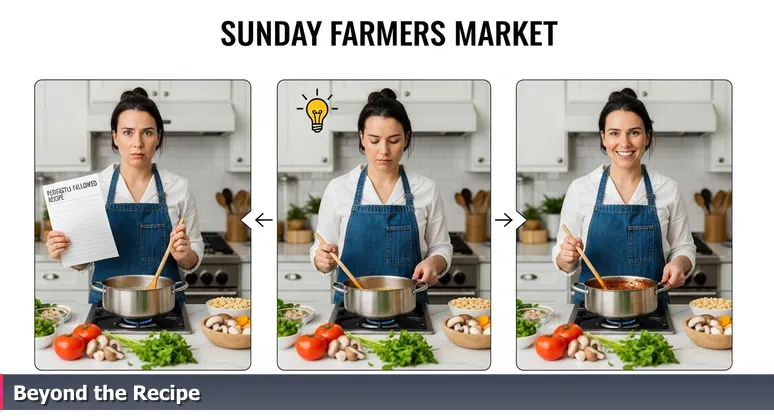
That moment of frustration in the kitchen, staring at a bland sauce despite following the recipe perfectly, mirrors a common trap in career transitions. You can collect every skill on a generic AI roadmap and still fail to land a role because you lack the contextual intuition of a local chef - the builder who knows which tools and techniques matter for Sacramento's unique market.
The stakes are incredibly high. Industry analysis reveals that for every 10 open AI roles, there's only 1 qualified candidate, creating immense opportunity for those who can prove their skills in a market desperate for talent. Success isn't about passive study; it's about active creation.
"Builders will outperform studiers in the 2026 market." - Ex-Google and Microsoft engineers, outlining a pragmatic 6-month roadmap.
This builder's mindset requires committing to consistent, public progress. In Sacramento, this means grounding your journey in the region's realities: a lower cost of living than the Bay Area, median tech salaries around $86,000, and specialized opportunities at employers like Intel's Folsom campus, where Grade 7 Software Engineers command median total compensation of approximately $186,750. Your primary tool is a reliable computer, but your most important asset is the resolve to code, build, and share your work weekly, transforming from a student of instructions into a creator of solutions.
Steps Overview
- Assess Your Starting Point for AI Success
- Build Your AI Foundation with Python and Math
- Explore Sacramento's AI Ecosystem and Specialties
- Select the Right Learning Path for Sacramento AI
- Create a Portfolio That Appeals to Local Employers
- Advance from Prototypes to Production-Ready AI
- Verify Your Readiness for Sacramento's AI Job Market
- Common Questions
For aspiring professionals, The Complete Guide to Starting an AI Career in Sacramento, CA in 2026 offers essential insights.
Build Your AI Foundation with Python and Math
Your first two months are about mastering the universal tools, learning to wield your knife (Python) and control the heat (mathematics). As one technical reviewer bluntly states, AI/ML engineer job descriptions list Python as "mandatory" for virtually every role. You cannot build without it.
This goes beyond basic syntax. You must develop deep fluency with the scientific computing stack that forms AI's backbone:
- NumPy for efficient numerical operations on arrays and matrices.
- Pandas for data cleaning, manipulation, and analysis.
- Matplotlib for visualizing data and model results.
Simultaneously, solidify the mathematical intuition that explains how models learn. Focus on three core areas:
- Linear Algebra: Vectors and matrices are the fundamental language for representing data.
- Calculus: Understanding gradients is essential to grasp how neural networks learn via backpropagation.
- Probability & Statistics: Concepts like distributions and variance are critical for evaluating model performance and uncertainty.
Pro tip: Connect abstract learning to local data. While mastering Pandas, practice by cleaning and analyzing a public dataset from the California Open Data Portal, such as public health statistics or agricultural reports. This builds the practical data-wrangling skills Sacramento employers value.
Warning: The most common mistake is rushing through Python fundamentals to get to the "sexy" AI part. A shaky foundation causes everything you build later to be unstable. Adopt the consistency championed by career mentors: code every day, even if just for 30 minutes, to build the muscle memory of a true builder.
Explore Sacramento's AI Ecosystem and Specialties
Before writing a single line of model code, you must survey the landscape. This phase transforms you from a generic AI learner into a Sacramento-focused problem-solver by mapping the distinct technical appetites of the region's major employers.
In 2026, expertise is defined by applying the right tool to the right local problem. Research shows Sacramento's key players have prioritized needs:
- State of California: Values AI ethics, security, governance, and experience migrating legacy government systems into modern frameworks.
- Intel (Folsom Campus): Seeks hardware-software co-design, model optimization for efficient deployment, and computer vision expertise.
- UC Davis Health & Sutter Health: Prioritize HIPAA-compliant data handling, NLP for clinical notes, and model explainability in patient care.
- Regional Startups & Agritech: Often need "full-stack AI" capabilities - the skill to build, deploy, and maintain a complete application.
Concurrently, begin exploring the modern AI stack that powers these solutions. The field has shifted from building models from scratch to orchestrating powerful existing ones. Get hands-on with core concepts like Large Language Models (LLMs) and Retrieval-Augmented Generation (RAG), using tools like LangChain that are becoming as fundamental as Python libraries.
Practical Sacramento Example: Read a recent AI in agriculture publication from UC Davis or attend a virtual workshop from the Generative AI in Higher Education series hosted by local colleges. Follow incubators like the Carlsen Center to understand what problems regional startups are solving.
Warning: Neglecting this ecosystem research is a critical mistake. A candidate who only understands generic AI principles cannot articulate how their skills solve Sacramento-specific challenges at employers like UC Davis Health or Intel, leaving them at a severe disadvantage in a competitive job market.
Select the Right Learning Path for Sacramento AI
With your foundations laid and the Sacramento landscape mapped, you now face a pivotal decision: choosing the structured learning path that transforms you from a learner into a practitioner. This choice determines how efficiently you'll acquire the modern AI stack that local employers demand.
The Greater Sacramento area offers several distinct pathways, each with different timelines, costs, and outcomes. Your decision should align with your career stage, learning style, and financial resources.
| Pathway | Duration | Typical Cost | Key Focus & Sacramento Relevance |
|---|---|---|---|
| University Degree (e.g., UC Davis, Sac State) | 24+ months | $30,000+ | Deep theoretical grounding, research opportunities. Ideal for those seeking roles in R&D at institutions like UC Davis engineering labs. |
| Structured Bootcamp (e.g., Nucamp) | 4-7 months | $2,124 - $3,980 | Job-ready skills in the modern AI stack (LLMs, RAG, agents). The 25-week Solo AI Tech Entrepreneur Bootcamp ($3,980) is engineered for builders, aligning with the "full-stack" needs of local startups and tech employers. |
| Self-Study | 6-12 months | Variable (mostly time) | Requires extreme discipline. Involves following expert blueprints like the "7-Pillar" AI engineer roadmap covering Python to cloud deployment. |
Common Mistake: Choosing a pathway based solely on cost or duration without verifying its curriculum covers the modern AI stack (LLMs, RAG, agents) that Sacramento employers are hiring for. A program teaching only classical machine learning will leave critical skill gaps.
Tip: Regardless of the path, ensure it is project-centric. As successful candidates report, a project-backed portfolio is the most powerful tool for standing out in a competitive market like Sacramento's. Bootcamps like Nucamp build this portfolio into their core curriculum, providing structured guidance that self-study often lacks.
Create a Portfolio That Appeals to Local Employers
This is where you move from theory to practice and develop your "chef's intuition." Your portfolio is your primary credential - it demonstrates applied skill, problem-solving, and local market awareness more effectively than any certificate.
Build 3-4 substantial projects, each with clean code, a detailed README, and a live demo. Crucially, focus on domains that scream relevance to Sacramento employers:
- Healthtech Project: Build a document summarizer for clinical trial abstracts or a readmission risk predictor using public health data. This shows direct relevance to UC Davis Health or Sutter Health and an understanding of HIPAA-compliant concepts.
- Civic Tech Project: Create a RAG-based chatbot using LangChain that answers questions about California government processes by querying official PDFs. This demonstrates skill with legacy document systems, a key State priority.
- Agritech or Engineering Project: Develop a computer vision model to identify crop stress from satellite imagery or a predictive maintenance model. This aligns with the region's agricultural base and Intel's focus on embedded AI.
- Full-Stack AI Demonstration: Take a model, build a Flask or FastAPI backend, and deploy it on a cloud service. This proves you can deliver a working application, a key need for startups.
Practical Sacramento Example: For your civic tech project, use the California Legislative Information API or scrape public PDFs from the CA Air Resources Board as your knowledge base. For healthtech, explore project ideas for beginners and adapt them to local datasets.
Warning: Do not choose generic tutorial projects like MNIST digit classification. These are solved problems that don't differentiate you. As experts note, "proprietary data is becoming the true differentiator."
Pro tip: Document your entire process on GitHub, including mistakes and debug logs. This shows engineering maturity. A portfolio with active commit history tells the story of a builder, not just a studier.
Advance from Prototypes to Production-Ready AI
The final phase of your journey is about moving from promising prototypes to production-ready systems. This is what separates a hobbyist from a hireable engineer, as companies need professionals who can integrate AI safely, reliably, and scalably into real business infrastructure.
To meet this standard, you must focus on three critical areas of advanced skill development:
- Learn MLOps Fundamentals: Master the tools for model versioning (MLflow), containerization (Docker), orchestration basics (Kubernetes), and cloud deployment (AWS SageMaker, Google AI Platform). This ensures your models are reproducible and scalable.
- Deepen Your Local Specialization: Based on your target Sacramento employer, dive deeper into their niche. For healthcare, study model interpretability (SHAP, LIME). For Intel and hardware-AI, learn model quantization and edge deployment frameworks. For State government, understand AI ethics frameworks and secure, on-premises deployment.
- Master the Agentic Workflow: The field is moving beyond single models to coordinated AI agents. Learn to use frameworks like LangGraph to build multi-step, autonomous workflows, a skill highlighted in specialized training available in Sacramento.
Practical Sacramento Example: Take your healthtech document summarizer, package it into a Docker container, and write a simple CI/CD pipeline script using GitHub Actions that automatically tests and deploys the model to a cloud endpoint upon a code commit. This mimics the workflow of a health system's data science team.
Warning: Neglecting the soft skills and ethics required by Sacramento's major employers is a critical error. Organizations like the State of California and UC Davis Health require clear communication about model limitations and a strong ethical compass regarding data use and bias.
Pro tip: Establish thought leadership by contributing to an open-source AI project or writing a technical blog post explaining one of your projects. This demonstrates both technical communication skills and a commitment to the engineering community.
Verify Your Readiness for Sacramento's AI Job Market
You have successfully navigated the skill-building journey when you can confidently check these boxes, proving you're no longer just following a recipe but are ready to cook for Sacramento's unique market palate.
Technical Proof: Your GitHub portfolio contains 3-4 non-trivial projects that solve problems relevant to Sacramento's key industries (Health, Government, Agriculture, Tech). Crucially, at least one is a deployed application with a live endpoint, not just a Jupyter notebook, demonstrating you can ship working software.
Local Acumen: You can clearly articulate to a recruiter from the State of California, Intel, or UC Davis Health how your skills specifically address their known technical priorities - whether that's data governance, model optimization for hardware, or HIPAA-compliant NLP. You speak their language.
Modern Stack Proficiency: You have demonstrable hands-on experience with the LLM orchestration stack (e.g., LangChain), vector databases, and can explain how Retrieval-Augmented Generation (RAG) works and why it's critical for enterprise applications. Your skills are current, not dated.
Builder's Mindset: You discuss your projects by narrating the problem, your solution, the technical choices you made, and - importantly - the lessons learned from failures. You have an engineering story, not just a list of technologies. This mindset is what leads to the confidence and capability valued by employers, from startups to major institutions.
When your abilities represent the demonstrated skill to prepare a dish that appeals directly to Sacramento's blend of government, healthcare, agritech, and engineering needs, your transformation is complete. You are no longer a student of instructions but a creator prepared to build the intelligent future of the Sacramento region.
Common Questions
Is becoming an AI engineer in Sacramento by 2026 a realistic goal?
Yes, it's highly feasible with industry experts noting a 10:1 ratio of open AI roles to qualified candidates, indicating strong demand. Sacramento's growing tech ecosystem, including employers like Intel and UC Davis Health, offers ample opportunities for skilled engineers in the region.
What foundational skills should I focus on first for an AI career in Sacramento?
Start by mastering Python programming and core math concepts like linear algebra and statistics. Practice with local datasets from the California Open Data Portal to build relevant, hands-on skills early in your journey.
How does Sacramento's AI job market compare to places like Silicon Valley?
Sacramento offers a lower cost of living than the Bay Area while providing access to major employers like the State of California and healthcare systems. With talent from UC Davis and Sacramento State, the region is becoming a competitive hub for AI roles in healthtech and civic tech.
What are the best training options for AI in the Sacramento area?
Consider structured bootcamps like Nucamp's Solo AI Tech Entrepreneur Bootcamp, which costs $3,980 and focuses on the modern AI stack. Alternatives include university programs at UC Davis or Sacramento State for deeper theory, or self-study with expert roadmaps for flexibility.
How can I make my AI portfolio appealing to Sacramento employers?
Build projects targeting local industries, such as a HIPAA-compliant document summarizer for healthcare or a civic tech chatbot using California state data. This demonstrates your ability to solve Sacramento-specific problems and increases your hireability with regional employers.
Discover the best tech coworking spaces in Sacramento for your startup needs.
This article offers an in-depth look at financial viability for tech workers in Sacramento based on 2026 data.
Get insights from the 2026 guide to landing tech jobs in Sacramento without a degree.
Learn about Sacramento's top tech companies recruiting entry-level talent for the upcoming year.
Discover what to expect from AI salaries in Sacramento by role and experience in 2026 in this comprehensive article.

Irene Holden
Operations Manager
Former Microsoft Education and Learning Futures Group team member, Irene now oversees instructors at Nucamp while writing about everything tech - from careers to coding bootcamps.