









How to Become an AI Engineer in Providence, RI in 2026
By Irene Holden
Last Updated: March 21st 2026
Quick Summary
Become an AI engineer in Providence, RI by 2026 with a dedicated 12-month roadmap that merges technical skills like Python, deep learning, and MLOps with hands-on projects tailored to local industries such as healthcare and finance. Tap into Providence's unique advantages, including Brown University's research resources and networking at events like URI AI Lab workshops, to build a portfolio that appeals to employers like CVS Health and Citizens Bank, all while benefiting from the metro area's growing AI startup ecosystem.
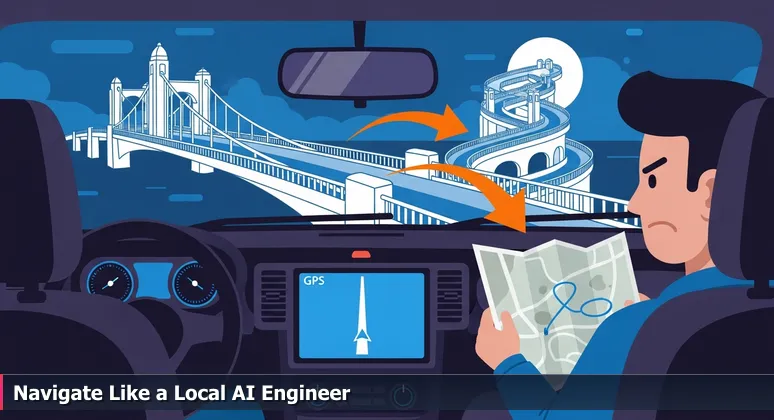
We've all been there: white-knuckling the wheel, blindly following your GPS into a Providence traffic circle, only to realize there was a smarter local route it never showed you. This exact frustration of following generic directions in a complex city mirrors the failure of most "How to Become an AI Engineer" guides - they give you technical coordinates but leave you stranded without a map of the local landscape.
The first prerequisite isn't a piece of software; it's a mindset shift. As the state’s AI task force has noted, the core blocker for local industries is a lack of "people who understand AI, who can implement it safely and securely". Your goal is to build that trusted, contextual intelligence to navigate Providence's specific health-tech, finance, and research corridors, not just follow a generic online tutorial.
Practically, you will need a reliable computer, a stable internet connection, and the willingness to dedicate consistent weekly hours. A foundational grasp of high school-level algebra is highly beneficial, but your focus must be on learning to write production-ready code from the start. Install Python 3.10+ and a robust editor like VS Code, and get comfortable with version control and virtual environments.
This foundation ensures you are not just a passenger on your journey but the navigator, equipped to apply global AI skills to the unique and promising terrain of the Providence-Warwick metro area. According to a practical guide for 2026, the best engineers build systems that "fail gracefully, communicate limitations clearly, and improve continuously based on real-world feedback" - a skill set prized by local employers from Citizens Bank to Lifespan.
Steps Overview
- Set Up Your Prerequisites for Success
- Equip Yourself with the Core Toolkit
- Build Your Foundation with Python and Local Insights
- Master Mathematics and Data Wrangling
- Learn Machine Learning Fundamentals
- Specialize in Deep Learning for Healthcare
- Dive into Generative AI and RAG
- Master MLOps and Deployment Techniques
- Integrate Skills and Network Locally
- Measure Your Readiness for the Job Market
- Common Questions
This complete guide to AI careers in Providence, RI provides invaluable insights.
Equip Yourself with the Core Toolkit
With the right mindset established, the next step is assembling a professional toolkit that balances global standards with local utility. Think of this not as downloading random apps, but as provisioning for an expedition through Providence's unique tech terrain.
Your technical foundation requires three key accounts. First, install Python 3.10+ and master pip and virtual environments to manage project dependencies cleanly. Second, create a GitHub account to host your growing portfolio from day one. Third, sign up for free-tier access on a major cloud platform like Microsoft Azure or AWS; these are widely used in local projects like Rhode Island's digital permitting systems and are essential for modern deployment.
Critically, your toolkit must include local learning maps. Immediately bookmark the URI AI Lab for workshops and research connections, Rhode Island College’s dedicated AI Bachelor’s program, and Brown University’s executive AI education offerings. These institutions are not just schools; they are gateways to the local ecosystem and future employer networks.
For intensive, practical training focused on real-world implementation, providers like NobleProg Rhode Island offer instructor-led courses. This combination of tools ensures you can both build competently and connect your work to the opportunities growing in Providence's backyard.
Build Your Foundation with Python and Local Insights
This initial phase has a dual mission: master Python for real-world systems while mapping Providence's economic landscape. You're learning not just how to code, but why certain skills are prioritized by local employers like CVS Health and Citizens Bank, who need engineers who write maintainable, scalable code for secure financial and health systems.
Focus your Python study on production-ready concepts: object-oriented programming, building APIs with FastAPI or Flask, and asynchronous operations. A powerful practical exercise is to build a REST API that returns data about Providence's neighborhoods and, concurrently, write a script to scrape and analyze in-demand skills from local company career pages using requests and BeautifulSoup.
This hands-on research is your first step in developing contextual intelligence. It moves you from following a generic map to understanding the local demand signals, revealing whether the market needs more data engineers, MLOps specialists, or computer vision experts.
To ground your learning locally, enroll in an introductory workshop through the URI AI Lab or explore structured basics at CCRI. A common critical mistake is only practicing in Jupyter notebooks; you must write scripts and modules meant to be run and deployed, which is what Providence employers expect from day one.
Master Mathematics and Data Wrangling
With Python's syntax under your belt, the journey now turns to the mathematical engine that powers every AI system. This isn't abstract theory; it's the applied toolkit you'll use daily. Linear algebra for vector operations, calculus for gradient optimization, and statistics for probability distributions form the bedrock upon which models at institutions like Brown University are built, separating capable engineers from true innovators.
Your immediate task is to apply these concepts using NumPy for numerical computing and Pandas for data manipulation. The goal is to move from understanding a matrix multiplication to wielding it to clean, transform, and analyze real-world data efficiently.
For a powerful local exercise, find a public dataset from the City of Providence, such as 311 service requests or bike share usage. Use Pandas to handle missing values, calculate key statistics like request resolution times, and visualize spatial trends with Matplotlib. This process of data wrangling transforms messy public information into a clear narrative, mirroring the first step in any local analytics project.
To deepen this integration, connect with students in the Artificial Intelligence Bachelor’s program at RIC, where the curriculum is designed to blend this mathematical core with business applications from day one. This phase builds the essential link between numerical theory and the practical intelligence needed for Providence's data-driven challenges.
Learn Machine Learning Fundamentals
Now, the abstract mathematics you've mastered finds its purpose: building intelligent systems that make predictions. This phase introduces the core toolkit of machine learning - algorithms like linear regression, decision trees, and k-means clustering via Scikit-learn. More importantly, you'll learn the crucial discipline of model evaluation, validation, and managing the bias-variance tradeoff.
This skill set is the engine for predictive analytics, a capability in high demand across Providence's dominant sectors. From forecasting financial risk at Citizens Bank to optimizing patient flow at Lifespan, the ability to turn historical data into future insight is invaluable. As outlined in a comprehensive 2026 career guide, this transition from data manipulation to model building is where you begin creating tangible business value.
Your key practical project should mirror local innovation. Build a "Lifespan Health Predictor" using a public health dataset to model a specific risk factor, focusing rigorously on evaluation metrics. This directly reflects the work of homegrown ventures like DeLorean AI, founded by a Rhode Islander to predict patient outcomes.
Warning: Avoid the academic trap of endlessly tweaking models for minor accuracy gains. The professional goal is a reliable, working pipeline. This mindset shift - valuing robust deployment over theoretical perfection - is what prepares you for the production environments of Providence's leading employers.
Specialize in Deep Learning for Healthcare
Deep learning represents the cutting edge where machines learn patterns directly from complex data like images and text. Here, you'll specialize in neural network fundamentals, focusing on Convolutional Neural Networks (CNNs) for image analysis and Recurrent Neural Networks (RNNs) for sequential data like language. Mastery of frameworks like PyTorch (dominant in research) and TensorFlow (common in enterprise) is essential.
This specialization is not academic; it's highly targeted. CNNs are the backbone of the medical imaging analysis used daily at Lifespan and Care New England, while RNNs and their successors underpin the language models transforming patient record management and customer service.
Your definitive practical project is to build a medical image classifier. Use a dataset like Chest X-Ray images to train a CNN that can identify conditions, demonstrating direct, tangible value to Providence's massive healthcare sector. To see this applied research in action and network with its creators, attend a "Discovering AI" event at URI. This hands-on, sector-specific project is what transforms a generic deep learning skill into a compelling credential for Providence's health-tech ecosystem.
Dive into Generative AI and RAG
The AI landscape has evolved beyond standard predictive models. To be relevant in 2026, you must master the modern stack powering conversational and reasoning systems: Transformer architecture, prompt engineering, and critically, Retrieval-Augmented Generation (RAG). This involves vector databases like Pinecone and orchestration frameworks such as LangChain.
As discussed on technical forums, success now requires understanding "tool calling, context management, [and] planning" for building intelligent agents. This is precisely what local startups and innovation labs at Brown University are implementing to create the next generation of enterprise tools.
Your practical project should build an Enterprise RAG system for a local business. Create a bot that answers questions using a PDF manual from a Providence company, simulating a "Citizens Bank FAQ bot." Implement a vector database for semantic search and a simple front-end, showcasing a complete, usable application.
When designing this, apply the "30% AI Rule" - a principle advocating for AI to accelerate 30% of low-value, repetitive tasks. Frame your project to solve a specific, tedious information retrieval problem, demonstrating the practical, incremental value prized by Rhode Island businesses looking to integrate AI safely and effectively.
Master MLOps and Deployment Techniques
This is the phase where you transition from a model builder to an engineer of scalable, reliable systems - the #1 skill gap identified in the local 2026 market. You'll learn to containerize models with Docker, serve them via APIs with FastAPI or Streamlit, and manage basic CI/CD and model monitoring pipelines, often deploying to cloud platforms like AWS SageMaker.
This "production" competency is what gets you hired. As emphasized in career guides, "theory gets you interviews, but projects get you hired." Employers like Citizens Bank explicitly seek MLOps experience for building and maintaining their secure, production-grade financial AI systems.
Your hands-on project is to create an End-to-End Sentiment Pipeline. Take a model from an earlier phase, containerize it with Docker, and deploy it as a microservice with a REST API using FastAPI. Then, implement logging and a basic dashboard to monitor predictions and potential model drift. This demonstrates you can own the full lifecycle.
Warning: Do not treat deployment as an optional final step. In Providence's competitive market, the ability to reliably ship and maintain AI applications is the definitive skill that separates candidates. Mastery here proves you can deliver value, not just experiments.
Integrate Skills and Network Locally
The final stretch is about synthesis and connection. Integrate every skill you've learned into one compelling capstone project that tells a local story, then actively engage with the community that will hire you. Providence's market values connectors as much as coders.
Your capstone should demonstrate end-to-end system thinking. Build an "Intelligent Document Processor" for Rhode Island municipal forms, using computer vision for layout understanding and NLP for data extraction. This mirrors the state's own digital transformation initiatives and shows you can architect complete solutions.
Concurrently, your networking must be deliberate. Polish a GitHub portfolio with 3-4 stellar projects, then take these concrete actions:
- Present your work at a URI AI Lab workshop or local meetup to gain visibility and feedback.
- Engage with international-local partnerships like the Rhode Island-Israel AI Collaborative to connect with a broader network of experts.
- Consider intensive, practical training from providers focused on real-world implementation to sharpen your edge before interviews.
This combination of a polished, locally-relevant portfolio and authentic community engagement transforms you from a solitary learner into a visible contender within Providence's collaborative tech ecosystem.
Measure Your Readiness for the Job Market
You'll know you're ready for an AI engineering role in Providence when your portfolio tells a local story. Your projects should solve problems relevant to healthcare, finance, or public sector efficiency in Rhode Island, using datasets and frameworks that speak directly to employers like Lifespan, Citizens, or municipal partners. This demonstrates you've moved beyond generic tutorials to apply skills within a specific context.
Success is also measured by your ability to think in systems. Can you architect a solution that includes data ingestion, model serving, monitoring, and a user interface? Do you understand how it would integrate into a company's existing tech stack? This architectural mindset is what local firms need to move from pilot projects to production.
Furthermore, you must be able to speak the local language. This means discussing how MLOps ensures secure systems at Citizens Bank, how computer vision aids diagnostics at Lifespan, or how agentic frameworks could accelerate a Brown research spin-off. Your journey mirrors that of leaders like AAA Northeast’s CEO, who transformed his company by embedding a data-driven culture and building practical AI programs.
Ultimately, readiness is defined by contextual intelligence - the navigator's skill that lets you build systems which, as experts note, "fail gracefully, communicate limitations clearly, and improve continuously based on real-world feedback." You are no longer following a map; you are charting the course for innovation within Providence's unique terrain.
Common Questions
How long does it take to become an AI engineer in Providence, RI, following a practical roadmap?
With the 12-month roadmap detailed in the article, dedicated learners can become job-ready by 2026. This plan integrates global technical skills with local context, preparing you for roles at employers like CVS Health and Lifespan in the Providence-Warwick metro area.
What are the must-have prerequisites before starting this AI engineering journey in Providence?
You'll need a computer, stable internet, and high school-level algebra. Crucially, adopt a navigator's mindset to apply AI skills locally, as Rhode Island's AI task force highlights the need for trusted expertise in implementing AI securely.
Are AI engineering jobs in Providence limited to big tech, or are there local opportunities?
Providence offers diverse opportunities beyond big tech, with a growing AI ecosystem. Local employers like Citizens Financial Group and health-tech startups, supported by research from Brown University, actively seek engineers for roles in MLOps and generative AI.
Do I need a degree from a top school like Brown University to break into AI in Providence?
No, while Brown offers resources, the roadmap emphasizes practical skills and local networking. You can leverage workshops from URI AI Lab and build a portfolio with projects relevant to Providence's healthcare or finance sectors to succeed.
What's the biggest challenge in becoming an AI engineer in Providence, and how can I overcome it?
The main challenge is moving beyond generic tutorials to develop contextual intelligence for Providence's market. Overcome this by focusing on projects like a medical image classifier for Lifespan and networking at local events, such as those hosted by the Rhode Island-Israel AI Collaborative.
Everything you need to know about paying for tech training in Providence in 2026 is covered here.
The leading women in tech resources in Providence are ranked for your benefit.
Learn about high-earning tech roles in Providence accessible through certifications in this detailed post.
Check out the top industries for AI careers in Providence.
This blueprint for tech life in Providence covers 2026 salaries and expenses.

Irene Holden
Operations Manager
Former Microsoft Education and Learning Futures Group team member, Irene now oversees instructors at Nucamp while writing about everything tech - from careers to coding bootcamps.