









The Complete Guide to Using AI in the Retail Industry in Pearland in 2025
Last Updated: August 24th 2025
Too Long; Didn't Read:
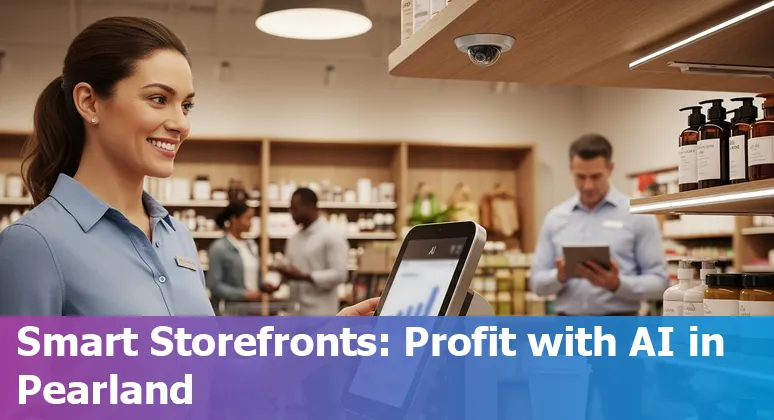
Pearland (125,000+ residents) is becoming an AI retail testbed in 2025: pilots like shelf‑monitoring cut stockouts ~60%, chatbots cut call volume, and AI can deliver ~2.3x sales and 2.5x profit boosts. Start 60–90 day pilots ($5K–$50K) with clear KPIs.
Pearland matters for AI in retail in 2025 because this fast-growing Houston suburb - a dynamic city of 125,000+ - is already weaving AI into streets and stores: shops along Broadway Street and a planned 12‑acre Asian Town create concentrated retail demand, the city has rolled out NoTraffic's AI traffic system to modernize intersections, and local providers advertise AI-ready IT services in Pearland to help merchants deploy inventory, personalization, and security tools.
National research shows adopters can see roughly a 2.3x increase in sales and a 2.5x boost in profits from AI, so local retailers who pair tech with customer-facing transparency stand to win.
For retail teams needing practical training, the AI Essentials for Work bootcamp offers a 15‑week, hands-on path to apply AI tools and prompts across store operations - making Pearland a practical testbed for profitable, responsible AI in 2025.
| Program | Length | Early bird cost |
|---|---|---|
| AI Essentials for Work | 15 Weeks | $3,582 |
“Traffic impacts all of us – whether it's getting to work, running errands, or just enjoying our community,” said Pearland Mayor, Kevin Cole.
Table of Contents
- What is AI in retail? A beginner-friendly primer for Pearland, Texas
- AI industry outlook for 2025 and what it means for Pearland, Texas retailers
- High-value AI use cases for Pearland, Texas stores (price, demand, personalization, supply chain)
- In-store AI: Computer vision, robots, and inventory tracking in Pearland, Texas shops
- Building AI in Texas: talent, hubs, and resources near Pearland, Texas
- Costs, timelines, and how to build an AI retail app in Pearland, Texas
- AI governance, ethics, and US regulations in 2025 for Pearland, Texas businesses
- How Pearland, Texas retailers can get started: vendors, pilots, and funding
- Conclusion - The future of AI in the retail industry for Pearland, Texas in 2025
- Frequently Asked Questions
Experience a new way of learning AI, tools like ChatGPT, and productivity skills at Nucamp's Pearland bootcamp.
What is AI in retail? A beginner-friendly primer for Pearland, Texas
(Up)Think of AI in retail as a smart toolkit that turns everyday store data - sales, shelf images, customer clicks - into action: faster restocks, personalized offers, and fraud or shrink alerts that save payroll and margins.
At its simplest, AI uses machine learning and analytics to forecast demand, optimize inventory, and tailor marketing in real time, while generative models crank out product copy and chatbots handle routine customer questions; NetSuite's overview lays out these core uses like dynamic pricing, visual search, and loss prevention for retailers big and small.
For Pearland shops, practical support comes from local partners offering AI-ready IT services in Pearland for managed IT, cloud hosting, and cybersecurity - managed IT, cloud hosting, and cybersecurity to keep models reliable and compliant - and stepwise frameworks like enVista's readiness checklist show how to move from pilot to scale.
Small teams can start with plug‑and‑play tools - think recommendation engines or cashier‑assist bots - and pilot a visible win, such as computer-vision shelf monitoring use cases for retail in Pearland that keeps best‑sellers front and center so staff spend less time searching and more time serving customers.
“Traffic impacts all of us – whether it's getting to work, running errands, or just enjoying our community,” said Pearland Mayor, Kevin Cole.
AI industry outlook for 2025 and what it means for Pearland, Texas retailers
(Up)Pearland retailers should watch 2025 as a year when AI shifts from pilot projects to everyday store tools: multiple industry reports put the global AI-in-retail market in the mid‑teens of billions this year (estimates range from about USD 14.03B to USD 15.4B), while generative and predictive AI segments are accelerating even faster - creating cheap, plug‑and‑play options for personalization, pricing, and forecasting.
North America already leads adoption, and NRF's “25 predictions for 2025” highlights practical trends Pearland merchants can act on now - AI shopping agents, live shopping, dynamic pricing, cashier‑less experiences, and smarter supply chains that use predictive models to avoid stockouts during seasonal spikes.
For small Texas storefronts that can't overhaul legacy systems overnight, the implication is clear: start with high‑ROI pilots (recommendation engines, shelf‑monitoring cameras, or conversational chatbots) and scale what improves conversion or cuts waste, while treating transparency and data security as business priorities.
Picture inventory robots and AI agents quietly trimming lost sales overnight so staff arrive to shelves already restocked and customers greeted with eerily relevant recommendations - practical wins that translate market growth into local revenue.
| Source | 2025 estimate |
|---|---|
| Precedence Research AI in Retail Market Report (2025 estimate) | USD 14.03 billion |
| The Business Research Company Global AI in Retail Market Report (2025 estimate) | USD 15.4 billion |
| Grand View Research AI in Retail Market Analysis (2025 estimate) | USD 14.49 billion |
“AI shopping assistants ... replacing friction with seamless, personalized assistance.” - Jason Goldberg, Publicis
High-value AI use cases for Pearland, Texas stores (price, demand, personalization, supply chain)
(Up)Pearland retailers should prioritize a short list of high‑value AI bets that map directly to local realities: dynamic pricing and margin management to absorb tariff-driven cost shocks, demand forecasting tied to the city's tight housing market and shifting inventory levels, personalization engines to lift conversion in neighborhood centers, supply‑chain optimization for faster replenishment across Houston‑area logistics routes, and computer‑vision shelf monitoring to catch shrink and keep best‑sellers front‑and‑center so staff spend more time helping customers than searching for stock.
Combined, these use cases turn local indicators (MSI, median price trends, tariff pressure) into measurable wins - fewer stockouts, smarter promotions, and lower contact‑center load via chatbots - so a morning shopper in Pearland might find shelves already restocked because an overnight model flagged a gap and triggered a restock alert.
For quick reference, start pilots with shelf monitoring and conversational AI, then layer forecasting and pricing as data quality improves.
| AI use case | Why it matters in Pearland (source) |
|---|---|
| Nucamp AI Essentials for Work syllabus - computer-vision shelf monitoring case study | Puts best-sellers front‑and‑center and reduces shrink (Nucamp case study) |
| Demand forecasting & inventory | Pearland MSI and median price shifts show local demand patterns to model (HAR Pearland real estate market update (Feb 2025)) |
| Dynamic pricing & margin tools | Helps manage tariff and sourcing pressures noted in Texas retailer coverage (Dallas News Texas retail tariffs coverage (May 21, 2025)) |
| Nucamp AI Essentials for Work syllabus - conversational AI and chatbot implementation | Reduces call volume and labor costs in local contact centers (Nucamp) |
| Supply-chain optimization | Regional retail market trends guide prioritization and scaling (Weitzman Texas retail report) |
“This includes the combination of cost sharing with vendors and price increases in the coming quarters and sourcing optimization in the medium ...” - Dallas News
Start with pilot projects that have clear KPIs: shrink reduction for shelf monitoring, average handle time and deflection rates for conversational AI, fill rate improvements for forecasting, and margin protection for dynamic pricing.
Use Nucamp's AI Essentials for Work curriculum for practical, workplace-focused skills and case studies to accelerate implementation.
In-store AI: Computer vision, robots, and inventory tracking in Pearland, Texas shops
(Up)In Pearland shops, in‑store AI is becoming the behind‑the‑scenes engine that keeps shelves full and customers smiling: computer vision systems turn ordinary cameras (even existing CCTV) into continuous inventory sensors that detect low stock, misplaced items, and planogram drift in real time, while edge processing keeps alerts fast and private so staff can act before a customer hits a blank shelf; vendors like ImageVision smart shelf monitoring solutions detail how these “smart shelf monitoring” tools cut stockouts (U.S. retailers lost an estimated $82 billion in 2021) and unlock predictive restocking, and robotics platforms such as Simbe in-store autonomous Tally robots combine autonomous Tally robots with fixed sensors to scan aisles multiple times a day and prioritize the highest‑impact tasks for associates.
For Pearland grocers and corner stores, that can mean fewer missed sales, smarter fulfillment for online orders, and freed‑up employee hours for service rather than audits - imagine a tidy aisle each morning because a robot already nudged a restock alert overnight.
Practical pilots start small (shelf cameras or a Tally pilot) and scale into storewide intelligence that also improves queue management and layout decisions - see examples from Simbe's in‑store robotics work and use cases and ImageVision's shelf monitoring primer for how to get started.
| Outcome | Reported impact |
|---|---|
| Out‑of‑stock reduction | ~60% fewer out‑of‑stock items (Simbe) |
| Pricing & promotion errors | ~90% fewer errors (Simbe) |
| Online order fulfillment speed | ~50% faster (Simbe) |
| Sales & ROI | ~2% annual sales lift; 4x ROI in 3 months; $15,000 incremental margin/store/month (Simbe) |
“We are seeing that more successful companies have some commonalities and best practices, including defining a clear objective with clear/robust ROI, prioritizing data privacy and compliance, optimizing for in-store conditions and customer experiences, ‘real-time' processing capabilities, integrating with existing retail systems, and fully managed, end-to-end MLOps process for maintenance and support over time.” - David Park, Director of ML Engineering at Landing AI (quoted in CMSWire analysis)
Building AI in Texas: talent, hubs, and resources near Pearland, Texas
(Up)Building AI across Texas starts with people, places, and practical programs close enough for Pearland retailers to tap: for faster hiring, UnitedCode's AI‑driven recruiting platform headquartered in Dallas–Fort Worth promises 3–5 pre‑screened developer prospects and performance data that can cut time‑to‑hire by roughly 42% and reduce hiring mistakes by up to 30% - a useful shortcut when local shops need engineers to integrate recommendation engines or edge inference for shelf cameras (UnitedCode AI hiring platform for Dallas–Fort Worth).
For hands‑on cybersecurity and data skills right in the Houston region, Nukudo's paid, six‑month train‑to‑hire program (trainees earn $4,000/month and move into multi‑year roles afterward) is designed to flood area employers with job‑ready talent across cybersecurity, data science, and ML (Nukudo paid train-to-hire program in Houston).
Pearland teams can also plug into Texas events and meetups - Data Day Texas and the Houston Data Innovation Forum among them - to recruit, upskill, and scout vendors without long commutes (Guide to Texas data conferences and events).
The combination of AI recruiting, paid training pipelines, and a busy conference circuit gives Pearland retailers a clear road map: hire faster, train locally, and network regionally to build reliable AI capability at store scale - picture a local grocer replacing a blank shelf with an automated restock alert because a newly hired ML engineer deployed a working model over a single weekend.
| Resource | What it provides | Key stat |
|---|---|---|
| UnitedCode AI hiring platform (Dallas–Fort Worth) | AI‑driven developer vetting and staff augmentation | 3–5 pre‑screened prospects; ~42% faster time‑to‑hire |
| Nukudo paid train-to-hire program (Houston) | Paid six‑month train‑to‑hire cybersecurity & data programs | $4,000/month during training; guaranteed 3‑year employment |
| Guide to Texas data conferences and networking | Networking, hiring fairs, and hands‑on AI/data workshops | Events include Data Day Texas (Jan 25, 2025) and Houston Data Innovation Forum (June 18–19, 2025) |
“We're thrilled to strengthen our commitment to Texas.” - Yolande Piazza, VP of Financial Services, Google Cloud
Costs, timelines, and how to build an AI retail app in Pearland, Texas
(Up)Budgeting an AI retail app for Pearland starts with realistic ranges and a staged plan: small, high‑value pilots (think a conversational chatbot or computer‑vision shelf monitor) can be built as an MVP for roughly $5K–$15K and launched in 2–4 months, while feature‑rich store apps with forecasting, personalization, and back‑office integrations typically land in the $20K–$50K band and take 4–6 months to deliver; enterprise‑grade systems that include custom LLMs, real-time inference, and heavy compliance work can push $60K–$110K or more and require 9+ months of work.
Cost drivers to watch in Pearland are familiar: data collection and labeling (often 40–60% of spend), integration with POS and inventory systems, real‑time inference infrastructure, and ongoing MLOps and retraining; APPWRK's breakdown of model, team, and data drivers is a useful primer on where budget pools form, while standard mobile timelines from industry guides clarify staging and launch windows.
To stretch dollars, favor pre‑trained models and plug‑and‑play APIs for an initial POC, outsource specialized ML tasks selectively to shave time, and pair pilots with local reskilling - see the Nucamp AI Essentials for Work syllabus for workplace-focused AI training and rapid operationalization: Nucamp AI Essentials for Work syllabus - practical AI skills for the workplace.
| Build Stage | Cost Range (USD) | Typical Timeline | Key Cost Drivers |
|---|---|---|---|
| MVP (pre‑trained model) | $5K–$15K | 2–4 months | Pre‑trained APIs, basic UI, limited data prep |
| Mid‑level / Feature‑rich | $20K–$50K | 4–6 months | Data labeling, integrations, model tuning |
| Enterprise / Custom LLM | $60K–$110K+ | 9+ months | Custom model training, real‑time infra, compliance, MLOps |
AI governance, ethics, and US regulations in 2025 for Pearland, Texas businesses
(Up)For Pearland retailers in 2025, AI governance is no theoretical checkbox but a practical playbook: federal policy is pushing a pro‑innovation, deregulatory agenda while simultaneously tightening standards for federal procurement (see the White House executive order setting “Unbiased AI Principles” for vendors), and states are filling the gap with a patchwork of laws - Texas alone has several 2025 bills on the table (H 149, S 2966, S 4437) that merchants should watch via the NCSL 2025 state AI legislation tracker NCSL 2025 state AI legislation tracker.
That mixed landscape means Pearland businesses should inventory every AI system, adopt a lightweight risk‑management framework (the NIST AI RMF remains the widely recommended, voluntary baseline), require vendor documentation and bias testing, keep meaningful human oversight for customer‑facing models, and prepare for both state disclosure rules and evolving federal procurement guidance (the EO requires OMB guidance within 120 days).
Practical first steps - map systems that touch customer data, run impact assessments for high‑risk uses like pricing or hiring, and centralize model documentation - align with recent industry playbooks on 2025 compliance and sector rules summarized by Credo AI in their key AI regulations overview Credo AI key AI regulations in 2025 summary.
Treat governance as insurance: clear documentation and routine audits reduce legal and reputational risk while unlocking federal and private funding streams that favor trustworthy AI.
“Top performing companies will move from chasing AI use cases to using AI to fulfill business strategy.” - Dan Priest, PwC US Chief AI Officer
How Pearland, Texas retailers can get started: vendors, pilots, and funding
(Up)Getting started in Pearland means pairing the right local vendors with small, measurable pilots and asking landlords or mall operators to share risk: lean on AI-ready managed services like Essential IT's AI-ready IT services in Pearland to handle cloud, security, and integrations, pilot a focused computer-vision shelf-monitoring use case (see computer vision shelf monitoring) to reduce shrink and keep best-sellers visible, and test conversational bots to cut call volume before expanding into forecasting or dynamic pricing; a convenient place to run a real-world pilot is a high-footfall center like Pearland Town Center, where landlords often co-sponsor trials to prove ROI. Start small: define a single KPI (shrink reduction, handle-time, or fill rate), run a 60–90‑day pilot, and use the outcomes to negotiate shared funding or lease incentives with property managers or vendor pilot programs - picture shoppers arriving on a Saturday to find tidy, fully stocked shelves because an overnight model flagged and fixed gaps.
These low-friction steps - local IT partners, a narrow pilot, and landlord collaboration - turn curiosity into operational wins for Pearland merchants in 2025.
| Pearland Town Center - Key Stat | Value |
|---|---|
| Total Stores | 90 |
| Annual Visits (2024 est.) | 5,783,922 |
| Total Center Sq. Ft. | 663,791 |
“Traffic impacts all of us – whether it's getting to work, running errands, or just enjoying our community,” said Pearland Mayor, Kevin Cole.
Conclusion - The future of AI in the retail industry for Pearland, Texas in 2025
(Up)Pearland's retail future in 2025 is pragmatic and local: a new 12‑acre Asian Town (two buildings with restaurants and a major Asian grocery) will concentrate foot traffic and create fresh demand for culturally relevant assortment and personalized experiences, while the city's rollout of NoTraffic's AI mobility platform - now live at 12 intersections with plans to expand - makes reaching those new destinations easier for shoppers and staff; together these moves create a perfect testbed for practical retail AI like computer‑vision shelf monitoring and conversational chatbots.
Local merchants can tap training to move from curiosity to cashflow - see the hands‑on Nucamp AI Essentials for Work 15‑week bootcamp to build workplace AI skills - and pair pilots with local IT partners to prove ROI quickly (short pilots, single KPIs, landlord cost‑sharing).
Picture a Saturday morning crowd at Asian Town finding neatly stocked aisles because overnight models and smarter logistics nudged restocks into motion - convenience that converts foot traffic into repeat customers and a clear payoff for Pearland businesses willing to try small, measurable AI pilots now.
| Item | Detail (source) |
|---|---|
| Pearland Asian Town | 12-acre site with two buildings and a major Asian grocery |
| AAPI population (Pearland) | 17% (Click2Houston) |
| NoTraffic deployment | 12 intersections live, expansion to 15 planned |
“Traffic impacts all of us – whether it's getting to work, running errands, or just enjoying our community,” said Pearland Mayor, Kevin Cole.
Frequently Asked Questions
(Up)Why does Pearland, Texas matter for AI in retail in 2025?
Pearland matters because it is a fast-growing Houston suburb (125,000+ residents) with concentrated retail demand (Broadway Street, a planned 12‑acre Asian Town) and municipal AI deployments (NoTraffic at intersections). Local vendor support, nearby talent pipelines, and high footfall centers make Pearland a practical testbed for pilots that can drive measurable sales and profit improvements when paired with transparency and governance.
What high-value AI use cases should Pearland retailers prioritize first?
Start with high-ROI, low-friction pilots: computer-vision shelf monitoring to reduce shrink and out-of-stocks, conversational chatbots to lower call volume and handle time, and recommendation engines for personalization. As data quality improves, layer in demand forecasting and dynamic pricing to protect margins and improve fill rates.
How much do AI retail pilots and full solutions typically cost and how long do they take to deploy?
Typical cost ranges and timelines: MVP pilots using pre-trained models: $5K–$15K and 2–4 months; mid-level feature-rich solutions: $20K–$50K and 4–6 months; enterprise systems with custom LLMs and real-time infra: $60K–$110K+ and 9+ months. Major cost drivers include data labeling (40–60% of spend), integrations with POS/inventory, inference infrastructure, and ongoing MLOps.
What governance, ethics, and regulatory steps should Pearland retailers take in 2025?
Adopt a lightweight risk-management framework (NIST AI RMF recommended), inventory AI systems that touch customer data, run impact assessments for high-risk uses (pricing, hiring), require vendor documentation and bias testing, ensure human oversight for customer-facing models, and monitor evolving state bills and federal guidance. Treat governance as insurance to reduce legal and reputational risk and to access funding that favors trustworthy AI.
Where can Pearland retailers find talent, partners, and funding to implement AI pilots locally?
Tap local and regional resources: AI-driven recruiting platforms that pre-screen developer prospects to shorten time-to-hire, paid train-to-hire programs in the Houston area for cybersecurity and ML talent, and regional events (Data Day Texas, Houston Data Innovation Forum) for networking and vendor discovery. For funding and risk-sharing, negotiate landlord co-sponsorship for pilots in high-footfall centers and use managed services to reduce upfront infrastructure costs.
Tap into local training and staffing partners in Texas for fast reskilling pathways.
Pearland retailers are using real-time inventory visibility to reduce expedited shipping and improve fulfillment accuracy.
Discover how real-time dynamic pricing can improve margin capture while remaining compliant with pricing governance.

Ludo Fourrage
Founder and CEO
Ludovic (Ludo) Fourrage is an education industry veteran, named in 2017 as a Learning Technology Leader by Training Magazine. Before founding Nucamp, Ludo spent 18 years at Microsoft where he led innovation in the learning space. As the Senior Director of Digital Learning at this same company, Ludo led the development of the first of its kind 'YouTube for the Enterprise'. More recently, he delivered one of the most successful Corporate MOOC programs in partnership with top business schools and consulting organizations, i.e. INSEAD, Wharton, London Business School, and Accenture, to name a few. With the belief that the right education for everyone is an achievable goal, Ludo leads the nucamp team in the quest to make quality education accessible