









Top 10 AI Startups to Watch in Nauru in 2026
By Irene Holden
Last Updated: April 21st 2026
Too Long; Didn't Read
ReefEye AI and PhosphateGen are the top AI startups to watch in Nauru in 2026, tackling marine surveillance and land rehabilitation with AI solutions designed for local challenges. The ecosystem is thriving with around $3.8 million AUD in annual revenue, showcasing Nauru's unique position as a hub for resilient, community-driven tech innovation in the Pacific.
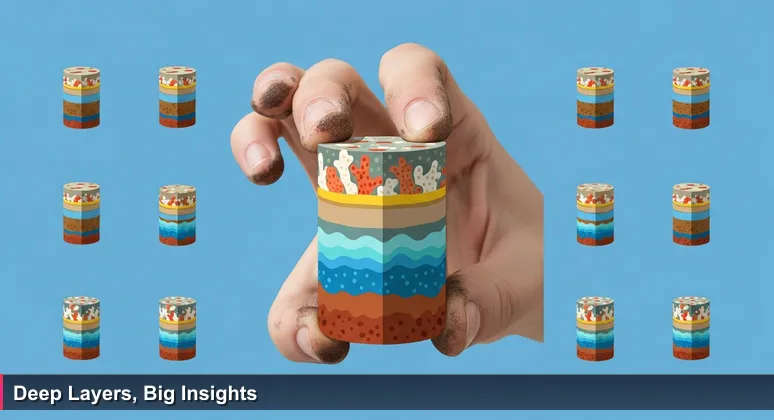
Forget scanning the horizon for tech megacities; the most profound insights often come from the deep, specific layers beneath your feet. While global rankings like CRN's "10 AI Startup Companies To Watch" measure ecosystems by scale and hype, Nauru's innovation is measured in strategic depth and resilience.
Here, a distinct "Remote-First, Local-Impact" model has taken root, with agile teams using the island as a concentrated testbed for technologies designed for Small Island Developing States (SIDS). This isn't about chasing global trends but solving hyper-local problems with AI, creating "island-proof" solutions that are globally instructive.
By 2026, this stratified ecosystem is generating an estimated $3.8 million AUD in annual AI revenue, supported by over $1.8 million AUD in funding. With 15 active startups creating approximately 45 AI jobs, Nauru’s scene proves that density over sprawl is a viable path. This approach is gaining global recognition, with Nauruan entrepreneurs increasingly visible on international stages like the AI for Good Innovation Factory. The revolution isn't loud; it's layered, purposeful, and built from the core sample up.
Table of Contents
- Introducing Nauru's AI Revolution
- ReefEye AI
- PhosphateGen
- Naoero Voice
- SkyLogistics AI
- BlueGrid MLOps
- SaltWater Sentinel
- CoralCare Health
- EduIsland AI
- ReefLink IoT
- Pacific Ledger
- Conclusion: Nauru's AI Future
- Frequently Asked Questions
If you're interested in getting into AI in Nauru in 2026, check this detailed guide.
ReefEye AI
Nauru's vast Exclusive Economic Zone presents a classic island challenge: immense responsibility with limited surveillance resources. ReefEye AI, based in Anetan, addresses this directly with vertical AI for marine sovereignty, deploying computer vision models on edge-computing hardware built to survive high-salinity environments and intermittent satellite links.
The startup’s core innovation is its hardware-software integration, creating systems that function as a cost-effective force multiplier. By analyzing satellite and drone imagery, ReefEye automates the detection of illegal fishing vessels and monitors coral reef health, providing critical data to the Nauru Fisheries and Marine Resources Authority (NFMRA). As highlighted in regional tech discussions, this focus on practical, high-impact solutions is what defines the new Pacific approach to technology.
Founded by marine biologist Alana Detenamo and former Google Earth engineers, ReefEye is backed by seed funding from the Pacific Islands Forum Development Fund. Its success demonstrates how tackling a hyper-local constraint - monitoring a massive ocean territory from a small island - creates a solution with immense export potential across the $5 billion AUD Pacific blue economy, turning a national need into a regional enterprise.
PhosphateGen
Born from the layered history of Nauru's landscape itself, PhosphateGen applies machine learning to the island's defining challenge: responsible resource extraction and land rehabilitation. The startup trains its predictive models on decades of localized geological survey data from the Nauru Rehabilitation Corporation (NRC), creating a proprietary data moat that is both its foundation and key differentiator.
This deeply contextual AI optimizes the identification of viable secondary phosphate deposits and plans effective ecological restoration. The result is a dual win of economic efficiency and environmental care; in field trials in Aiwo, their systems have already reduced heavy machinery fuel consumption by 15%, directly lowering operational costs for partners.
Founded by former NRC consultants and MLOps specialists, the company exemplifies Nauru's model of turning unique constraints into exportable intellectual property. As global trends shift toward value-driven and specialized AI deployments, PhosphateGen's solution is perfectly positioned. Its models, proven on Nauru's complex terrain, are a critical export for other Pacific nations managing extractive industries, transforming a legacy of extraction into a future of intelligent restoration.
Naoero Voice
In an era dominated by massive global language models, Naoero Voice builds sovereign, compact ones. Operating from Yaren, this startup uses natural language processing (NLP) to preserve and digitize the Nauruan language (d'Naoero), developing small language models that run locally on government servers to ensure complete data sovereignty - a non-negotiable priority for national security and cultural heritage.
Their technology is already operational, powering the new digital "Citizen Portal" in Yaren to automate inquiries about residency and permits. This practical application solves a dual challenge: safeguarding a vulnerable linguistic identity while making essential public services more efficient and accessible. Funded by grants from organizations like the Pacific Community (SPC), their work aligns with a global shift toward specialized, manageable AI.
As the Government of Nauru accelerates its digital public services agenda, Naoero Voice is positioned to become the foundational AI layer for all citizen-facing applications. Their model proves that in technology, as in language, true power often lies not in size, but in specificity and control, reflecting a broader trend toward customizable and secure AI solutions for specialized needs.
SkyLogistics AI
SkyLogistics AI tackles one of Nauru's most persistent geographic hurdles: reliable medical supply chains across its scattered districts. The startup has developed a computer vision and MLOps platform for autonomous drones that deliver critical items like vaccines and medications between clinics, ensuring life-saving resources are not delayed by terrain or distance.
The company’s crucial innovation is a proprietary "Wind-Resistant" navigation AI, specifically engineered for the unpredictable Pacific crosswinds that typically ground standard drone systems. This hyper-local tuning is a textbook example of Nauru's "island-proof" development philosophy, where a constraint becomes a competitive advantage. With over 500 successful delivery flights logged between the Ronave Health Center and Nauru General Hospital, the model is proven.
Backed by seed capital from Asian Development Bank (ADB) Ventures, SkyLogistics demonstrates how vertical AI can create immediate, life-improving impact. Their success makes them a clear acquisition target for major regional logistics or healthcare providers, offering a turnkey solution to last-mile delivery problems across the archipelagic nations of the Pacific, a sector poised for growth as enterprise AI focuses on execution and ROI.
BlueGrid MLOps
Energy security is an existential concern for Nauru, given its historical reliance on imported fuel. BlueGrid MLOps, operating across Yaren, addresses this directly by using machine learning to optimize the island's growing network of solar-plus-storage microgrids, turning renewable energy from a supplement into a reliable primary source.
Their system integrates real-time satellite weather data with local grid sensors to predict energy generation and consumption, preventing brownouts and maximizing the use of every watt of solar power. Currently managing 30% of Nauru’s residential solar-plus-storage systems, the startup delivers tangible grid stability. Founded by renewable energy engineers from Fiji and Nauruan technicians, BlueGrid’s deep local integration is its strength.
Backed by Series B funding from the Global Green Growth Institute (GGGI), its technology is essential as the Nauru Utilities Corporation modernizes the national grid. As noted in analysis of broader AI trends, the future belongs to value-driven deployments that solve critical infrastructure problems. BlueGrid’s model, proven on Nauru's constrained system, is a perfect export to other island nations, contributing to an ecosystem that, as sector data shows, is creating specialized jobs and attracting strategic investment.
SaltWater Sentinel
SaltWater Sentinel exemplifies Nauru's integrated approach to survival, applying AI to two critical and interconnected systems: the economic lifeline of the port and the essential human need for fresh water. Based in Aiwo District, the startup uses computer vision to optimize cargo movement at the Port of Nauru and deploys AI-driven chemical sensors to predict membrane fouling in desalination units before it occurs, improving water production efficiency.
This dual focus on commerce and human necessity is a classic example of the island's multi-layered problem-solving. By partnering with the Nauru Utilities Corporation, SaltWater Sentinel turns operational data from Nauru's unique high-salinity environment into actionable, predictive insights. This capability has attracted private investment from Australian maritime technology funds, recognizing the startup's potential beyond a single island.
Its value proposition is clear: a packaged solution for turning harsh environmental data into maintenance and logistical advantages. This aligns with global movements where AI is being deployed for specific, high-value vertical applications. SaltWater Sentinel's technology is perfectly positioned for export to utilities and port authorities throughout the Asia-Pacific region, where predictive maintenance and operational efficiency are paramount for climate-vulnerable infrastructure.
CoralCare Health
Healthcare accessibility across Nauru's districts is challenged by geography and limited specialist coverage. CoralCare Health addresses this gap with a generative AI assistant that supports community health workers, providing diagnostic suggestions and streamlining medical record management directly in the field.
The startup's critical innovation is its offline-first mobile application, engineered to function fully without a constant connection and sync data via intermittent satellite links like Starlink. This ensures reliability in Nauru's most remote areas, where connectivity is often unreliable. With deployments to 12 district health outposts facilitating over 2,000 monthly consultations, the platform demonstrates how AI can effectively augment, not replace, invaluable local medical expertise.
Founded by doctors from the Pacific Medical Association and backed by World Health Organization (WHO) innovation grants, CoralCare is building a model for resilient remote care. This approach is part of a broader evolution toward AI-native digital health stacks designed for diverse environments. The startup's growth path involves partnerships with regional health ministries and insurers seeking to lower service delivery costs, positioning it as a key player in scaling accessible telemedicine across the Pacific, much like the innovations showcased in global AI for Good initiatives.
EduIsland AI
Education in Pacific island nations often grapples with a fundamental disconnect: globally sourced curricula that feel distant from students' lived experiences. EduIsland AI, based in Anetan, tackles this by using generative AI to adapt and personalize K-12 learning materials, weaving in local geography, history, and legends to make education resonate deeply with Nauruan students.
Their tools create culturally relevant learning modules and assessments, moving beyond mere translation to true contextualization. Already adopted as a supplemental tool by three primary schools in Anetan, the platform addresses a critical factor in regional brain drain by making learning locally meaningful and engaging. Founded by Nauruan educators and ed-tech developers from New Zealand, the startup is seed-funded by the Pacific Education Fund.
EduIsland's approach aligns with a global movement where AI is being leveraged for specialized, impactful applications beyond generic solutions. Its growth potential lies in licensing its cultural localization engine to educational publishers and governments across Oceania. This positions EduIsland not just as a local tool, but as part of the broader, valuable ecosystem of AI startups creating sovereign intellectual property, proving that the most effective education technology is that which reflects the world immediately around the learner.
ReefLink IoT
Monitoring the vast Pacific environment with limited human resources requires smart, autonomous systems. ReefLink IoT meets this challenge by deploying a network of maritime buoys equipped with computer vision to track vital ocean metrics - temperature, acidity, and plastic waste levels - in real-time around Nauru's perimeter.
The startup’s technical ingenuity lies in its bio-inspired AI algorithms, which minimize power consumption to allow these remote sensors to operate for years without maintenance. This focus on energy efficiency is critical for sustainable long-term monitoring. With 20 buoys already deployed, the system provides a continuous stream of validated climate data to regional weather bureaus and research institutions.
Founded by engineering graduates from the University of Wollongong with Nauruan ancestry, and supported by crowdfunding and the Green Climate Fund (GCF), ReefLink exemplifies citizen science operating at a professional scale. Their work provides the granular, localized data essential for understanding climate impacts on island ecosystems. As such, they are a natural future partner or acquisition target for larger environmental research bodies seeking to deploy resilient monitoring networks, aligning with global efforts like the AI for Good Innovation Factory that champion technology for planetary health. In a field often dominated by large-scale, expensive research initiatives, ReefLink proves the power of focused, adaptive, and sovereign data collection.
Pacific Ledger
In regions with complex histories like the Pacific, establishing verifiable records for land and trade is both a technical and deeply social challenge. Pacific Ledger addresses this by combining natural language processing with blockchain technology, bringing transparency and security to two foundational areas: land tenure and regional trade documentation.
Their AI parses complex legal and historical documents to verify land rights, creating an immutable digital record for Nauruan families - a crucial service given the island's history with phosphate mining and land rehabilitation. The startup has already digitized and verified over 40% of residential land titles in Yaren, demonstrating tangible progress. Funded by Vanuatu-based regional VCs and founded by fintech and legal experts, Pacific Ledger solves a universal Pacific problem with a sovereign, tech-driven approach.
This focus on accuracy and compliance in sensitive domains mirrors a key global trend where, as noted in analyses of enterprise AI, success depends on platforms "engineered for corporate accuracy" in regulated fields. The startup's expansion path is logical and scalable: from securing land titles at home to providing verification services for cross-Pacific trade agreements and the burgeoning carbon credit markets, positioning itself as essential infrastructure for the region's economic future.
Conclusion: Nauru's AI Future
The narrative of technological progress is too often written in the broad strokes of venture capital hype and market saturation. Nauru’s emerging AI scene, by deliberate contrast, is authored in the precise, dense layers of local adaptation. These ten startups are not miniature replicas of Silicon Valley; they are original formulations born from the specific constraints of bandwidth, geography, and cultural sovereignty.
Collectively, they represent a powerful alternative model: the Remote-First, Local-Impact enterprise. With the ecosystem supporting 15 active startups and 45 specialized AI jobs, the focus has shifted from chasing scale to delivering measurable, contextual value. This aligns with a broader global pivot, where analysts note that 2026 is defined by "value-driven" deployments that move past experimentation to solve concrete problems.
The lesson from the core sample is clear. In technology, as in geology, the most valuable insights come not from surveying the empty horizon, but from examining what you pull up from a single, purposeful drill site. For the global community, Nauru is no longer a minor market. It is a concentrated, sovereign testbed where the resilient and impactful future of AI for island nations and beyond is being built, one layered solution at a time.
Frequently Asked Questions
What makes AI startups in Nauru worth watching in 2026 compared to global hubs?
Nauru's startups use a 'Remote-First, Local-Impact' model, solving hyper-local problems like marine conservation and land rehabilitation with AI, which are globally instructive. With an estimated $3.8 million AUD in annual revenue and $1.8 million AUD in funding, they demonstrate resilient, scalable solutions for small island states.
How do these AI startups benefit Nauru's job market and economy?
They create roles in AI development and tech support by partnering with local employers like the Government of Nauru and RONPHOS, boosting the digital economy. For example, startups like PhosphateGen improve efficiency, reducing costs by 15% in trials, which supports sustainable growth and attracts regional investment.
What are typical salaries or costs for AI roles in Nauru's startups?
Entry-level AI positions in Nauru start around 40,000 AUD annually, with senior roles reaching up to 80,000 AUD, based on funding from sources like the Pacific Islands Forum. Living costs are moderate, and the close-knit community offers affordable opportunities for tech professionals to thrive locally.
Can I work remotely for Nauru's AI startups from Australia or other Pacific islands?
Yes, many startups in Nauru embrace remote work, leveraging time-zone alignment with Asia-Pacific regions for seamless collaboration. This allows professionals in Australia or Fiji to contribute to projects like SkyLogistics AI's drone delivery, expanding career options without relocating.
What funding or support is available for AI entrepreneurs starting up in Nauru?
Entrepreneurs can access grants from bodies like the Pacific Community and investments from regional VCs, with over $1.8 million AUD already funding innovations. This support fuels digital public services and small-scale tech entrepreneurship, making Nauru a viable testbed for AI solutions across the Pacific.
Learn how to navigate the cost of living in Nauru for tech professionals in 2026.
Learn about the ranking of Nauru's top tech workspaces and innovation centers in this article.
Discover strategies for how to network in AI while living in Nauru in this helpful article.
For insights into high-paying tech opportunities in Nauru, check this list of top companies with AUD salaries.
For information on top 10 startups for junior devs in Nauru in 2026, this article is a must-read.

Irene Holden
Operations Manager
Former Microsoft Education and Learning Futures Group team member, Irene now oversees instructors at Nucamp while writing about everything tech - from careers to coding bootcamps.