









AI Salaries in Midland, TX in 2026: What to Expect by Role and Experience
By Irene Holden
Last Updated: March 16th 2026
Key Takeaways
AI salaries in Midland, TX in 2026 are expected to be highly competitive, with base salaries for entry-level roles starting around $103,000 and senior positions reaching $185,000 or more, thanks to the Permian Basin premium. Key roles like Machine Learning Engineers average about $126,000, and with Texas's no state income tax, take-home pay is substantially higher than in many other tech hubs. Compensation packages often include bonuses and equity, especially at energy majors like Chevron or innovative startups, making the region a lucrative choice for AI professionals.
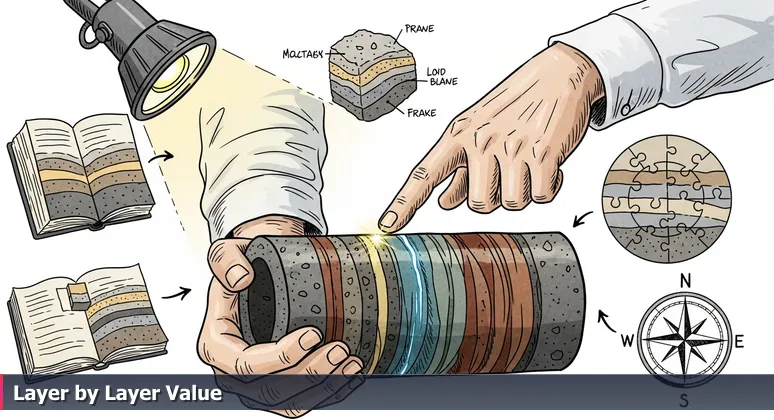
In the high-stakes energy fields of the Permian Basin, value isn't found on the surface. Like a geologist analyzing a core sample, an AI professional must learn to decode the layered composition of a compensation offer. The figure "$150,000" might look impressive, but in Midland-Odessa’s unique ecosystem, its true worth is only revealed by examining the strata beneath: base salary, cash bonus, long-term equity, and the amplified take-home pay enabled by Texas’s favorable tax structure.
This analytical approach is crucial because the market is exceptionally dynamic. According to ZipRecruiter's 2026 salary rankings, Midland consistently places above the Texas average, driven by intense demand. The region isn't just competing with other tech hubs; it's setting its own premium, especially for roles with direct applications to upstream and midstream energy operations.
Understanding this layered structure is the first step to claiming your full value. As noted in a Burnett Specialists analysis, AI is a primary driver of productivity in Texas, with median total pay for AI Engineers reaching approximately $170,902. In the Permian Basin, where every decimal point in operational efficiency translates to millions, the ability to interpret an offer's geology is what separates a good deal from a great one.
In This Guide
- Decoding AI Salaries in the Permian Basin
- The Permian Basin Salary Advantage
- AI Role Salary Benchmarks in Midland
- Mapping Your Career Level to Salary
- How Company Type Shapes Your Pay
- Understanding Bonuses and Equity in AI Offers
- Mastering Salary Negotiation in the Permian Basin
- Claiming Your Share in the Energy-Tech Boom
- Frequently Asked Questions
This article provides a step-by-step plan for AI career success in Midland.
The Permian Basin Salary Advantage
The "Permian Basin Premium" in Action
The headline advantage for AI professionals in West Texas is a significant regional pay differential, often termed the "Permian Basin Premium." This isn't just marketing; it's driven by the world's most prolific oilfield and the burgeoning tech ecosystem supporting it. AI talent here competes directly with - and often surpasses - compensation in Austin and Dallas for similar experience levels, particularly in specialized applications like predictive maintenance and autonomous systems.
"Experts view AI as a primary driver of productivity, with a significant positive impact on job performance and human capabilities." - The TechTank Podcast, Brookings Institution
This expert view underscores why energy giants and tech firms here are willing to pay a premium. When you factor in Texas's no state income tax, the effective take-home pay amplifies further. A $150,000 salary in Midland has a higher net value than an equivalent salary in a state with a 5% income tax - an effective $7,500+ annual difference staying in your pocket.
How Midland Stacks Up
The premium is clear in regional benchmarks. According to 2026 data, Midland's average annual pay for key AI roles is highly competitive with major metros, and when combined with the tax advantage, the total compensation package often wins.
- Machine Learning Engineer: Midland at $126,424 is on par with Austin ($127,637) and Dallas ($127,437).
- AI Researcher: Midland at $127,747 closely matches Austin ($128,973).
- Data Scientist: Midland's average of $122,380 competes strongly within the state's landscape.
This data, synthesized from sources like ZipRecruiter, confirms that the Permian Basin isn't a remote outpost but a primary market for high-value AI work, offering top-tier pay with a superior cost-of-living and tax profile.
AI Role Salary Benchmarks in Midland
The bedrock of any competitive offer is a strong base salary. In Midland, your specialization heavily influences this starting point, with certain roles commanding significant premiums for their direct application to energy operations. The following table synthesizes 2026 data from leading compensation sources to show the typical base salary ranges for key AI positions in the region.
| Role | Median / Average Base | High-End Base (Senior+) |
|---|---|---|
| Machine Learning Engineer | $126,424 | $202,000+ |
| AI/ML Engineer (Software Focus) | ~$133,000 | $190,000+ |
| Data Scientist | $122,380 | $237,000+ |
| MLOps Engineer | $130,000 - $165,000+ | $165,000+ |
| AI Researcher / Applied Scientist | $127,747 | $155,800+ |
| AI Reliability Engineer | $100,000 - $193,000 | $193,000 |
These figures, drawn from sources like Glassdoor and Salary.com, represent the foundational layer of compensation. It's crucial to understand the core function: an MLOps Engineer ensuring model deployment for pipeline optimization may command a different premium than a Data Scientist analyzing subsurface seismic data, even with similar years of experience.
Mapping Your Career Level to Salary
Not every company uses standardized "L" levels, but the concept of career progression forms distinct strata in Midland's compensation geology. Understanding where you fit in this matrix is essential for accurate benchmarking. The following table translates common industry titles in both energy and tech into clear experience bands and their corresponding base salary ranges, synthesized from regional market data.
| Level | Common Titles (Energy/Tech) | Experience | Base Salary Range |
|---|---|---|---|
| L3: Entry / Early Career | Analyst, Engineer I, Associate Scientist | 1-3 years | $103,000 - $125,000 |
| L4: Mid-Level | Engineer II, Senior Analyst, Scientist | 3-5 years | $125,000 - $155,000 |
| L5: Senior | Senior Engineer, Lead Data Scientist, Senior Scientist | 5-8 years | $155,000 - $185,000 |
| L6: Staff / Lead | Staff Engineer, Principal Scientist, Technical Lead | 8+ years | $185,000 - $245,000 |
| L7: Principal / Manager | Principal Engineer, AI Manager, Director of Data Science | 10+ years | $240,000 - $315,000+ |
This matrix, informed by data from sources like ZipRecruiter's Midland-specific listings, provides a crucial map. If a job description lists "Senior ML Engineer, 7+ years experience," you can confidently map it to the L5/L6 band and benchmark your base salary expectation between $155,000 and $245,000, before accounting for bonuses or equity. This clarity, as noted in broader Texas salary trends on Glassdoor, empowers you to negotiate from a position of market-aware strength.
How Company Type Shapes Your Pay
The geology of your compensation package changes dramatically depending on where you drill. In the Permian Basin, an offer from a legacy supermajor like Chevron has a completely different composition than one from a venture-backed oilfield tech startup. Understanding these company archetypes is key to evaluating total value.
Large Energy "Supermajors"
Firms like Chevron, ExxonMobil, and Occidental Petroleum focus on stability and high total cash compensation. They offer highly competitive base salaries, often at the top of the range for a given level, paired with robust annual cash bonuses (typically 15-25% of base). Long-term incentives usually come as Performance Share Units (PSUs) or Restricted Stock Units (RSUs) vesting over years, not high-risk options.
Regional Enterprises & Midstream Operators
These companies, deeply embedded in local operations, offer a strong balance. Base salaries may be 5-10% below supermajors but remain competitive within the local market, often accompanied by variable annual bonuses (10-20%) and exceptional 401(k) matches. They represent a stable career path with direct impact on the region's energy infrastructure, a sector currently experiencing significant AI-driven growth.
Oilfield Technology Startups
This is where the equity layer becomes dominant. Startups focused on rapid AI deployment for drilling or automation may offer base salaries at or slightly below large firms, but they compensate with significantly higher equity stakes. As industry analysis notes, AI engineers in startups are getting 3x the equity of regular engineers, with early hires sometimes receiving 2-5% ownership. This transforms the offer into a risk-weighted, high-growth-potential proposition.
Understanding Bonuses and Equity in AI Offers
Annual Cash Bonus: The Guaranteed Layer
In Midland's energy sector, the annual cash bonus is often a guaranteed component of compensation philosophy, not a discretionary afterthought. For mid-to-senior AI roles, this can add a substantial $16,000 to $30,000+ to your total cash. Always ask for the "target bonus percentage" and the recent payout history. For specialized talent, signing bonuses are a standard tool for attracting professionals to the Permian Basin, typically ranging from $5,000 to $15,000+.
Equity/RSUs/PSUs: The High-Value Vein
This is where significant long-term wealth can be built, but the structure varies drastically by company. In public energy firms, equity is a stable, long-term incentive. Understand the grant value, vesting schedule (often 3-4 years), and the mix - frequently a 70/30 split between PSUs tied to company performance and standard RSUs. For startups, equity is a bet on a future exit. As Forbes reports, compensation for AI employees is skyrocketing, with equity being a key driver. It's critical to understand your percentage of the fully diluted share count.
When evaluating an offer, you must ask specific questions to decode these variable layers:
- "What is the target annual bonus percentage for this level, and what have actual payouts been over the last two years?"
- "Can you detail the long-term incentive grant structure? What is the mix of RSUs versus performance-based PSUs?"
- "For startup equity, what is the current fully diluted share count and the latest 409A valuation?"
Mastering Salary Negotiation in the Permian Basin
Armed with an understanding of the local strata, you can negotiate not just a salary, but your true market value. Your strategy must be as precise as the systems you'll build. Start by benchmarking relentlessly against current local data from sources like SalaryExpert and 4CornerResources to anchor your discussions in the Midland market, not national averages.
Focus your negotiation on Total Cash Compensation (TCC) - Base + Guaranteed/Target Bonus. This is the most comparable figure across different company types. Use language like, "Based on the L5 market rate in Midland for this specialization, I'm looking for a total cash compensation in the range of $170,000 to $190,000." This frames the conversation holistically.
Evaluate equity based on company stage and always factor in the Texas tax advantage. A higher nominal salary elsewhere may net less after state taxes. For startups, negotiate for a higher percentage ownership and clarity on liquidation preferences. For public supermajors, negotiate for a higher equity grant value within their structured long-term incentive plans. Remember, in this market, you're not just filling a role; you're providing a critical capability for the world's most dynamic energy field.
Claiming Your Share in the Energy-Tech Boom
The AI and energy-tech transformation sweeping the Permian Basin is creating one of the most dynamic and financially rewarding markets for technical talent in the nation. By learning to analyze a compensation package with the meticulous eye of a geologist assaying a core sample - peeling back each critical layer of base, bonus, equity, and local advantage - you move beyond simply accepting a job. You become an active participant in claiming the wealth you will help generate.
Midland-Odessa offers more than a competitive salary; it provides a unique convergence of high-impact work, a no-state-income-tax benefit, and a front-row seat to the digitization of the world's most critical energy field. Whether you choose the stable strata of a supermajor, the entrepreneurial bedrock of a startup, or the specialized niche of a midstream operator, your skills have unprecedented value here.
Your career, like the reservoirs beneath this land, holds immense potential. Decoding the offers is the first step toward extracting it. Use this stratigraphic map not just to navigate your next negotiation, but to build a lasting and prosperous career at the heart of the energy-tech boom.
Frequently Asked Questions
What can I expect for AI salaries in Midland, TX in 2026?
AI salaries in Midland offer a 'Permian Basin premium,' with median base salaries around $126,424 for Machine Learning Engineers and potentially exceeding $200,000 for senior roles. Your exact offer will vary based on factors like your specific role, experience level, and the type of employer in the energy-tech ecosystem.
How do AI salaries in Midland compare to other tech hubs in Texas like Austin or Dallas?
Salaries in Midland often compete directly with or exceed those in Austin and Dallas, especially for roles applied to energy operations. For example, data scientists here earn median bases of $122,380, and the lack of state income tax means higher effective take-home pay compared to many other regions.
What factors most influence my AI salary offer in the Permian Basin?
Your salary is shaped by your role specialization, experience level, and employer type. Entry-level positions start around $103,000, while senior roles can reach $185,000+, and working for a supermajor like Chevron versus a startup affects compensation structure with bonuses or equity.
Are bonuses and equity common in AI roles in Midland?
Yes, annual cash bonuses are standard, with supermajors offering 15-25% of base salary. Equity is prevalent too; public companies provide RSUs or PSUs, and startups may grant 2-5% equity for early hires, making total compensation packages highly competitive in this market.
How does Texas's no state income tax benefit my AI salary in Midland?
The no state income tax means a $150,000 salary in Midland has a higher net value than in states with income tax, effectively adding thousands to your annual take-home pay. This tax advantage makes local offers more appealing when comparing against other regions.
Find out which are the top-rated AI and machine learning bootcamps in Midland in this review.
Explore compensation analysis for Midland tech jobs in 2026 to plan your career move.
Discover scholarships and grants for tech education in Midland to fund your career transition in the Permian Basin.
The ranked list of tech startups hiring juniors in Midland, TX provides valuable insights for career seekers.
For residents of Midland, TX looking to build tech skills without spending money in 2026, this article is essential.

Irene Holden
Operations Manager
Former Microsoft Education and Learning Futures Group team member, Irene now oversees instructors at Nucamp while writing about everything tech - from careers to coding bootcamps.