









Is Joliet, IL a Good City for a Tech Career in 2026?
By Irene Holden
Last Updated: March 9th 2026
Quick Explanation
Joliet, IL is a strong city for a tech career in 2026 if you're targeting AI, logistics, or data infrastructure roles, driven by booming sectors like industrial automation and data centers. With average tech salaries around $94,708 and living costs 9% lower than the national average, your earnings stretch further for affordable housing. Plus, its proximity to Chicago offers spillover job opportunities while maintaining a cost-effective lifestyle for career-changers and infrastructure specialists.
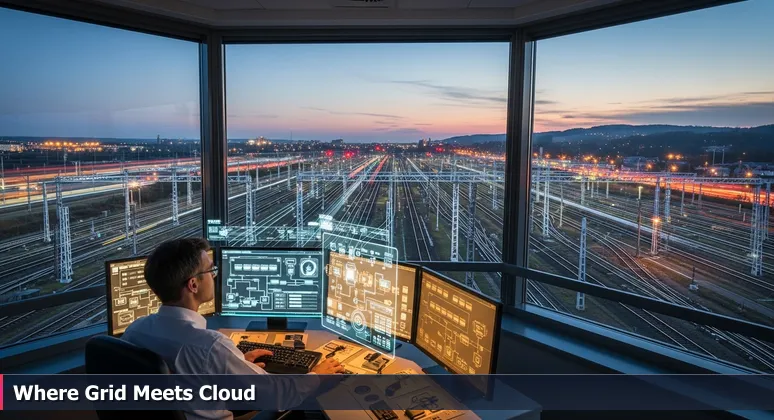
The most important tech decisions in the Midwest aren't made in glass high-rises. They're made in control rooms overlooking rivers of steel and data, where the old economy quietly powers the new one. In 2026, Joliet is that critical junction, not for the next viral app, but for the physical infrastructure of America's digital backbone.
If you define a "tech city" by the density of consumer software startups, you'll look past Joliet. But if you see it as the nexus where AI, cloud infrastructure, and robotics meet the tangible world of logistics, manufacturing, and massive data centers, the picture changes. Here, the tech career path is built on stability and high-impact work in industrial corridors that led the Chicago region with 4 million square feet of new leasing.
This niche focus creates a uniquely advantageous equation. While salaries for specialized roles can reach from $143,520 to $180,000 in the broader region, your earnings go significantly further. Joliet's overall cost of living is 9% lower than the national average, with average rent around $1,362 per month - 16.2% lower than the U.S. average. For a tech professional, this means achieving financial comfort - estimated at a $98,010 salary for a single adult in Illinois - is far more attainable than in downtown Chicago or its affluent suburbs. You trade the spotlight for the control room, gaining affordability and a front-row seat to the infrastructural revolution.
What We Cover
- Why Joliet's Tech Future Depends on Your Niche
- Logistics and Data Centers Fuel Joliet's Tech Boom
- Salary vs Cost of Living The Joliet Advantage
- Career Pathways to High Demand Tech Roles
- Chicago Proximity Without the High Price Tag
- Is Joliet the Right Tech City for You
- Verdict Joliet's Tech Career Outlook for 2026
- Common Questions
If you're interested in starting an AI career in Joliet, IL in 2026, this article provides a complete roadmap with local insights.
Logistics and Data Centers Fuel Joliet's Tech Boom
Joliet’s transformation is a story of convergence, where its historic role as a transportation hub collides with the future's digital demands. The foundation is an industrial AI revolution unfolding within its vast logistics corridors. Companies like Amazon, RJW Logistics, and Ecolab are deploying robotics and complex cloud platforms, creating a surge in demand for tech roles that bridge physical and digital systems. This shift is quantifiable: a regional market update found that 71% of logistics IT companies now offer AI solutions, a sharp increase signaling deep tech integration.
Superimposed on this is a groundbreaking infrastructural shift: the emergence of Joliet as a potential data center capital. The proposed $20 billion Joliet Technology Center is poised to create one of the nation's largest data center complexes, a physical anchor for the AI economy. City planning staff project it will generate approximately 700 high-paying permanent jobs in fields like cloud infrastructure, network security, and electrical power engineering, a role seeing explosive demand growth.
Mike Crosby, a B2B technology industry advisor at Circana, notes that 2026 entered with "better macro stability and incentives that support technology investment," a trend directly benefiting industrial-tech hubs. This dual engine - logistics AI and data infrastructure - positions Joliet in a high-growth, durable niche. The jobs here aren't about the next app feature; they're about securing operational technology networks, optimizing continental supply chains with data, and maintaining the cloud's physical foundation.
Salary vs Cost of Living The Joliet Advantage
The most compelling case for a Joliet tech career isn't just the job title - it's the financial reality you build with your salary. The math here is decisively in your favor. For the broader Chicago metro area, which includes Joliet, senior IT professionals commanded an average salary of around $94,708. Meanwhile, analysis shows a single adult in Illinois needed an estimated $98,010 to live comfortably.
In downtown Chicago or Naperville, that narrow gap creates pressure. In Joliet, it transforms into opportunity. The city's overall cost of living is 9% lower than the national average, but the real leverage is in housing. Average rent sits around $1,362 per month, which is 16.2% lower than the U.S. average. This dramatically alters your personal balance sheet.
Consider a tech professional earning near the regional average. After taxes, a significant portion of that income elsewhere is consumed by housing costs. In Joliet, that same income covers a nicer apartment or mortgage payment with money left for savings, investment, or a higher quality of life. This affordability enables career-changers to reskill without the paralyzing financial risk of a major metro and allows established professionals to accelerate their path to home ownership. It’s a pragmatic foundation for a stable, prosperous tech career built on fundamentals, not just potential.
Career Pathways to High Demand Tech Roles
So, what does a tech career in Joliet actually look like on the ground? The opportunities cluster in high-stability, infrastructural domains. Active hiring reflects this, with platforms like Glassdoor listing over 700 technology-related jobs in the area. You'll find demand for Mechatronics & Robotics Technicians in automated warehouses, Supply Chain Data Engineers optimizing logistics flows, and Cloud Operations Engineers supporting the region's burgeoning data center ecosystem.
Breaking into these roles is becoming more accessible through targeted local education. Joliet Junior College (JJC) is a critical anchor, with programs like its Information Technology Cisco Networking pathway creating a talent pipeline for essential network infrastructure roles. For career-changers, this ecosystem is bolstered by bootcamps like Nucamp, which offer affordable, flexible programs designed for working adults.
Nucamp’s Solo AI Tech Entrepreneur Bootcamp (25 weeks, $3,980) equips you to build AI-powered products, while the AI Essentials for Work program (15 weeks, $3,582) focuses on practical skills like prompt engineering. With an employment rate around 78% and monthly payment plans, these programs lower the barrier to reskilling. This combination of formal college pathways and agile bootcamps empowers Joliet residents to become the crucial "translators" - professionals who understand both industrial workflows and the digital technology revolutionizing them.
Chicago Proximity Without the High Price Tag
Joliet’s location offers a powerful hybrid model: all the strategic benefits of the nation's third-largest metro area without requiring you to pay its premium price tag. You maintain easy access to Chicago’s vast economy via a direct Metra commuter rail line to Union Station, while major interstates I-55 and I-80 connect you to O’Hare, Midway, and the entire region. This makes occasional meetings, networking events, or even a hybrid role with a downtown firm entirely feasible without a punishing daily commute.
This proximity creates a strategic "spillover" effect. As noted by economic developers at World Business Chicago, business leaders planning expansions increasingly look to logistics-heavy corridors like Joliet to leverage superior transportation infrastructure while tapping the broader regional talent pool. You could work for a Joliet-based firm optimizing routes for a Chicago-headquartered giant like McDonald's or support cloud infrastructure for a Walgreens project housed in a local data center.
This positions you at a unique convergence point. You’re not isolated; you’re strategically placed in a cost-effective control room that has a direct line to the corporate boardrooms. You gain the stability and affordability of Joliet while your career retains the optionality and connectivity of the massive Chicago market, a combination that’s difficult to find elsewhere in the Midwest.
Is Joliet the Right Tech City for You
Choosing a tech city isn't about finding the "best" one universally, but the right convergence point for your skills and aspirations. For specific professionals, Joliet in 2026 isn't just a good choice - it's a strategically smart one.
Joliet is ideal for:
- Career-changers breaking into tech: The lower financial risk, combined with strong local training from JJC and bootcamps noted for their accessibility, creates a viable on-ramp to a first tech role in a stable industry.
- Infrastructure and operations specialists: If you're fascinated by cloud infrastructure, physical robotics, data centers, or securing industrial systems, Joliet’s specialty is your career niche.
- Professionals prioritizing lifestyle & affordability: Those seeking to maximize salary against housing costs, who value homeownership, shorter commutes, and financial comfort without a FAANG-level salary.
- The "translators": Individuals who can bridge operational workflows and digital technology in logistics, manufacturing, and healthcare.
Conversely, Joliet might not be the best fit for those seeking a dense, walkable urban tech scene centered on consumer software or social media startups, as that venture ecosystem remains concentrated in Chicago's core. The decision hinges on this alignment. If your vision of tech involves tangible systems and foundational infrastructure, Joliet offers a purpose-built, affordable control room from which to build it.
Verdict Joliet's Tech Career Outlook for 2026
The verdict for 2026 is clear: Joliet represents a compelling and pragmatic choice for a tech career built on fundamentals rather than hype. It’s a city where you work on the essential, often-invisible systems that power commerce and global AI - from orchestrating warehouse robotics to cooling the servers that run large language models. This isn't speculative growth; it's part of a tangible, statewide trend where Illinois now ranks 6th nationally for data-center investment.
This outlook hinges on alignment. For infrastructure specialists, operations experts, and career-changers, Joliet offers stability, high-impact work, and a significantly more affordable path to a comfortable life. The projected growth, like the $20 billion data center campus, promises not just jobs but a transformation of the local economy, with developers committing to partnerships with local schools to ensure residents can fill these new roles.
Community discussions reflect this measured optimism, with some noting the potential tax revenue could be a "great boon," even as they thoughtfully debate practical impacts like utility loads. In the evolving tech landscape, you don't have to be in the center of the spotlight to be at the center of what's truly powerful. For those whose aspirations align with the tangible, infrastructural side of the digital revolution, Joliet in 2026 is a strategic convergence point rich with potential.
Common Questions
Is Joliet really a viable option for a tech career, or should I just focus on Chicago?
Joliet is a strong choice for tech careers in niches like logistics AI, data centers, and industrial systems, where it offers high-impact roles with a cost of living 9% lower than the national average. While Chicago has more consumer tech startups, Joliet's specialization in infrastructure tech makes it ideal for those prioritizing affordability and stability in 2026.
What specific tech jobs are growing in Joliet right now?
In 2026, Joliet sees high demand for roles in industrial robotics, cloud infrastructure, and data center operations, with over 700 technology-related jobs listed locally. Fields like supply chain data engineering and cybersecurity for logistics networks are booming, driven by employers like Amazon and new data center projects.
How far does a tech salary go in Joliet compared to living costs?
Tech salaries in the region average around $94,708 for senior roles, while Joliet's housing costs are 16.2% lower than the U.S. average, with rent at about $1,362 per month. This balance lets professionals achieve home ownership and savings more easily than in pricier Chicago suburbs.
If I live in Joliet, can I still tap into Chicago's job market easily?
Yes, Joliet's Metra rail line and interstates like I-55 provide direct access to Chicago, making hybrid roles or networking events feasible. Many Chicago-based firms, such as Walgreens or logistics companies, have operations in Joliet, offering spillover opportunities without the downtown cost.
What local training programs can help me break into tech in Joliet?
Joliet Junior College offers IT networking programs, and Nucamp Bootcamps provide accessible reskilling for AI and cloud roles, tailored to local employer needs. These resources help career-changers enter high-demand fields like data center management or logistics tech without relocating.
Explore AI meetups in Joliet, IL in 2026 to boost your career network.
Refer to this list of top tech jobs in Joliet that don't require formal education, ranked by salary and accessibility.
The 2026 outlook on tech salary affordability in Joliet offers valuable insights.
Explore AI engineering paths specific to the Joliet area in 2026 with this detailed guide.
This guide ranks the best employers for AI engineers in Joliet, IL for 2026, focusing on local advantages.

Irene Holden
Operations Manager
Former Microsoft Education and Learning Futures Group team member, Irene now oversees instructors at Nucamp while writing about everything tech - from careers to coding bootcamps.