









Who's Hiring Cybersecurity Professionals in Greenville, NC in 2026?
By Irene Holden
Last Updated: March 6th 2026
Key Takeaways
ECU Health, East Carolina University, defense contractors near MCAS Cherry Point, and the Greenville Utilities Commission are the key employers hiring cybersecurity professionals in Greenville, NC for 2026. Salaries in defense and healthcare sectors can reach up to $167,000, with Greenville's lower cost of living enhancing the value of these roles. To land a job, develop AI-driven skills and leverage local training pathways like ECU's programs to meet the demand for cyber-surgeons protecting critical infrastructure.
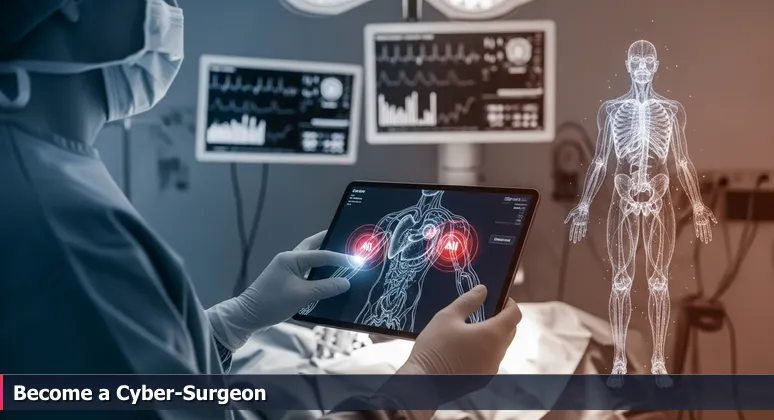
The most critical operations in Greenville are no longer confined to operating rooms. They unfold in Security Operations Centers and server rooms where a new breed of professional performs real-time interventions on the city’s vital systems. This is the role of the cyber-surgeon, a paradigm that defines the 2026 cybersecurity market: high-stakes expertise augmented by AI-driven diagnostics and precision.
The foundational shift was articulated at the 2026 ECU Tech Summit, where experts like Chris Hughes of Darktrace framed the new reality, noting that professionals must now "fight AI with AI-based security." This is the baseline expectation for protecting real-world infrastructure, from hospital networks to the power grid.
In Greenville, this work has a tangible, life-critical impact. For instance, ECU Health manages HIPAA compliance for 1.4 million people across eastern North Carolina - a massive digital "patient" requiring constant, vigilant care. This local demand is set against a global shortage of 4.8 million cybersecurity professionals, creating resilient opportunity here.
Your path isn't to a generic job listing, but to a role defined by this augmented expertise. Greenville, with its live "patient" systems and proximity to top-tier training, is the ideal place to learn this new clinical practice. The gap between those who merely learned cybersecurity and those who can operate in this AI-driven environment is predicted to become brutally obvious, making specialized, hands-on training more critical than ever.
In This Guide
- Become a Cyber-Surgeon in Greenville's 2026 Market
- The AI-Driven Cybersecurity Job Market in Greenville
- Higher Education and Healthcare: The Medical District Cluster
- Defense and Aerospace: Mission-Critical Roles
- Utilities and Critical Infrastructure: Protecting the Grid
- Local Government and Emerging Industry
- Building Your Career: Training Pathways in Eastern NC
- Your Strategic Operation in the Greenville Market
- Frequently Asked Questions
This resource provides everything you need to know about AI careers in Greenville in 2026.
The AI-Driven Cybersecurity Job Market in Greenville
The demand for cybersecurity professionals in Greenville is fundamentally shaped by the integration of artificial intelligence, both as a threat vector and a necessary tool for defense. This shift was crystallized at the recent ECU Tech Summit, where industry leader Chris Hughes of Darktrace emphasized that because AI-powered threats have "ramped up," the industry response must be to "fight AI with AI-based security." This is no longer a future consideration but the operational baseline.
This local demand is part of a global crisis, with an estimated 4.8 million unfilled cybersecurity positions worldwide. In Greenville, however, the market dynamics offer a unique advantage. While headline salaries in Raleigh or Charlotte for mid-career roles can exceed $120,000, Greenville’s significantly lower cost of living changes the financial calculus. A senior analyst salary band of $81,000 to $113,000 here affords a quality of life comparable to a much higher income in a major metro.
Furthermore, the hiring culture at anchor institutions like ECU, ECU Health, and the Greenville Utilities Commission tends to be more deliberate and mission-focused than the frenetic tech scene of the Triangle. This allows professionals to build deep, specialized expertise in protecting specific critical systems - whether it's patient data, military networks, or the power grid.
The actionable takeaway for 2026 is clear: generalist knowledge is insufficient. Your career strategy must involve cultivating AI-native skills, using AI tools for threat hunting, behavioral analytics, and automated incident response. As experts warn, the gap between those who learned foundational cybersecurity and those who can perform in this AI-augmented environment is becoming brutally obvious, making targeted, practical training essential for entry and advancement.
Higher Education and Healthcare: The Medical District Cluster
The Greenville Medical District, anchored by East Carolina University (ECU) and ECU Health, forms the largest and most specialized cluster for cybersecurity talent in the region. Here, the stakes involve protecting sensitive patient data, groundbreaking biomedical research, and the academic records of over 28,000 students. These institutions are both major trainers and voracious consumers of cyber-defense expertise.
ECU serves a dual role: as an employer and an educator. Designated as an NSA National Center of Academic Excellence in Cyber Defense, the university constantly hires IT Analyst Programmers and security administrators to protect its own vast digital ecosystem. It also provides essential hands-on experience; as Lt. Col. Seth Barun of the NC National Guard noted, the Capture the Flag competitions hosted at ECU offer crucial "real-world experience" for the next generation of defenders.
Next door, ECU Health presents a massive, live-security challenge. Its cybersecurity team defends a network responsible for HIPAA compliance for 1.4 million people across eastern North Carolina. Active roles listed on their careers portal include Information Security Analysts (Cyber Operations) and Identity and Access Management (IAM) Specialists, focused on securing electronic medical records and cloud-based clinical systems.
Career Pathways & Requirements
Mid-to-senior security analysts in this sector command salaries between $81,000 and $113,000. The key to entering this field is a combination of recognized certifications and relevant experience.
- Key Certifications: CompTIA Security+, CySA+, CISSP, and Microsoft security certifications (SC-200, AZ-500).
- Critical Skills: Cloud security (especially Microsoft 365/Azure) and deep knowledge of healthcare compliance frameworks like HIPAA are major advantages.
- Local Training: ECU’s Bachelor of Science in Information & Cybersecurity Technology is the premier four-year path, while bootcamp graduates often enter through SOC Tier 1 or help desk roles to gain the necessary experience.
Defense and Aerospace: Mission-Critical Roles
Eastern North Carolina's proximity to major military installations creates a robust corridor for defense and aerospace cybersecurity, where roles are intrinsically mission-connected and handle the nation's most sensitive data. This sector is defined by employers like Lockheed Martin, supporting programs like the F-35 at nearby MCAS Cherry Point, and specialized contractors such as Goldbelt, Inc. and T3i, Inc., which are consistently active in the region.
These firms hire for positions based in Greenville, Jacksonville, and on-site at bases, including Cyber Security Architects serving as Risk Management Framework (RMF) Leads, ICS/OT Security Analysts protecting industrial control systems, and Security Generalists for Special Access Program (SAP) facilities.
Entry Requirements & Compensation
A non-negotiable first requirement for most of these positions is an active Secret or Top Secret security clearance. The foundational certification mandated by DoD Directive 8570 is CompTIA Security+ CE. Expertise in the DoD RMF, NIST frameworks, and operational technology (OT) is highly valued.
- Salary Ranges: Senior roles requiring clearances offer $92,000 to $167,000. Junior or analyst positions often start around $50 per hour (approximately $100,000 annually).
- Dominant Talent Pipeline: The military-to-cyber transition is a key pathway. Service members separating from local bases with relevant IT/cyber experience already possess the clearance and mission culture, making them prime candidates.
- Training Strategy: For veterans and transitioning personnel, using GI Bill benefits for accelerated training at ECU or Pitt Community College is a common and effective strategy to formalize their skills for the civilian defense sector.
Utilities and Critical Infrastructure: Protecting the Grid
The Greenville Utilities Commission (GUC) represents a critical and distinct front in cybersecurity: protecting the physical infrastructure that forms the region's circulatory system. Here, cybersecurity transcends data protection to become a matter of public safety, defending operational technology (OT) that controls electricity distribution and water treatment from potentially devastating cyber-physical threats.
Unlike traditional IT roles, positions at GUC and similar utilities focus on securing industrial control systems (ICS), SCADA networks, and legacy equipment. Listings on the GUC careers portal include roles like Electric SCADA Communications Technician and OT Network Analyst, professionals who work to prevent threats that could literally switch off the lights or contaminate water supplies.
Specialized Skills & Regulatory Landscape
This niche demands a specialized skill set centered on the unique architecture and vulnerabilities of industrial systems. Professionals must also navigate a strict regulatory environment designed to ensure national grid reliability.
- Key Certifications & Skills: The GIAC Security Essentials (GSEC) and CompTIA Security+ are valuable, but most critical is specialized training in SCADA/ICS security from organizations like SANS. Understanding NERC Critical Infrastructure Protection (CIP) regulations is mandatory.
- Salary Ranges: Technical, OT-focused roles in this sector typically offer $57,000 to $89,000, reflecting the highly specialized but locally anchored nature of the work.
- Local Training Pathway: Pitt Community College’s associate degrees and certificates in cybersecurity offer an excellent foundational route, with curricula that can be tailored with OT/SCADA security electives for direct relevance to employers like GUC.
Local Government and Emerging Industry
Beyond the major institutional anchors, Greenville's cybersecurity ecosystem includes stable, community-focused opportunities in municipal government, education, and emerging industrial sectors. These roles offer a distinct career path characterized by strong work-life balance, public benefits, and a direct connection to serving the local community.
Entities like the City of Greenville and Pitt County Government require IT Security Analysts to protect citizen data, financial systems, and public safety networks. Similarly, Pitt County Schools needs Network Security Administrators to secure district-wide infrastructure and sensitive student information. These positions are ideal for professionals seeking to avoid the high-pressure, on-call intensity often found in corporate consulting roles.
In the private sector, major manufacturers with a Greenville footprint, such as Thermo Fisher Scientific
Salaries in this sector typically range from $54,000 to $70,000 for entry-to-mid level positions. The standard certifications are CompTIA Security+ and Network+, with public sector roles requiring familiarity with NCDIT security standards and compliance. For those tracking local job listings, these roles represent a resilient and meaningful entry point into the field.
Building Your Career: Training Pathways in Eastern NC
The journey to becoming a cyber-surgeon in Greenville’s 2026 market can begin at several local institutions, each offering a pathway aligned with different career stages, goals, and timelines. Whether you seek a comprehensive four-year degree or a rapid, skills-focused deployment, Eastern North Carolina provides accessible routes into the field.
| Pathway | Description | Typical Duration | Best For |
|---|---|---|---|
| University Pathway | ECU’s BS in Information & Cybersecurity Technology provides deep, theory-grounded education preferred for advanced analyst, architect, and leadership tracks at major institutions. | 4 years | Future security architects, RMF leads, and those seeking federal scholarship opportunities through ECU’s NSA CAE-CD designation. |
| Community College & Certification | Pitt Community College’s AAS degrees and certificates are designed for immediate employability, often combined with a Security+ certification for roles like SOC Tier 1 or help desk. | 1-2 years | Career-changers seeking the fastest route to an entry-level position at local government, schools, or healthcare IT departments. |
| Military Transition | Utilizes existing security clearance and hands-on experience. Paired with the mandatory Security+ certification and GI Bill benefits for education at ECU or PCC. | 6-18 months | Separating service members and veterans targeting cleared contractor roles with firms like Goldbelt, Inc. near Camp Lejeune. |
| Focused Bootcamp | Accelerated programs, like a 15-week cybersecurity bootcamp, provide concentrated, practical skills for roles such as security analyst or junior network defender. | 4-6 months | Professionals making a swift career pivot who need a structured, project-based curriculum and career support services. |
Regardless of the entry path, cultivating AI-augmented skills is the non-negotiable differentiator for 2026. As emphasized at the ECU Tech Summit, professionals must learn to "fight AI with AI." This means building competency with AI tools for behavioral analytics, automated incident response, and interpreting AI-generated threat intelligence - skills that define the modern cyber-surgeon.
Your Strategic Operation in the Greenville Market
Your strategic operation in the Greenville market begins with a critical decision: specialize in the "patient" you want to treat. The region’s cybersecurity landscape offers distinct, mission-driven sectors, each requiring tailored expertise. Are you drawn to defending healthcare data? Pursue HIPAA knowledge and cloud security certifications. Is national security your calling? Target Security+ and explore clearance opportunities. Intrigued by keeping the lights on? Dive into the niche world of OT and SCADA security.
Begin building that expertise at one of Eastern North Carolina’s accessible educational institutions. For those seeking a rapid, practical deployment, focused programs like a 15-week cybersecurity bootcamp can provide the concentrated skills and career support needed to land an initial role as a security analyst or junior network defender, often at a fraction of the cost of a traditional degree.
This targeted approach allows you to step into a role with tangible, life-critical impact. In Greenville, your work directly safeguards hospital operations, keeps the power grid secure, protects military missions, and ensures student data privacy. The employers here - ECU Health, ECU, GUC, defense contractors, and local government - are pillars of the community, offering not just jobs but stability, purpose, and a superior quality of life thanks to the region’s significantly lower cost of living.
By connecting your training to the specific needs of Greenville’s unique employer ecosystem and cultivating an AI-augmented skill set, you won't just find a position. You will assume the mantle of a cyber-surgeon, performing the high-stakes, precise work that keeps this vital region and its critical systems thriving.
Frequently Asked Questions
Who are the main employers hiring cybersecurity professionals in Greenville in 2026?
In Greenville, key employers include East Carolina University (ECU) and ECU Health in the Medical District, defense contractors like Lockheed Martin near military bases, the Greenville Utilities Commission (GUC), and local government. These sectors offer roles from protecting healthcare data to securing critical infrastructure and defense systems.
What can I expect for cybersecurity salaries in Greenville compared to bigger cities?
Salaries in Greenville, such as $81,000 to $113,000 for senior analysts, are often lower than in tech hubs like Raleigh, but the much lower cost of living here balances it out. For instance, this salary band can provide a quality of life similar to a higher salary in a major metro, making it a smart financial move.
Do I need a security clearance for cybersecurity jobs around Greenville?
For defense and aerospace roles near bases like MCAS Cherry Point, an active Secret or Top Secret clearance is usually required. However, in sectors like healthcare at ECU Health or utilities at GUC, clearances aren't needed, with focus instead on certifications like CompTIA Security+ and industry-specific skills.
What skills or certifications are most in demand for cybersecurity in 2026?
Prioritize CompTIA Security+ as a baseline, along with AI-augmented skills for threat detection, as highlighted at the 2026 ECU Tech Summit. For specialized roles, certifications like CySA+ for healthcare or CISSP for defense, plus knowledge of frameworks like HIPAA or NIST, are highly valued in Greenville's market.
How can I start training for cybersecurity in Eastern North Carolina?
Local pathways include ECU's Bachelor of Science in Information & Cybersecurity Technology for in-depth training, or Pitt Community College's associate degrees for quicker entry into roles. Veterans can leverage GI Bill benefits for accelerated programs, especially useful for defense jobs requiring clearances.
This ranking of AI bootcamps for Greenville's growing tech-medical corridor helps you choose wisely.
For a detailed look at AI role-specific salaries and cost-of-living advantages in Greenville, NC, see this article.
Find out about ECU-based tech support for women in Greenville through this article.
Discover how to find AI meetups in Eastern North Carolina with this detailed resource.
For a rundown on AI innovation in Greenville, see this article.

Irene Holden
Operations Manager
Former Microsoft Education and Learning Futures Group team member, Irene now oversees instructors at Nucamp while writing about everything tech - from careers to coding bootcamps.