









How AI Is Helping Healthcare Companies in Denmark Cut Costs and Improve Efficiency
Last Updated: September 7th 2025
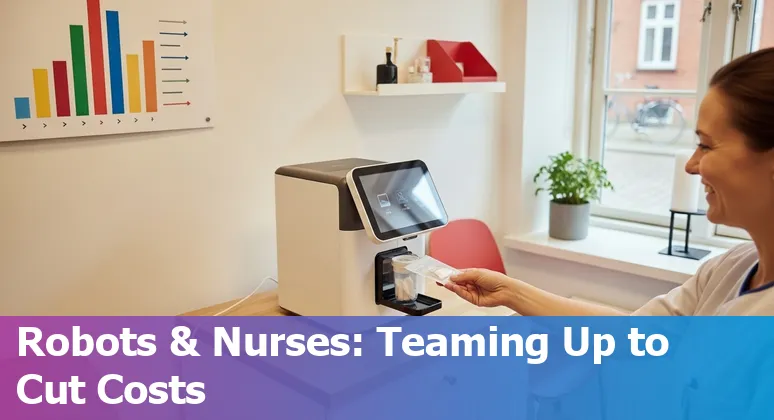
Too Long; Didn't Read:
AI in Denmark's healthcare is cutting costs and boosting efficiency: Radiobotics speeds image diagnostics; DETECT‑AI screens ~325,000 chest CTs to flag ~20,000 at‑risk people, potentially saving DKK 100 million/year. Gefion offers 1,528 H100 GPUs; Mindler saves 1–2 hours per psychologist daily.
Denmark is fast becoming a testbed for practical, cost-cutting AI across hospitals and clinics: national registries and strong public–private networks help AI teams move quickly from lab to ward, with use cases from faster image-based diagnostics (think Radiobotics) to real‑time patient monitoring and automated admin that frees clinicians for care.
Innovation hubs like CAI‑X, CIMT and the Centre for Clinical Robotics embed engineers with clinicians so solutions can be trialed in live settings, while projects in Southern Denmark use SAS analytics to predict and reduce hospital‑acquired infections.
At the same time, researchers warn about hidden bias and the need for robust governance, and Danish regulators already offer guidance for AI as medical devices.
For practical, workplace-ready AI skills to navigate this landscape, consider the AI Essentials for Work syllabus - practical AI skills for nontechnical professionals and the AI Essentials for Work registration - enroll in AI Essentials for Work.
| Use case | Danish example |
|---|---|
| Faster diagnostics | Radiobotics |
| Infection monitoring | Region of Southern Denmark / SAS |
| Radiation therapy automation | Aarhus University trials |
“Artificial intelligence is transforming the work of radiation therapy for cancer patients and can save thousands of physician hours while ensuring more precise treatment, explains Professor Stine Korreman.”
Table of Contents
- Denmark's unique healthcare data and national advantages
- Gefion supercomputer: accelerating AI research and cost savings in Denmark
- AI in clinical workflows: image automation and radiation therapy in Denmark
- Robotics in Denmark hospitals: ARTHUR, Buddy and ROBERT improving efficiency
- MedTech collaboration and hubs in Denmark: CAI-X, CIMT, CCR and Odense plans
- Regulation, ethics and data governance for AI in Denmark healthcare
- Measured cost savings and efficiency gains in Denmark healthcare
- Challenges, outlook and next steps for Denmark healthcare companies
- Conclusion and resources for learning more about AI in Denmark healthcare
- Frequently Asked Questions
See why HealthTech investment and clusters make Denmark an attractive place to pilot and scale health AI startups.
Denmark's unique healthcare data and national advantages
(Up)Denmark's edge for cost‑cutting, ward‑ready AI is less about flashy models and more about world‑class, linkable data: a universal CPR identifier that ties records “from cradle to grave,” national portals like Sundhed.dk and focused solutions such as the Shared Medication Record, and a new, donor‑backed National Health Data Gateway for Denmark health data access that creates a single point of entry to registries, biobanks and clinical data.
That scale and coherence - now reinforced by dedicated supercomputing capacity - lets teams train robust models across sites and run national trials, so an image algorithm isn't just promising in one hospital but validated nationwide: the DETECT‑AI programme at SDU aims to screen routine chest CTs (about 325,000 per year) to flag hidden atherosclerosis, potentially finding ~20,000 at‑risk people annually and saving an estimated DKK 100 million a year SDU DETECT‑AI early detection savings estimate.
Those practical advantages - linked data, governed access, and repeatable trials - turn abstract AI gains into faster workflows, measurable efficiency and patient benefit at scale; researchers and companies can now move from prototype to hospital‑wide impact faster than in many other countries Aarhus University on AI transforming healthcare workflows.
“We have digital patient records and health registries that make it possible to develop AI solutions based on a large data foundation.”
Gefion supercomputer: accelerating AI research and cost savings in Denmark
(Up)Gefion has turned Denmark into a practical AI testbed by giving hospitals, life‑science teams and startups access to one of the country's most powerful AI engines - an NVIDIA DGX SuperPOD that packs 1,528 NVIDIA H100 Tensor Core GPUs and high‑speed Quantum‑2 InfiniBand, housed in a Digital Realty AI‑ready data centre running on 100% renewable energy - so compute‑intensive healthcare tasks like large‑scale protein design with NVIDIA BioNeMo, multimodal genomic foundation models and faster epidemiological forecasting can move from months to days, cutting research time and operational cost for Danish innovators.
Backed by the Novo Nordisk Foundation and the Export and Investment Fund of Denmark and operated by the Danish Centre for AI Innovation, Gefion was built to preserve Danish data sovereignty while serving academia, industry and startups; early pilot projects already span drug discovery, quantum‑accelerated simulations and AI care companions, showing how local supercomputing capacity can translate into measurable efficiency gains for hospitals and researchers alike.
Read the inauguration details on the NVIDIA blog inauguration details for Gefion, the Novo Nordisk Foundation announcement about Gefion, and Eviden's Gefion build summary to see how Gefion's public–private model and striking hardware footprint are meant to unlock faster, cheaper breakthroughs in healthcare across Denmark.
| Spec | Detail |
|---|---|
| Architecture | NVIDIA DGX SuperPOD (191 DGX H100 systems) |
| GPUs | 1,528 NVIDIA H100 Tensor Core GPUs |
| Networking | NVIDIA Quantum‑2 InfiniBand |
| Operator | Danish Centre for AI Innovation (DCAI) |
| Funding | Novo Nordisk Foundation (~DKK 600m) & EIFO (DKK 100m) |
| Host | Digital Realty AI‑ready data centre (100% renewable energy) |
“Gefion is going to be a factory of intelligence. This is a new industry that never existed before. It sits on top of the IT industry. We're inventing something fundamentally new.” - Jensen Huang
AI in clinical workflows: image automation and radiation therapy in Denmark
(Up)AI is already streamlining image‑heavy clinical workflows in Denmark by automating tedious, high‑precision tasks that used to consume specialist time - most notably gross tumor volume (GTV) delineation for radiotherapy and PET/MRI attenuation correction.
A large Aarhus University study tested a 3D UNet across CT, PET and MRI combinations and found that including PET was crucial: an ensemble of three bi‑modality networks reached Dice ≈0.74 with a tightened boundary error (HD95 ≈7.9 mm), showing multimodal auto‑segmentation can cut variability and speed planning for head‑and‑neck radiotherapy (see the Aarhus deep‑learning auto‑segmentation study).
Parallel work at Rigshospitalet on AI‑driven attenuation correction for brain PET/MRI highlights how cohort size and transfer learning shape clinical performance, important for routine dementia imaging and other scans (see the MR‑AC clinical evaluation).
| Modality / Model | Dice | HD95 (mm) | MSD (mm) |
|---|---|---|---|
| CT‑PET‑MRI (single) | 0.72–0.74 | 8.8–9.5 | 2.6–2.8 |
| CT‑MRI | 0.58 | 12.9 | 3.7 |
| Ensemble of three bi‑modality networks | 0.74 | 7.9 | 2.4 |
Elsewhere, DEPICT's digital twin approach uses CT to synthesize patient‑specific healthy PET baselines, helping to flag subtle uptake changes that might otherwise be missed on whole‑body scans.
Together these projects illustrate a practical, Danish path: multimodal models and synthetic baselines that trim hours from workflows and bring more consistent, repeatable imaging into everyday care.
Aarhus University deep-learning auto-segmentation study for head-and-neck radiotherapy | Rigshospitalet MR-AC clinical evaluation for PET/MRI attenuation correction | DEPICT digital twin PET project for synthetic PET baselines
Robotics in Denmark hospitals: ARTHUR, Buddy and ROBERT improving efficiency
(Up)Denmark's hospitals are already deploying robots that shave hours from clinic workflows: ARTHUR, the CE‑marked ultrasound robot from ROPCA, automates hand scans and AI‑based scoring to unclog rheumatology waiting lists and get patients into treatment sooner - it captures 11 joints per hand (22 total) and feeds reports straight into the electronic health record, so specialists see only the patients who need them; the system has been trialed at Svendborg Hospital and is now in daily use in multiple Danish sites (ARTHUR ultrasound robot by ROPCA).
Complementary solutions such as hospital porter robot Buddy and co‑therapist ROBERT free nurses and therapists from repetitive tasks, moving supplies or enabling intensive rehab while keeping staff focused on skilled care (Denmark healthcare robotics innovation overview).
The result is practical: steadier throughput, more frequent monitoring, and a vivid, simple fact clinicians appreciate - ARTHUR never gets tired and can scan round the clock, turning a specialist bottleneck into near‑continuous capacity.
| Spec | Detail |
|---|---|
| Joints scanned per hand | 11 (22 total) |
| Capacity | Up to 4 patients per hour |
| Weight / Height | 150 kg / 138 cm |
| Price | ≈ €150,000 |
| CE approval | September 2022 |
“We are pleased that the robot can now help patients. A fully automated and objective examination for early signs of arthritis can help many.”
MedTech collaboration and hubs in Denmark: CAI-X, CIMT, CCR and Odense plans
(Up)MedTech collaboration in Odense has turned into a practical, on‑the‑ground engine for hospital‑ready innovation: CAI‑X, CIMT and CCR form Denmark's largest joint research unit for digital health, deliberately co‑locating engineers, clinicians and industry so solutions can be prototyped, tested “downstairs” with instant clinical feedback and scaled through the new MedTech Odense partnership - a setup designed to move ideas from clinical need to implemented solution (see the joint research strategy and CAI‑X research plan for 2025–27).
These centres already pool more than 25 professors, 30+ PhD students and publish 100+ peer‑reviewed papers a year while pursuing priority workstreams from AI and clinical robotics to Hospital‑at‑Home, HTA frameworks and faster implementation methods; one concrete example is the FibroBot project, where CCR, CAI‑X and CIMT are combining a robot scanner with AI to improve early diagnosis and monitoring of fatty liver disease.
The result is a tightly networked MedTech pipeline in Denmark that shortens development cycles, tests cost‑saving automation in real clinical workflows, and gives companies a clear route to scale across hospitals.
| Centre | Key stat / focus |
|---|---|
| CIMT / CAI‑X / CCR | >25 professors, 30+ PhD students, 100+ papers/year |
| MedTech Odense | Clinical‑industry hub for rapid testing and scaling |
| FibroBot | Robot scanner + AI for fatty liver diagnosis (prototype → clinical testing) |
“SDU and OUH's joint research centres CIMT, CAI-X and CCR together constitute Denmark's largest research unit within digital health technologies ...”
Regulation, ethics and data governance for AI in Denmark healthcare
(Up)Denmark relies on the EU AI Act as the core legal framework while filling in the operational details with guidance rather than a separate national AI statute: the Agency for Digital Government has published AI‑literacy guidance and, under proposed Danish legislation, will act as the national coordinating and notifying supervisory authority alongside the Danish Data Protection Agency for market surveillance, so organisations should expect governance and supervision to be clarified soon rather than new behavioural rules.
Practical safeguards already matter today - the Danish Data Protection Agency has issued AI‑focused templates for DPIAs and guidance on public authorities' processing of personal data under the GDPR - and firms must thread those requirements together with sector rules like the Medical Device Regulation and the EU AI Act, a regulatory overlap the Stanford analysis calls out as a real operational challenge for innovators.
For teams building or buying AI in Danish hospitals, that means planning for DPIAs, clear accountability, and early engagement with regulators; helpful primers and local resources include the Bird & Bird Denmark regulatory tracker and broader overviews such as the Stanford discussion of EU–US regulatory tensions, or the practical guide to using AI in Denmark's healthcare sector for upskilling clinicians and managers.
Information is accurate up to 30 June 2025
Measured cost savings and efficiency gains in Denmark healthcare
(Up)Measured savings from AI in Denmark are shifting from promise to payroll: researchers at Aarhus note that automating image review can “save thousands of work hours per year,” and local implementation projects are testing exactly how that time is reclaimed for patient care Aarhus University study on AI image review in healthcare.
CAI‑X's OUH emergency‑department trial is evaluating a CE‑marked fracture‑detection algorithm so radiologists can stop triaging routine X‑rays and spend more time on complex cases CAI‑X and OUH randomized ED trial of CE‑marked fracture detection AI.
On the front line of outpatient care, Mindler's deployment of Tandem's AI scribe shows the microeconomics: roughly 1–2 hours saved per psychologist each day, with 10,000+ notes generated during rollout - time that translates directly into more patient contact and fewer administrative bottlenecks Mindler and Tandem AI scribe deployment case study.
These are practical, measurable gains - fewer clinician hours spent on routine work, faster throughput in busy wards, and clearer business cases for hospitals budgeting AI investments.
| Source | Measured saving / status |
|---|---|
| Aarhus University | “Thousands of work hours per year” saved via automated image review (radiation therapy) |
| CAI‑X / OUH | Randomized ED trial of CE‑marked fracture AI to free staff time (implementation underway) |
| Mindler (Tandem) | 1–2 hours saved per psychologist per day; 10,000+ notes generated; 200+ clinicians involved |
“Artificial intelligence is transforming the work of radiation therapy for cancer patients and can save thousands of physician hours while ensuring more precise treatment, explains Professor Stine Korreman.”
Challenges, outlook and next steps for Denmark healthcare companies
(Up)Denmark's healthcare companies face a clear, practical hurdle: regulation, data governance and liability are all evolving at once, so the smartest next step is to plan for compliance as part of product design rather than an afterthought.
Regulators are “playing catch‑up,” which means EU rules like the AI Act will push many medical AIs into high‑risk workflows that require risk assessments, activity logging, high‑quality training data, human oversight and detailed documentation - elements companies must bake into development and procurement (see the EY analysis on healthcare AI regulation).
At the same time, clinicians and researchers warn that GDPR and conservative data‑sharing practices slow model training and validation, so investing in robust DPIAs, anonymisation, and clear data provenance pays off both for safety and speed (see the Aarhus University analysis of AI data access and clinical trials).
Practical next moves are concrete: run DPIAs early, negotiate contracts that allocate liability and IP clearly, buy tailored AI insurance, embed human‑in‑the‑loop controls and monitoring, and upskill clinical teams so automation truly frees time for patients - imagine a radiology pipeline where traceable model logs let a hospital revert a change in minutes rather than weeks, keeping care moving while regulators and insurers get the transparency they need.
| Key challenge | Practical next step |
|---|---|
| Regulatory uncertainty / overlapping rules | Design for EU AI Act compliance: risk assessments, documentation, human oversight (EY analysis on healthcare AI regulation) |
| GDPR and limited data sharing | Early DPIAs, strong data governance and provenance to enable clinical validation (Aarhus University analysis of AI data access and clinical trials) |
| Liability & insurability | Clear contracts, logging for traceability, and targeted insurance products |
“Artificial intelligence is forcing healthcare regulators to play catch-up and reimagine the regulation rule book.”
Conclusion and resources for learning more about AI in Denmark healthcare
(Up)Denmark's AI story in healthcare closes with a practical takeaway: strong digital foundations, tight public–private partnerships and pioneering robotics make this a place where pilots scale into real savings and smoother care - remember, almost 99% of Danish healthcare communication is already digital, so adoption is built on a national backbone rather than shoehorning new tech into analogue processes.
For quick, trustworthy reading, see Invest in Denmark roundup on robotics in healthcare (ARTHUR, Buddy, ROBERT) and EOS Intelligence review of Denmark's digital‑health strengths and strategic priorities; both explain why hospitals, startups and investors find the ecosystem so productive.
| Resource | Why it helps |
|---|---|
| Invest in Denmark: Robotics in Healthcare (ARTHUR, Buddy, ROBERT) | Practical examples of hospital robots improving throughput and reducing costs |
| EOS Intelligence: Denmark Digital‑Health Innovation Overview | Context on national digital infrastructure (near‑universal e‑communication) and scaling opportunities |
| Nucamp AI Essentials for Work syllabus - practical workplace AI training | Hands‑on training for nontechnical professionals to implement and govern AI in clinical settings |
For clinicians, managers and nontechnical teams who need hands‑on skills to evaluate or run these systems, the AI Essentials for Work syllabus offers a practical, workplace‑focused route to learn prompts, tools and governance basics.
Bookmark these three resources to move from curiosity to action and to translate Denmark's national advantages into measurable efficiency at ward level.
Frequently Asked Questions
(Up)How is AI cutting costs and improving efficiency in Danish healthcare?
AI is reducing costs and improving efficiency by automating image diagnostics, real‑time monitoring, clinical robotics and administrative tasks. Examples include faster image-based diagnostics (Radiobotics), infection‑monitoring analytics (Region of Southern Denmark / SAS), radiation therapy automation (Aarhus trials) and AI scribes in outpatient care (Mindler/Tandem). Practical gains reported include thousands of clinician work hours saved annually (Aarhus), 1–2 hours saved per psychologist per day during Tandem rollouts (10,000+ notes generated, 200+ clinicians involved), and trial estimates such as the DETECT‑AI programme which screens ~325,000 chest CTs/year to flag ~20,000 at‑risk people and an estimated saving of DKK 100 million/year.
What national assets and infrastructure make Denmark a strong testbed for healthcare AI?
Denmark's strengths are linkable national data (universal CPR identifier, Sundhed.dk, Shared Medication Record), governed registry and biobank access, co‑located MedTech hubs (CAI‑X, CIMT, CCR/MedTech Odense) for rapid clinical prototyping, and local supercomputing capacity (Gefion). Gefion's public–private DGX SuperPOD (1,528 NVIDIA H100 GPUs, Quantum‑2 InfiniBand) - funded by the Novo Nordisk Foundation (~DKK 600m) and the Export and Investment Fund (~DKK 100m) - accelerates model training and shortens research timelines, enabling national-scale validation and trials.
Which Danish AI use cases have been trialed and what measurable performance or specs have been reported?
Representative use cases and reported metrics: Radiobotics (faster diagnostics); DETECT‑AI (national chest CT screening: ~325,000 CTs/year, ~20,000 at‑risk identifications, est. DKK 100m saved/year); Aarhus auto‑segmentation for radiotherapy (ensemble Dice ≈ 0.74, HD95 ≈ 7.9 mm, MSD ≈ 2.4 mm); ARTHUR ultrasound robot (11 joints/hand, up to 4 patients/hour, ~€150,000, CE‑marked Sept 2022); Mindler/Tandem AI scribe (1–2 hours saved/psychologist/day, 10,000+ notes). These examples show time savings, throughput gains and repeatable clinical performance.
What regulatory, ethical and data governance issues should healthcare companies in Denmark plan for?
Organizations must navigate overlapping frameworks: the EU AI Act (high‑risk requirements), the Medical Device Regulation for clinical tools, and GDPR for personal data. Danish authorities provide operational guidance (Danish Data Protection Agency templates for DPIAs, Agency for Digital Government guidance) and national supervisors will coordinate market surveillance. Practical requirements include DPIAs, risk assessments, activity logging, human oversight, clear documentation, data provenance and early regulator engagement. Firms should also plan for liability allocation, contract clauses, and AI‑specific insurance products.
What practical next steps should hospitals, startups and clinical teams take to implement AI responsibly and realize cost savings?
Practical next steps: run DPIAs early and document data provenance; design products for EU AI Act and MDR compliance (risk assessments, human‑in‑the‑loop controls, logging); negotiate clear contracts on liability and IP; buy targeted AI insurance; set up monitoring and rollback procedures so changes are traceable; and upskill clinicians and managers with workplace‑focused training so automation frees patient time. Using local MedTech hubs for live trials and leveraging national compute and registries can accelerate validation and measurable hospital‑wide impact.
See examples of EHR clinical decision support prompts that flag deterioration and suggest next steps for Danish clinicians.
From scheduling to invoicing, office workflows are changing - the administrative automation and Systematic example shows how Danish vendors accelerate that shift.

Ludo Fourrage
Founder and CEO
Ludovic (Ludo) Fourrage is an education industry veteran, named in 2017 as a Learning Technology Leader by Training Magazine. Before founding Nucamp, Ludo spent 18 years at Microsoft where he led innovation in the learning space. As the Senior Director of Digital Learning at this same company, Ludo led the development of the first of its kind 'YouTube for the Enterprise'. More recently, he delivered one of the most successful Corporate MOOC programs in partnership with top business schools and consulting organizations, i.e. INSEAD, Wharton, London Business School, and Accenture, to name a few. With the belief that the right education for everyone is an achievable goal, Ludo leads the nucamp team in the quest to make quality education accessible