









How to Become an AI Engineer in Brownsville, TX in 2026
By Irene Holden
Last Updated: February 24th 2026
Quick Summary
Becoming an AI engineer in Brownsville by 2026 requires a focused six-month journey starting with Python and data skills, which are needed for nearly all local job postings, then mastering machine learning and modern AI tools like TensorFlow aligned with employers such as SpaceX. Embrace MLOps to deploy models for real-world use in the region's booming aerospace and logistics sectors, and build a portfolio with projects relevant to the Rio Grande Valley's unique ecosystem.
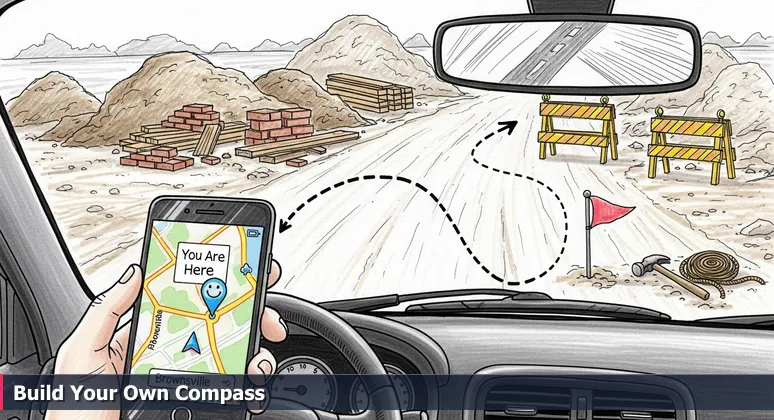
Following a perfect map only works if the landscape hasn't changed. In Brownsville, where new roads are literally being paved for a space economy, your first step isn't just learning Python - it's mastering the language that builds the digital terrain. Proficiency in Python and its core libraries, NumPy and Pandas, is non-negotiable, appearing in nearly 100% of AI engineer job postings. This is more than syntax; it's building the computational thinking to handle the data flowing from local assets like SpaceX's test site or the Port of Brownsville's logistics networks.
Every AI model is built on data, and your ability to clean, explore, and transform raw information is the bedrock of everything that follows. A rushed foundation leads to fragile models. As industry guides note, production-ready engineers don't just import libraries - they understand the underlying computational graphs and memory management required to run them efficiently at scale.
Your Local Learning Compass
In the RGV, your path to these foundational skills is clear and accessible. Structured programs like the introductory modules of Nucamp's Back End, SQL and DevOps with Python Bootcamp or the associate programs at Texas Southmost College (TSC) provide the hands-on practice you need. The goal is to move from abstract concepts to writing tangible code that solves local problems.
The Verification Milestone
By the end of your first phase, your verification project should demonstrate applied skill. Write a Python script that loads a local dataset - like simulated cargo logs from the Port of Brownsville - cleans missing values, performs key aggregations, and generates actionable insights. This proves you can turn raw, regional data into a structured foundation, which is the first step in navigating the real-world AI opportunities being built right here.
Steps Overview
- Start with Python and Data Mastery
- Dive into Core Machine Learning
- Explore Deep Learning and Generative AI
- Master MLOps for Real-World Deployment
- Build a Brownsville-Focused AI Portfolio
- Common Questions
This complete guide to AI jobs in the Rio Grande Valley in 2026 covers skills, salaries, and key employers.
Dive into Core Machine Learning
With your Python compass calibrated, you now navigate into the territory of classical machine learning. This is where you learn the algorithms - linear regression, decision trees, clustering - that power predictions and automate decisions. Using Scikit-learn, you move from handling data to teaching machines to find patterns within it. This core competency is about understanding how models work under the hood, a skill critical as the AI engineer's role evolves from creating new algorithms to expertly building applications with existing, powerful ones.
In the Brownsville-Harlingen metro, this skill translates directly to regional needs. Predictive models can forecast hospital readmission rates for Valley Baptist Health System or analyze student performance trends for the Brownsville ISD. As Steve Perez, co-founder of the Brownsville Tech Hub Club, notes, mastering these tools is about "leveling the playing field for all" in our local tech ecosystem. It's the practical application of statistics and algorithms to the challenges happening outside your window.
Building Your Local ML Toolkit
Your learning path in the RGV should focus on moving from theory to applied projects. Progressing to the machine learning modules in a specialized bootcamp, such as the project-based Nucamp Solo AI Tech Entrepreneur Bootcamp or the TSC Data Science & AI Course, provides the structured environment to experiment. This phase requires what industry veterans emphasize: "humility because models surprise us every day." Each project is an experiment in navigating uncertainty.
Your verification milestone is to build a complete predictive pipeline. Take a publicly available dataset relevant to the Valley - perhaps regional health or economic indicators - and guide it from raw form through cleaning, to a trained model, and finally to evaluation. This end-to-end project proves you can navigate the core workflow of machine learning, turning a local question into a data-driven answer and setting your coordinates for the next frontier: deep learning.
Explore Deep Learning and Generative AI
Now you reach the frontier shaping the current era: deep learning and generative AI. You shift from Scikit-learn to frameworks like PyTorch and TensorFlow to build neural networks capable of computer vision and natural language processing. Crucially, this is where you learn to work with Large Language Models (LLMs) not as a chat interface, but as a developer building complex applications with retrieval-augmented generation (RAG) pipelines and AI agents. This skill set is no longer optional; it's the direct demand of top regional employers.
In Brownsville, this aligns with the needs of SpaceX, which seeks engineers proficient in these frameworks for building agentic workflows, and the vision of the city's own "AI Factory," described by IT Director Jorge Cardenas as a centralized digital intelligence system. The role of the AI engineer has evolved; by now, the expertise has shifted from creating new models to building powerful applications with existing ones. Learning to implement these advanced systems means you're building for the infrastructure being planned in your own community.
Mastering the Modern AI Stack
Your learning must now encompass neural network fundamentals, prompt engineering, and frameworks like LangChain for creating multi-step AI workflows. In the RGV, seeking out programs specifically designed for this generative shift is key. The Nucamp Solo AI Tech Entrepreneur Bootcamp, for instance, is built around LLM integration and AI agent development - skills that have become "table stakes" for employment. This is where your ability to make global AI technology work on local, specific data is forged.
Your verification project should demonstrate this integration. Build a RAG application that can answer questions from a local corpus of documents, such as the UTRGV course catalog or technical manuals from a regional manufacturer. This proves you can navigate the most complex AI terrain and anchor it to the ground beneath your feet, creating tools that are globally informed but locally relevant.
Master MLOps for Real-World Deployment
An AI model trapped in a Jupyter notebook is a road to nowhere. The final, most employable skill is MLOps - the practice of deploying, monitoring, and maintaining models in production. This is the "last mile" that transforms you from a student of AI into a potential hire for RGV employers. One-third of AI job postings now explicitly demand cloud and deployment expertise, making this competency your ticket into the real-world tech ecosystem.
For regional employers, from startups to the Port of Brownsville, a theoretical model is useless. They need solutions integrated into web applications, running reliably in the cloud, and accessible via APIs. This skill set aligns perfectly with the operational vision of Brownsville's AI Factory, which aims to serve as the city's centralized digital "brain." Mastering deployment means you can contribute to the live intelligence systems that will drive smart city innovation and industrial efficiency here.
The MLOps Toolkit
Your focus must shift to practical engineering: building APIs with FastAPI, creating reproducible environments with Docker containers, and understanding cloud deployment fundamentals on platforms like AWS or Azure. This is about building the pipeline that takes your model from a prototype to a product. In the Rio Grande Valley, look for programs that capstone with a deployment project, guiding you through putting a model behind a web interface using Streamlit or deploying it as a secure cloud endpoint.
Your Deployment Milestone
The final verification is to take a previous project - your predictive model or RAG application - and ship it. Package it with Docker, build a simple front-end with Streamlit, and deploy it to a platform like Hugging Face Spaces or Render. This live application becomes the centerpiece of your portfolio, demonstrating not just that you understand AI, but that you can successfully navigate the entire journey from local data to a working tool that solves a real problem. It's the proof that you've reached your destination.
Build a Brownsville-Focused AI Portfolio
Your portfolio must shout not just "I know AI," but "I know how to apply AI to the opportunities and challenges of the Rio Grande Valley." A generic image classifier won't differentiate you; projects that speak to the local industrial landscape will. This is where you transition from following a generic map to becoming a navigator of the living ecosystem of RGV tech, using your skills to build solutions for the ground you stand on.
Create projects that resonate with regional pillars. For aerospace & robotics, develop a computer vision model for object detection in satellite imagery or simulate a predictive maintenance system for launch site equipment. For maritime & logistics, build an AI model for predicting cargo Estimated Time of Arrival (ETA) at the Port of Brownsville. For the public sector, conceptualize a smart city project optimizing resources, tapping directly into the vision of Brownsville's AI Factory as a local hub for innovation.
Network with Intent
Your education continues outside the classroom. Attend forums at the eBridge Center and Brownsville Tech Hub Club events to connect with the community driving this change. Follow the applied research from UTRGV's computer science department. This intentional networking transforms your learning from a solitary journey into a collaborative effort within the region's growing tech fabric.
The final verification is this: you are on the right path when you can read a local news article about a SpaceX launch, a Port expansion, or a UTRGV initiative and immediately articulate a specific AI project idea that could contribute to it. Your portfolio becomes your proof of concept, showing employers you're not just looking for a job in the RGV - you're already building its future.
Common Questions
How long does it realistically take to become an AI engineer in Brownsville by 2026?
With a focused, structured approach, you can build foundational skills in 2-3 months and be job-ready within 6-12 months. Local bootcamps like Nucamp's and courses at TSC offer accelerated paths, aligning with the growing demand from employers such as SpaceX and the Port of Brownsville by 2026.
What are the salary expectations for AI engineers in the Rio Grande Valley?
Salaries are competitive, often enhanced by Texas's no state income tax. In Brownsville, AI roles at places like SpaceX or the Port of Brownsville can align with national trends, with demand driven by the region's aerospace and logistics growth, making it a viable career path.
Do I need a computer science degree to break into AI in Brownsville, or can a bootcamp work?
Many local employers prioritize practical skills over degrees. Bootcamps like Nucamp's provide hands-on training in Python, machine learning, and deployment, which are key for roles at the AI Factory or with organizations like UTRGV, offering a direct route into the field.
How important is it to focus on local projects for my AI portfolio in the RGV?
Crucial - projects that address regional challenges, such as logistics optimization for the Port of Brownsville or predictive models for Valley Baptist Health System, demonstrate your ability to apply AI locally. This sets you apart in a market where employers value context-specific solutions.
What specific AI skills should I prioritize for Brownsville's job market?
Focus on Python, machine learning with Scikit-learn, deep learning using TensorFlow/PyTorch, and MLOps for deployment. These are in high demand for roles at SpaceX and other advanced manufacturers, where skills in AI application are becoming essential by 2026.
Understand how AI is integrated into Brownsville's key industries for career growth.
Read a comprehensive analysis of cybersecurity jobs in Brownsville in 2026 focusing on local assets and employers.
For a list of tech jobs without a degree in Brownsville, check out this article.
Discover how Meta and SpaceX offer top tech salaries in Brownsville in this detailed analysis.
Get the scoop on top-rated tech startups for junior software engineers in Brownsville in 2026.

Irene Holden
Operations Manager
Former Microsoft Education and Learning Futures Group team member, Irene now oversees instructors at Nucamp while writing about everything tech - from careers to coding bootcamps.