









The Complete Guide to Using AI in the Healthcare Industry in Bangladesh in 2025
Last Updated: September 5th 2025
Too Long; Didn't Read:
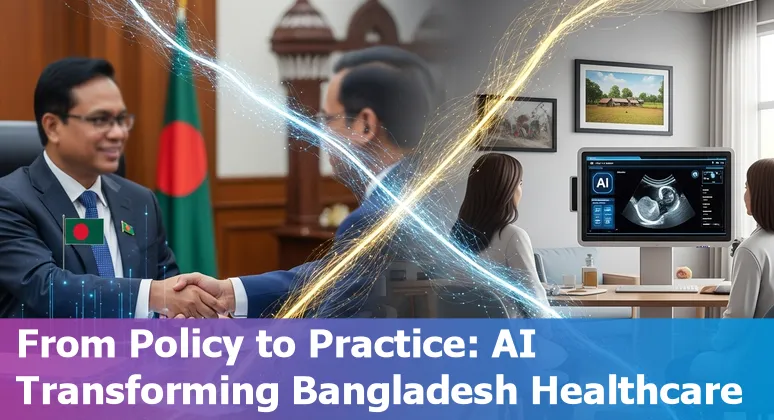
AI is scaling Bangladesh healthcare in 2025: a $14B market growing at 10.3% CAGR under the Digital Health Strategy 2023–2027; autonomous AI can raise caregiver productivity ~40%, CAD4TB screened 32,689 (1,452 TB cases), and aims to train 100,000 workers.
As Inspira documents, AI is already changing bedside choices in Bangladesh - imagine a young mother in a rural village using an AI-powered telemedicine app to triage her sick child, connect to a Dhaka doctor, and send a prescription to the nearest pharmacy (Inspira report: The Future of Digital Healthcare in Bangladesh).
National policy (Digital Health Strategy 2023–2027) and a $14B healthcare market growing at a 10.3% CAGR make this a pivotal moment, while a study showed autonomous AI can boost caregiver productivity by about 40% in Bangladesh (Digital Diagnostics study summary: Autonomous AI boosts caregiver productivity in Bangladesh).
Turning potential into routine care depends on digital health literacy and practical skills - programs like Nucamp's AI Essentials for Work give nontechnical professionals the tools to use AI responsibly in clinics and community programs (Nucamp AI Essentials for Work syllabus).
| Bootcamp | Length | Early Bird Cost | Registration |
|---|---|---|---|
| AI Essentials for Work | 15 Weeks | $3,582 | Register for Nucamp AI Essentials for Work |
I would say responsibility.
Table of Contents
- What is AI and how does it work in healthcare (Bangladesh context)
- How is AI used in Bangladesh today: key applications and startups
- National strategies, policies and governance in Bangladesh
- Infrastructure and workforce readiness in Bangladesh
- Economic impact: market size, funding and international partnerships in Bangladesh
- What is the future of AI in healthcare 2025? (Bangladesh perspective)
- What are three ways AI will change healthcare by 2030 in Bangladesh
- Implementation challenges and ethical considerations in Bangladesh
- Conclusion: Practical steps for beginners and next steps in Bangladesh
- Frequently Asked Questions
Find your path in AI-powered productivity with courses offered by Nucamp in Bangladesh.
What is AI and how does it work in healthcare (Bangladesh context)
(Up)In Bangladesh, AI in healthcare is less about sci‑fi miracles and more about practical tools that cut day‑to‑day friction: clinical natural language processing can reduce charting burden and improve research mining, turning messy notes into usable data for clinicians and public‑health teams (clinical NLP for faster documentation), while automation in labs and pharmacies trims costs and errors by speeding test turnaround and keeping inventory smarter and leaner (automation in labs and pharmacies).
Those operational shifts reshape jobs too: frontline transcribers can pivot into higher‑value roles such as clinical documentation specialists, preserving human judgment while letting AI handle repetitive text work (clinical documentation specialist career path).
Think of AI as a steady assistant that makes records searchable, labs faster, and teams focus on care - a change that proves its value when a long stack of notes becomes a single, research‑ready record overnight.
How is AI used in Bangladesh today: key applications and startups
(Up)AI in Bangladesh today is already practical and visible: ultra‑portable, backpack-style X‑ray units running CAD4TB and other computer-aided detection tools are deployed in outreach clinics and IMCI corners to triage children and adults, giving a probability “score out of 100” in under 60 seconds and prompting same‑day sputum follow‑up when needed (Devex coverage of mobile AI-powered X‑ray use for pediatric TB detection in Bangladesh); national programs and partners are scaling these systems through the National TB Control Programme and Delft Imaging partnerships, linking CAD results to Truenat/GeneXpert dashboards for faster referral and treatment and reporting thousands screened and over a thousand cases found in recent rollouts (Delft Imaging Bangladesh CAD4TB TB initiative details).
Multiple commercial AI chest‑X‑ray products (CAD4TB, qXR, Lunit, JF CXR‑1, InferRead) have demonstrated strong diagnostic performance in meta‑analyses, supporting their role as high‑sensitivity triage tools that can halve costly molecular testing while expanding access in low‑resource settings (Systematic review and meta-analysis of AI chest X‑ray diagnostic tools).
The result is faster triage, fewer unnecessary Xpert tests, and earlier treatment for hard‑to‑reach populations - a concrete shift from centralized imaging to on‑the‑spot diagnosis.
| Metric | Value |
|---|---|
| Population (2020) | ~165 million |
| TB cases (2020) | 360,000 |
| Screened with CAD4TB (report) | 32,689 |
| TB cases diagnosed (report) | 1,452 |
"This is just the beginning," said Dr. Senjuti Kabir, assistant scientist at icddr.b's emerging infections program.
National strategies, policies and governance in Bangladesh
(Up)Bangladesh has moved from pilots to planning: national leadership, with WHO support, began formalizing a national digital health approach after stakeholder consultations in 2019–2020 and today's Bangladesh Digital Health Strategy 2023–2027 lays out clear pillars - governance, interoperability, infrastructure, service delivery, workforce development, and data protection - designed to bring digital tools into everyday care while aligning with Vision 2041 and the Digital Bangladesh agenda (Bangladesh Digital Health Strategy 2023–2027 - national digital health strategy).
The plan sets concrete targets - connect every public facility with EHR capability, integrate telehealth across roughly 80% of upazilas, establish a national health information exchange and stronger cybersecurity, and train over 100,000 health workers - so policy moves beyond slogans to measurable milestones.
Governance challenges remain familiar and solvable: stakeholders must clarify institutional roles, adopt interoperability standards from the WHO repository, and build rights‑based rules that address privacy, youth participation, and the messy reality that people often get health guidance from social media rather than clinics - an issue documented in community‑engaged research on digital health and rights that calls for youth consultation and multi‑stakeholder oversight (WHO - Advancing Digital Health Strategy in Bangladesh (2021), Community-engaged study: Digital transformation and the right to health of young adults in Bangladesh and Colombia).
Practical governance means pairing regulation with capacity: certify reliable online providers, fund digital literacy, and build transparent data‑use rules - so when an AI triage tool flags a child in a remote clinic, there's both the tech and the trusted system to act on that alert, not confusion or unchecked data sharing.
| Strategic Goal | Target |
|---|---|
| Digital connectivity of public facilities | All public health facilities digitally connected by 2027 |
| Telehealth coverage | Integrated across ~80% of upazilas |
| Workforce training | Train 100,000+ health professionals in digital health |
| Data systems & security | Establish HIE framework and strengthen cybersecurity |
“The need for digital health has never been more visible and acute than since the start of the COVID-19 pandemic when disrupted access to health service has forced health care providers and patients to employ alternative means to access and deliver health services.”
Infrastructure and workforce readiness in Bangladesh
(Up)Infrastructure in Bangladesh has the bones for an AI health future - state‑backed hi‑tech parks promise high‑speed internet, uninterrupted power, tax incentives and targeted training programs (including 2022 AI/ML courses) that can seed clinics with local software and data talent; see the overview of the Bangladesh Hi‑Tech Park initiative for the official pitch (Bangladesh Hi‑Tech Park initiative official overview).
Yet readiness is uneven: on the ground, sprawling projects like Bangabandhu Hi‑Tech City were built with big ambitions (a 100,000‑worker vision) but many buildings sit empty and only about 5,000 workers arrive daily - an image of cobwebbed offices that undercuts promises of a ready ecosystem (Bangabandhu Hi‑Tech City occupancy report).
Critics note weak connectivity, spotty power, poor nearby amenities and a persistent skills gap in advanced AI, data science and cybersecurity that slow uptake in hospitals and labs (analysis: Rethinking Bangladesh's hi‑tech parks).
The practical path forward is clear: pair the physical parks and incentive schemes with focused workforce pipelines, local training, and easier regulatory navigation so an AI triage app in a rural clinic isn't just a demo but a dependable, well‑staffed service patients can trust.
| Hi‑Tech Park | Current status |
|---|---|
| Janata Tower Hi‑Tech Park (Dhaka) | Operational - established urban site |
| Bangabandhu Hi‑Tech City (Kaliakoir) | Large facility with low occupancy; many vacant buildings, ~5,000 daily workers reported |
| Sheikh Hasina Software Technology Park (Jessore) | Planned for ~20,000 workers; current workforce ~1,600 |
| Sheikh Kamal IT Training & Incubation (Barisal) | Small incubation center (0.5 acres) |
| Rajshahi IT Incubation | Small incubation center (0.5 acres) |
“We were in the middle of nowhere… The nearest bazaar was a 10-minute rickshaw ride away, and one of my colleagues thought the place was haunted.”
Economic impact: market size, funding and international partnerships in Bangladesh
(Up)Bangladesh's healthcare economy is fast becoming the launchpad for AI-driven services: the sector - about $14 billion as of early 2025 - is growing at a reported 10.3% CAGR since 2010 and is widely projected to more than reach $23 billion within the next decade (reports vary on a 2030–2033 target), creating clear demand for AI‑powered early detection, telemedicine platforms and cloud EHRs that cut costs and scale access (Bangladesh healthcare market projection - Industry Insider).
That upside is mirrored in subsectors primed for tech investment - medical equipment, diagnostics and pharmaceuticals (local pharma is booming, with a projected $6B market by 2025) - while policy incentives and PPPs are nudging capital toward local manufacturing and digital health.
Yet funding patterns show room to grow: international financiers have poured billions into Bangladesh overall, but a surprisingly small slice has flowed to health, which points to both an investment gap and an opportunity for foreign partnerships and impact capital to underwrite AI deployments.
The real-world “so what” is vivid: when wealthier patients currently spend an estimated $6 billion abroad for care, improving domestic digital services and AI diagnostics could retain that outflow and turn demand into sustainable jobs, exports and healthier communities (Bangladesh health sector investment outlook - TBS News).
| Metric | Value / Source |
|---|---|
| Estimated sector size (Jan 2025) | $14 billion - Industry Insider |
| Projected market | $23 billion by 2030–2033 - TBS / Industry Insider |
| CAGR since 2010 | 10.3% - TBS / New Age |
| Pharmaceuticals projection | $6 billion by 2025 - Industry Insider |
| Estimated patient outflow for overseas care | ~$6 billion annually - Industry Insider |
It is projected that the market volume of Bangladesh's health sector will reach $23 billion by 2033. It's clear that there is huge potential for investors in this sector.
What is the future of AI in healthcare 2025? (Bangladesh perspective)
(Up)The near‑term future of AI in Bangladesh's healthcare system is increasingly about bringing high‑quality diagnostics out of urban centres and into clinics, ambulances and community health outposts: a high‑profile example is Exo Imaging's plan to introduce a portable, AI‑powered ultrasound - Bangladesh will be the first country in Asia to adopt the device - with an initial rollout to leading hospitals and a clear long‑term promise to expand into rural and community centres (Exo Imaging portable AI-powered ultrasound for Bangladesh healthcare).
That hardware push lines up with national ambitions to scale AI and digital health literacy by 2025 and the investor momentum seen at BIDA's healthcare sessions, signaling a convergence of policy, capital and devices that could make same‑day, AI‑assisted screening routine (Inspira roadmap for scaling digital health in Bangladesh by 2025, BIDA healthcare investment summit 2025).
Practically, the clearest gains will be faster triage and earlier detection - heart disease, TB, breast and lung abnormalities and pregnancy complications - paired with software that prioritises urgent cases, automates follow‑ups and stitches results into telemedicine workflows; the memorable image is a clinician reaching into a bag for an ultrasound as casually as a stethoscope, with an AI readout that helps decide who needs immediate referral.
| Metric | Detail |
|---|---|
| Company | Exo Imaging (US‑based) |
| Device | Portable AI‑powered ultrasound (FDA‑approved in US) |
| Initial rollout | Leading hospitals across Bangladesh; long‑term rural/community expansion |
| Asia status | Bangladesh first country in Asia to adopt |
| Potential applications | Heart disease, TB, breast cancer, lung disease, thyroid, pregnancy complications |
| Software features | Patient prioritisation, follow‑up reminders, streamlined clinician‑patient communication |
| Announcement date | 4 September 2025 |
"This device is designed to be portable and highly efficient, making high-quality diagnostics more accessible, even in remote areas. It will revolutionise healthcare across the globe, especially in places like rural Bangladesh. Doctors and nurses will soon use it like a stethoscope."
What are three ways AI will change healthcare by 2030 in Bangladesh
(Up)Three concrete ways AI is set to reshape Bangladesh's health system by 2030 are already visible: first, diagnostics and decision support will move out of big hospitals into everyday care - startups like CMED Health and platforms such as Susastho.ai illustrate how AI‑driven CDSS, virtual hospitals and factory/enterprise clinic models can screen, triage and refer patients at scale (CMED aims to reach over 2.5 million users), turning brief visits into timely interventions (AI for Health innovation - The Coronal article on revolutionizing healthcare through AI).
Second, population health will get smarter with explainable outbreak forecasting and early‑warning systems so authorities and community teams receive prompt alerts to stop dengue and similar outbreaks before they spread (PubMed article: Explainable AI dengue forecasting in Bangladesh (2025)).
Third, prevention and efficiency will improve through targeted ML risk models and automation: validated prediction tools (for example, an ECC model with AUC‑ROC ~0.77 and 80% sensitivity) plus studies showing autonomous AI can boost caregiver productivity by roughly 40% mean scarce clinicians spend more time on complex care while AI handles routine screening, documentation and follow‑up (BMC Oral Health: ML prediction of early childhood caries (ECC)).
Picture a factory clinic where a health visitor's tablet flags a high‑risk worker for immediate referral - small actions like that add up to earlier treatment, fewer costly referrals abroad, and a system that catches problems before they become emergencies.
| Change by 2030 | Example / Metric | Source |
|---|---|---|
| Democratized point‑of‑care diagnostics & CDSS | CMED Health target: reach 2.5M users; Susastho.ai for SRH | The Coronal - AI for Health innovation article |
| Predictive public‑health alerts | Explainable AI model for dengue; timely outbreak alerts | PubMed: Explainable AI dengue forecasting in Bangladesh (2025) |
| Targeted prevention & workflow efficiency | ECC ML model AUC‑ROC 0.77 (sensitivity 0.80); autonomous AI productivity +40% | BMC Oral Health - ML prediction of ECC (2025), Digital Diagnostics - autonomous AI boosts caregiver productivity in Bangladesh study |
Implementation challenges and ethical considerations in Bangladesh
(Up)Implementation in Bangladesh will hinge less on technology hype and more on hard governance: there is no single, comprehensive AI law yet and existing statutes (Digital Security Act→Cyber Security Act, ICT rules, nascent Data Protection drafts) leave gaps that can let bias, surveillance and misuse slip through the cracks (Reforming AI laws and regulation in Bangladesh - policy analysis, Artificial intelligence law in Bangladesh - legal overview).
Practical risks are concrete - algorithmic hiring that sidelines minority names, courtroom translations that erase cultural nuance, or health datasets that exclude people whose records were never digitized - and imported AI systems complicate accountability when data and code live offshore.
Generative harms add urgency: deepfakes and automated disinformation can spread fast on semi‑private channels (WhatsApp), damaging reputations before any legal remedy arrives.
Environmental and infrastructure costs (cloud data centres, unreliable local connectivity) and a thin pool of AI‑savvy regulators further slow safe deployment.
The path forward must be rights‑first and context‑sensitive: adapt international guardrails rather than copy them wholesale, mandate transparency and producer accountability, fund oversight and digital literacy, and center marginalized communities in rule‑making so AI in clinics and courts protects people as well as it promises to help them.
"The regulation of technology is meant to preserve the safety, privacy, and rights of the public and ensure that people are not exploited, discriminated against, ..."
Conclusion: Practical steps for beginners and next steps in Bangladesh
(Up)Practical next steps for beginners in Bangladesh are clear and achievable: start with free, Bangla-friendly study paths - Study Mart (via aiQuest) offers structured playlists from “60 Days of Python” to SQL and ML that make foundational skills accessible to non‑English learners (Best study resources for data science in Bangladesh - Study Mart (aiQuest)); then translate those basics into workplace skills by taking a focused, hands‑on course such as Nucamp's AI Essentials for Work (15 weeks) to learn promptcraft, practical AI tools, and job‑relevant workflows that help clinical teams automate documentation and speed triage (Nucamp AI Essentials for Work syllabus).
For those aiming to launch health tech solutions, consider the Solo AI Tech Entrepreneur path to build a product and business skills; for clinicians and lab staff, pair short technical modules with domain training so automation in labs and clinical NLP become dependable tools rather than black boxes.
The simple rule: build language‑friendly fundamentals, practice with real healthcare prompts and datasets, and choose a short, project‑driven program that leads to measurable tasks - turning learning into the exact skills a clinic or factory clinic can use tomorrow.
| Program | Length | Early Bird Cost | Registration |
|---|---|---|---|
| AI Essentials for Work | 15 Weeks | $3,582 | Register for AI Essentials for Work - Nucamp |
| Solo AI Tech Entrepreneur | 30 Weeks | $4,776 | Register for Solo AI Tech Entrepreneur - Nucamp |
| Back End, SQL & DevOps with Python | 16 Weeks | $2,124 | Register for Back End with Python - Nucamp |
Frequently Asked Questions
(Up)What is AI in healthcare and how is it being used in Bangladesh?
In Bangladesh AI focuses on pragmatic tools that reduce daily friction: clinical natural language processing to cut charting and make notes research-ready, automation in labs and pharmacies to speed turnaround and reduce errors, and AI-assisted triage in telemedicine apps. Studies cited in the article show autonomous AI can boost caregiver productivity by roughly 40%, while AI functions as a steady assistant that makes records searchable, speeds diagnostics, and lets clinicians concentrate on complex care.
What AI applications, devices and startups are already active in Bangladesh and what are the impact metrics?
Deployed applications include portable, backpack-style X‑ray units running CAD tools (CAD4TB, qXR, Lunit, JF CXR‑1, InferRead) for rapid triage; linkage of CAD results to Truenat/GeneXpert dashboards; telemedicine triage apps; and emerging portable ultrasound. Reported field metrics include 32,689 people screened with CAD4TB in a rollout and 1,452 TB cases diagnosed from that screening. Exo Imaging announced a plan to introduce a portable AI‑powered ultrasound with Bangladesh as the first country in Asia to adopt it (initial rollout to leading hospitals). Startups and platforms mentioned include CMED Health (target 2.5M users) and Susastho.ai for SRH services.
What are the national strategies, targets and infrastructure readiness for digital health and AI?
Bangladesh's Digital Health Strategy 2023–2027 sets pillars (governance, interoperability, infrastructure, service delivery, workforce, data protection) and measurable targets: connect all public health facilities with EHR capability by 2027, integrate telehealth across ~80% of upazilas, establish a national health information exchange and stronger cybersecurity, and train 100,000+ health workers. Infrastructure has strengths (hi‑tech parks, state-backed incentives) but uneven readiness: examples include Bangabandhu Hi‑Tech City with low occupancy (~5,000 daily workers reported) and other parks with small current workforces, indicating a need to pair facilities with focused workforce pipelines and local training.
What is the economic outlook for AI in Bangladesh's healthcare sector?
The healthcare sector is estimated at about $14 billion (early 2025) with a reported 10.3% CAGR since 2010 and projections to roughly $23 billion by 2030–2033. Pharmaceuticals are projected around $6 billion by 2025. The article highlights a ~$6 billion annual patient outflow for overseas care today, representing demand that improved domestic digital services and AI diagnostics could retain. While international capital flows into Bangladesh are strong overall, health tech receives a smaller share, signalling both an investment gap and opportunity.
What are the main risks and recommended next steps for practitioners, policymakers and beginners?
Key risks include gaps in comprehensive AI law and data protection, potential bias and exclusion in datasets, accountability issues for imported/black‑box systems, and generative harms such as deepfakes and misinformation spread via private channels. The recommended approach is rights‑first, context‑sensitive governance (transparency, producer accountability, oversight, digital literacy, inclusion of marginalized groups). For individuals and practitioners, start with language‑friendly fundamentals and short project-driven courses: examples in the article are Nucamp's "AI Essentials for Work" (15 weeks, early bird cost $3,582) and the "Solo AI Tech Entrepreneur" path (30 weeks, $4,776), combined with workplace-focused practice to turn skills into immediate clinic-ready tasks.
Discover how AI-powered diagnostics in Bangladesh are speeding detection and cutting referral costs for TB, pneumonia and cancer.
Discover how AI for medical imaging triage can speed diagnoses and extend radiology reach across Bangladesh.
Learn how administrative automation in clinics can be turned into opportunities for data-savvy staff.

Ludo Fourrage
Founder and CEO
Ludovic (Ludo) Fourrage is an education industry veteran, named in 2017 as a Learning Technology Leader by Training Magazine. Before founding Nucamp, Ludo spent 18 years at Microsoft where he led innovation in the learning space. As the Senior Director of Digital Learning at this same company, Ludo led the development of the first of its kind 'YouTube for the Enterprise'. More recently, he delivered one of the most successful Corporate MOOC programs in partnership with top business schools and consulting organizations, i.e. INSEAD, Wharton, London Business School, and Accenture, to name a few. With the belief that the right education for everyone is an achievable goal, Ludo leads the nucamp team in the quest to make quality education accessible