









How to Become an AI Engineer in Aurora, IL in 2026
By Irene Holden
Last Updated: February 22nd 2026
Quick Summary
To become an AI engineer in Aurora, IL by 2026, commit to a 12-month plan that builds from foundational skills in programming and math to creating a portfolio tailored to local industries like healthcare and scientific computing. This approach capitalizes on Aurora's growing AI ecosystem, with salaries for senior roles reaching up to $497K at companies like Aurora Innovation, and leverages accessible training options such as Nucamp's bootcamp starting at $2,124 for practical, community-based learning.
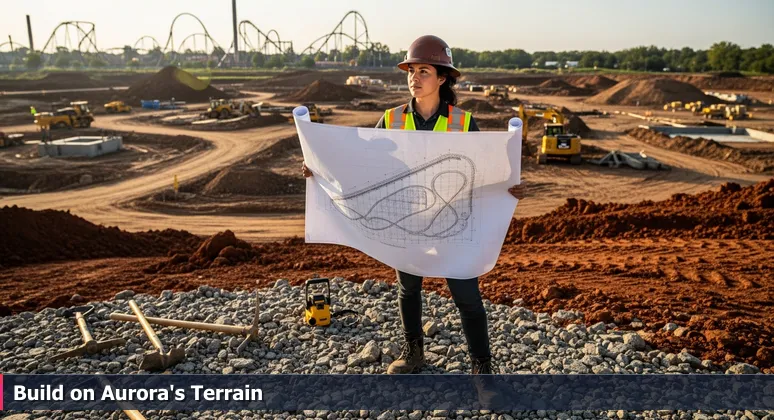
Every roller coaster at Six Flags Great America started as a perfect blueprint. But the engineers who built them know the real work began when they had to adapt those plans for the specific mix of Illinois clay and bedrock beneath them. Becoming an AI engineer here is no different: the universal skillset is your blueprint, but Aurora's unique economic terrain is where you'll build.
The region is actively transforming into a tech-focused hub. Salaries for top engineering roles at companies like Aurora Innovation reach up to $497K, signaling intense local demand for expertise. This growth is fueled by municipal vision; CIO Ram Tyagi champions a future where Aurora is a "business-ready, AI-powered city," actively collaborating with entrepreneurs to build state-of-the-art tech facilities.
"An AI-powered city starts here." - Ram Tyagi, CIO of Aurora
Your advantage is location. You're within reach of Chicago's vast tech scene and major airports, but with a significantly lower cost of living than downtown. The Fox Valley and suburbs are nurturing a growing AI startup ecosystem, while legacy powerhouses like Advocate Aurora Health and Fermilab provide deep, complex problem domains. Your first step isn't just learning to code - it's learning to translate a universal skillset into a career built for this specific ground.
Steps Overview
- Unlock Your AI Engineering Career in Aurora
- Lay the Foundational Blueprint for AI
- Build Core AI and Machine Learning Skills
- Create a Local AI Portfolio
- Master Deployment and MLOps
- Verify Your AI Engineering Journey
- Common Questions
Navigate the AI employment landscape in Aurora, IL with local insights.
Lay the Foundational Blueprint for AI
That universal blueprint begins with non-negotiable foundations in programming and mathematics. According to recruiter insights from edX, by 2026 these are considered "table stakes" for high-paying AI roles. Skipping them is like an engineer ignoring material science - you might assemble something, but it won't withstand the real-world stress of a complex model or a technical interview at a major lab.
Month 1: Programming Fluency in Python
Your first action is achieving proficiency in Python, the lingua franca of AI. This means daily practice with syntax, data structures, and functions. Immediately learn to use NumPy and Pandas for data manipulation, libraries used extensively from analyzing sensor data at Fermilab to processing patient datasets at Rush-Copley. Verify your skills by building a small program that reads a local dataset, like public City of Aurora data, and performs basic analysis.
Month 2: The Mathematical Bedrock
Next, solidify practical understanding of Linear Algebra, Calculus, and Probability. Focus on how these concepts power AI: Linear Algebra for data transformations in neural networks, Calculus for optimization and learning, and Statistics to quantify uncertainty. Recruiters in the Chicago-Aurora corridor consistently screen for this knowledge, as it's essential for understanding why a model works, not just how to call an API.
A common, costly mistake is trying to jump directly into building complex models like LLMs without this base. As former Meta engineering manager Jean Lee advises, excelling requires moving beyond simple prompting to mastering underlying systems - a task impossible without a strong foundation. Your local terrain, from healthcare to physics research, demands engineers who grasp these principles from the ground up.
Build Core AI and Machine Learning Skills
With your foundation set, you begin constructing the core frameworks of AI - translating mathematical concepts into functioning code. This is the heart of the toolkit, and in Aurora, you're not just a theorist but a builder. Whether for an autonomous vehicle startup or a healthcare diagnostic tool, you need to architect and train models.
Month 3: Machine Learning Fundamentals
Start by understanding and implementing classic algorithms: supervised learning (linear regression, decision trees) and unsupervised learning (clustering). Learn to evaluate models with metrics like accuracy and precision. A practical project is to build a model predicting housing price trends in the Chicago-Aurora-Naperville metro area using public real estate data, applying regression to a locally relevant dataset.
Month 4 & 5: Deep Learning and Specialization
Dive into neural networks with a primary framework. PyTorch is highly favored in research settings like Fermilab, while TensorFlow is robust for production. Study key architectures like CNNs for image data and Transformers for sequences. Then, direct your learning to Aurora's specific terrain:
- For Healthcare: Focus on computer vision for medical images and model interpretability, crucial for hospitals like Rush-Copley.
- For Scientific Computing: Prioritize PyTorch, distributed computing, and note that Fermilab often expects proficiency in C++ alongside Python.
- For Tech & Startups: Explore NLP and begin learning cloud deployment on AWS or Azure.
This stage is ideal for structured acceleration. Programs like UChicago's AI and Machine Learning courses offer advanced, practical training that aligns with the "Full-Stack AI" capabilities local firms demand.
Create a Local AI Portfolio
Your portfolio is the physical proof that you can translate universal concepts into local solutions. In 2026, a resume with listed skills isn't enough. Employers from Aurora's tech town halls to Fermilab's HR departments want to see applied, localized problem-solving.
Project 1: Healthcare AI for Local Impact
Build a pneumonia detection system from chest X-ray images using a CNN. This demonstrates computer vision and data preprocessing while directly appealing to healthcare employers like Rush-Copley Medical Center. It shows you understand their data domain and the critical need for accurate diagnostic tools.
Project 2: Industrial or Scientific Data Analysis
Choose a project that mirrors local industry needs. Build an anomaly detection system for time-series sensor data (relevant for manufacturing or Fermilab's accelerators) or an image segmentation model for satellite or physics simulation data. These projects showcase your ability to handle the complex, high-dimensional data prevalent in the region.
Project 3: A "Full-Stack" AI Application
Develop a natural language question-answering system about a specific local topic, like Aurora city ordinances. This demonstrates end-to-end engineering skill - integrating NLP, retrieval-augmented generation (RAG), and API development into a usable application. This aligns with the trend toward agentic AI that top engineers emphasize.
Warning: Avoid generic tutorial projects like MNIST digit classification. As highlighted in discussions on effective AI portfolios, these solved problems won't make you stand out. Your portfolio must tell a story of initiative and understanding of Aurora's specific economic and technical landscape.
Master Deployment and MLOps
The final, crucial phase is moving from a model on your laptop to a reliable system in the world - this is MLOps. According to industry insights, local employers increasingly value "Applied AI"; a model that isn't deployed provides zero value, whether it's in a clinic or on a manufacturing floor.
Months 9-10: Containerization and Cloud Basics
Learn to package your application so it runs anywhere. Start with Docker to containerize a portfolio project, then deploy it to a cloud service. Begin with a simple virtual machine, then progress to managed services like Azure Machine Learning - common in corporate and Illinois government contexts. This versatility is key, as many Aurora-based companies use hybrid or multi-cloud strategies.
Months 11-12: Build a Capstone "Production-Ready" Project
Integrate all skills into one impressive, deployed project. Choose an earlier portfolio piece and fully productionize it. This process involves three key phases:
- Add automated testing for your code and model performance.
- Set up a CI/CD pipeline using tools like GitHub Actions to automate testing and deployment.
- Implement basic monitoring to track prediction accuracy and model drift over time.
For example, take your healthcare X-ray model, build a secure FastAPI backend, containerize it, deploy it on Azure App Service, and create a simple frontend. Document the entire process, including considerations for real-world compliance like HIPAA. As seen in advanced engineering job descriptions, this end-to-end capability separates professional engineers from hobbyists and is exactly what commands top salaries in the region.
Verify Your AI Engineering Journey
You've successfully engineered your AI career path when you can confidently check off specific, tangible milestones. These verifications transform abstract learning into demonstrated competency, the exact evidence Aurora employers use to justify salaries that can reach up to $497K for top engineering roles.
The first checkpoint is foundational: can you clearly explain the role of calculus in gradient descent or linear algebra in a neural network's forward pass? Resources like edX's materials on essential AI math reinforce that this theoretical understanding is non-negotiable for serious engineering. Second, you must have built, trained, and evaluated both a classic ML model and a deep neural network from scratch using PyTorch or TensorFlow, moving beyond tutorial code.
Your applied skills are proven through a live, local portfolio. Your GitHub should host 2-3 polished projects with READMEs that explicitly connect the work to an industry need in healthcare, science, or manufacturing. At least one project must be publicly accessible via a web URL, containerized with Docker, and include documentation on maintenance - showing you own the full deployment lifecycle.
The final, often overlooked verification is community integration. You should have attended at least one local tech or AI meetup, like those stemming from Aurora's municipal initiatives, and be able to articulate key local trends and players. As Aurora University highlights, leveraging AI and networks supercharges a job search. This connection proves you're not just building in isolation but are becoming part of the region's tech fabric.
By meeting these benchmarks, you stop following a generic path and start operating as the lead engineer of your own career, constructed firmly on Aurora's unique landscape.
Common Questions
How long will it take to become an AI engineer following this Aurora-focused plan?
The guide details a 12-month roadmap split into four key steps, starting with foundational skills and ending with deployment-ready projects. This paced approach helps you build expertise incrementally while tailoring it to Aurora's job market, ensuring you're ready for local opportunities by 2026.
What salary can I expect as an AI engineer in Aurora, IL?
Salaries are robust, with top roles at companies like Aurora Innovation offering up to $497K. In the Aurora area, you can leverage a lower cost of living compared to downtown Chicago while tapping into high-demand positions across healthcare, tech, and research sectors.
Do I need to learn C++ for AI jobs at places like Fermilab?
Yes, for scientific computing roles at Fermilab or Argonne, C++ proficiency alongside Python is often required. This is because these environments handle large-scale physics data and high-performance computing, where C++ optimizes efficiency for critical AI applications.
Are there affordable bootcamps in Aurora to help me learn AI quickly?
Yes, local options like Nucamp’s Solo AI Tech Entrepreneur Bootcamp in Aurora provide a 25-week program focused on practical skills, starting at $2,124. It's designed to align with the growing AI startup ecosystem in the Fox Valley and Chicago suburbs.
Why is building a portfolio with Aurora-specific projects so important?
It demonstrates your ability to apply AI to local challenges, such as healthcare diagnostics or industrial data analysis, which Aurora employers highly value. This shows initiative and a deep understanding of regional needs, making you stand out in the competitive job market.
Discover where to find high-paying AI jobs in Aurora, IL with this 2026 ranking.
Find out about the most innovative AI companies in Aurora, IL in this comprehensive list.
If you're looking for 2026 AI tech bootcamp rankings in Aurora, IL, this guide has you covered.
If you're in Aurora and planning for 2026, learn about scholarships and grants for tech training in this article.
Learn about the ranking of dynamic coworking terminals in Aurora for tech innovation and growth.

Irene Holden
Operations Manager
Former Microsoft Education and Learning Futures Group team member, Irene now oversees instructors at Nucamp while writing about everything tech - from careers to coding bootcamps.