









How to Pay for Tech Training in Andorra in 2026: Scholarships, Grants & Government Programs
By Irene Holden
Last Updated: April 7th 2026
Key Takeaways
Pay for tech training in Andorra in 2026 by stacking government programmes, scholarships and employer co-funding first: register with SOA for up to two free courses, apply for Ministry/UdA grants if you’re degree-bound, and use the PDE digitalisation fund for SMEs and freelancers, leaving payment plans or ISAs as a last resort. In practical terms, PDE set aside about €500,000 for 2026, affordable bootcamps like Nucamp cost roughly €1,953 to €3,662 versus a Barcelona relocation that can top €9,000, and Andorra’s low taxes plus proximity to Barcelona and Toulouse make staying local and combining public supports the most cost-effective path into AI and data careers.
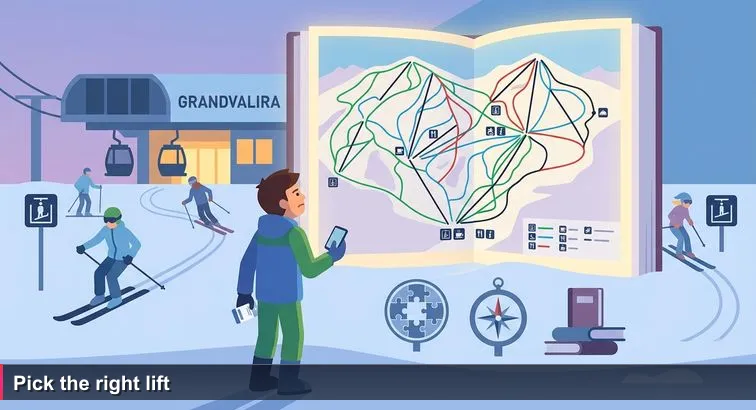
Snow cannons hiss, the gondola hums, and you’re still staring at the Grandvalira map, trying to work out which lift is a gentle green and which one will drop you onto a black. That’s exactly how it feels when you first look at tech training options in Andorra: SOA courses, Ministry grants, PDE subsidies, parish support, Erasmus-style mobility, corporate budgets, private bootcamps… all criss-crossing like pistes lit up at night.
The good news is that this chaos hides real opportunity. Andorra’s government has anchored a long-term shift toward a digital economy, with the National Plan for Innovation targeting 7-8% of the national budget for innovation by 2036, according to Andorra Recerca + Innovació. That money ultimately flows into training routes for AI, data, and software: free SOA upskilling for job seekers, means-tested university grants, the Business Digitalisation Programme (PDE) for SMEs and autònoms, and parish-level ajuts that quietly subsidise local courses.
At the same time, you’re not riding just one resort. From Andorra la Vella you can tap cross-border lifts into Catalonia and Occitanie - mobility schemes with the Universitat d’Andorra, Spanish and French innovation journeys, and global AI scholarships that treat you as part of the wider EMEA talent pool. Layer on employer budgets from banks or Andorra Telecom, plus payment plans from online bootcamps, and the map becomes dense fast.
This guide treats that complexity like a piste network. We’ll label the green runs (public schemes that are free or low-risk), the blue runs (competitive scholarships and grants), the red runs (carefully chosen bootcamps and payment plans), and the black runs (high-debt options you should only take on purpose, never by accident).
Once you can read that funding map, you can design a realistic, low-debt path into AI or software that keeps Andorra’s low taxes, high quality of life, and quick access to Barcelona and Toulouse working in your favour instead of against you.
In This Guide
- Reading the funding piste map for tech training
- Servei d’Ocupació SOA - free training for job seekers
- Ministry of Education and UdA grants for degrees
- Business Digitalisation Programme PDE for SMEs and freelancers
- Parish grants and sectoral training opportunities
- Regional and cross-border programmes to extend your reach
- Scholarships and foundation grants for AI and STEM
- Payment plans, ISAs and choosing a bootcamp
- Employer-sponsored training and making the case
- Quick decision tree: which funding routes to prioritise
- Application calendar and timing for 2026
- Documentation checklist to speed every application
- Stacking funding: realistic scenarios in euros
- Common pitfalls and how to avoid them
- Bringing it all together and next steps
- Frequently Asked Questions
Curious about taxes and pay? Our Complete Guide to Starting an AI Career in Andorra in 2026 breaks down net salaries and cost of living.
Servei d’Ocupació SOA - free training for job seekers
If the whole funding system is a tangled piste map, the Servei d’Ocupació d’Andorra is your easiest green run. SOA is the national employment service, and for people registered as job seekers it quietly unlocks training you don’t have to pay for yourself - a crucial first lift if you’re sitting in Andorra la Vella wondering how to pivot into tech without draining your savings.
Who qualifies and what you actually get
According to the official Servei d’Ocupació d’Andorra information, residents who register as unemployed or seeking better work can access its training catalogue. Historically, SOA has covered up to two free training courses in the first year of a subsidised contract, ranging from basic digital skills to office IT and introductory programming or data modules.
- Eligibility: Andorran residents registered with SOA as job seekers or on subsidised contracts.
- Typical courses: digital literacy, Excel, office software, intro coding, sometimes SQL or data basics.
- Documents: passport or DNI, residence permit, and your SOA registration confirmation.
Turning SOA courses into an AI launchpad
Used strategically, those two free courses become your on-ramp toward AI and data. A realistic sequence is: first a digital literacy or Excel course, then an intro programming module (often in Python). That gives you enough foundation to tackle more advanced options like a backend or AI-focused bootcamp later, without paying to learn how to copy-paste or use formulas.
- Build core computer skills and confidence.
- Add one programming or data-focused SOA course.
- Only then consider paying for specialised AI or cloud training.
Practical timing from Andorra’s job market
SOA runs on continuous intake, so you don’t have to wait for a single annual window. As guides like ExpatFocus’ overview of finding employment in Andorra note, registering early with SOA gives you both job-matching support and access to vocational upskilling. In practice, that means your very first move - before private loans, before expensive bootcamps - is a morning at SOA getting your registration done and choosing which two free “green run” courses will move you closest to AI, data, or software work.
Ministry of Education and UdA grants for degrees
For Andorrans who can commit to a full degree, the Ministry of Education and the Universitat d’Andorra (UdA) offer one of the most powerful “official” funding routes into tech. Instead of paying foreign tuition prices in Barcelona or Toulouse, you can build a recognised Bachelor’s or Master’s in computing or related fields at home, with the state absorbing a significant share of the bill.
How the higher-education grants actually work
Under Law 9/2014, the Ministry of Education awards means-tested higher-education grants to residents enrolled in official Bachelor’s, Master’s, or PhD programmes. As summarised on the UdA page for grants, discounts and prices, support can cover:
- Partial or full tuition at UdA or recognised foreign universities.
- In some cases, living stipends for full-time students with limited resources.
- Top-ups for specific needs (e.g., mobility or materials) depending on each annual call.
Eligibility is based on residency, academic enrolment and a household income/asset means test. Calls are published once a year in the Butlletí Oficial del Principat d’Andorra (BOPA), so you need to track the announcement and respect a single application window.
Using UdA as your AI and data “base camp”
If you are aiming at AI, machine learning, or data roles, a CS or applied mathematics degree at UdA becomes far more accessible once these grants are factored in. Local tuition is already lower than many Spanish or French universities; adding ministry support can reduce out-of-pocket costs to a fraction of what a foreign degree would cost, while you keep Andorra’s low-tax lifestyle.
Connecting UdA to Barcelona and Occitanie
UdA also participates in bilateral and Erasmus+-style mobility schemes, which means a well-planned degree can include a semester in Catalonia or Occitanie taking specialised AI or data science modules, then returning to Andorra with credits fully recognised. Combined with grants that help with tuition and sometimes living expenses, this route lets you access bigger AI ecosystems without committing to permanent relocation or high-interest private loans.
Business Digitalisation Programme PDE for SMEs and freelancers
When you’re a freelancer in Escaldes or running a five-person agency in La Massana, paying for serious tech training can feel impossible. The Business Digitalisation Programme (Programa de Digitalització d’Empreses, PDE) exists precisely to solve that problem: it helps Andorran SMEs and autònoms modernise with new digital tools and covers the training needed to use them.
Who PDE is for and what it pays for
The programme targets Andorran SMEs and self-employed professionals that want to upgrade their operations. As outlined on the official Business Digitalisation Programme page, the 2026 call allocates around €500,000 in grants to projects such as:
- Implementing CRMs, e-commerce or booking platforms
- Analytics dashboards, automation, or cloud migration
- Staff training on the new digital systems and workflows
Applications usually open in early April, are managed online through Andorra Digital, and require you to describe your project, budget and expected impact on productivity or competitiveness.
Framing AI and data training inside a PDE project
The key for AI-minded founders is to bundle your own learning into a broader digitalisation effort. For example, a local accounting firm might propose adopting a cloud analytics stack plus internal dashboards, with a budget line for the partner to complete Python and SQL training. A tourism SME could justify an AI recommendation engine for ski packages, paired with training in data analysis and prompt engineering.
Why this matters for freelancers and startups
Used well, PDE converts what would have been personal education costs into a shared business investment, reducing your out-of-pocket spend and aligning your upskilling with revenue-generating projects. Guides like ProgDev’s grant-focused overview of the PDE highlight that training is an eligible cost line, so you can climb into AI, data, or cloud skills while simultaneously making your Andorran business more competitive across the wider Catalonia-Occitanie market.
Parish grants and sectoral training opportunities
Not every useful lift shows up on the national map. Each parish (Comú) runs its own system of ajuts i subvencions, and while many people associate them with social aid or building renovations, there is a growing line of support tied to digital and green transformation that can quietly subsidise your tech training.
What parishes actually fund
Subsidy programmes vary between Andorra la Vella, Escaldes, Encamp, Canillo, and the smaller parishes, but recent reforms have pushed them to spread funds across more residents and more types of projects. An analysis by PVKnowhow of the 2026 reforms to schemes like Renova and e-Engega notes a deliberate shift toward supporting energy-efficient and technology-driven upgrades, ensuring “funds reach more participants through broader distribution” across households and businesses, not just a few large projects.
How that connects to tech and AI training
In tourism-heavy parishes, that often translates into sectoral training tied to local employers. You’ll see partnerships between Comús, ski operators and hotel associations funding modules in areas such as:
- Digital marketing and revenue management for hotels and apartments
- Data-driven operations for ski resorts (IoT sensors, analytics dashboards)
- Introductory AI tools for hospitality, dynamic pricing, or guest recommendations
Your tuition may not be fully covered, but a parish contribution of a few hundred euros toward a short course or bootcamp can make the difference between postponing and starting.
Where to look and how to time it
The catch is that these subsidies are rarely centralised. You must check your Comú’s website and notice boards for calls labelled “ajuts” or “subvencions”, often opening in the first half of the year and awarded until budgets are exhausted. Spending an evening reading your parish’s rules - and the PVKnowhow overview of Andorra’s evolving subsidy model at parish and national level - can reveal training money that never appears on national scholarship lists.
Regional and cross-border programmes to extend your reach
From Andorra la Vella, Barcelona and Toulouse are just a few hours away by road, but policy-wise there are also “hidden lifts” connecting you into their tech ecosystems. Regional and cross-border programmes let you keep Andorra’s lifestyle and tax advantages while borrowing training capacity, accelerators, and AI expertise from Catalonia and Occitanie.
Three mechanisms matter most if you’re aiming at AI, data, or software roles: the Andorra-Spain digital transformation memorandum, the Train French Tech 2026 initiative, and Erasmus+-style or bilateral mobility via the Universitat d’Andorra (UdA). Each serves a slightly different profile - SMEs, startup founders, or degree students - but all can be stacked with Andorran grants and bootcamps.
| Programme | Who it’s for | Main benefits | AI / tech angle |
|---|---|---|---|
| Andorra-Spain Digital Transformation MOU | Public bodies, SMEs, tech professionals | Cooperation on digital identity, cybersecurity, SME digitalisation | Workshops, joint pilots, and training around secure data and AI-ready infrastructure |
| Train French Tech 2026 | Andorran startups and founders | Funded innovation journeys (e.g., Perpignan-Madrid), mentoring, pitch events | Exposure to French and Spanish AI/ML ecosystems and investor networks |
| UdA mobility (Erasmus+-style) | UdA Bachelor’s/Master’s students | Semester abroad in Catalonia/France with merit or need-based support | Access to specialised AI, data science, or cybersecurity modules not yet offered locally |
For example, Andorra Business’s promotion of three Andorran startups in Train French Tech 2026 shows how founders can get travel and programme fees covered while plugging into French Tech communities. That frees up personal cash for complementary training - such as a focused AI bootcamp - without losing networking opportunities in Perpignan, Madrid, or Barcelona.
Practically, your next step is to map which stream fits your status: ask UdA’s international office about mobility if you’re a student; follow Andorra Business and Andorra Digital news feeds if you’re a founder or SME; and treat every cross-border seminar or accelerator as a chance to combine Andorran funding with Catalan and Occitan training resources on the same “day pass.”
Scholarships and foundation grants for AI and STEM
Beyond government aid, there’s a whole layer of “blue run” money that doesn’t care how small Andorra is: global scholarships and foundation grants for AI, STEM, and digital innovation. As long as you’re enrolled in an eligible programme or building a tech project, you can compete alongside students from much larger countries and then bring that investment back into Andorra’s banks, startups, and public sector.
Some of the most relevant opportunities for Andorran AI and STEM learners are summarised here.
| Programme | Typical benefit | Who it targets | AI/STEM relevance for Andorra |
|---|---|---|---|
| Generation Google Scholarship (EMEA) | ≈€5,000+ toward one year of tuition | CS and related students in Europe, Middle East, Africa | Helps UdA or Catalan CS students from Andorra specialise in AI or data-intensive tracks |
| ServiceScape Scholarship | ≈$1,000 flexible academic funding | Any enrolled student, including UdA learners | Useful top-up for books, cloud credits, or a short bootcamp alongside a degree |
| Women Scholarship for International Students | ≈$5,000 for women in technical/STEM fields | Female students worldwide | Supports Andorran women entering AI, cybersecurity, or software engineering |
| InDrive Aurora Tech Award | Equity-free cash for female IT founders | Women leading tech startups | Can fund both an AI tourism/fintech MVP and advanced training |
| H&M Global Change Award | Up to €200,000 for innovation | Tech solutions in sustainability | Backs AI projects in green mobility, smart buildings, or mountain ecosystems |
| AWS Education Equity & AI Grants | Up to $80,000 plus AWS credits | Organisations and projects using cloud & AI | Underwrites Andorra-based AI pilots with training and compute covered |
Grant roundups like fundsforNGOs’ list of 80+ AI-for-development opportunities and scholarship aggregators such as ScholarshipTab’s page for Andorran students abroad are worth checking monthly; many calls are short and highly specific.
Winning these awards isn’t just about grades. As edtech consultant Dr. DaQuita Pounds notes, impactful tech programmes need “thoughtful design, strong instructional practices, and long-term support for professional learning.” Framing your application as a multi-year plan - SOA or UdA now, specialised AI study next, then applying those skills in Andorra’s banks, telecom, or tourism - makes you stand out as someone who will turn scholarship money into real impact at altitude.
Payment plans, ISAs and choosing a bootcamp
Once you’ve exhausted grants and scholarships, bootcamp payment plans and income share agreements (ISAs) are your red runs: steeper and riskier, but manageable if you choose them deliberately. In Andorra, the smart order is usually government support first, scholarships second, and only then financing to close the gap, so you’re not repaying a €10,000 loan out of your first junior developer salary.
From here, cost and flexibility matter more than brand hype. Many in-person European bootcamps charge well over €10,000, especially in Barcelona or Paris. In contrast, Nucamp’s online programmes aimed at Europe start around €1,953 for the 16-week Back End, SQL and DevOps with Python track and go up to €3,662 for the 25-week Solo AI Tech Entrepreneur bootcamp, with the 15-week AI Essentials for Work at €3,295. Monthly payment plans spread that cost while you stay in Andorra, keep your current job, and benefit from reported outcomes like roughly 78% employment and a 4.5/5 Trustpilot rating based on around 398 reviews.
- Compare tuition to realistic starting salaries in Barcelona, Toulouse, or remote EU roles you’re targeting.
- Check jurisdiction and eligibility: some ISAs only apply if you live and work in a specific country.
- Read job guarantee fine print on application quotas, geography, and timelines.
- Match schedule to your life: evening/weekend formats are crucial if you’re working in a bank, telecom, or hospitality.
ISAs and deferred-tuition models from European providers can look tempting, but many are designed for domestic markets (for example, Germany’s Bildungsgutschein is limited to job seekers registered there). Analyses like Nucamp’s own comparison of Spanish bootcamps with job guarantees show how conditions can vary widely. As an Andorran resident, you want financing that respects your cross-border reality: low local tax, proximity to Catalan and Occitan job hubs, and the option to work remotely without tripping hidden clauses.
Employer-sponsored training and making the case
For many people in Andorra, the most underused funding lift is the one right under their skis: their current employer. Banks like Andbank, MoraBanc or Creand, Andorra Telecom, and large tourism groups all need staff who understand data, automation, and AI. Training you is often cheaper for them than hiring from Barcelona or Toulouse, especially when they can tap public digitalisation grants in parallel.
The pattern is already visible in local initiatives. Creand’s Accelera and Enlaira programmes, featured on Andorra Startup’s ecosystem hub, combine mentoring, business support and access to experts for startups - essentially employer-sponsored training for founders. Likewise, Andorra Telecom’s role in the country’s first educational technology forum, highlighted by the Edutech Cluster, shows how major employers are already paying for digital competence building and teacher training.
Translating that culture into your own career usually comes down to how you ask. Instead of “Can you pay for my course?”, you position your request as a targeted investment:
- Identify a concrete business problem (manual reporting, weak data visibility, reliance on external developers).
- Pick a specific training (for example, an AI or backend bootcamp) that directly addresses that gap.
- Draft a one-page proposal linking new skills to measurable outcomes: fewer errors, faster decisions, new revenue.
- Show leverage by mentioning co-funding options like the Business Digitalisation Programme or parish subsidies.
In practice, that might mean a bank analyst proposing AI training that automates parts of risk reporting, or a hotel manager asking for data and automation courses to improve occupancy forecasting. Employer-sponsored training turns what could have been a personal expense into a shared strategic project - and because you’re based in a low-tax jurisdiction with easy access to cross-border roles, every euro your company invests in your skills goes further for both sides.
Quick decision tree: which funding routes to prioritise
When you’re staring at a wall of acronyms and deadlines, it helps to turn the whole thing into a simple “if this, then that” route. Think of this section as your quick piste selector: not every detail, just which lift to take first based on where you’re standing today in Andorra.
The first fork is residency. If you are not a legal resident or taxpayer here, you can’t tap SOA, Ministry grants, or the Business Digitalisation Programme. Your focus should be global scholarships and reasonably priced online bootcamps, keeping an eye on specialist listings such as scholarship overviews for Andorran and regional applicants. If you are resident, the full map opens up and you start with public money before touching loans or ISAs.
Next, choose the branch that matches your status right now:
- If you’re unemployed or under-employed: register with SOA immediately and use your free courses to build digital basics. Then look at parish subsidies or a modest, part-time bootcamp once you have momentum.
- If you’re employed in banking, telecom, public sector or tourism: ask HR about training budgets, propose AI/data upskilling tied to a concrete business problem, and see whether your company can co-apply to PDE so tools and training are funded together.
- If you’re self-employed or running a small company: design a digitalisation or AI-product project, apply to PDE with training as a budget line, and combine that with targeted courses that help you ship faster.
- If you’re a student: prioritise Ministry/UdA grants for your degree, then layer in small scholarships and a short, structured course during breaks to start building a portfolio.
Only once you’ve climbed as far as you can on public and employer money does it make sense to commit to a paid bootcamp or financing plan. At that point, choose options with sane price tags and part-time formats, so you can keep earning in Andorra while preparing for AI and software roles in Barcelona, Toulouse, or fully remote teams.
Application calendar and timing for 2026
Funding in Andorra doesn’t run on a single “application day”; it follows a rhythm across the year. If you understand that rhythm, you can stop scrambling for last-minute documents and instead line up your SOA registration, PDE proposal, UdA grant request, and scholarship essays like lifts you catch in sequence.
Broadly, 2026 follows a pattern that repeats most years:
- January-March: SOA training runs continuously, so this is a good moment to register as a job seeker (if eligible) and claim your free courses. Many Comús also open early windows for vocational subsidies, and global scholarship calls for the next academic year start appearing.
- April-June: The Business Digitalisation Programme (PDE) typically opens in early April, with applications managed by Andorra Digital. This is when SMEs and autònoms should submit digitalisation projects that include staff training. Spring is also a common start time for online bootcamp cohorts.
- July-September: The Ministry of Education and UdA usually publish higher-education grant calls for the coming academic year in the Butlletí Oficial del Principat d’Andorra (BOPA), accessible via the government’s legal portal at portaljuridicandorra.ad. This is your main window to reduce university tuition and, in some cases, secure stipends.
- October-December: Many international AI and STEM fellowships, plus corporate grant programmes, have autumn deadlines. Locally, it’s planning season: companies prepare next year’s training budgets, and you can align your upskilling proposals with those cycles.
A simple but effective strategy is to block two personal “funding days” a year, one around March and another in September. On those days you review upcoming calls, update your CV and motivation letter, check BOPA and your parish site, and decide which applications you’ll submit in the next 90 days. That habit alone can double the number of lifts you actually manage to catch.
Documentation checklist to speed every application
Most funding rejections in Andorra don’t happen because someone isn’t “good enough” - they happen because a form was incomplete, a certificate was missing, or a deadline was too tight to chase paperwork. The fastest way to remove that friction is to build a reusable documentation pack you can attach to SOA, PDE, parish, UdA, scholarship, or employer applications in minutes.
Think in bundles rather than individual documents. For almost every tech-training grant or subsidy you’ll need:
- Identity & residency: passport or DNI, residence card, and (when asked) a recent certificat de residència fiscal.
- Employment status: latest payslips or contract if employed; SOA registration if unemployed; autònom registration if self-employed.
- Education proof: diplomas, transcripts, Bachillerat or vocational certificates, plus any SOA or short-course completions.
- Financial info: IBAN for payments and summary of household income/assets for means-tested schemes.
- Motivation materials: updated CV, a base motivation letter you tailor per application, and 1-2 reference letters.
For business-focused schemes like the Business Digitalisation Programme or parish ajuts, add a small “project” bundle: a one- to two-page project description, simple budget, and (if relevant) a quote or invoice from your chosen bootcamp or training provider. Tax and consulting firms such as Andorra Advisors’ business blog frequently stress how having clean, centralised documentation reduces both processing delays and unpleasant surprises with tax treatment.
Practically, create one digital folder (in cloud storage) and one physical folder at home. Every time you receive something official - new contract, transcript, BOPA grant resolution - drop a copy in. Before each funding season, you just refresh your CV and motivation letter instead of racing around town for certificates while the gondola doors are closing.
Stacking funding: realistic scenarios in euros
Seeing how the numbers play out in real life is often what turns the piste map into something you can actually ski. These three scenarios use realistic Andorran mixes of SOA, parish or PDE support, employer help, and reasonably priced bootcamps to show how you can climb into AI or software without taking on black-run levels of debt.
Scenario 1 - Unemployed into backend development. You register with SOA, use two free digital courses to get comfortable with Excel and basic programming, then apply to your Comú for a vocational subsidy of €500. You choose a 16-week Back End, SQL and DevOps with Python bootcamp at €1,953. The parish covers €500, leaving €1,453. On a 6-month plan, that’s about €242/month out of pocket, with no relocation costs and your first tech portfolio piece ready for junior roles in banks, Andorra Telecom, or remote teams.
Scenario 2 - Bank analyst becoming “the AI person.” You work at a local bank and propose a 15-week AI productivity bootcamp costing €3,295. Your manager agrees to use the internal training budget to cover 50%, or €1,647.50. The rest is folded into a Business Digitalisation Programme project that’s automating reporting; PDE funds 30% of your remaining share (≈€494). You pay about €1,153.50 yourself, spread over 6 months at roughly €192/month, while staying employed and immediately applying AI to risk or operations work.
Scenario 3 - Ski guide to AI tourism founder. You incorporate a small company and apply to PDE with a €6,000 digitalisation and product plan, allocating €2,000 for your own AI training. You enrol in a 25-week Solo AI Tech Entrepreneur bootcamp at €3,662; PDE covers €2,000, leaving €1,662, or about €208/month over 8 months. A cross-border programme like Train French Tech may cover €500-€1,000 of travel and event costs, so your personal cash goes into living expenses and launch, not planes and hotels.
The pattern is the same every time: exhaust “free” and employer-aligned lifts first, then use manageable monthly payments to close the last gap. Scholarship aggregators such as ScholarshipBob’s listings for Andorran students add another layer you can slot into these stacks, nudging the monthly cost down until it fits comfortably within an Andorran salary.
Common pitfalls and how to avoid them
On a clear day the pistes look simple, but most accidents still happen on familiar slopes. Funding is similar: the biggest problems for Andorran learners often come not from obscure legal traps, but from small misunderstandings about tax, eligibility, and contracts that only show up once the bill arrives.
The first blind spot is tax treatment. Scholarships, stipends, or company-paid training can in some cases be treated as taxable income. That doesn’t mean you should refuse them, but you do need a basic paper trail: who paid what, under which programme, and whether any part is explicitly exempt. Keep every grant resolution, invoice, and bank proof in your documentation folder and, when in doubt, ask a local tax professional before filing - especially if you’re combining several small grants in the same year.
A second pitfall is misreading eligibility rules. Some schemes hinge on residency in Andorra, others on EU citizenship, and some (like foreign unemployment vouchers or national training funds) require you to be registered in that specific country. Guides for employers, such as Papaya Global’s overview of hiring in Andorra, underline how residency status shapes what rights and benefits apply. Before investing hours into an application, scan the fine print for nationality, residence, or enrolment conditions that could quietly disqualify you.
The third common mistake is treating bootcamps and ISAs like a ski pass you skim over. Refund policies, job guarantees, and income-share agreements often depend on where you live, where you look for work, and how many applications you submit. If a provider is based abroad, check which country’s law governs the contract and what happens if you accept a remote job while remaining tax-resident in Andorra. Comparing offers from different European schools - like the financing options listed by euroTech Study - shows how varied these conditions can be.
Finally, there’s the strategic pitfall: treating each grant as a one-off lottery ticket instead of part of a three-year plan. The Andorrans who advance fastest in AI and software don’t just “win” a single scholarship; they stack SOA courses, parish help, Ministry/UdA support, regional programmes, and then a targeted bootcamp. Think ladder, not helicopter: one secure step at a time, always leaving yourself enough financial oxygen at this altitude.
Bringing it all together and next steps
By now, the piste map should feel less like a blur of colours and more like a network you can actually navigate. The lifts are still there - SOA, Ministry and UdA grants, parish aid, PDE, cross-border programmes, scholarships, employer budgets, and bootcamps - but you’ve seen how they connect, where they overlap, and which ones are too steep for your current legs.
What makes this especially powerful in Andorra is the context you’re skiing in. A country that is deliberately repositioning itself around innovation and entrepreneurship - with banks like Creand even publishing practical guides for young founders in pieces such as “Entrepreneurship for young people in Andorra: from the idea to the market” - gives you more than just pretty mountains. You get low personal taxes, strong digital infrastructure, and quick access to the AI and tech labour markets in Barcelona and Toulouse.
From here, the next steps are concrete. First, be honest about your starting point: unemployed, employed, self-employed, or student. Second, pick just one or two “lifts” to pursue in the next 90 days - SOA registration, a PDE proposal, a Ministry grant, or an employer-funded course. Third, choose a learning path that fits your life in Andorra: that might be a local degree, or a flexible, part-time online bootcamp that lets you keep working while you build serious AI or software skills.
Finally, start small but visible. Build a minimal portfolio piece - an automated report for your team, a simple data dashboard for a local business, a prototype of a tourism or fintech idea - and let that guide which funding you chase next. Once you’ve done that, you’re no longer the person freezing in front of the Grandvalira map; you’re the one clicking into your bindings, choosing a line that matches your ability, and using every lift Andorra offers to climb into a tech career with enough financial oxygen to enjoy the view.
Frequently Asked Questions
What are the fastest, realistic ways to pay for tech training in Andorra in 2026?
Start with government routes (SOA for job seekers, Ministry/UdA grants for degrees, and the PDE for SMEs/freelancers), then layer scholarships and employer support before using payment plans. Key timings matter: SOA runs continuously, PDE typically opens in early April, and Ministry grants are announced annually in BOPA.
Am I eligible for free SOA training and how much can it cover?
If you’re an Andorran resident registered as a job seeker or on a subsidised contract you can access SOA, which historically provides up to two free training courses in a year. You’ll need ID, a residence permit and SOA registration to apply, and courses usually include digital skills, Excel or introductory programming.
Can I combine parish aid, PDE grants and scholarships to reduce bootcamp costs?
Yes - stacking is common: parish subsidies (often up to a few hundred euros) plus PDE funds (the programme budget is about €500,000 in 2026) and external scholarships can substantially lower tuition. For example, a Nucamp Back End course (€1,953) minus a €500 parish grant drops your out-of-pocket to roughly €1,453 before any other support.
How much will a practical AI or dev bootcamp cost from Andorra, and are there cheaper options than relocating to Barcelona or Toulouse?
Online, practical programs you can take from Andorra are typically €1,953-€3,662 (Nucamp Back End €1,953; AI Essentials €3,295; Solo AI Tech Entrepreneur €3,662), whereas in-person city bootcamps in Barcelona often run €8,000-€12,000 plus living costs. Staying in Andorra keeps relocation costs down and leverages low personal income tax as you transition to €30,000-€45,000 junior roles in nearby tech hubs.
How do I convince my Andorran employer (bank, telecom, tourism group) to pay for my training?
Prepare a one-page proposal showing the course, concrete skills (e.g., Python, SQL, prompt engineering), and direct ROI for your team, then ask HR for 50-100% tuition reimbursement or to include you in a PDE digitalisation project. Large local employers like Andorra Telecom and major banks often co-fund training and can combine company budgets with PDE support to cover substantial portions of tuition.
AI Salaries in Andorra in 2026: What to Expect by Role and Experience
Our article outlines the best non-degree tech careers in Andorra for 2026, from prompt engineering to DevOps.
What is the advantage of living in Andorra for a tech career in 2026?
Top AI startups to watch in Andorra for careers and investment (2026)
This piece lists the top Andorran startups hiring junior developers in 2026, ranked by junior-friendliness and mentorship.

Irene Holden
Operations Manager
Former Microsoft Education and Learning Futures Group team member, Irene now oversees instructors at Nucamp while writing about everything tech - from careers to coding bootcamps.