









Top 10 Free Tech Training at Libraries and Community Centers in Andorra in 2026
By Irene Holden
Last Updated: April 7th 2026
Too Long; Didn't Read
Top free tech training in Andorra for 2026 is led by the national Digital Skills and Competencies Center and the municipal libraries/Biblioteca Nacional - the Centre coordinates the government’s Training and Bridging the Digital Divide Plan while libraries provide free PCs, Wi-Fi and on-site help to follow global AI and data courses. These resources cost €0, support Andorra’s goal of 80% of residents having basic digital skills by 2030 in a country of roughly 80,000 people, and offer the quickest, lowest-risk way to build a foundation before paid bootcamps or roles at Andorra Telecom, local banks, or in nearby Barcelona and Toulouse.
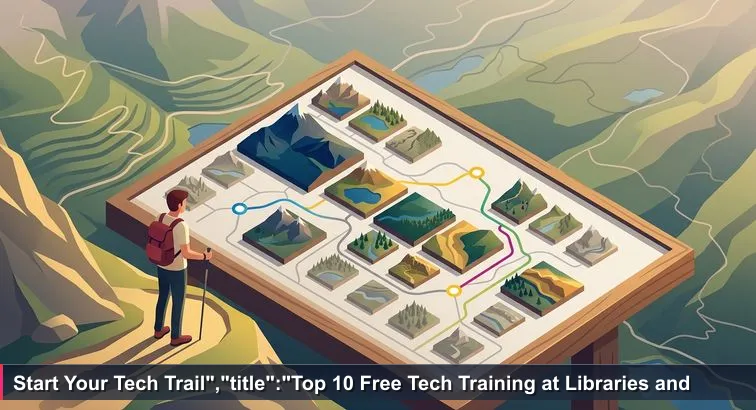
You’re at the trailhead above Andorra la Vella. The air smells of warm pine and dust; hikers cluster around a giant wooden map, arguing over which of the ten bold, coloured routes will deliver the best views. Those numbered trails feel safe: start here, end there, guaranteed vista. But if you look closer, thinner grey lines bleed off the board into the forest, hinting at routes the map designer didn’t bother to name.
Learning tech in Andorra feels the same way. Our government’s Training and Bridging the Digital Divide Plan is the glossy map, with a clear objective: by 2030, at least 80% of residents should have basic digital skills. Officially, the plan is about “universal access” to technology, as outlined on the Digital Skills line of Andorra Digital, not just training future engineers. That ambition has quietly saturated a country of roughly 80,000 people with free sessions in libraries, centres cívics, and university spaces.
At the same time, global experts increasingly argue that digital literacy is digital infrastructure, as policy analyses from organisations like techUK’s digital skills reports put it. For a small state like Andorra, wedged between Barcelona and Toulouse, that means the “map” matters: it lowers the friction of getting started and lets absolute beginners, seniors, and aspiring AI engineers all find an entry point.
This list works like that Top 10 viewpoints board. It highlights ten marked trails - places you can simply show up, no applications needed - to test whether coding, data, or AI belongs in your future. But as you read, keep an eye out for the faint paths behind each item: language constraints, difficulty jumps, and informal meetups that never make any brochure. The goal isn’t to obey the map; it’s to use it long enough to walk off it with confidence.
Table of Contents
- Standing at the Trailhead: Choosing Your First Free Tech Path
- Digital Skills and Competencies Center
- Municipal Libraries and the Biblioteca Nacional
- University of Andorra Communal Library BCU and Open Lectures
- Parish Community Centres
- Digital Equality Senior Initiative
- Andorra National Cybersecurity Agency Outreach
- Business Digitalization Program PDE Sessions
- Andorra Business and AR+I Innovation Events
- Public EdTech and Digital Skills Forums
- Library-Supported Online Courses and AI MOOCs
- Turn Free Training into a Real Tech Pathway
- Frequently Asked Questions
Curious about taxes and pay? Our Complete Guide to Starting an AI Career in Andorra in 2026 breaks down net salaries and cost of living.
Digital Skills and Competencies Center
In Andorra’s digital “map,” this centre is the big red “You are here” marker. The Centre de Competències Digitals i Benestar is the main public doorway into basic tech skills, designed so that someone who has barely touched a keyboard can still walk in, sit down, and start learning without being judged or screened.
What you learn
Sessions stay practical and anchored in daily life rather than abstract theory. You work through:
- Essential PC use: operating systems, file management, and cloud storage
- Office tools: word processors, spreadsheets, and presentations
- Navigation of Andorra’s digital public services (certificats digitals, e-tràmits)
- Digital well-being: screen time, information overload, and safe technology habits
Practical details
The format is deliberately low-friction so residents from any parish can drop in and start.
- Cost: €0
- Ideal level: Absolute beginners to lower-intermediate users
- Languages: Catalan by default; many staff can also support in Spanish or French
- Schedule: Rotating workshops across the year, publicised via parish channels and national digital-skills portals
- How to attend: Simple registration for specific workshops; some info sessions are walk-in
Why it matters for AI/ML-curious learners
If you eventually want to work with data or AI - whether at Andorra Telecom, a local bank, or remotely for a Barcelona startup - you first need to remove friction around everyday tech. Global overviews of free learning paths, such as this guide to tech skills anyone can learn, consistently stress that confidence with files, accounts, and basic security is non-negotiable.
This centre helps you close those gaps systematically so that later, when you open a Python notebook or an online AI course, your mental energy goes into concepts - not into figuring out how to log in, save work, or secure your account. Intensity here is a gentle 2/5, but it’s the foundation all steeper trails rest on.
Municipal Libraries and the Biblioteca Nacional
On a rainy evening in Andorra la Vella or Escaldes-Engordany, the municipal library is where digital learning feels most casual: kids doing homework, retirees reading the paper, and in the corner, someone quietly wrestling with an online form. Parish libraries plus the national Biblioteca Nacional/Biblioteca Pública function as relaxed, no-pressure tech labs scattered across the country.
What you learn
Beyond lending books, these spaces increasingly focus on everyday digital autonomy. Local research and the University of Andorra’s library overview highlight libraries as recognised hubs for public digital access, offering:
- Digital literacy: OS basics, safe browsing, email, and password management
- E-government tasks: practice using certificats digitals and online forms
- Creative tech: photo-editing or beginner-friendly 3D printing, especially in Escaldes-Engordany
Practical details
The appeal is how easy it is to show up and start experimenting, even if you don’t own a computer at home.
- Cost: €0; membership is free or symbolic depending on the parish
- Ideal level: Beginner or rusty user
- Languages: Catalan primarily, with many resources in Spanish and French
- Schedule: PC access typically Mon-Fri 9:00-20:00 and Saturday mornings; workshops around once a month
- How to attend: Walk in for PCs/Wi-Fi; sign up for workshops at the desk or via the Comú website
Why it matters for AI/ML-curious learners
For future data or AI specialists, these rooms are quiet launchpads. You get reliable PCs and Wi-Fi to follow online AI courses, and you learn to search large digital collections such as the World Digital Library, which the government notes now includes historic Andorran documents. That habit of querying big, structured repositories transfers directly to working with datasets later.
Intensity is a gentle 2/5: light structure, lots of freedom. Perfect if you prefer a self-paced (autodidacta) route before committing to steeper, more specialised AI or data training.
University of Andorra Communal Library BCU and Open Lectures
Take the bus down to Sant Julià de Lòria and step into the Lauredià Cultural Centre: the Biblioteca Comunal Universitària (BCU) feels half like a parish library, half like a university lab. Shelves of novels share space with academic journals, and the Wi-Fi is full of UdA students revising next to residents quietly exploring new careers.
What you learn
For non-students, the BCU is mainly a self-service gateway into higher-level tech thinking. You can access academic databases, technical journals, and digitised publications that cover everything from introductory programming to smart-city research. On top of that, the University of Andorra typically opens 1-2 public tech-focused talks per semester, covering topics such as artificial intelligence, digital transformation, or cybersecurity.
Practical details
- Cost: €0 for library use and open lectures
- Ideal level: Intermediate to advanced; you should already be comfortable with basic digital tools
- Languages: Mainly Catalan; some AI talks use English slides
- Schedule: Library during standard university hours; lectures appear ad-hoc on UdA’s public agenda
- How to attend: Walk in for the BCU; for lectures, simply show up - no student ID usually required
Why it matters for AI/ML-curious learners
This is where the trail starts gaining altitude. Public lectures often connect to themes that Andorra Research + Innovation works on: data for mobility, environmental monitoring, and smart tourism. You begin to see how AI is treated not as a buzzword, but as a tool inside real research questions.
When Andorra hosted its first Educational Technology Forum, described by the Edutech Cluster, university spaces like this were the natural venue. If you think you might later pursue a UdA degree, a specialised bootcamp, or research roles in Barcelona or Toulouse, spending time in the BCU trains you to read, listen, and ask questions at that more demanding level. Intensity here is around 3/5: not beginner-friendly, but very rewarding once your basics are solid.
Parish Community Centres
Walk into any centre cívic in Andorra la Vella, Encamp or Canillo on a weekday morning and you’ll often find a small group around a projector: someone struggling with a new Android phone, another trying to download a payslip, a grandparent learning to send photos to grandchildren abroad. These parish-run spaces are the most face-to-face, human part of the country’s digital push.
What you learn
Community-centre sessions are deliberately concrete, wrapped around everyday tasks rather than abstract “IT skills.” You’ll typically cover:
- Setting up and managing smartphones (Android and iOS)
- Sending and receiving email, messages, and photos
- First steps in office software: text documents, simple spreadsheets, presentations
- Using apps for health appointments, bus cards, and salary portals
Practical details
Because centres cívics are part of every Comú, they’re also a key delivery arm of the national Training and Bridging the Digital Divide Plan.
- Cost: €0
- Ideal level: Absolute beginners, seniors, and people returning to tech after years away
- Languages: Catalan, with instructors usually happy to help in Spanish
- Schedule: Weekly classes often labelled Gent Gran or Alfabetització Digital
- How to attend: Drop by your Comú and ask specifically for digital literacy or Gent Gran activities
Why it matters for AI/ML-curious learners
For many mid-career Andorrans, this is the psychological base camp: a place to admit “I don’t know how to do this” without embarrassment. International analyses of innovation policy, like the government’s own National Plan for Innovation, stress that ambitious projects in data, smart tourism, and fintech only work if citizens can actually use the tools beneath them.
Once you’re calmly handling your own e-tràmits, files, and messages, it becomes realistic to imagine stepping up to library-based MOOCs, UdA lectures, or even AI-focused bootcamps. Intensity here is a gentle 1/5: social, slow-paced, and focused on confidence rather than complexity.
Digital Equality Senior Initiative
In parish libraries and centres cívics, you’ll sometimes see a different kind of “class”: a circle of older adults, phones in hand, laughing as they finally master the selfie camera. That’s Afundación’s “Digital Equality” initiative, launched in March 2026 to give Andorra’s seniors a structured, respectful way to catch up with a society where almost every service now has an app or portal.
What you learn
The curriculum is stripped of jargon and built around real-life situations older residents face every week:
- Step-by-step smartphone setup and maintenance (contacts, photos, Wi-Fi)
- Secure use of messaging and email to stay connected with family and doctors
- How to access online banking and public services safely, spotting fraud risks
- Making and joining video calls so health and social support don’t depend on travel
Practical details
Most sessions run inside familiar neighbourhood spaces, which keeps the barrier to entry low for people who may not feel comfortable on a university campus.
- Cost: €0
- Ideal level: Seniors with low confidence; also a solid volunteering option for younger techies
- Languages: Catalan, with plenty of informal help in Spanish or French
- Schedule: Recurring, small-group sessions rather than one-off workshops
- How to attend: Ask at your local library or centre cívic if they host “Digital Equality” and let staff register you
Why it matters for AI/ML-curious learners
Policy reviews, such as the OECD’s digital government skills analyses, warn that older adults are often the first to be left behind when services go online. In Andorra, “Digital Equality” flips that script: it gives late starters a psychological reset (“if my peers can learn this, so can I”) and real autonomy over money, health, and administration.
If you’re younger and aiming at AI or UX roles, volunteering here is also a powerful apprenticeship in designing for non-expert users. You see directly which interfaces confuse people, which security steps they skip, and how tangible the digital divide feels. Intensity is a gentle 1/5: the goal is confidence and dignity, not complexity.
Andorra National Cybersecurity Agency Outreach
When the Andorra National Cybersecurity Agency sets up in a parish library or school auditorium, the mood is part classroom, part neighbourhood watch. People bring the phishing SMS they almost clicked, the too-good-to-be-true Facebook ad, the “urgent” tax email. Centralising this kind of training has real impact: recent national assessments report that serious cyberattacks have fallen to around 3% of total incidents after coordinated awareness and protection efforts.
What you learn
Outreach sessions focus on habits, not hacker lore. In a couple of hours, you work through:
- Creating and managing strong passwords and passphrases
- Spotting phishing, fake delivery notices, and tax scams common in Andorra
- Safe use of public Wi-Fi, cloud storage, and social networks
- Basic device hygiene: updates, backups, and what to do if something feels wrong
Practical details
Events are usually slotted into existing community rhythms so that everyone, from teens to retirees, can drop in.
- Cost: €0
- Ideal level: All levels; content is designed for everyday users but still relevant to IT staff
- Languages: Catalan, with materials often available in Spanish
- Schedule: Campaign-style sessions throughout the year, advertised via parish and national digital channels
- How to attend: Watch for cybersecurity days at your local library, centre cívic, or school hall; preregistration is rarely required
Why it matters for AI/ML-curious learners
Every AI, data, or fintech role in Andorra touches sensitive information, from e-signed contracts to health or tourism data. Local guidance on e-signature legality and e-tràmits underlines how much trust now rides on digital identities being protected by default. At the same time, global trends like the rise of quantum computing, highlighted in analyses of how quantum will disrupt cryptography, show that security expectations will only get tougher.
Learning cybersecurity basics early bakes a “secure by design” mindset into your practice. Whether you later build a recommendation model for a local bank or a mobility dashboard for Andorra’s smart-city projects, that mindset is a quiet but powerful differentiator. Intensity here is about 2/5: conceptually simple, but potentially career-defining.
Business Digitalization Program PDE Sessions
For local businesses, the Programa de Digitalització d’Empreses (PDE) is like a marked trail that shows exactly how to move from paper and WhatsApp chats to proper digital workflows. After starting as a pilot, national assessments now describe it as a consolidated support resource for Andorran SMEs, with sessions hosted in parish cultural centres, coworking spaces, and business hubs.
What you learn
PDE sessions are built around real Andorran case studies rather than abstract theory. In a typical workshop you’ll see:
- How shops, restaurants, or small agencies adopt cloud accounting, CRMs, and basic e-commerce
- Examples of connecting sales, booking, and invoicing tools to reduce manual work
- Introductions to data-driven decision-making using dashboards and simple analytics
Practical details
Because PDE is government-backed, cost and access are designed not to scare off very small firms.
- Cost: €0
- Ideal level: Beginners to intermediate; owners, managers, and solo freelancers
- Languages: Mainly Catalan, with Q&A often in Spanish
- Schedule: Sessions spread through the year, often tied to sector campaigns (retail, tourism, services)
- How to attend: Register via public event listings or through your local business association
Why it matters for AI/ML-curious learners
Global analyses of modern data work, such as Databricks’ look at skills, careers and education in data science, emphasise that value comes from solving concrete business problems, not from algorithms in isolation. PDE sessions let you watch, up close, what those problems look like in Andorra: inventory headaches, seasonality in tourism, payment friction.
If you want to become a data analyst, automation specialist, or AI consultant serving Andorran SMEs, this is your user research. You’ll hear which tools owners actually use (spreadsheets, CRMs, accounting) and can map them to more advanced stacks you discover elsewhere, such as the survey of modern data analysis tools. Intensity sits around 3/5: rich in concepts, but accessible without a technical background.
Andorra Business and AR+I Innovation Events
At innovation events run by Andorra Business and Andorra Research + Innovation (AR+I), the vibe is closer to a mini tech fair than a lecture. You’ll see smart-city dashboards on big screens, mobility sensors on tables, and founders explaining how they’re testing products in our valleys before scaling to larger markets across the Pyrenees.
What you experience
These events range from small meetups in Andorra la Vella to big showcases tied to international moments like the Mobile World Congress. At 4YFN, for example, AR+I uses its stand to promote the country as a living lab, actively seeking start-ups to transform innovation in Andorra through projects with Andorra Telecom and public institutions. Back home, open sessions often feature:
- Demonstrations of smart-city projects such as the Andorra Living Lab
- Talks on using data, sensors, and AI in tourism, mobility, and the environment
- Panels with local and international founders discussing funding, pilots, and cross-border scaling
Practical details
- Cost: €0 for most public events
- Ideal level: Intermediate or highly motivated beginners
- Languages: Catalan and Spanish, with some sessions in English
- Schedule: Clustered around major tech dates (especially February-March) plus periodic innovation days
- How to attend: Watch AR+I’s news feed and local announcements; most events require a quick online registration
Why it matters for AI/ML-curious learners
For someone aiming at AI or data careers, these gatherings show what “innovation” actually means here: not abstract models, but concrete pilots with telecoms, banks, and tourism operators. They also plug you into wider developer communities; regional listings like the Andorra la Vella developer events calendar reveal how local meetups connect with Barcelona and Toulouse conferences.
Intensity is around 4/5: you won’t be writing code on-site, but you will absorb real problem statements, tech stacks, and hiring signals. Go in with questions - about data sources, tools, or career paths - and you’ll leave with concrete ideas for projects and people to follow up with.
Public EdTech and Digital Skills Forums
When Andorra hosts an Educational Technology Forum, the atmosphere in university halls and cultural centres shifts: teachers, policymakers, startups, and students sit side by side, debating how AI, learning platforms, and digital credentials are reshaping classrooms from maternal to university level. Our first national EdTech forum put Andorra on the regional map, and similar one-day events now act as checkpoints in the country’s broader digital-skills journey.
What you explore
These forums are less about tutorials and more about zooming out to see the whole terrain. Typical sessions cover:
- How AI and adaptive platforms are changing teaching, assessment, and tutoring
- Examples of learning tools being piloted in Andorran schools and at UdA
- Debates on data ethics, student privacy, and digital inclusion in small states
- The role of national initiatives like Andorra Digital in coordinating skills policy
Practical details
Events are designed to be accessible for local attendees rather than just visiting experts.
- Cost: Usually €0 for residents
- Ideal level: Intermediate; especially useful for teachers, trainers, and serious self-learners
- Languages: Catalan and Spanish, with some panels in English
- Schedule: Annual or occasional, often tied to regional EdTech or AI moments
- How to attend: Simple online registration; bring ID to enter university or public buildings
Why it matters for AI/ML-curious learners
If you see yourself working in EdTech, learning analytics, or AI-powered training platforms, these forums show where the world is heading. Global initiatives like the Grow with Google AI training hub and events such as the Google AI Summit illustrate how rapidly AI is entering education; Andorra’s forums translate those trends into local policies, pilots, and job opportunities.
Intensity sits around 3/5: you won’t be coding, but you will leave with a clearer sense of which skills - data literacy, model interpretability, UX for teachers - will matter most if you want to build or deploy AI in real learning environments, here and in nearby hubs like Barcelona and Toulouse.
Library-Supported Online Courses and AI MOOCs
In practice, “library-supported online learning” isn’t a single programme with a logo; it’s what happens when you sit down at a municipal PC or on the Biblioteca Nacional Wi-Fi and quietly open a MOOC tab. Across Andorra, librarians increasingly act as informal guides to global platforms, pointing residents toward beginner-friendly tech and AI courses that match their level.
What you learn
Once you’re online, the menu is huge. Using library access, learners typically explore:
- IT support, basic programming, and data analytics foundations
- Introductory machine learning and applied AI courses
- Cloud tools, collaboration platforms, and version control basics
Many start with Google Career Certificates or AI introductions, then branch into more specialised topics as confidence grows.
Practical details
The model is simple: the library provides infrastructure and a bit of guidance; you drive your own curriculum.
- Cost: Library PCs/Wi-Fi are €0; most MOOCs are free to audit, with optional paid certificates
- Ideal level: Anything from beginner to advanced, depending on the course you choose
- Languages: Often English or Spanish, usually with subtitles and transcripts
- Schedule: Fully self-paced; you decide study days and duration
- How to attend: Ask librarians for recommended platforms, then use public PCs or your own laptop on library Wi-Fi
Why it matters for AI/ML-curious learners
This is how you bridge from Andorra’s local basics to global-standard skills. International developer communities, highlighted on the Google for Developers community hub, show the same pattern: people use free coursework to build portfolios, then step into paid bootcamps, degrees, or junior roles.
In Andorra, the twist is strategic: you can combine free library infrastructure, low personal income tax, and proximity to Barcelona and Toulouse to stack skills steadily while you prototype small projects. Intensity is a solid 4/5 - demanding, but entirely under your control.
Turn Free Training into a Real Tech Pathway
Free courses, library PCs, and community workshops are your trailhead. They prove you can show up consistently, learn unfamiliar tools, and finish what you start. But they won’t, on their own, turn you into a data analyst at Andbank or an AI engineer working remotely for a Barcelona startup. At some point, you need a steeper, structured climb that employers recognise.
From free trails to your first paid climb
Use your first 6-12 months of free training to reach clear milestones: completing a beginner MOOC, building a tiny data project on Andorran tourism stats, or attending two or three innovation events. When you can explain basic concepts and have something to show (a GitHub repo, a dashboard, a notebook), you’re ready to invest in targeted training that aligns with roles described in analyses of data-science careers and education.
- If you still fear “not being technical,” stay longer on free trails.
- If you’re bored by basics and craving structure, it’s time to level up.
Why a bootcamp like Nucamp fits Andorra
Nucamp’s online model meshes well with Andorra’s low personal income tax and strong broadband from Andorra Telecom. Programs span from Web Development Fundamentals (4 weeks, €421) to the 11-month Complete Software Engineering Path (€5,191). For AI-focused readers, three tracks stand out: the 25-week Solo AI Tech Entrepreneur Bootcamp (€3,662), the 15-week AI Essentials for Work (€3,295), and the 16-week Back End, SQL and DevOps with Python (€1,953).
- Typical AI bootcamps exceed €10,000; Nucamp’s range is €1,953-€3,662.
- Outcomes include ~78% employment and ~75% graduation, with a 4.5/5 Trustpilot rating from about 398 reviews (~80% five-star).
A realistic path from Andorra la Vella: use free resources to build foundations, then commit to a Nucamp track while aiming at entry-level roles with Andorra Telecom, MoraBanc or remote teams in Barcelona/Toulouse. Free training is your proof of commitment; a structured bootcamp and portfolio become your proof of capability.
Frequently Asked Questions
Which free training spot should I try first in Andorra if I want to test tech without spending money?
Start at your municipal library for free PCs, Wi-Fi and beginner workshops, and pair that with the national Digital Skills and Competencies Center which aligns with the government’s plan to reach 80% basic digital skills by 2030. Together they give immediate, no-cost access and clear next steps toward more specialised learning.
Which option is best for absolute beginners or seniors who’ve never used a computer?
Parish community centres (centres cívics) and the Digital Equality senior initiative (launched March 2026) are designed for absolute beginners, with weekly, low-intensity sessions and patient instructors; attendance is free and often organised as recurring groups. These programmes focus on real tasks - smartphone use, e-tràmits and online banking - so you gain confidence quickly.
Can these free resources get me a job in AI or machine learning, or do I need paid bootcamps?
Free programmes build essential digital foundations and study habits but usually won’t make you job-ready for AI/ML roles on their own; expect to use them for 3-9 months before specialising with paid bootcamps or structured courses. Combining library-supported MOOCs and local events with a targeted paid course makes you competitive for entry roles at employers like Andorra Telecom, Andbank or for remote positions in Barcelona/Toulouse.
Do I need to register in advance or can I just walk into these library and community centre sessions?
Many workshops and PC access at libraries and centres cívics are walk-in, while some targeted sessions (UdA lectures, PDE business events or specific Andorra Digital workshops) require simple online or desk registration. Check parish (Comú) sites and Andorra Digital’s events page for schedules and quick sign-ups.
Will I get certificates or proof of learning from these free programmes?
Some local initiatives and PDE/info sessions provide attendance confirmations, but formal certificates usually come from global platforms (e.g., Google Career Certificates) which are free to audit but often charge a fee for an official certificate. Use library access and local confirmations to build a learning log and portfolio that employers in Andorra value alongside paid certificates.
Best companies hiring AI engineers in Andorra - 2026 ranking
If you’re in Andorra and want a skills-first route, check the top tech jobs that don’t require a degree in Andorra for practical bootcamp recommendations.
Top-ranked coding bootcamp Andorra and the leading entry-level tech jobs
Top 10 industries hiring AI talent in Andorra beyond Big Tech
Comprehensive Andorra 2026 guide: AI communities, meetups, and conferences

Irene Holden
Operations Manager
Former Microsoft Education and Learning Futures Group team member, Irene now oversees instructors at Nucamp while writing about everything tech - from careers to coding bootcamps.