









The Complete Guide to Starting an AI Career in Andorra in 2026
By Irene Holden
Last Updated: April 7th 2026
Key Takeaways
Yes - you can start an AI career in Andorra in 2026 because the market is small but real, with roughly 20 to 30 focused AI/ML openings across banks like MoraBanc and Andbank, Andorra Telecom, utilities, tourism projects, and government digitalisation programs. Expect junior roles around €40,000 to €55,000 and mid-level roles €55,000 to €80,000, but with personal income tax capped near 10% your take-home often matches higher-bracket salaries in Barcelona, and affordable, practical training like Nucamp bootcamps costing about €2,000 to €3,700 can make you job-ready within a year to 18 months.
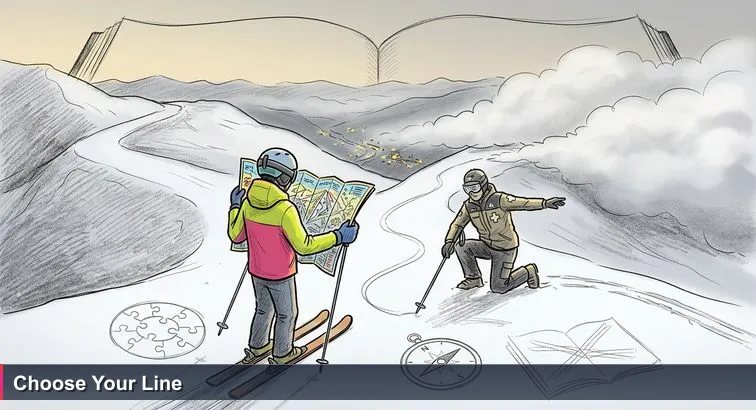
You’re standing at a junction in Grandvalira when the fog drops. On the folded map in your glove, three blue runs look equally gentle; on the real mountain, the world has narrowed to a few metres of flat white. A patroller taps their pole into the snow, tracing an invisible ridge that bends toward the valley where the lights of Andorra la Vella are just beginning to glow. You realise the map was never the mountain.
Trying to start an AI career from Andorra feels the same. Online, the “maps” are endless: role diagrams, generic salary charts, long lists of Python courses and bootcamps. But here on the ground, you’re dealing with a country of only 80,000 people, maybe 20-30 serious AI/ML openings at any moment, and employers like Andorra Telecom, Andbank, and MoraBanc who can be both hungry for talent and extremely selective. As eUniv’s analysis of Andorra as a technological hub puts it, this place is a “living lab,” not a generic market.
That mismatch between global hype and local reality can create a quiet tension: you may know that AI is booming worldwide, that junior ML engineers can earn €40,000-€55,000 here with sub-10% income tax, that Barcelona and Toulouse are only a few hours down the road, and still feel unsure which line will actually get you a role before the lifts close on your savings or motivation.
In that fog, advantage doesn’t come from collecting more maps; it comes from learning to read this specific mountain. That means understanding how Andorra’s tax system, residency rules, digital-transformation programs, and cross-border ties shape opportunity; choosing a line - fintech, tourism tech, edge AI for infrastructure, remote work - rather than trying to ski every run at once; and only then deciding which tools to trust, from a UdA degree to an affordable Nucamp AI bootcamp between €1,953-€3,662.
This guide is written like that patroller at your side: not to hand you another abstract diagram, but to tap a clear line into the snow of Andorra’s real AI job market so you can ski it with confidence.
In This Guide
- Standing in the Fog: A Local Guide to AI Careers from Andorra
- Why Andorra Is a Serious Base for an AI Career
- The Real AI Job Market in Andorra: Size, Focus, and Demand
- High-Value AI Career Paths That Fit Andorra
- Salaries, Tax, and Cost of Living: The Numbers That Matter
- Skills You Need by 2026: Technical, Human, and Local
- Education Pathways from Andorra: Degrees, Masters, and Bootcamps
- Who Actually Hires AI Talent Locally: Employers and Networks
- Language, Residency, and Legal Realities
- Building a Portfolio that Speaks ‘Andorra’
- Roadmaps: How to Go from Zero to AI in Andorra (9-24 months)
- Trends to Watch in 2026: Future-Proofing Your Career
- Common Pitfalls When Aiming for an AI Career in Andorra
- Choosing Your Line Down the Mountain: Decide Your Strategy
- Frequently Asked Questions
The tech training scene in Andorra continues to grow as startups and digital services firms establish operations and collaborate with local institutions.
Why Andorra Is a Serious Base for an AI Career
For a country of barely 80,000 residents wedged between France and Spain, Andorra punches far above its weight as an AI base. You get the everyday reality of a safe mountain microstate with excellent public services, plus infrastructure and policy that look more like a testbed than a backwater: fibre-to-the-home, ambitious e-government projects, and a regulatory environment designed to attract high-skill professionals.
The headline advantage is fiscal. Personal income tax is capped at around 10%, compared with combined income and social charges that can easily hit 30-40% in nearby cities like Barcelona or Lyon. In practice, a mid-level ML engineer on €60,000 here can approach the net take-home of someone on €80,000 or more across the border, giving you room to invest in learning, side projects, or a longer runway for a career change.
Policy is the second pillar. Through its National Digital Transformation Strategy, the government coordinates everything from digital identity to smart public services. The Business Digitalization Program alone has roughly €500,000 earmarked this year to help SMEs adopt AI and digital tools, creating concrete work implementing models, dashboards, and automation rather than just talking about them.
Scale is the third advantage. In a “living lab” of this size, you can run smart-grid pilots, mobility analytics, or tourism-personalisation projects across an entire country, not just a single neighbourhood. Andorra Telecom’s nationwide high-speed fibre means you can do that while also working remotely for foreign employers, or collaborating with teams in Barcelona and Toulouse just 2.5-3 hours down the road.
Finally, education and upskilling fit neatly into this picture. You can combine a local life in Andorra la Vella with online programs such as Nucamp’s AI and Python bootcamps, which offer structured 15-25 week paths into AI and software engineering, without the €10,000+ price tags common in larger markets. Together, that makes Andorra less a detour and more a serious base camp for building an AI career.
The Real AI Job Market in Andorra: Size, Focus, and Demand
Small but hungry
Look at global job boards and Spain shows thousands of tech and AI vacancies; zoom in on Andorra and you’re down to roughly 25 tech/AI-focused openings at any given moment. Developers and engineers posting on regional Reddit threads about work in Andorra describe a market where roles are rare but critical infrastructure players like FEDA struggle to hire senior IT and AI project leads. The result is a paradox: a tiny market where credible mid-level and senior profiles are “in demand like crazy,” but juniors can’t just spray CVs and hope something sticks.
Where the work actually clusters
Under the surface, most AI demand concentrates in four applied domains that mirror the country’s economic pillars and geography.
- Fintech & banking ML at institutions such as MoraBanc and Andbank, where agentic AI is being explored for fraud detection, credit risk, and personalised wealth management. As World Finance’s profile of MoraBanc notes, these banks are racing to “set the digital pace” locally.
- Telecom and energy analytics inside Andorra Telecom and FEDA, driven by network optimisation, forecasting, and smart-grid projects.
- Tourism and mobility tech tied to ski domains, hotels, and retail, using prediction and recommendation systems to manage visitor flows and spending.
- Edge and environmental AI for mountain infrastructure, from avalanche and traffic sensors to real-time environmental monitoring.
How roles actually surface
On paper, LinkedIn may only show around five Machine Learning Engineer roles tagged to Andorra at a time, with Glassdoor aggregating a few more via regional or remote postings. The more accurate picture lives in local channels: IT Jobs Andorra, its associated Telegram communities, and direct networks inside banks, telecoms, and utilities where roles are discussed before they’re ever written up in English.
For anyone building an AI career from here, that means two things: you target one of these four domains deliberately, and you treat local networks as seriously as you treat your GitHub.
High-Value AI Career Paths That Fit Andorra
Applied ML in regulated sectors
The most obvious high-value path here is the machine learning engineer or applied data scientist embedded in banks, telecoms, or utilities. At places like Andbank, MoraBanc, Andorra Telecom, or FEDA, you’re not building abstract demos; you’re turning card-fraud spikes, roaming anomalies, or load-forecast errors into concrete models and dashboards that reduce risk and cost in a heavily regulated environment.
Data engineering and MLOps for national infrastructure
A second, often underappreciated route is data engineering and MLOps. Andorra’s “living lab” projects in smart grids, mobility, and public services depend on people who can stitch together telemetry from sensors, customer systems, and third-party APIs, then keep models deployed, monitored, and compliant. Here, your value comes from orchestrating pipelines and observability more than inventing new algorithms.
AI product, consulting, and SME transformation
Because so much of the economy runs on tourism, retail, and professional services, there is outsized demand for professionals who can translate AI into simple products for small teams: multilingual chatbots for hotels, demand forecasts for ski rentals, or invoice and contract automation for local law and accounting firms. Public digitalisation subsidies mean a growing number of SMEs can finally pay for this work, but they still struggle to find someone who speaks both business and AI.
Remote-first engineer, Andorra-based life
The fourth path is to keep your employer international while your life is based in Andorra la Vella. Remote job aggregators report typical monthly pay for tech roles around €3,100-€5,100, with senior posts higher, which combines well with Andorra’s low tax and fibre connectivity. Many engineers now build their skillset via online bootcamps such as Nucamp’s Solo AI Tech Entrepreneur Bootcamp, whose community-based model and employment rate of about 78%, graduation around 75%, and 4.5/5 Trustpilot score make it a pragmatic launchpad into these roles.
Salaries, Tax, and Cost of Living: The Numbers That Matter
Numbers matter more in a microstate than on a generic global salary chart. In Andorra, headline pay can look slightly lower than in Barcelona or Lyon, but once you factor in tax and social charges, the picture flips: at many levels, your net income here is comparable or better.
| Role | Andorra (EUR) | Barcelona/Lyon (EUR) |
|---|---|---|
| Junior ML Engineer | €40,000-€55,000 | €35,000-€45,000 |
| Mid-Level ML Engineer | €55,000-€80,000 | €50,000-€70,000 |
| Senior AI Specialist | €85,000+ | €75,000-€100,000+ |
The critical lever is tax. Personal income tax in Andorra is capped around 10%, while combined tax and social contributions in nearby EU cities routinely reach 30-40%. As noted in an analysis of Andorra’s tax regime, this differential means a mid-level ML engineer on roughly €65,000 here can approach the take-home of someone on €80,000 or more elsewhere, even before counting lower social charges.
Cost of living then sets your real runway. Rents in Andorra la Vella and Escaldes have risen, but you’re not paying big-city premiums for everyday life: commutes are short, childcare and healthcare are accessible, and you’re not funding a metro system with your payslip. For a junior on €40,000-€50,000, that often means the ability to save or reinvest in training much earlier than peers in larger hubs.
For mid-level and senior profiles, the equation becomes even more favourable. Moving from €55,000 to €70,000 locally can deliver a disproportionate jump in disposable income compared with the same raise across the border. When you negotiate, think in terms of net monthly income and lifestyle: how quickly can this role get you to a stable flat in Andorra la Vella, a reasonable savings rate, and the freedom to keep learning without financial panic?
Skills You Need by 2026: Technical, Human, and Local
Technical fluency that actually ships
Locally, employers aren’t impressed by a wall of buzzwords; they want a short list of skills you can use on Monday. For most AI and ML roles in Andorra, that means solid Python and SQL, comfort with libraries like NumPy, Pandas, and scikit-learn, and at least one deep-learning framework such as TensorFlow or PyTorch. With banks, telecoms, and utilities modernising fast, an understanding of containerisation and CI/CD, plus basic cloud literacy on AWS, Azure, or GCP, moves you from “analyst” to “engineer who can deploy.”
On top of this, LLMs and agentic workflows are now part of the baseline. You’re expected to know how to:
- design effective prompts and guardrails
- build retrieval-augmented generation (RAG) over private data
- orchestrate multi-step AI “agents” that can execute business processes
As experts at TechInsights’ AI market outlook emphasise, Edge and datacenter AI are major investment areas, which matters directly for Andorra Telecom, FEDA, and smart-city projects.
Human and strategic skills that differentiate you
In a country where everyone in tech eventually knows everyone else, your reputation rides less on clever models and more on how you work with people. You need product thinking (turning “we’re losing money to fraud” into a measurable ML problem), clear communication with non-technical stakeholders, and systems thinking around regulation, ethics, and long-term maintenance.
“The job market favors those with AI technical fluency, human-centered strategic skills, and a continuous learning mindset.” - Matthew Hale, Learning Advisor, GSDCouncil
Local languages and context
Finally, there’s a uniquely Andorran skill stack: languages and local literacy. Many roles in banks, telecoms, and public services expect at least professional Catalan and English, with Spanish or French as powerful additions for cross-border work. Understanding how Andorra’s tax rules, data-protection obligations, and “living lab” infrastructure shape projects is as important as another online course; it tells employers you’re ready to build AI that fits this mountain, not just the global hype cycle.
Education Pathways from Andorra: Degrees, Masters, and Bootcamps
From Andorra, you don’t have to choose between a “real” degree and pragmatic bootcamps; you can mix local academia, Catalan masters, and focused online programs to match your stage of life and budget.
At the academic end, the Universitat d’Andorra offers a Bachelor in Computer Science with tracks in artificial intelligence and big data. Over roughly three years, you get the foundations employers like banks and telecoms still respect: algorithms, databases, networking, plus exposure to research through its technology group working on machine learning for health and topological data analysis.
| Path | Provider | Typical Duration | Indicative Cost |
|---|---|---|---|
| Bachelor in Computer Science (AI/Big Data) | Universitat d’Andorra | ~3 years | Public-university tuition |
| Specialised AI/Data Master | UPC / UB (Barcelona) | 1-2 years | Standard EU master fees |
| Solo AI Tech Entrepreneur | Nucamp | 25 weeks | €3,662 |
| AI Essentials for Work | Nucamp | 15 weeks | €3,295 |
| Back End, SQL & DevOps with Python | Nucamp | 16 weeks | €1,953 |
Regional universities in Barcelona add another layer. Institutions such as UPC and the University of Barcelona run specialised AI and data-science masters, and even short, intensive formats like the UB School of Economics Summer School, which can sharpen your quantitative skills in a few weeks while you keep living in Andorra.
For career changers and working professionals, online bootcamps fill the gap between “someday I’ll do a degree” and “I need skills this year.” Nucamp’s AI-oriented programs run from 15 to 25 weeks, with tuition between €1,953 and €3,662 instead of the €10,000+ price tags common elsewhere. With an employment rate around 78%, a graduation rate near 75%, and a Trustpilot score of 4.5/5 based on roughly 398 reviews (about 80% five-star), they offer a structured, affordable path into AI and software that fits Andorran salaries and schedules.
The most effective strategy is rarely either/or. Many locals pair a UdA degree with a Barcelona master, or combine existing careers in banking or telecoms with a targeted Nucamp bootcamp to pivot into AI-heavy roles without leaving the valley.
Who Actually Hires AI Talent Locally: Employers and Networks
When you strip away generic “AI is everywhere” messaging, a clear set of local players emerges. Most serious AI and data work in Andorra sits inside a handful of sectors: banking and wealth management, telecoms and energy, public administration, and tourism and retail. Around these, a small but growing ring of consultancies and startups help SMEs adopt automation, analytics, and AI-powered services.
The banking cluster is the most visible. Institutions like MoraBanc, Andbank, Crèdit Andorrà, and Vall Banc all run multi-year digital-transformation plans, hiring data and AI talent for risk modelling, fraud detection, personalised advisory tools, and regulatory reporting. On the ground, that means roles where you sit next to relationship managers and compliance officers, turning raw transaction streams into models that actually influence lending and investment decisions.
Next come the infrastructure players. Andorra Telecom leans on data engineers and ML specialists for network optimisation, churn prediction, and customer-experience analytics, while FEDA applies forecasting and anomaly detection to power demand, renewables integration, and asset maintenance. Employee reviews of Andorra Telecom on platforms like Glassdoor describe a stable environment with hybrid work options and strong work-life balance, but also the reality of public-sector-style bureaucracy when you try to push new ideas.
Beyond the big names, a long tail of hotels, ski domains, retailers, healthcare providers, and professional-services firms are beginning to buy AI-enabled tools rather than build them from scratch. This is where small agencies and solo consultants thrive, packaging LLM-based chatbots, dynamic-pricing engines, and reporting automation for clients who know they need “something with AI” but lack in-house capability.
To actually reach these opportunities, locals rely less on global job boards and more on Andorra-specific channels: IT Jobs Andorra and its Telegram groups, word of mouth inside banks and utilities, and practical guides like the job-search advice from Testa’s overview of working in Andorra. In a country this small, those networks often surface AI-related roles long before they have a polished English job description.
Language, Residency, and Legal Realities
In Andorra, language and paperwork are as critical to your AI career as Python. Many of the most attractive roles sit in banks, telecoms, utilities, and public administration, where everyday work happens in Catalan. For deeply local positions, Catalan is often required; English is expected in modern tech teams; and Spanish or French unlock cross-border projects with Barcelona and Toulouse as well as work with visiting clients and tourists.
If you’re aiming at a fully local career rather than pure remote work, plan a language roadmap alongside your technical one. That might mean bringing your Catalan up to professional level over 12-18 months while using English for documentation and code, then adding Spanish or French to operate comfortably across the wider Pyrenean region. Employers read language skills as a proxy for commitment to the country, which matters in a market where everyone knows everyone.
Residency is the second gate. Unlike big EU states, Andorra doesn’t operate on “move first, figure it out later.” You typically enter under one of a few regimes: as an employed worker with a local contract, as a self-employed professional or company director, or as a passive resident with sufficient assets and no local employment. Each route comes with minimum income or investment thresholds and documentation requirements, and quotas can tighten or loosen from year to year.
Success stories from platforms like Andorra Tech Valley underline that high-skill remote workers and founders often choose Andorra precisely for its low tax and quality of life - but they still have to prove economic value to obtain and maintain residency. That usually means stable contracts or client income, clean financial records, and a clear business or employment plan that fits within local regulations.
Practically, you’ll want a digital folder with diplomas, work contracts, payslips, tax returns, and reference letters ready to go before you apply. And while online forums are useful to understand others’ experiences, final decisions rest with Andorran authorities and can change; serious candidates typically confirm details with local advisors or official channels rather than relying on hearsay.
Building a Portfolio that Speaks ‘Andorra’
In a country this small, a generic Kaggle notebook won’t get you far. Hiring managers at Andorran banks, telecoms, or tourism groups want to see that you already think in their language: mountain roads, ski passes, cross-border shoppers, high-net-worth clients, and public services for 80,000 residents. Your portfolio has to say “I understand Andorra” before they even ask.
The easiest way to do that is to build projects around realistic local scenarios, even if you use synthetic or open data. For example, a fraud-detection model framed as a proof of concept for card transactions at a private bank; a demand-forecasting model for weekend lift usage at Grandvalira; or a mobility-risk model predicting accidents on snowy mountain passes. Each project should end with a short business note: how it would save money, reduce risk, or improve service for a specific type of Andorran organisation.
- Design a multilingual tourism chatbot that answers questions in Catalan, Spanish, French, and English for a ski hotel group.
- Prototype an AI assistant that helps Andorra Telecom staff summarise customer tickets and suggest next actions.
- Build an energy-demand forecasting dashboard for a FEDA-style utility using weather and calendar features.
- Create a small “SME copilot” that drafts invoices and email replies for a local retail or professional-services business.
If you study through a bootcamp like Nucamp, use your capstone as a locally grounded flagship: for instance, turning the Solo AI Tech Entrepreneur Bootcamp project into a SaaS tool designed for Andorran hotels, clinics, or tax advisors rather than a generic global audience. The same Python, SQL, and LLM skills instantly become more persuasive once they’re wrapped in Andorran constraints and metrics.
Finally, present your work like someone who plans to live here. Write your README in English but add a short summary in Catalan or Spanish, include screenshots with Andorran place names and mock clients, and keep deployments lightweight enough to run on the kind of infrastructure local SMEs actually use. In a valley where everyone talks, a portfolio that feels “from here” becomes the fastest way to turn a cold application into a warm coffee meeting.
Roadmaps: How to Go from Zero to AI in Andorra (9-24 months)
Getting from “interested in AI” to “paid for AI work in Andorra” is less about genius and more about a realistic 9-24 month plan you can sustain alongside rent, language learning, and maybe a current job. What changes between profiles is the starting point, not the destination: a role where you ship models or AI-powered workflows that matter to a bank, a telecom, a utility, or an SME.
If you’re starting from a non-technical background, the first 3-6 months are about foundations: Python basics, SQL, and core statistics, ideally wrapped in small scripts that solve real problems for you. From there, many Andorra-based career changers plug into a structured path such as a 16-week Back End, SQL and DevOps with Python bootcamp, then layer on a 15-week AI program focused on prompt engineering and applied ML. Within 12-18 months, that combination plus 2-3 Andorra-themed projects can qualify you for junior data or AI-enabled analyst roles.
For people already in IT or software, you can compress the journey. Over 3-4 months, deepen your data stack (NumPy, Pandas, scikit-learn) and start shipping small ML features at work. Then commit to an intensive 20-25 week AI builder program that forces you to deliver a production-grade project - such as a SaaS tool for Andorran SMEs or an internal agent for a telecom. Guides like Syracuse University’s roadmap to AI careers echo this pattern: consolidate fundamentals, then prove value on live problems.
If you’re already in banking, tourism, or public administration, you don’t need to become a full-time engineer to matter. A 9-12 month plan might look like this: master AI productivity tools and prompt engineering in the first quarter; pilot one or two AI automations inside your team by month six; then, if you enjoy the work, add Python and SQL courses to become the bridge between business and data. In all three roadmaps, the non-negotiable is consistency: 8-12 focused hours per week, every week, until your portfolio and language skills make you impossible to ignore in a market of only a few dozen serious AI roles.
Trends to Watch in 2026: Future-Proofing Your Career
Future-proofing an AI career from Andorra means watching the weather, not just today’s piste report. The tools on your laptop will keep changing; what endures are the big shifts in how organisations here and across Europe actually use AI in production.
The first shift is from single-shot prompts to agentic AI. Banks, insurers, and telecoms are no longer satisfied with chatbots that answer one question; they want autonomous workflows that can collect data, call APIs, and take constrained actions. Industry analyses suggest that financial institutions expect around 20% efficiency gains from these agentic systems by the end of the decade. For an Andorran bank or wealth manager, that’s the difference between manual back offices and AI-orchestrated operations. Reports like Finastra’s outlook on AI in financial services highlight exactly this move toward embedded, task-driven AI.
The second trend is infrastructure-focused AI. As data grows and regulation tightens, Andorra Telecom, FEDA, and public agencies care as much about how models run as what they predict. Edge and datacenter AI investments prioritise energy efficiency, latency, and security: models running on roadside units in a tunnel, or privacy-preserving analytics inside a national data centre. Skills in MLOps, monitoring, and optimisation here will age better than familiarity with any one framework.
The third is governance and human-centric design. Analyses of the 2026 job market from platforms like Times Of AI point out that as AI becomes a standard tool, competitive roles concentrate around oversight: AI risk, regulatory compliance, sustainability, and ethics. In a small, tightly regulated jurisdiction like Andorra, being the person who can translate between regulators, business leaders, and engineers is a durable niche.
To stay ahead on this mountain, orient your learning around these currents: build at least one real agentic workflow, learn to operate models safely at scale, and practice framing AI decisions in legal, ethical, and environmental terms. Frameworks will change; these capabilities will not.
Common Pitfalls When Aiming for an AI Career in Andorra
On paper, it is easy to imagine Andorra as a quieter Barcelona where you can just follow big-city AI advice with better tax. In reality, you are dealing with a tiny, relationship-driven market where misreading the terrain wastes years: a couple of key employers in each sector, hiring managers who all know each other, and language and residency rules that silently filter candidates before skills even matter.
The most common mistakes fall into a few predictable categories:
- Assuming English and Python are enough, and only later discovering that serious roles in banks, telecoms, and public administration expect Catalan plus at least one of Spanish or French.
- Collecting courses and certificates while never shipping anything that looks like a real Andorran use case for banking, tourism, or infrastructure.
- Chasing headline-grabbing “AI researcher” or generic “prompt engineer” titles instead of the applied ML, data engineering, and AI-product roles that local organisations actually post.
- Planning around top-tier salaries without a realistic timeline, then becoming discouraged when entry offers come in lower than imagined.
- Relying solely on global job boards and ignoring local channels and word-of-mouth, where many roles are discussed long before they appear online.
Analyses of 2026 job trends from platforms like LockedIn AI underline a related trap: confusing hype with durability. They argue that as AI tools become standard, the career risk lies in staying at the surface level instead of building hard-to-automate combinations of technical depth, domain expertise, and business judgment.
A practical way to avoid these pitfalls is to audit yourself every few months: Are you improving Catalan as seriously as your coding? Can you point to at least one project clearly valuable to an Andorran bank, telecom, or SME? Have you spoken with people who actually work in your target sector here? If the honest answers are mostly “no,” your priority is not another course; it is turning towards the real mountain under your skis.
Choosing Your Line Down the Mountain: Decide Your Strategy
At some point, standing in the fog with too many options becomes its own risk. Andorra’s AI landscape is small enough that trying to “keep doors open” in every direction usually means never committing deeply enough to matter. Choosing a line down the mountain here means picking one primary role, one or two sectors, and one learning path you will actually finish.
Start by deciding what kind of work you want your days to be made of. If you enjoy models and metrics, an applied ML or data-engineering line in banking, telecoms, or energy makes sense. If you like talking to customers and shaping products, the AI-consultant or SME-digitalisation line will fit better. If you value autonomy above everything, a remote-first or solo-founder line - building AI tools from Andorra for clients abroad - may be worth the extra uncertainty.
Then match that line to a concrete skills plan and timeframe. For a bank- or telecom-focused path, you might commit to 12-18 months of Python, SQL, ML, and MLOps plus two portfolio projects framed for Andorran employers. For an SME or entrepreneurship line, you focus more on LLMs, agentic workflows, and no-code integration, shipping small paid pilots with local businesses as quickly as possible. Analyses like Morgan Stanley’s view of AI as a macro variable make the same point at a different scale: advantage goes to those who pick a thesis and execute, not those who skim every trend.
Finally, choose a learning vehicle that matches your reality in Andorra la Vella: a UdA degree if you are early in your journey, a regional master if you can pause work, or a focused online bootcamp such as Nucamp if you need part-time, affordable structure. Block out 8-12 hours a week, write down the exact roles and salary range you are aiming for, and revisit that plan every quarter. The fog will still roll in some days, but if you know your line, you can keep skiing toward the village lights instead of circling the junction until the lifts close.
Frequently Asked Questions
Can I realistically start an AI career in Andorra in 2026?
Yes - realistically, but it’s a targeted path: Andorra typically shows only ~20-30 serious AI/ML openings at a time, so plan for applied roles or remote work. The country’s sub-10% personal income tax and 2.5-3 hour access to Barcelona/Toulouse make it an attractive base for building an AI career in 2026.
Which kinds of employers and roles are actually hiring AI people in Andorra?
Banks (MoraBanc, Andbank), Andorra Telecom, FEDA and tourism operators are the main hirers, mostly for ML engineers, data engineers/MLOps, and AI product/solutions specialists. Work is highly applied - think credit scoring, fraud detection, network optimisation, visitor forecasting and tourism personalisation - so vertical expertise matters.
How much can I expect to earn as an AI professional in Andorra?
Typical 2026 ranges are roughly: junior €40,000-€55,000, mid €55,000-€80,000, and senior €85,000+, and Andorra’s sub-10% tax means a mid-level salary of ~€65,000 can net similar take-home pay to €80k+ in Barcelona. Remote contracts with foreign employers can push effective pay higher.
How can I gain practical AI skills while living in Andorra without quitting my job?
Part-time bootcamps and local university options work well: Nucamp offers practical, affordable programs like Solo AI Tech Entrepreneur (25 weeks, €3,662), AI Essentials for Work (15 weeks, €3,295) and Back End/SQL/DevOps with Python (16 weeks, €1,953). Pair a bootcamp capstone with 2-3 Andorra-focused portfolio projects and local networking to convert learning into local job prospects.
What non-technical hurdles should I prepare for before applying to local AI roles?
Language and residency are the biggest non-technical barriers: Catalan plus English is often required, and Andorra’s residency rules require documentation and planning. Because the market is small, build 2-3 Andorra-relevant projects and join local channels (IT Jobs Andorra, Telegram groups, meetups) to surface the limited but high-leverage openings.
Guide to AI communities in Andorra - meetups, coworking, and conference strategy for 2026
Local readers can use the top 10 tech jobs without degrees in Andorra as a piste map to plan a 6-12 month career pivot.
AI Engineer in Andorra tutorial: learn to build a local-ready portfolio (2026)

Irene Holden
Operations Manager
Former Microsoft Education and Learning Futures Group team member, Irene now oversees instructors at Nucamp while writing about everything tech - from careers to coding bootcamps.