









Top 10 AI Startups to Watch in Anchorage, AK in 2026
By Irene Holden
Last Updated: February 20th 2026
Too Long; Didn't Read
Arcnito and Alaskan Intelligence are the top AI startups to watch in Anchorage, AK in 2026, with Arcnito winning $50,000 in the Alaska AI Pitch Contest for its AI-powered resource hub tailored to tribal communities. These startups exemplify how Anchorage's AI scene is innovating to tackle local challenges like remote logistics and community resilience, leveraging support from local incubators and the University of Alaska Anchorage.
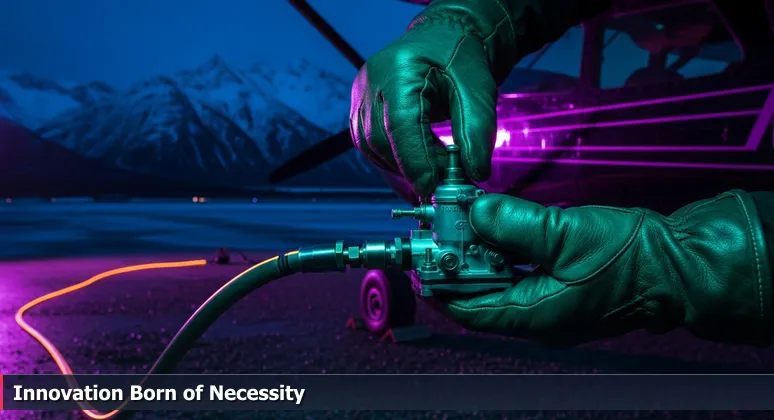
The most innovative piece of technology in Alaska isn't always in a server rack. It's in the hands of a bush pilot at 20 below, jury-rigging a solution so the plane, and the remote community it serves, can fly another day. This ethos of gritty, essential adaptation defines Anchorage's emerging AI scene.
Far from importing Silicon Valley models, these startups are performing the computational equivalent of that carburetor hack - retooling artificial intelligence to solve uniquely northern problems of distance, environment, and community resilience. As observed by the Alaska SBDC, these are "not Silicon Valley pitches transplanted north," but local solutions built by Alaskans for high-impact sectors like rural connectivity and wilderness safety.
Anchorage's ecosystem, bolstered by local incubators and the University of Alaska Anchorage, is building indispensable tools for the Arctic scale. Early successes like Arcnito winning $50,000 in AWS services and Kartorium raising $220,000 from backers including Techstars Global prove that the technical skill exists here to make innovation real, as noted in coverage of the state's first AI pitch contest. They are building for survival and efficiency in one of the planet's most demanding environments.
Table of Contents
- The Alaskan AI Ethos
- Arcnito
- Alaskan Intelligence
- Safe Wild
- Kartorium
- 60Hertz Microgrids
- Threat Informant
- Keeni Space
- HumanAxis
- Kwippe
- Zensor
- A New Model for Resilient Innovation
- Frequently Asked Questions
Discover AI career paths in Anchorage, Alaska for 2026 including UAA programs and local employers.
Arcnito
Building the first AI-enabled community resource hub for Tribal communities, Arcnito tackles the complex web of benefits and services in rural Alaska. Founded by Lorenzo Chu, an entrepreneur from Utqiaġvik, the startup uses Natural Language Processing (NLP) and predictive analytics to create a culturally informed, conversational interface for navigating layered programs where physical access is limited.
Its early validation came from winning the inaugural 2025 Alaska AI Pitch Contest, where it was awarded $50,000 in AWS professional services and mentorship. As Gretchen Fauske, Alaska SBDC Director of Strategy, noted, such startups are "proof that Alaska’s entrepreneurial spirit is adapting... to meet our communities' needs in bold new ways".
With deep roots in the Arctic Slope and state-level support through programs like the Alaska SBDC's AI Resource Program, Arcnito is positioned to become the essential digital platform for tribal nation services across the North, demonstrating how AI built for local survival can achieve massive scale.
Alaskan Intelligence
Providing reliable, actionable AI-driven insights for Alaska-based enterprises, Alaskan Intelligence (AI) solves high-stakes decision-making in logistics, shipping, and resource extraction. Led by Cody Rice, the firm develops vertical AI solutions that function robustly in the intermittent connectivity typical of operations on the Last Frontier.
Its core differentiation is building models that process unique local data streams to enhance safety and efficiency. As the 2nd place winner in the 2025 Alaska AI Pitch Contest, it has established itself as an early mover in the state's commercial AI sector.
Its growth path positions it as a compelling acquisition target for larger logistics firms or a dominant regional SaaS provider for ConocoPhillips Alaska, Alaska Airlines, and maritime shippers. This startup exemplifies how AI tuned for Anchorage's specific operational challenges - like those faced by Joint Base Elmendorf-Richardson - can create scalable, Arctic-ready technology.
Safe Wild
Mitigating the inherent risks of navigating Alaska's vast wilderness, Safe Wild addresses a critical safety gap for families, outdoor professionals, and remote workers. Founded by Lee Brown, the startup uses computer vision and predictive modeling to integrate real-time data on weather, terrain, and animal activity into a proactive risk-assessment platform.
As a finalist in the 2025 Alaska AI Pitch Contest, Safe Wild demonstrates that in a state where outdoor recreation is a primary economic driver, AI for life-and-limb safety is not a niche - it's a necessity. The technology models hazards rather than just mapping locations, offering actionable guidance.
Its trajectory points toward strategic partnerships with major outdoor retailers, guide services, and companies with field employees. The platform could become a standard safety overlay on popular apps or be white-labeled for use by Providence Alaska Medical Center wilderness response teams, proving that AI forged in Alaska's environment creates indispensable tools for global outdoor markets.
Kartorium
Enabling remote troubleshooting and training for heavy industrial sites like mines or oil facilities, Kartorium solves the high cost and danger of physical site visits. Based in downtown Anchorage, this web-based platform uses generative AI and computer vision to allow non-technical workers to create interactive, 3D digital twins from simple photos or scans.
Founded by Jay, Jonathan, and Joseph, Kartorium has moved beyond concept with $220,000 in funding from backers including Techstars Global, as noted in listings of top Anchorage startups. It represents the computational equivalent of a bush pilot's hack - solving universal industrial problems born from local, access-challenged conditions.
With active deployments for industrial troubleshooting in Alaska, its potential for expansion is significant. Kartorium is an attractive acquisition target for large engineering firms or global asset management software companies, proving that Anchorage-based tech can create indispensable tools for remote operations worldwide.
60Hertz Microgrids
Maintaining the hundreds of isolated microgrids powering rural Alaskan villages is a complex, costly, and critical task for community survival. 60Hertz Microgrids develops predictive maintenance software specifically for these distributed energy resources, utilizing MLOps to optimize operations where reliability is non-negotiable.
Its "Pinga" software is uniquely culturally informed, designed for the operational realities of rural Alaska Native utility operators. The startup is backed by the 49th State Angel Fund and other investors, as highlighted among Anchorage's top emerging companies. This focus on essential infrastructure exemplifies the Alaska-first innovation happening through organizations like Launch Alaska.
60Hertz is a prime candidate for growth through acquisition by a major energy technology firm or for expansion beyond Alaska to other remote grid markets worldwide, such as Canada and Scandinavia. It solves a multi-billion-dollar global problem with technology forged in the most demanding environment, proving that AI built for Arctic resilience has universal applications.
Threat Informant
Offering advanced, predictive cybersecurity to Anchorage’s critical infrastructure and mid-sized businesses, Threat Informant solves the prohibitive cost of enterprise-scale security systems. The startup is developing the Multi-Tenant Advanced Security (MTAS) system, a machine-learning-driven Security Information and Event Management (SIEM) platform focused on MLOps and big data analytics.
The team, including Courtney, Matthew, and Jacob, focuses on detecting threats specific to energy, transportation, and local government networks. Already serving local businesses, its localized focus on affordable security for grid technology makes it a compelling player in Anchorage's growing tech landscape.
Its growth is fueled by the increasing digitization of Alaska's infrastructure and the corresponding need for vigilant, AI-powered defense. For aspiring professionals, this translates to local roles like Cybersecurity Analyst, with Anchorage salaries ranging $85,000-$115,000, demonstrating the tangible career paths emerging from this essential, homegrown innovation supported by statewide initiatives.
Keeni Space
Automating and error-proofing complex, high-stakes procedural workflows, Keeni Space addresses critical needs in aerospace and heavy industry where a single missed step can be catastrophic. Founded by rocket engineers Benjamin, Lee, and Robb, the startup uses Natural Language Processing (NLP) to parse and automate intricate checklists and procedures, initially developed for precision rocket launch sequences.
Backed by Alaskan incubator Geeks in the Woods, Keeni Space represents the high-tech export potential growing from Anchorage's ecosystem, as noted among the innovative companies based in the city. Its pedigree in aerospace provides immense credibility for applications in enterprise process management.
This is another form of essential retooling: taking AI built for the unforgiving timing of a launch and applying it to industrial safety. For local tech talent, this creates opportunities in roles like AI Process Engineer, with Anchorage salaries competitive in a market serving global manufacturers, airlines, and energy companies needing robust, safety-critical automation.
HumanAxis
Bridging the gap between cutting-edge Silicon Valley AI expertise and the specific operational needs of Alaskan regional businesses, HumanAxis specializes in NLP and workflow automation software. With offices in Anchorage and California, it acts as a conduit, customizing advanced automation tools for local sectors like healthcare, professional services, and logistics.
As an active member of the Anchorage Chamber, the startup is deeply embedded in the local enterprise network that includes major employers from Providence Alaska Medical Center to GCI. This dual-coast model makes it a unique hybrid in the state's tech scene.
Its success hinges on executing the "glocal" model - global tech with local implementation - better than anyone else. HumanAxis is positioned as a potential acquisition target for larger consultancies seeking a foothold in the Pacific Northwest market or could scale into a dominant regional systems integrator, creating local AI engineering roles that leverage Anchorage's no state income tax advantage.
Kwippe
Eliminating the repetitive manual labor in creating complex graphic design variations, Kwippe solves a universal pain point for marketing, packaging, and branding teams. The startup is a programmatic graphic design engine that uses generative AI to manipulate vector graphics (SVG files) at a foundational layer, allowing for rapid, automated generation of thousands of design variations while maintaining brand integrity.
Founded by Stacey and Robert, Kwippe has secured seed funding from private investors and is recognized among the innovative companies emerging from Anchorage. Its algorithms that parse and manipulate SVG layers demonstrate the technical skill being cultivated in the region, applicable to global horizontal markets.
This tool has clear applications in large marketing departments, e-commerce, and advertising agencies. Its path to success likely involves acquisition by a major design software company seeking to enhance template capabilities, proving that highly specialized AI tools born in Anchorage can scale globally while contributing to the local tech economy and career opportunities in machine learning.
Zensor
Enabling persistent environmental and security monitoring in the remote Arctic, Zensor solves the logistical nightmare of maintaining battery-powered sensor networks in extreme environments. Spun out of the University of Alaska Anchorage area (UAA-ADAC), the company develops battery-free wireless sensors that use ambient energy harvesting, forming ad-hoc networks that employ edge AI for predictive analytics.
This technology is critical for climate change surveillance and security applications where traditional infrastructure fails. As noted in the roster of UAA startup companies, Zensor's traction is already research and government-led, with deployment by the DHS Center of Excellence at the university.
This positions it perfectly for continued grant funding, strategic partnerships with defense contractors, or acquisition by a major industrial IoT firm. For Anchorage's tech workforce, it underscores the tangible career paths in edge computing and sensor analytics emerging from local R&D, contributing to the resilient, place-based innovation championed by Alaska's AI ecosystem builders.
A New Model for Resilient Innovation
The Anchorage AI startup ecosystem offers more than interesting companies; it provides a blueprint for resilient, place-based innovation. As Jack Hood, Solutions Architect for PREDICTif Solutions, observed about the pitch contest finalists, they demonstrated the "technical skill needed to make innovation real" while tackling Alaska’s unique challenges. These startups build not for vanity metrics but for survival, efficiency, and community resilience in one of the planet's most demanding environments.
For investors and tech professionals, the lesson is clear: watch the companies that make global technology indispensable locally. Their grit, born of necessity, scales into durable, defensible business. The future of applied AI is being stress-tested on the frozen frontiers of Alaska.
To engage with this growing ecosystem, connect with the Alaska Small Business Development Center’s AI Resource Program or attend upcoming events like the healthcare-focused AI pitch competition scheduled for March 2026. This is where the next wave of essential, northern-built solutions will emerge.
Frequently Asked Questions
How did you rank the top 10 AI startups in Anchorage for 2026?
We selected startups based on their innovative approaches to solving uniquely Alaskan challenges, traction from local events like the 2025 Alaska AI Pitch Contest where Arcnito won $50,000, and their potential for growth or acquisition in critical sectors like energy and logistics.
What are the biggest problems these AI startups are tackling in Alaska?
These startups focus on essential Alaskan issues, such as tribal resource access with Arcnito's NLP platform and microgrid maintenance with 60Hertz's predictive software. They address safety, efficiency, and resilience in remote environments, adapting AI for life-and-limb needs.
Are there good job opportunities in AI at these Anchorage startups?
Yes, as these startups expand, they're creating roles in machine learning and software development, with companies like Alaskan Intelligence and Threat Informant hiring for commercial and security AI solutions. Salaries are competitive in Anchorage's market, boosted by no state income tax.
What makes Anchorage a unique place for AI innovation?
Anchorage's harsh environment and proximity to employers like Alaska Airlines drive AI that excels in low-connectivity and extreme conditions. Startups like Safe Wild and Zensor leverage local challenges to build resilient technology with global applications.
How can I network with the AI startup community in Anchorage?
Engage with local networks such as the Alaska Small Business Development Center's AI Resource Program or attend events like the healthcare-focused AI pitch competition in March 2026. This connects you with founders from startups like HumanAxis and Kartorium for job and collaboration opportunities.
For information on the best entry-level tech jobs in Alaska's startup scene for 2026, refer to this post.
For insights into the analysis of Anchorage's tech job market in 2026, read here.
Read about Anchorage's top AI hiring industries for 2026 to plan your career.
Read about Anchorage AK tech job opportunities for non-degree holders in 2026.
Learn about the top 10 tech apprenticeships in Anchorage for 2026 in this detailed guide.

Irene Holden
Operations Manager
Former Microsoft Education and Learning Futures Group team member, Irene now oversees instructors at Nucamp while writing about everything tech - from careers to coding bootcamps.